



What is the Airport Express?
The Beijing Capital Airport Express is a dedicated light rail line connecting the airport terminals directly to the Beijing Subway network. Unlike the standard subway lines which charge by distance, this line operates on a separate ticketing system with a higher, fixed price, offering spacious seating and luggage racks designed specifically for international travelers.
Route and Stations: Where Does it Go?
The train runs on a loop system. It is crucial to understand the order of stops so you don’t get off too early. The train departs from Terminal 3, picks up at Terminal 2, and then heads into the city.
- Terminal 3 (T3): The starting point.
- Terminal 2 (T2): The second pickup point.
- Sanyuanqiao: Transfer here for Line 10 (a massive loop line that connects to most other subway lines).
- Dongzhimen: The main hub. Transfer here for Line 2 (inner city loop) and Line 13.
- Beixinqiao: The terminus. Transfer here for Line 5 (North-South axis).
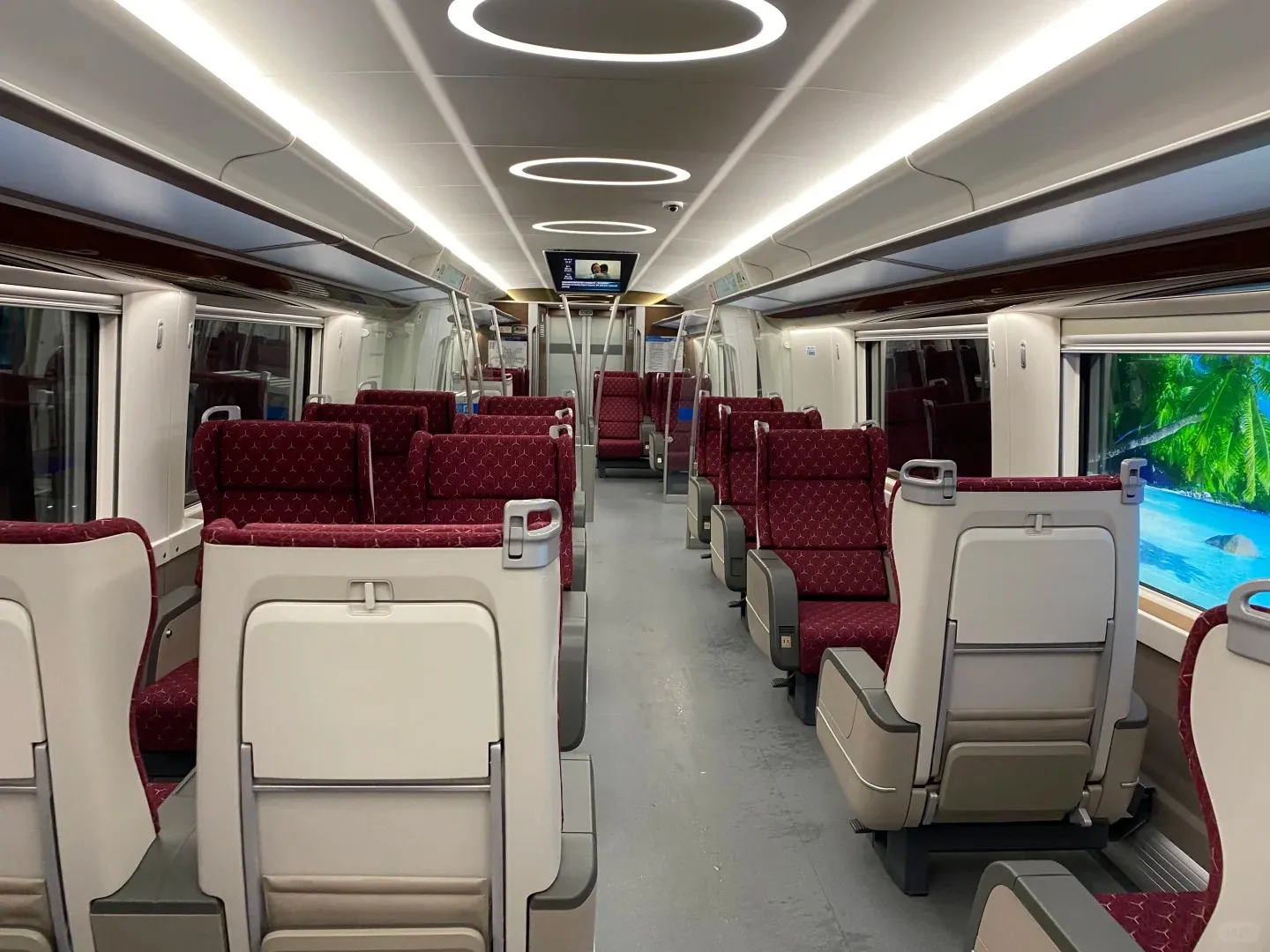
Step aboard the Beijing Capital Airport Express and enjoy a journey in comfort and style, with modern amenities like these plush red seats, bright lighting, and captivating digital window views to enhance your travel experience to or from Beijing Capital International Airport.
Ticket Costs and Payment Methods (2026 Update)
As of 2026, the fare remains a flat 25 RMB. However, the days of fumbling with paper notes at a ticket vending machine are largely over. While machines still exist, they can be temperamental with foreign credit cards or older banknotes.
How to Pay Like a Local
To enter the station, you simply scan a QR code at the turnstile. You should set up one of the following apps before you board your flight to China:
- Alipay (Zhifubao): Link your foreign Visa or Mastercard to the app. Use the “Transport” mini-app within Alipay to generate a subway QR code.
- WeChat Pay: Similar to Alipay, this works with foreign cards.
- Yikatong (Physical Card): If you prefer a physical card, you can buy a “Yikatong” transit card at the airport service desk. It requires a 20 RMB deposit, but it is excellent for tapping through turnstiles if your phone battery dies.
Insider Tip: The “Dongzhimen” Transfer Warning
Most guidebooks simply state that you can “transfer at Dongzhimen.” They fail to mention the physical reality of this transfer. It is not a cross-platform switch.
When you arrive at Dongzhimen, you must exit the Airport Express platform and navigate a series of long corridors and escalators to reach the Line 2 subway platforms. If you are traveling with heavy luggage or small children, be prepared for a 10-minute walk through dense crowds. The air in the underground connectors can get stuffy, especially in July and August. If you have excessive luggage, taking a taxi from the Dongzhimen street level might be wiser than dragging bags into the Line 2 subway depths.
Stay Connected: The Great Firewall
Navigating the subway and setting up Alipay requires a stable internet connection. However, standard roaming or local Chinese SIM cards will block Google Maps, Gmail, and Instagram due to the Great Firewall. To access your essential apps and navigate the rail system, you need a reliable eSIM.
💡 Editor’s Pick: We recommend Nomad eSIM for China because it reliably bypasses the Great Firewall with stable speeds. Use code JORICAQLKF at checkout to get $5 USD off your first data plan.
Step-by-Step: From Arrival to City Center
1. Landing and Customs
After clearing immigration and picking up your bags, follow the bilingual signs that say “Airport Express” or “Subway”. In Terminal 3, you will head to the second floor of the Parking Garage No. 3 via a long corridor. In Terminal 2, it is located on the basement level (B2).
2. Buying Your Ticket
If you have Alipay set up, walk straight to the gate. If you need a physical ticket, look for the staffed counters rather than the machines. The English-speaking staff can process your passport and issue a single-journey card. Do not lose this card; you need to insert it into the machine to exit at your destination.
3. The Ride
The trains run every 10 to 15 minutes. The ride is smooth and travels above ground for the first leg, offering a view of Beijing’s suburban sprawl before diving underground near Sanyuanqiao.
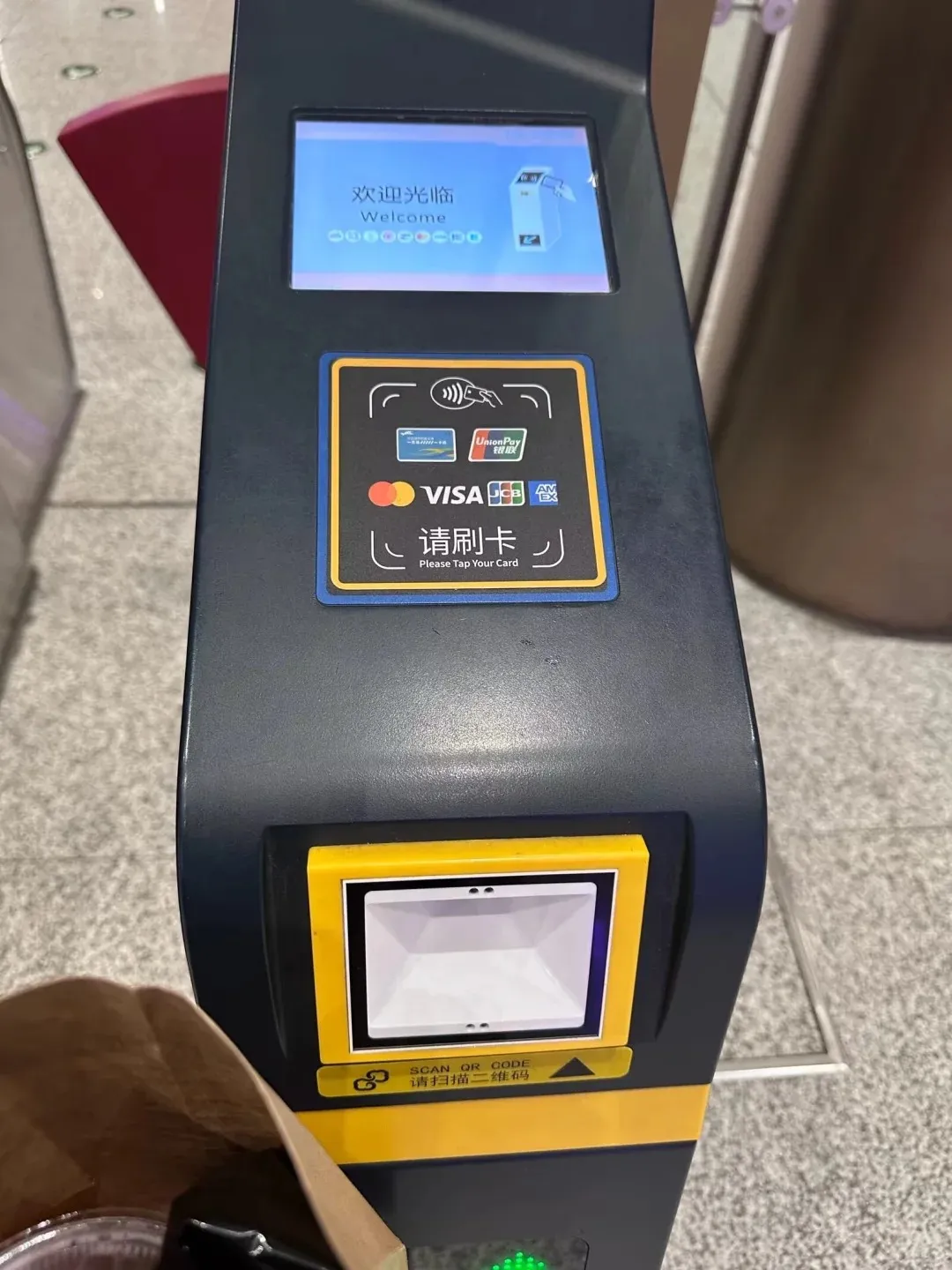
Seamlessly enter the Beijing Capital Airport Express. These modern turnstiles accept major international credit cards like Visa and Mastercard, alongside popular QR code payment methods, ensuring a smooth start to your Beijing adventure.
Operating Hours
Be careful if you have a red-eye flight. The train does not run 24/7. According to official schedules, the timing is generally as follows:
- First Train from T3: Approx. 06:20
- Last Train from T3: Approx. 22:50
- First Train from T2: Approx. 06:35
- Last Train from T2: Approx. 23:10
If you land after 11:00 PM, you will likely need to take an official airport taxi or a DiDi (China’s version of Uber/Grab). The taxi queue is located on the lower level; ignore anyone approaching you in the arrivals hall offering a “private ride”—these are unlicensed drivers who will overcharge you.