


Essential Logistics for 2026 Travelers
Connectivity is Non-Negotiable
To navigate the labyrinthine hutongs and pay for your snacks, you need constant, unfiltered internet access. The “Great Firewall” blocks many Western apps, including Google and Instagram. Relying on public Wi-Fi puts your data at risk and is often unstable in residential alleyways.
💡 Editor’s Pick: We recommend Nomad eSIM for China because it reliably bypasses the Great Firewall with stable speeds. Use code JORICAQLKF at checkout to get $5 USD off your first data plan.
What is a Hutong?
Definition: A hutong is a narrow street or alleyway, common in Northern Chinese cities like Beijing, formed by lines of siheyuan (traditional courtyard residences). Many have stood since the Yuan, Ming, and Qing dynasties.
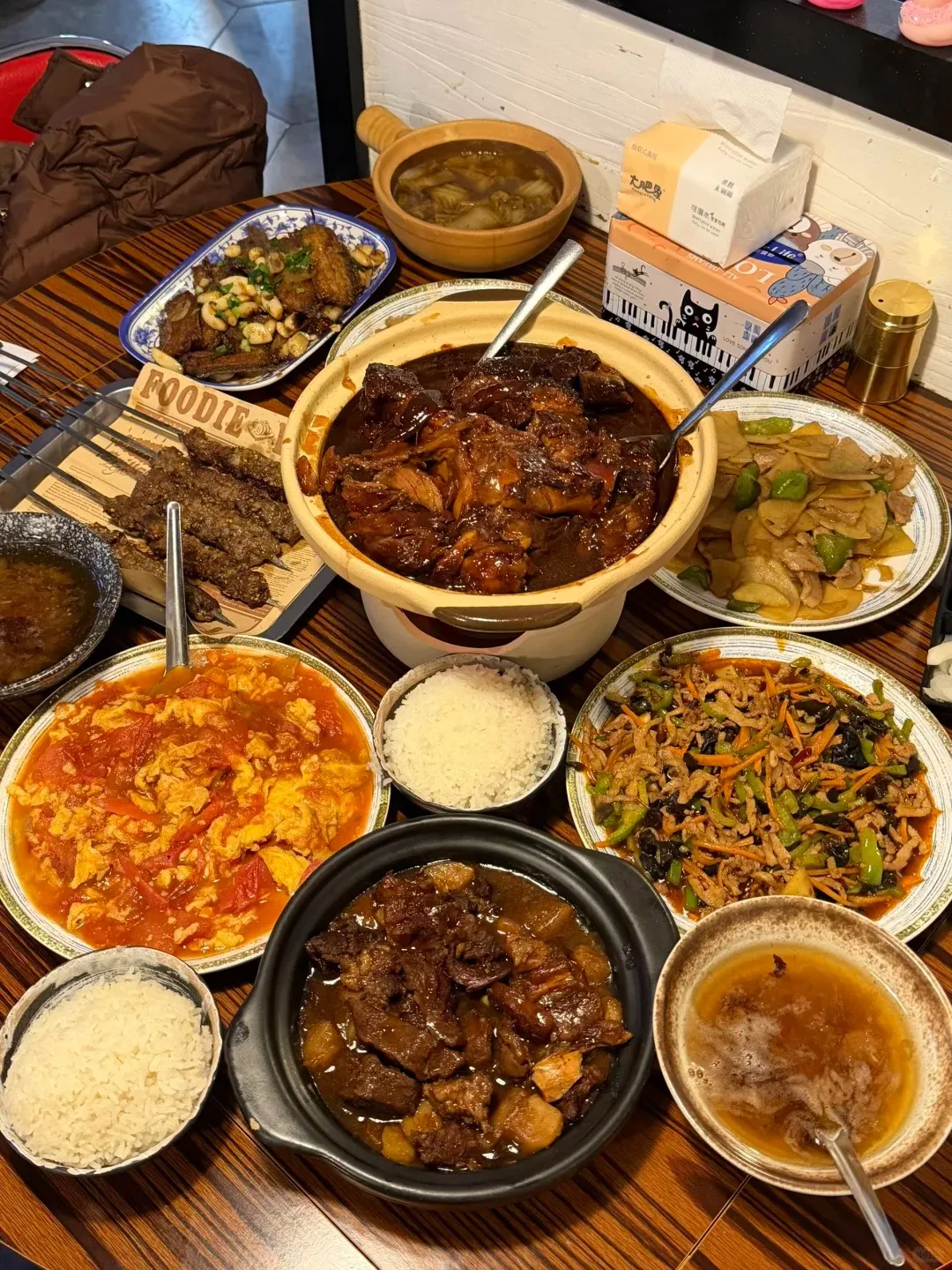
Beyond the main attractions, the real culinary gems of Beijing often hide in plain sight within the city’s historic hutong alleyways. This traditional spread is a perfect example of the authentic local eats waiting to be discovered.
The Top 10 Hutong Eats & Where to Find Them
1. Zhajiangmian (Noodles with Soybean Paste)
Often called “Beijing Bolognese,” this is the city’s signature comfort food. Hand-pulled wheat noodles are topped with a thick, salty sauce made from stir-fried ground pork and fermented yellow soybean paste. It is served with fresh vegetable garnishes like cucumber, radish, and bean sprouts to cut the saltiness.
- Insider Tip: Do not ask for it “less salty.” The saltiness is the point. Mix it thoroughly before taking a bite.
- Where to go: Fangzhuanchang No. 69 (69 Fangzhuanchang Hutong). It retained its Michelin Bib Gourmand status through 2026 for a reason.
- Price: 25–35 CNY ($3.50–$5.00 USD).
2. Luzhu Huoshao (Pork Stew with Bread)
This dish is the ultimate litmus test for travelers. It is a hearty stew of pork intestines, lungs, and pork belly, boiled for hours with discs of unleavened bread (huoshao) that soak up the savory broth. It has a strong, distinct aroma that fills the alleyway.
- Is it worth it? If you enjoy nose-to-tail eating, yes. The texture is soft, not chewy. If you dislike organ meat, skip this.
- Where to go: Chenji Luzhu Xiaochang near Qianmen. It’s gritty, loud, and completely authentic.
- Price: 30–45 CNY.
3. Doornail Meat Pie (Men Ding Rou Bing)
Named because they resemble the golden studs on the doors of the Forbidden City, these are cylindrical beef patties with a crispy, pan-fried skin. They are incredibly juicy inside.
- Warning: Do not bite directly into a fresh one. The hot grease inside will squirt out and burn you. Poke a hole with your chopstick to let the steam escape first.
- Where to go: Baorui Men Ding Rou Bing. It’s a hole-in-the-wall that sells out by early afternoon.
- Price: 8–12 CNY per pie.
4. Douzhi (Fermented Mung Bean Milk)
What is Douzhi? It is a gray-green, fermented drink made from mung bean remnants. It tastes sour and slightly sulfurous, often compared to blue cheese or old socks.
Locals swear by its health benefits, particularly for digestion. It is usually eaten with jiaoquan (crispy fried dough rings) and spicy pickles to mask the flavor.
- Where to go: Yin San Douzhi near the Temple of Heaven.
- Price: 3–5 CNY.
5. Donkey Burger (Lvrou Huoshao)
There is a local saying: “In Heaven there is dragon meat; on Earth there is donkey meat.” This Hebei province specialty is a staple in Beijing hutongs. The meat is lean, savory, and shredded, served inside a flaky, rectangular baked bun.
- Flavor Profile: It tastes similar to slow-cooked pulled beef but with a finer texture and a gamier flavor profile.
- Where to go: Wang Pangzi (Fatty Wang’s). Open 24 hours and consistently reliable.
- Price: 15–20 CNY.
6. Miancha (Seasoned Millet Mush)
This is a breakfast staple that is disappearing from commercial streets. It is a thick porridge made of millet flour, topped with a generous layer of sesame paste (tahini) and sesame salt. It is savory, nutty, and very filling.
- How to eat it: Traditionally, you do not use a spoon. You hold the bowl with one hand and rotate it while sipping, ensuring you get a mix of porridge and sesame paste with every mouthful.
- Where to go: Daxing Hutong Miancha. It is essentially a window in a residential wall; you eat standing up in the alley.
- Price: 5–10 CNY.
7. Chuan’r (Lamb Skewers)
While available everywhere, hutong Chuan’r has a specific vibe. These are small cubes of lamb, alternating fat and lean, grilled over charcoal (or electric grills in stricter zones) and heavily dusted with cumin and chili flakes.
- Insider Tip: Avoid the large, touristy skewers at Wangfujing. Look for small, smoky grills where locals are drinking Yanjing beer on low plastic stools.
- Where to go: The area around Beixinqiao and Ghost Street (Guijie) comes alive with these vendors after 9:00 PM.
- Price: 6–10 CNY per skewer.
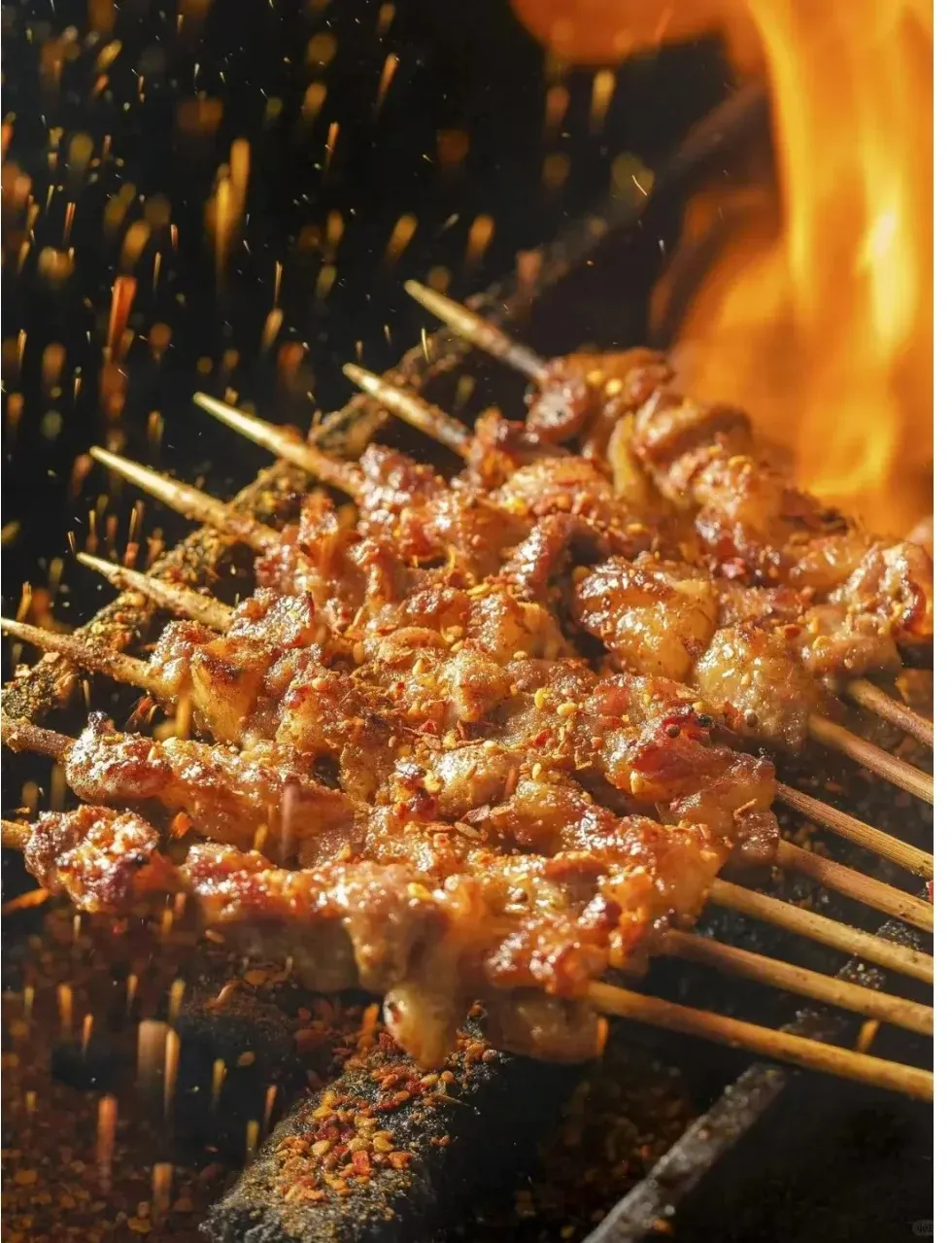
A quintessential Beijing street food experience: sizzling lamb chuanr, generously seasoned with cumin and chili, grilled to perfection over open flames. Find these aromatic skewers tucked away in the city’s vibrant Hutong alleyways.
8. Traditional Beijing Yoghurt (Nai Lao)
You will see these white ceramic jars with blue paper lids everywhere. This is a sweetened, fermented yoghurt that is drinkable through a straw. It is fresher and less viscous than Greek yogurt.
- Logistics: You pay a deposit for the jar. You are expected to drink it at the stall and return the jar, or pay extra to take it with you.
- Where to go: Any small convenience store (xiaomaibu) inside the hutongs. Wenyu Nailao on Nanluoguxiang is famous for a bowl version topped with nuts.
- Price: 5–10 CNY.
9. Tanghulu (Candied Hawthorn)
The iconic winter snack of Beijing. Hawthorn berries (which are tart, similar to cranberries) are skewered and coated in hardened rock sugar. The contrast between the crunchy, sweet shell and the soft, sour fruit is addictive.
- Modern Twist: In 2026, you can find skewers of strawberries, kiwi, and even cherry tomatoes stuffed with walnuts, but the hawthorn is the classic.
- Where to go: Street vendors near Shichahai lakes.
- Price: 10–20 CNY depending on the fruit.
10. Mongolian Hot Pot (Copper Pot)
While technically a sit-down meal, many hutong establishments run this in a casual, street-side manner. A copper pot with a coal chimney in the center boils water. You cook paper-thin slices of mutton yourself.
- Where to go: Jubaoyuan on Niujie (Ox Street). This is the heart of Beijing’s Muslim quarter. The meat quality here is superior to tourist spots.
- Price: 100–150 CNY per person for a full meal.