


What is a Hutong?
A hutong is a narrow street or alleyway, specific to Beijing, formed by lines of traditional courtyard residences known as siheyuan.
The term is believed to derive from the Mongolian word hottog, meaning “water well,” dating back to the Yuan Dynasty (1271–1368). Historically, communities were built around these wells, and the alleys connected the walled courtyard homes where generations of families lived together.
Top Hutong Neighborhoods: Where to Go
Not all alleys are created equal. Some have been commercialized into “tourist streets,” while others remain quiet residential enclaves. Here is a breakdown based on travel style.
1. For the “Real” Beijing: Beiluoguxiang & Caochang
If you want to escape the tour groups, cross the street from the famous Nanluoguxiang and head north into Beiluoguxiang. Here, the noise fades away. You will find independent coffee shops next to bicycle repair stands. Similarly, Caochang Hutong offers a pristine, renovated environment with a water system (Sanlihe Park) running through it, offering a rare glimpse of water-town aesthetics in the dry north.
2. For History & Arts: Liulichang & Shijia
Liulichang Culture Street is the historic center for scholars. It is lined with shops selling calligraphy brushes, inkstones, and antiques. It feels like stepping onto a movie set of the Qing Dynasty. For a look inside a restored courtyard, visit the Shijia Hutong Museum. Unlike private homes, this is open to the public and showcases the history of the alley where many famous writers and officials once lived.
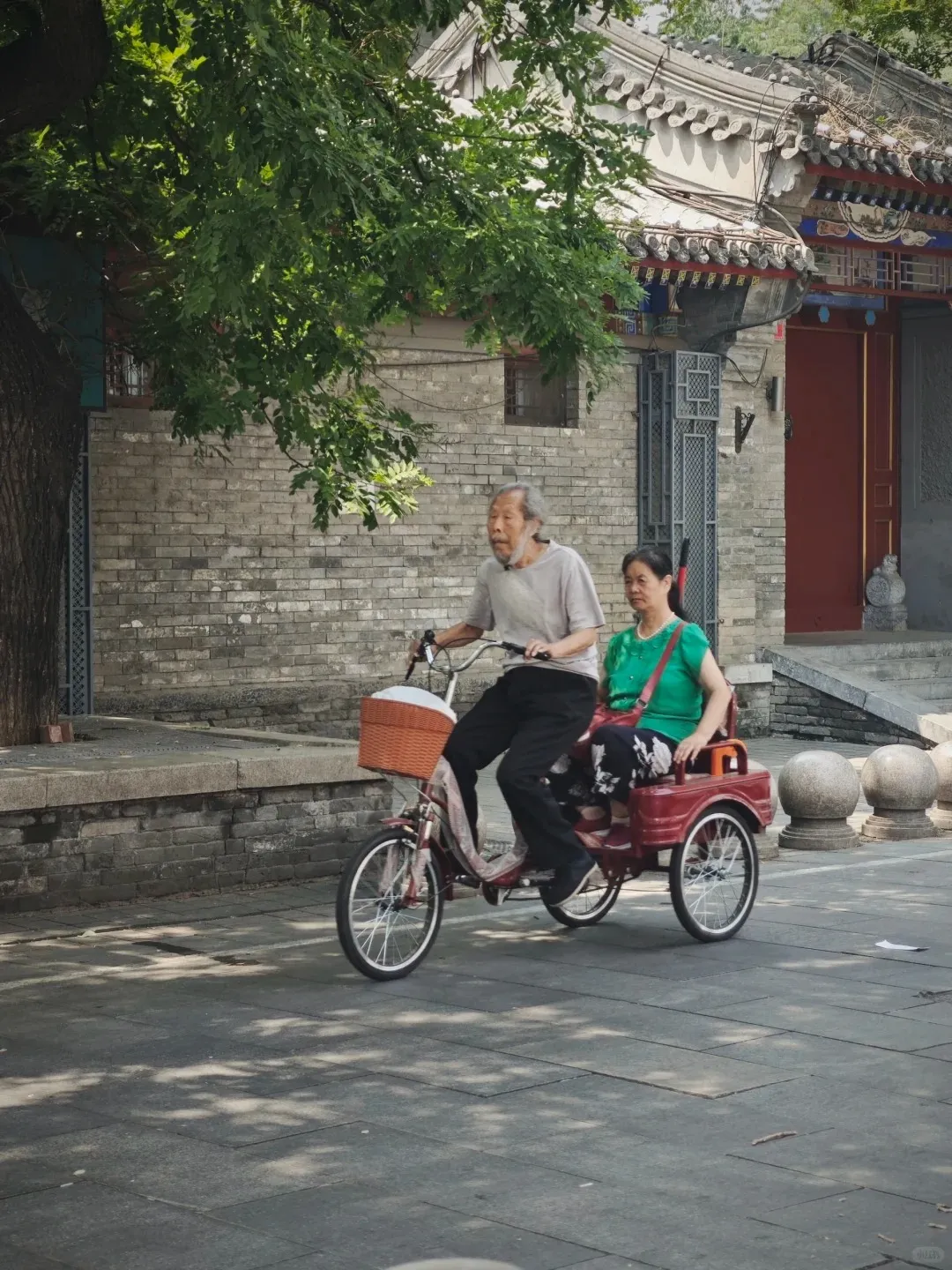
Experience the authentic ‘local life’ in Beijing’s historic hutongs, where scenes like this elderly couple cruising on their tricycle are a common and charming sight.
3. For Architecture & Photography: White Pagoda Temple
The White Pagoda Temple (Baitasi) area offers one of the most striking visual contrasts in the city. The massive white Yuan Dynasty stupa towers over the low-slung grey roofs. This area is becoming a hub for architects and designers, featuring rooftop cafes that offer the perfect vantage point for sunset photos.
Must-Try Hutong Foods
Food in the hutongs is cheap, fast, and flavor-heavy. Look for small “hole-in-the-wall” eateries where locals are queuing.
- Jianbing (Chinese Crepe): The ultimate breakfast. A mung-bean flour crepe topped with egg, cilantro, scallions, hoisin sauce, and a crispy wonton cracker.
- Miancha (Flour Tea): A thick, warm millet porridge topped with sesame paste. It is traditionally drunk directly from the bowl without a spoon—a true local skill.
- Chuanr (Lamb Skewers): Small BBQ joints come alive at night. Pair spicy cumin lamb skewers with a local Yanjing beer or a craft brew from Great Leap Brewing, a pioneer in the hutong craft beer scene.
- Peking Duck: For a rustic experience, try Li Qun Roast Duck. Hidden in a dilapidated courtyard, it has hosted heads of state despite its humble appearance.
Mistakes to Avoid & Insider Tips
To ensure a smooth experience, keep these “contrarian” tips in mind, which often contradict standard guidebook advice.
The Rickshaw Trap
Mistake: Hiring the first rickshaw driver who approaches you near the Drum Tower or Shichahai. These are often overpriced and provide rushed, scripted tours.
Better Option: Walk. The best discoveries happen on foot. If you must take a rickshaw, book a reputable tour through a verified agency or agree on a firm price (including the drop-off location) before getting in.
The Public Toilet Reality
Mistake: Assuming cafes or shops have restrooms. Most traditional hutong buildings do not have private plumbing.
Reality: You will likely need to use public communal toilets located every few hundred meters. They are safe and generally clean, but they are often squat toilets. Always carry your own tissue and hand sanitizer.
Respecting Privacy
Mistake: Pushing open a heavy wooden door to “take a peek.”
Reality: If a door is closed, it is a private home. Look for the sign “Private Residence, No Entry” (私人住宅,非请勿进). Residents value their privacy despite the thin walls.
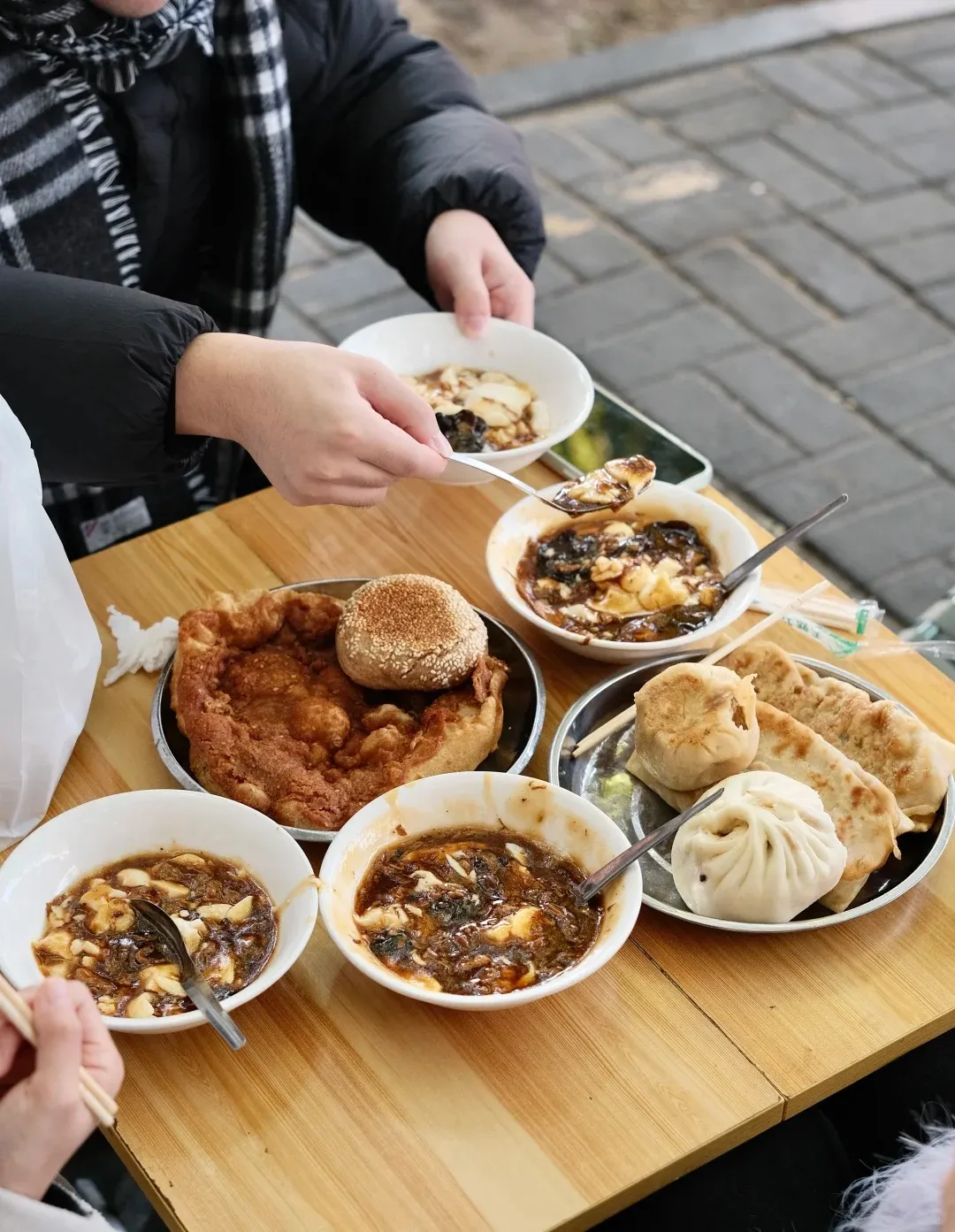
Dive into the heart of Beijing’s local life with an authentic Hutong breakfast. This spread of savory douhua, fresh baozi, and crispy fried breads offers a true taste of traditional flavors, perfect for fueling your exploration of the historic alleys.
Practical Logistics for 2025
- Metro Access: The best subway stations for hutong access are Nanluoguxiang (Line 6/8), Beixinqiao (Line 5), and Shichahai (Line 8).
- Visas: If you are on a layover, utilize the 144-hour visa-free transit policy. Keep your hotel booking and connecting flight ticket handy.
- Connectivity: Ensure you have a travel eSIM (like Airalo or Holafly) or a roaming plan that bypasses the “Great Firewall” so you can access Google, Instagram, and WhatsApp/Gmail while navigating.