


The Logistics: How to Pay and Ride
In 2026, cash is almost obsolete in Beijing’s transport ecosystem. While ticket machines technically still accept coins and small bills, finding a machine that isn’t “Out of Service” or rejecting your crumpled 10 RMB note is a frustration you don’t need.
The Golden Standard: Alipay and WeChat
This is how 99% of locals travel. Inside the Alipay app (which now supports international credit cards seamlessly), tap on “Transport” and select “Metro.” This generates a QR code.
You simply hold your phone screen over the turnstile scanner. It beeps, the gate opens, and you walk through. Do the same when you exit, and the fare (usually between ¥3 and ¥8 depending on distance) is automatically deducted. Insider Tip: Ensure your phone screen brightness is turned up; older scanners at historic stations like Qianmen can be finicky with dim screens.
The “Yikatong” Physical Card
If you prefer a physical souvenir or want to disconnect, you can buy a Yikatong (Beijing Transportation Smart Card). You will need a ¥20 refundable deposit. However, be warned: refunding the card before you leave requires finding a specific service center, which often have limited hours. Most travelers end up keeping the card with the leftover balance as a souvenir because the return process is too bureaucratic.
Staying Connected Underground
To use the Alipay QR code, you need a data connection. While stations have Wi-Fi, it requires SMS verification that often fails with foreign phone numbers. You need reliable mobile data to load maps and payment codes instantly.
Don’t rely on roaming, which is expensive and often throttled. For 2026, we recommend a high-speed eSIM that routes traffic effectively.
💡 Editor’s Pick: We recommend Nomad eSIM for China because it reliably bypasses the Great Firewall with stable speeds. Use code JORICAQLKF at checkout to get $5 USD off your first data plan.
Navigating the Station: What to Expect
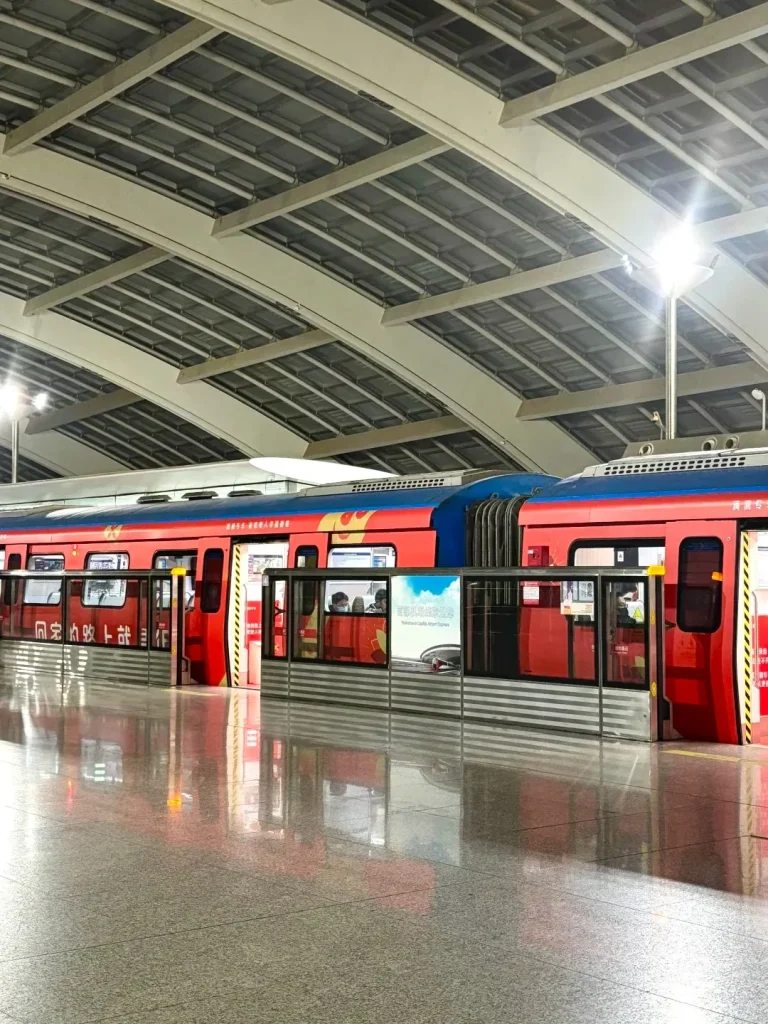
Entering a Beijing subway station is a sensory experience. You will first look for the navy blue logo with a white “D” inside a circle (short for Dìtiě). As you descend, you will be hit with the distinct smell of machine grease and floor cleaner.
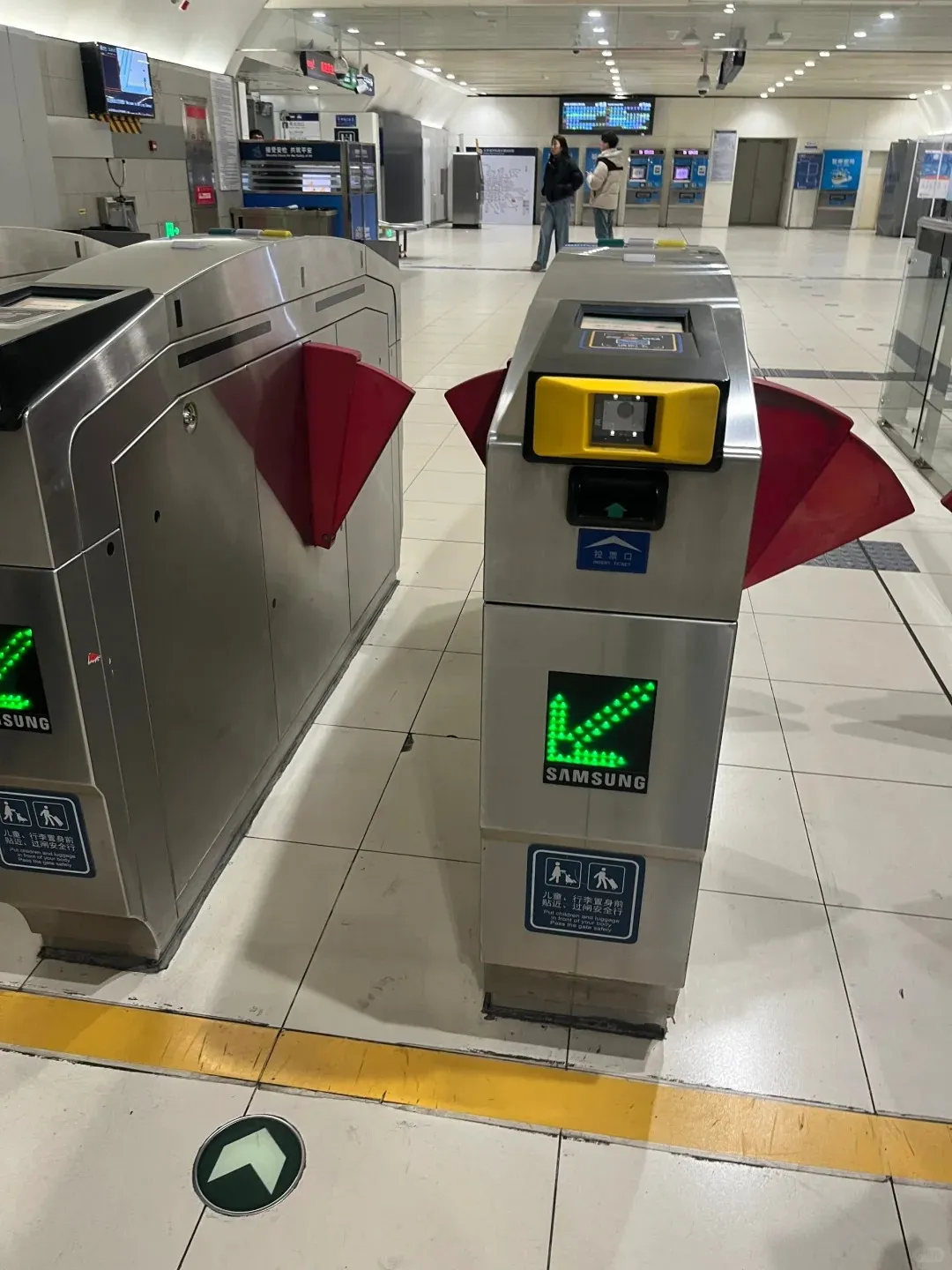
Mastering Beijing’s metro begins at the fare gates. With your transit card or payment app ready, navigating these turnstiles is the first step to a smooth journey across the city.
The Security Checkpoint
Unlike London or New York, every entry involves a security check. You must put your backpack through an X-ray machine.
What to know:
- Liquids: If you have a water bottle, the guard may ask you to drink from it (“Hē yī kǒu”).
- Aerosols: Hairspray or large deodorants are often confiscated.
- Knives: Even small Swiss Army knives will be taken. Do not bring them.
The “Exit” Trap
This is where most tourists fail. A single station like Wangfujing might have exits labeled A, B, C1, C2, and E. The distance between Exit A and Exit E underground can be a 10-minute walk, but surfacing at the wrong exit can put you on the wrong side of a massive boulevard with no crosswalk for 500 meters.
Insider Strategy: Do not just look for the station name. Look for the specific Exit Letter closest to your destination using your map app before you get off the train. Signs on the platform are excellent and bilingual, listing exactly which landmarks are near which exit.
Key Lines for Travelers
With over 27 lines, the map looks like a plate of spaghetti. However, as a visitor, you will primarily live on these three lines:
Line 1 (The Red Line)
This is the tourist backbone. It runs East-West and hits the heavyweights:
- Tiananmen East/West: The Forbidden City and the Square.
- Wangfujing: Famous snack street and shopping.
- Military Museum: Transfer here for Line 9 to Beijing West Railway Station.
Warning: This line was built in the 1960s. The carriages are lower, the stations are smaller, and it gets hotter and more crowded than newer lines.
Line 2 (The Blue Loop)
This loop line traces the old city walls. It connects you to the Lama Temple (Yonghegong) and the hip hutongs near Gulou Dajie. It is also the easiest way to transfer between other major lines.
Line 8 (The Green Line)
Often overlooked, Line 8 is fantastic for reaching the Olympic Park (Bird’s Nest) in the north and cuts straight down through the traditional central axis to the National Art Museum.
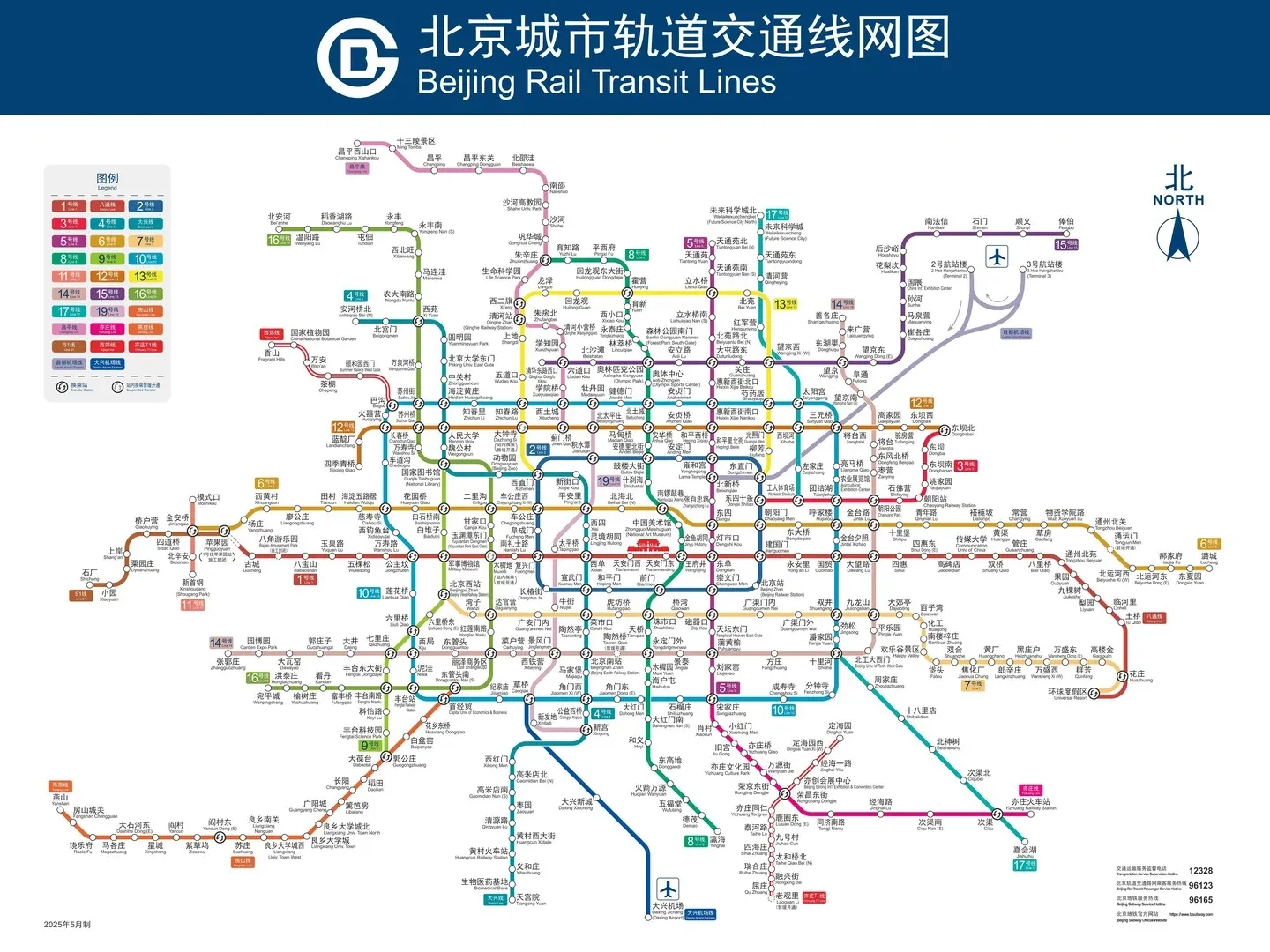
Your ultimate companion for navigating Beijing’s vast urban landscape, this comprehensive subway map empowers you to master the metro system like a local and confidently explore all the city has to offer.
Is the Subway Always the Best Choice?
While I advocate for the metro 90% of the time, there are exceptions. If you are traveling with heavy luggage during rush hour (8:00 AM or 6:00 PM), the subway is a nightmare. People will push, and there is no space for suitcases.
Additionally, the subway shuts down relatively early. Most lines stop running between 10:30 PM and 11:00 PM. If you are out late enjoying the nightlife in Sanlitun, you will need to switch to a ride-hailing app like DiDi.