


The “Big Three”: Restored Sections Near Beijing
Most travelers will end up at one of these three sections. They are officially managed, require tickets, and offer amenities like cable cars and restrooms.
1. Mutianyu: The Crowd-Pleaser
If I had to recommend one section to 90% of travelers in 2026, it is Mutianyu. Located about 70km (1.5 hours) from Beijing, it strikes the perfect balance. It is fully restored, meaning the footing is safe, but it is surrounded by dense woods (over 90% forest cover) that look spectacular in autumn.
The Insider Experience: The real draw here isn’t just the wall—it’s the descent. You can take a chairlift up and then ride a single-person toboggan down a winding metal track. It is touristy, yes, but undeniably fun. Even former First Lady Michelle Obama took the ride.
- Crowd Level: Moderate. You will see people, but if you walk past Tower 20, the crowds thin out significantly.
- Difficulty: Low to Medium. Cable cars make the ascent easy.
- Best For: Families with kids, layover travelers, and those who want great views without a grueling trek.
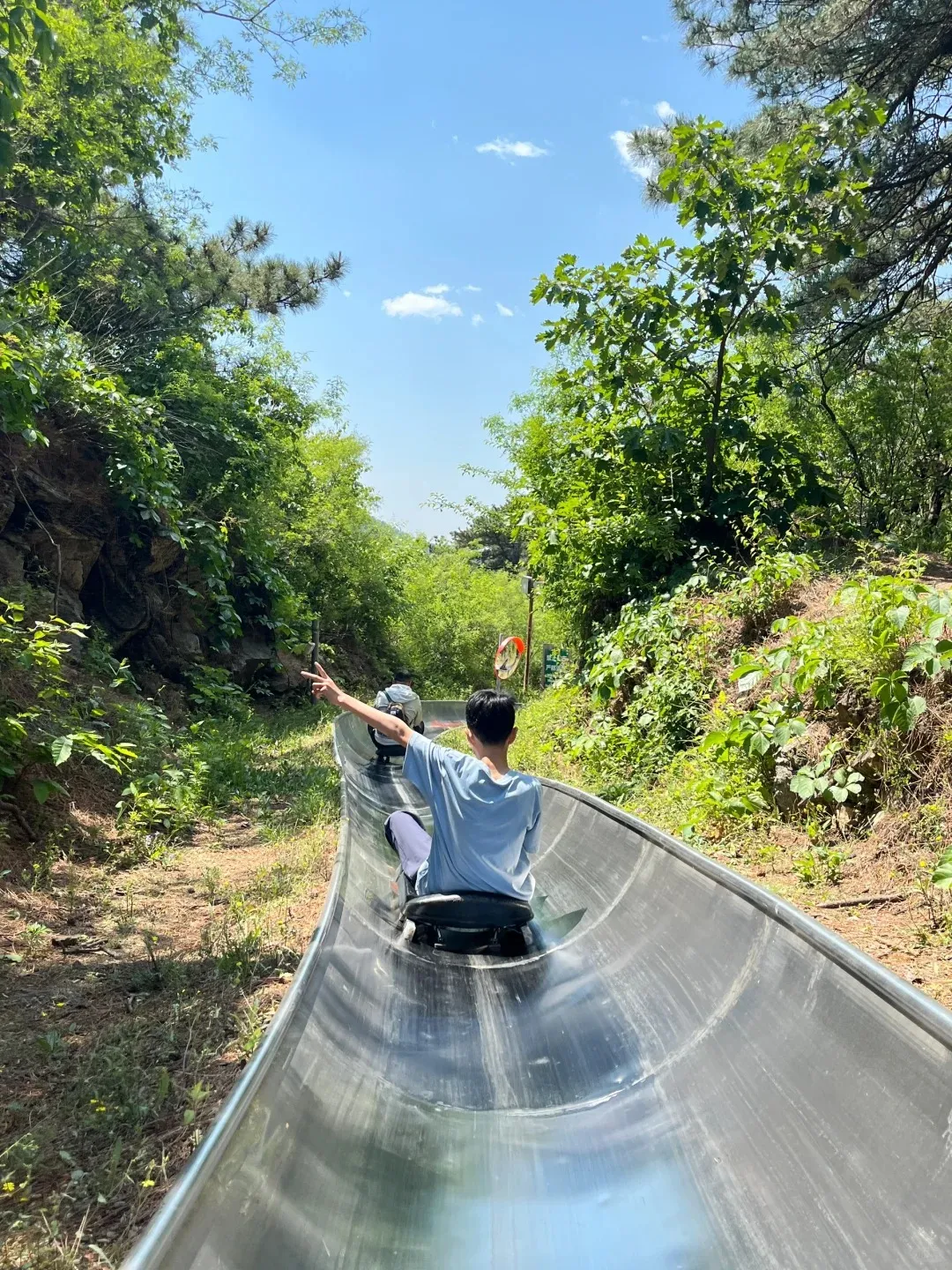
For travelers seeking a fun and unique descent, the Mutianyu Great Wall’s popular toboggan slide offers an exhilarating ride through beautiful forest scenery. It’s a memorable way to conclude your visit, making Mutianyu a great choice for every type of adventurer.
2. Jinshanling: The Photographer’s Dream
If you are willing to drive 2.5 to 3 hours from Beijing, Jinshanling rewards you with the most stunning architecture. This section connects to Simatai and features 67 watchtowers over a 10.5km stretch. Unlike the uniform bricks of Mutianyu, Jinshanling features diverse tower shapes (square, round, oval) and “barrier walls” used for defense within the wall itself.
Is it Worth the Drive? Absolutely. Because it is further away, tour buses often skip it. You can often find yourself alone on a watchtower watching the sunset. The section is half-restored and half-wild, giving you a taste of history without the safety risks of the fully wild wall.
3. Badaling: The Tourist Trap (With One Exception)
I will be honest: I generally tell clients to skip Badaling. It is the closest section to Beijing and the most famous among domestic Chinese tourists. During holidays or summer weekends, it is not a hike; it is a shuffle through a sea of people. You will be fighting for elbow room, and the noise of megaphones can ruin the atmosphere.
The Exception: If you are traveling with a wheelchair user or someone with severe mobility issues, Badaling is your best option. It features elevators and barrier-free ramps that allow everyone to experience the wonder of the wall.
The “Wild Wall”: Unrestored Adventures
For those who find restored bricks too “Disney-fied,” the wild wall offers silence, ruin, and raw history. Note that amenities here are non-existent—bring your own toilet paper and water.
Jiankou: The Vertical Challenge
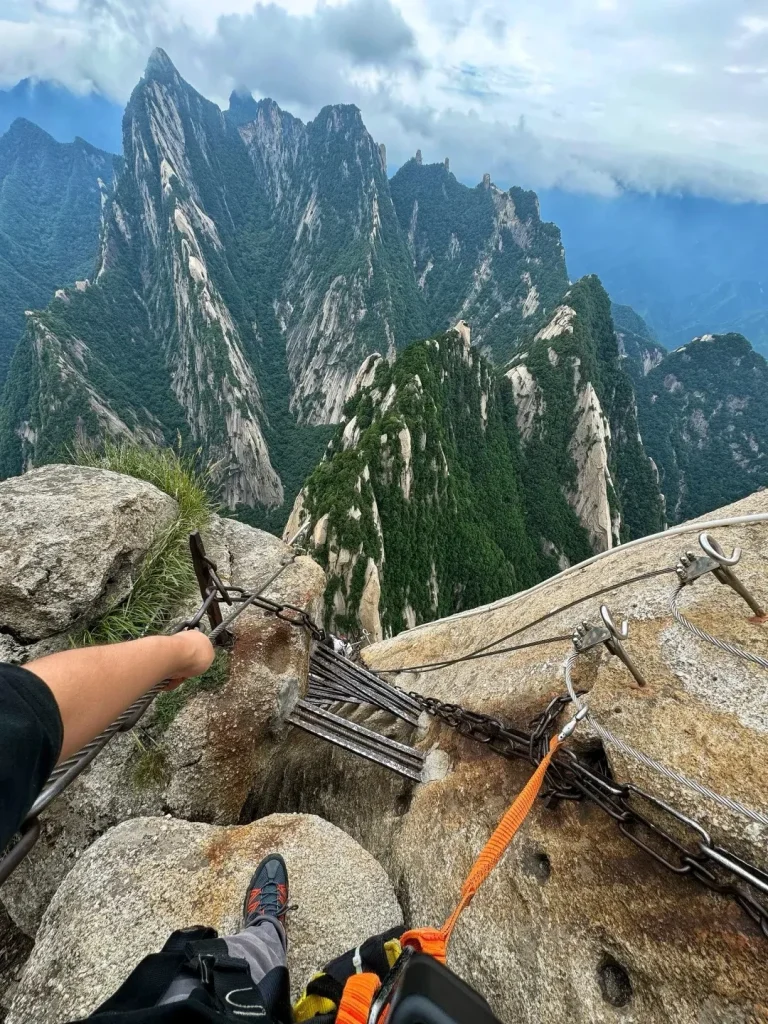
Jiankou is often the section you see on National Geographic covers—white dolomite rocks striking out against jagged green peaks. It is entirely unrestored. Trees grow through the watchtowers, and the stairs are often crumbled rubble.
Warning: This is not a casual walk. Sections like “The Sky Stairs” and “The Eagle Flies Facing Upward” are near-vertical climbs. Accidents happen here every year. Do not attempt this in rain or snow, and I highly recommend hiring a local guide for safety.
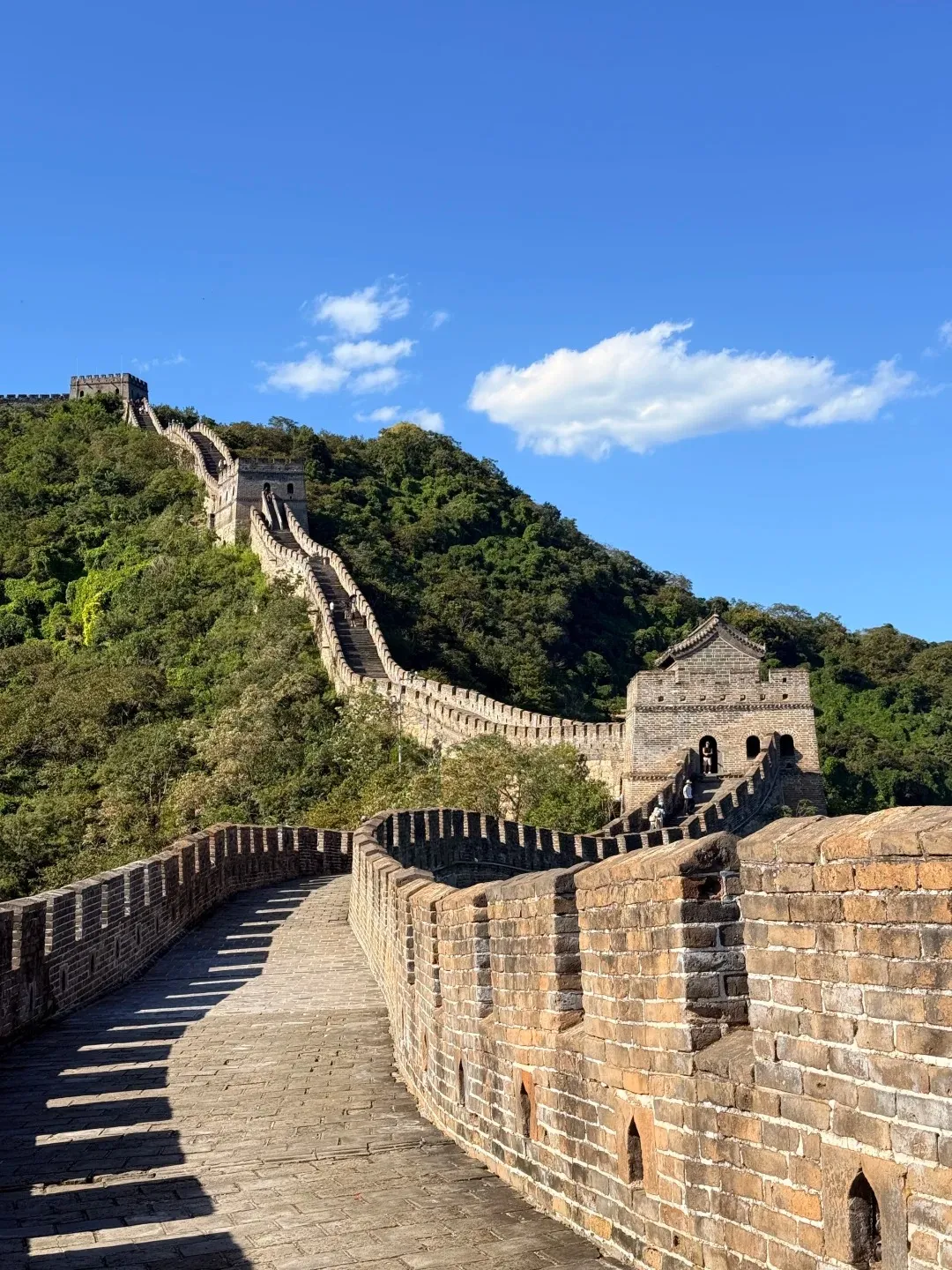
For travelers seeking an adventurous and less crowded experience, the Jiankou section of the Great Wall provides breathtaking views and a challenging hike. Its dramatic, untamed beauty offers a glimpse into a truly wild stretch of this historic wonder.
Simatai: The Night Owl
Simatai is unique because it is the only section open for night tours. It is steep and precipitous, with the famous “Fairy Maiden Tower” perched on a razor-thin ridge. It is located right next to Gubei Water Town, a resort town that, while manufactured, offers comfortable 5-star accommodation.
Insider Tip: Book a stay in Gubei Water Town, take the cable car up to Simatai at dusk, and watch the wall light up as darkness falls. It is a magical, albeit commercialized, experience.
Logistics: Making It Happen in 2026
Getting There
While the high-speed train to Badaling (via the 12306 rail system) is efficient, it drops you right into the crowds. for Mutianyu or Jinshanling, I strongly recommend hiring a private driver (Didi or a pre-booked transfer). It costs more (expect 600-900 RMB for the day), but it saves you hours of navigating bus transfers.
Staying Connected
Navigating to these remote sections requires reliable maps and translation apps. Since the Great Firewall blocks Google and many Western apps, you need a reliable connection solution. Roaming is often expensive and slow.
For 2026 travelers, I recommend using an eSIM that routes traffic through servers outside of China, allowing you to access Instagram, WhatsApp, and Google Maps without a VPN.
💡 Editor’s Pick: We recommend Nomad eSIM for China because it reliably bypasses the Great Firewall with stable speeds. Use code JORICAQLKF at checkout to get $5 USD off your first data plan.
Payment Methods
Do not rely on cash. Even the small vendors selling water at the foot of the wild wall expect digital payment. Before you leave, set up Alipay or WeChat Pay and link your international credit card. It is the only way to pay for your toboggan ticket or that post-hike bottle of water.