



What is the 144-Hour Visa-Free Transit?
The 144-hour visa-free transit policy allows citizens from 54 eligible countries to enter specific Chinese regions, including Beijing and Hebei, for up to six days without a pre-approved visa, provided they hold confirmed onward tickets to a third country. According to the China National Immigration Administration, this is perfect for short camping itineraries.
Choosing Your Spot: Where to Camp Near the Wild Wall
Not all unrestored sections are created equal. You need a location that balances stunning scenery with safe, accessible camping areas.
Jiankou: The Photographer’s Dream
Jiankou is notorious for its steep, jagged white dolomite ridges. It’s wildly photogenic but physically demanding. Insider Tip: Do not attempt to camp on the “Zhengbeilou” watchtower roof. Not only is it technically illegal and heavily monitored in 2026, but the midnight wind chill drops to a biting 5°C (41°F) even in late spring. Instead, hike down to the adjacent village basecamps where local farmers let you pitch a tent safely for about 50 RMB.
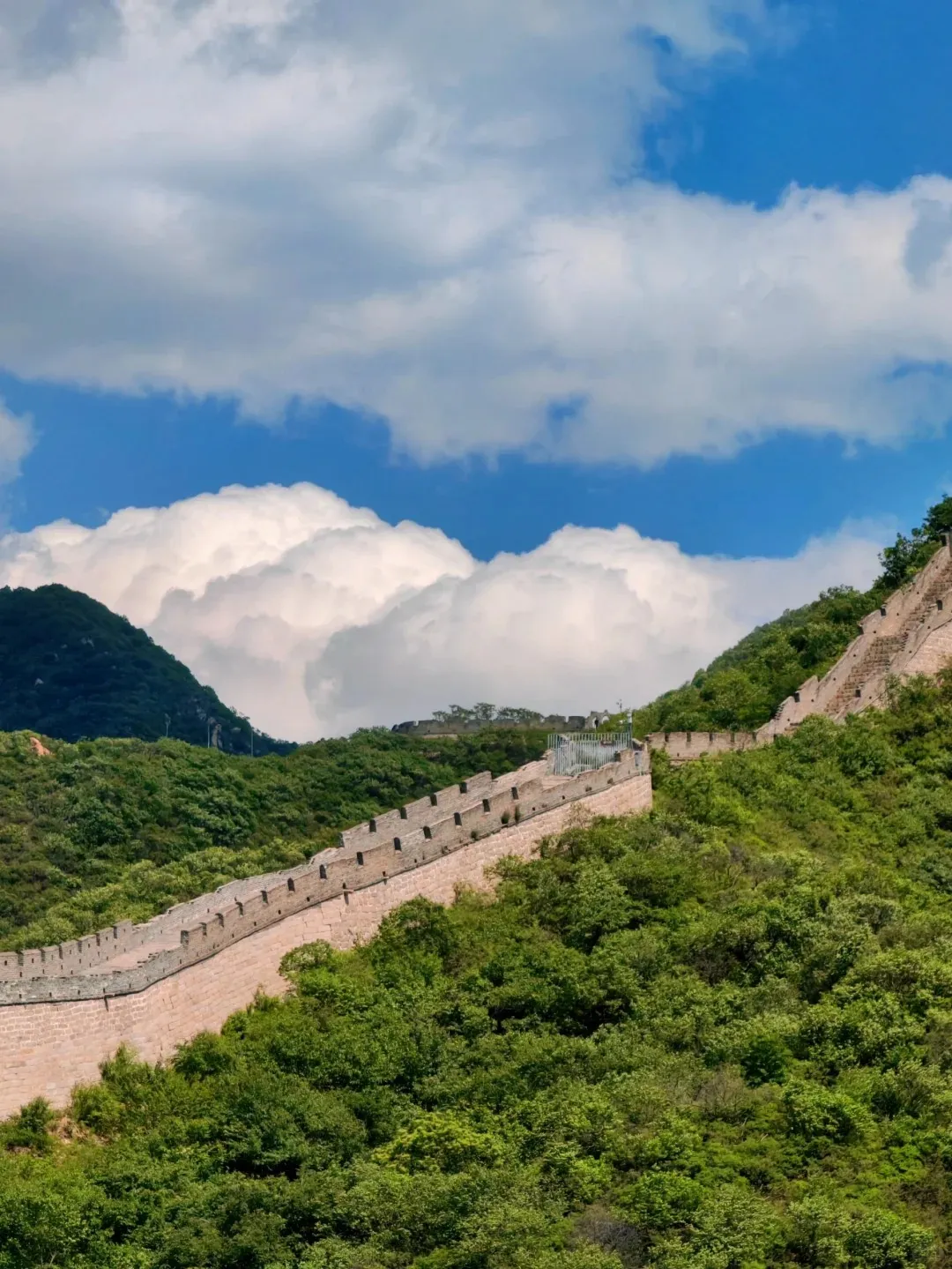
The majestic Great Wall of China, seen here snaking through verdant mountains, offers endless opportunities for exploration. For those seeking an immersive adventure, discover our guide to safely camping on more remote, ‘wild’ sections of this ancient wonder.
Chenjiapu and Gubeikou: The Uncrowded Alternatives
If you want to skip the intense scrambling of Jiankou, head to Gubeikou. It retains its battle-scarred, un-restored charm without the terrifying vertical drops. Is it Worth It? Absolutely. While tourists are elbowing each other at Badaling, Gubeikou offers miles of silent, rolling hills. The smell of wild jujube bushes and the quiet crunch of gravel under your boots make this the ultimate wilderness escape.
Logistics: How to Navigate and Pay in 2026
Getting to the wild sections without a private guide requires a mix of high-speed rail and local ride-hailing. According to the official 12306 China Railway booking system, you can catch a high-speed train from Beijing Chaoyang to Huairou or Miyun stations for under 40 RMB.
Once at the station, you will need the DiDi ride-hailing mini-app (accessed via Alipay or WeChat) to reach the trailhead. Cash is practically obsolete in rural China today, so ensure your foreign credit card is linked to Alipay before you land.
To keep these apps functioning on the mountains, you need seamless cellular data. I highly recommend using a travel eSIM to bypass the local firewall.
💡 Editor’s Pick: We recommend Nomad eSIM for China because it reliably bypasses the Great Firewall with stable speeds. Use code JORICAQLKF at checkout to get $5 USD off your first data plan.
With a solid connection, you can use Baidu Maps (Google Maps is highly inaccurate in rural China) to track your hiking routes and translate signs using WeChat’s built-in scanner.
Essential Gear and Safety: What to Pack
Carrying a heavy pack up 45-degree inclines of crumbling stone is exhausting. Your gear needs to be ultralight and highly functional.
- Footwear: Leave the trail runners at home. You need over-the-ankle hiking boots with deep lugs. The loose rubble on the descents acts like marbles on hard stone.
- Hydration: Bring a 3-liter hydration bladder plus extra bottles. A bottle of water at a village shop costs 2 RMB, but once you hit the trail, opportunistic vendors (if you see them) charge up to 20 RMB.
- Shelter: A freestanding 3-season tent is mandatory. You cannot drive stakes into the stone or hard-packed earth around the watchtowers.
- Leave No Trace (LNT): Pack out all toilet paper and trash. The wild wall has no sanitation facilities, and human waste is becoming a serious issue in the surrounding valleys.
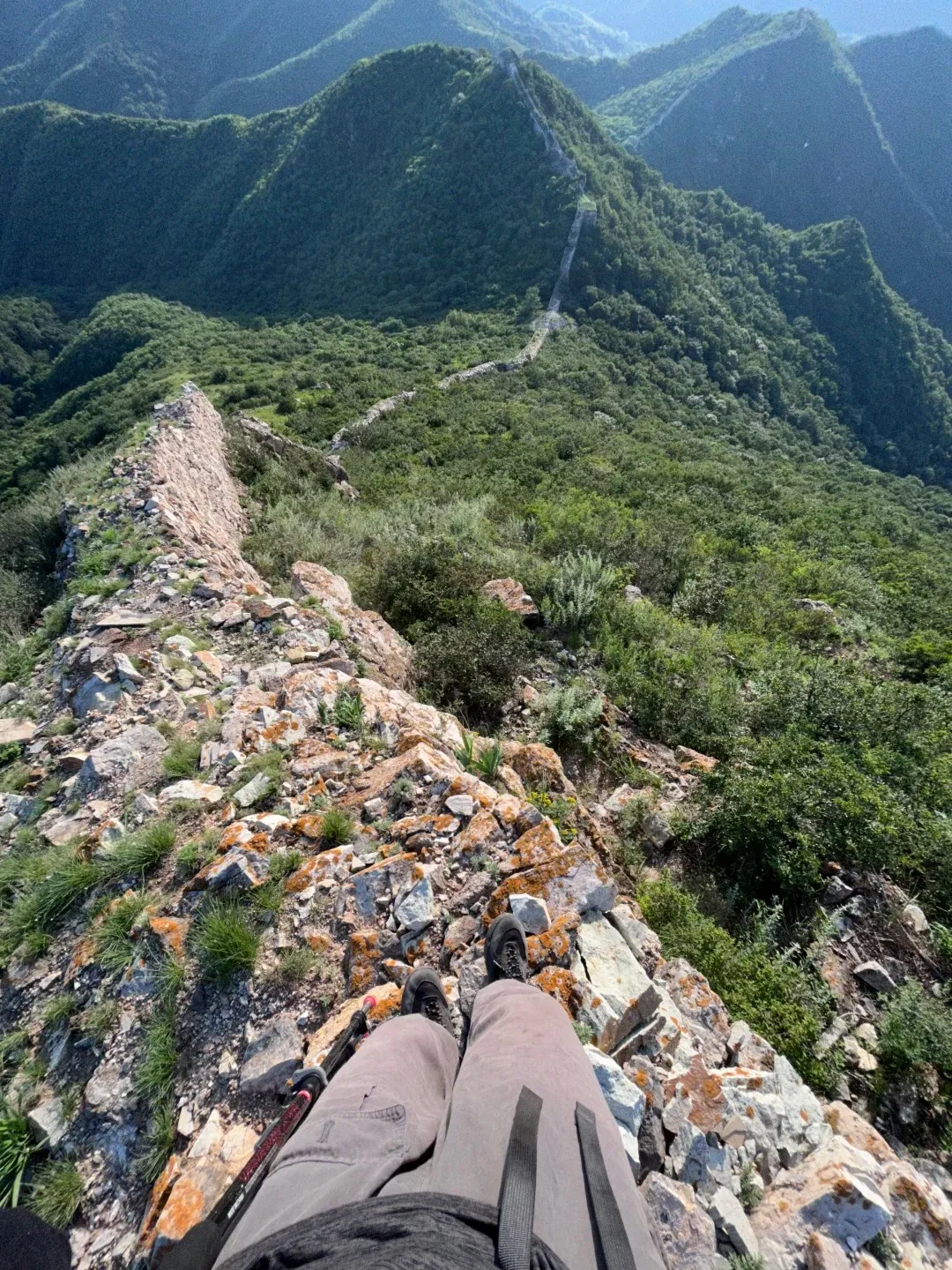
Perched on an authentic, unrestored section of the Great Wall, soaking in the grandeur of nature and history. For an even deeper immersion, consider the adventure of ‘wild’ Great Wall camping – just be sure you’re fully equipped and understand the safety protocols outlined in our guide!