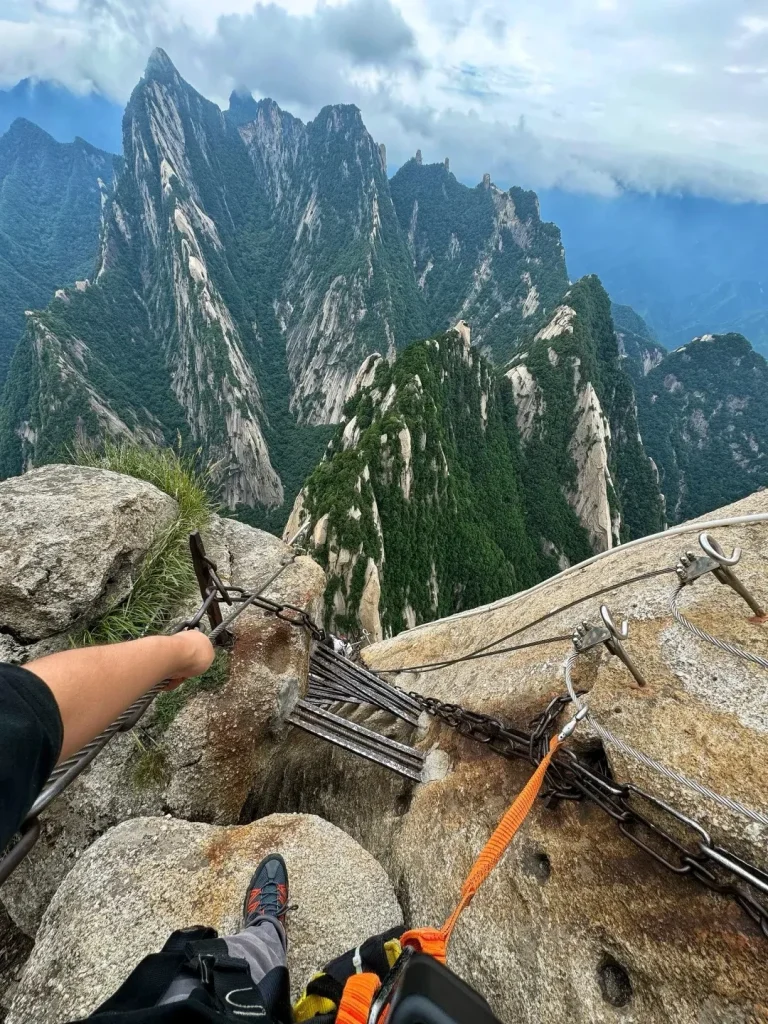



Mapping the Route: The Hexi Corridor
Gansu is long and narrow. Most travelers traverse it from East to West, starting in the capital, Lanzhou, and ending at the edge of the frontier in Dunhuang. While you can fly between cities, the high-speed train is the most reliable way to witness the landscape shift from green loess plateaus to stark, rocky desert.
1. Lanzhou: More Than Just a Layover
Most guides treat Lanzhou as a mere transit hub, but it offers a vital introduction to the region’s cultural blend. The city sits on the Yellow River and has a significant Hui Muslim population.
Insider Tip: Skip the provincial museum if you are short on time, but do not skip a bowl of Lanzhou Lamian (hand-pulled beef noodles). Go to Mazilu or any shop packed with locals before 10:00 AM. The locals eat this for breakfast; by 2:00 PM, the broth in many shops is considered “too old” and they close.
2. Zhangye: The Rainbow Mountains
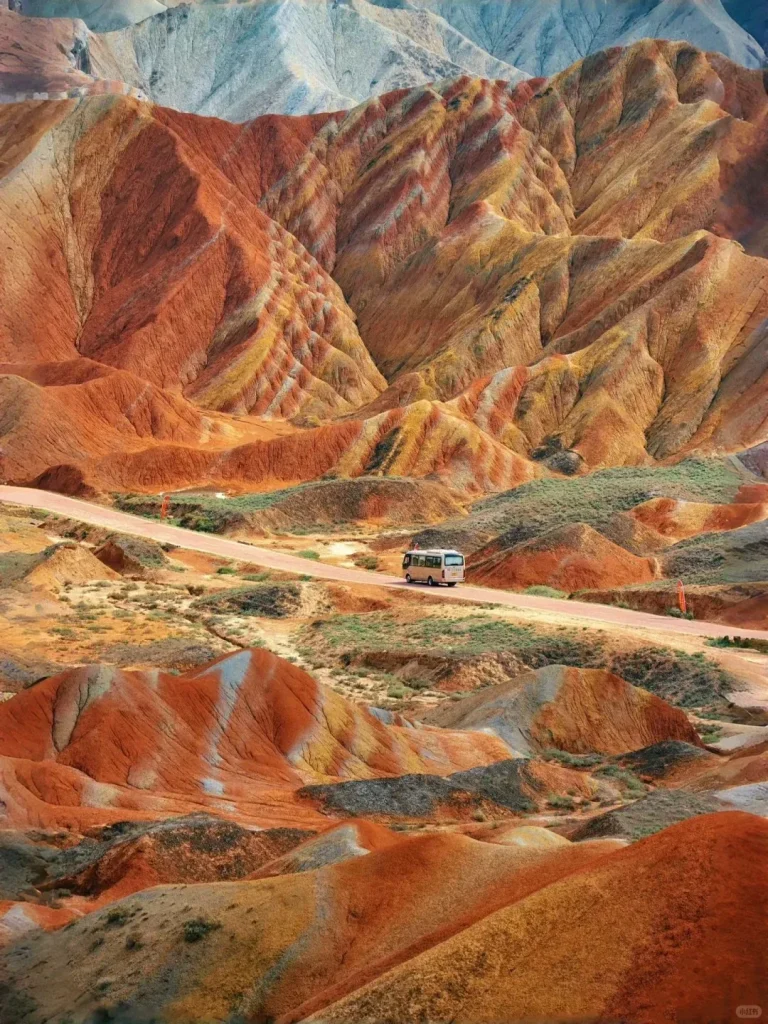
A three-hour high-speed train ride west brings you to Zhangye. The main draw is the Zhangye National Geopark (the Danxia Landforms). The stripes of red, yellow, and orange sandstone look like a spilled spice rack.
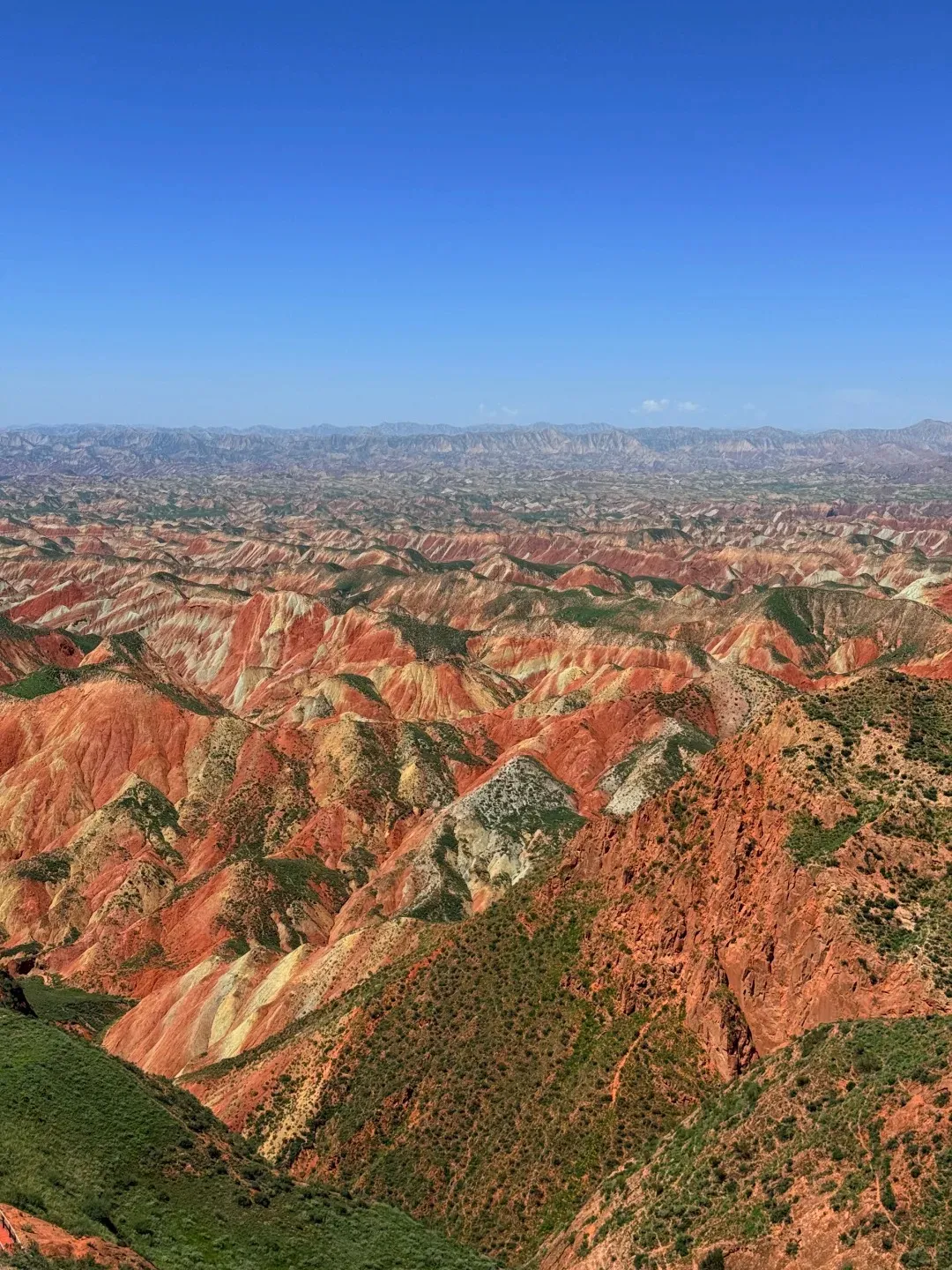
Discover the awe-inspiring ‘Rainbow Mountains’ of Zhangye Danxia Landform Geological Park in Gansu, a breathtaking natural wonder that marks a vibrant stop along China’s ancient Silk Road.
Is it Worth It? Yes, but manage your expectations regarding the crowds. The park operates on a hop-on-hop-off bus system that can be chaotic.
- Strategy: Head directly to Viewing Platform No. 4. It offers the most panoramic views and is the best spot for sunset photography.
- Avoid: The midday sun washes out the colors. You need low-angle light (morning or late afternoon) to see the vibrant stratification.
3. Jiayuguan: The End of the Wall
Jiayuguan Fort marks the western end of the Ming Dynasty Great Wall. Unlike the stone walls of Beijing, the wall here is rammed earth, crumbling into the desert. It is a stark reminder of where “civilization” historically ended and the “wild” began.
Reality Check: The fort itself has been heavily restored and can feel a bit like a theme park. However, the nearby Overhanging Great Wall offers a steep hike with fewer tourists and a more authentic feel of the desolate borderlands.
Dunhuang: The Crown Jewel of the Silk Road
If you only visit one place in Gansu, make it Dunhuang. This oasis city is the gateway to the Taklamakan Desert and holds immense historical weight.
The Mogao Grottoes
These 492 caves carved into a cliff face contain Buddhist art spanning a thousand years. The preservation is miraculous given the desert environment.
Crucial Booking Advice: There are two types of tickets:
- “A” Tickets (Normal): Includes a digital movie and access to 8 caves with a guide. Must be booked 30 days out.
- “B” Tickets (Emergency): Released when A tickets sell out. Includes only 4 caves and no guide.
Do not rely on showing up the day of. If you miss the booking window, you will likely be stuck with a “B” ticket, missing the most impressive interiors.
The Singing Sand Dunes & Crescent Lake
Just 6km south of the city, huge dunes loom over a natural crescent-shaped spring. It is undeniably touristy—you can ride camels, slide down dunes, and fly in gliders—but the geography is stunning.
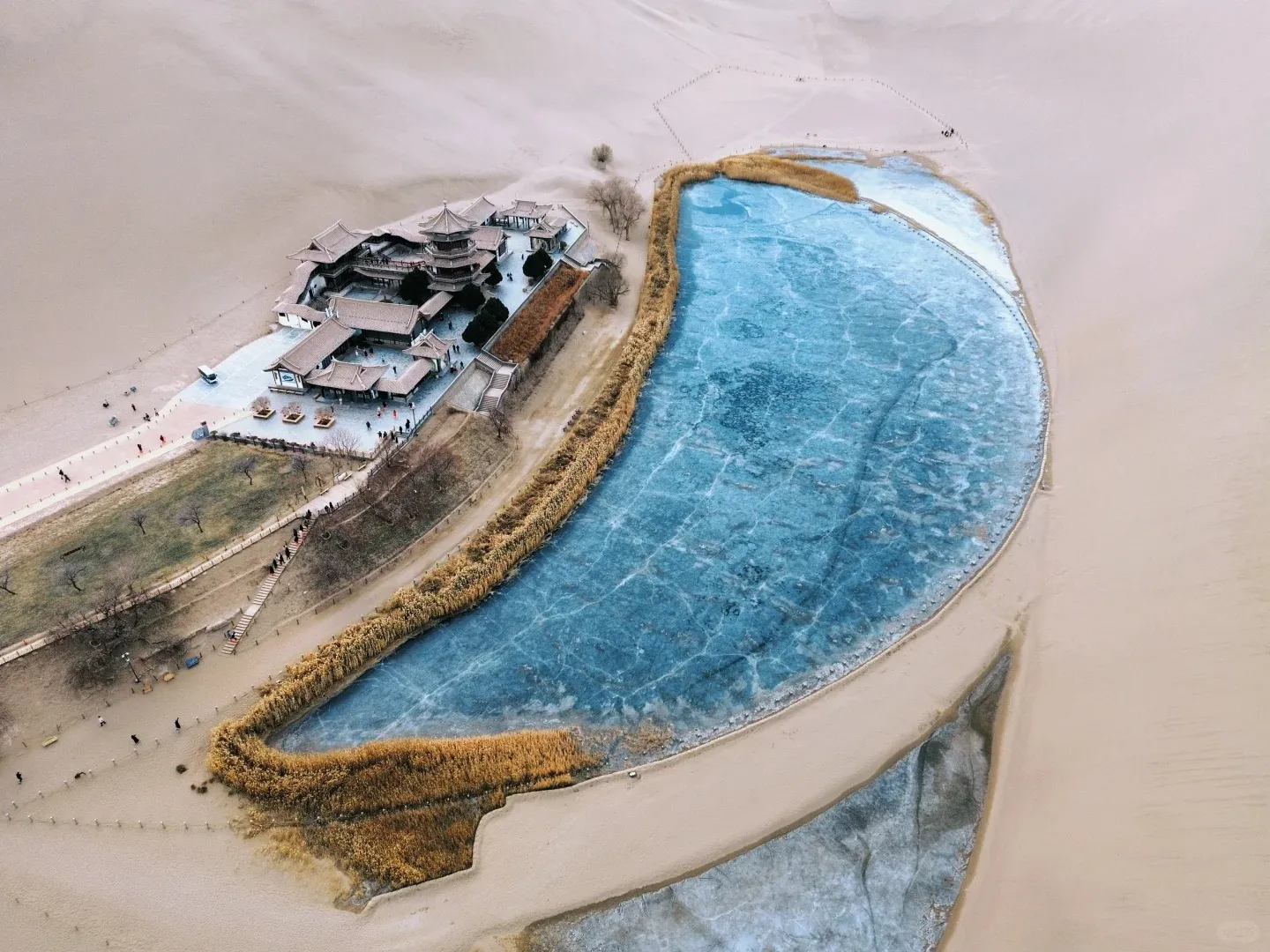
A breathtaking aerial view reveals Dunhuang’s legendary Crescent Lake (Yueyaquan), an enduring oasis nestled amidst the Mingsha Mountain sand dunes. This vital stop along the ancient Silk Road in Gansu Province has provided solace and beauty to travelers for centuries, miraculously resisting the desert’s embrace.
Insider Tip: Buy shoe covers (bright orange gaiters) at the entrance to keep sand out of your boots. It looks silly, but you will regret it if you don’t. Also, stay for sunset, but be prepared for the temperature to drop 10°C (18°F) the moment the sun disappears.
Practical Logistics for 2026
Digital Survival & Connectivity
You cannot survive in China without a smartphone. You will need it to order food, book taxis (via Didi inside the Alipay app), and translate menus. However, the “Great Firewall” blocks most Western apps.
What is an eSIM?
An eSIM is a digital SIM card that allows you to activate a cellular plan from your carrier without having to use a physical nano-SIM. For China, you need one specifically designed to route traffic through servers outside of mainland China to bypass censorship.
💡 Editor’s Pick: We recommend Nomad eSIM for China because it reliably bypasses the Great Firewall with stable speeds. Use code JORICAQLKF at checkout to get $5 USD off your first data plan.
Understanding Visas
What is the 144-Hour Visa-Free Transit?
This policy allows travelers from 54 countries to enter specific Chinese ports for up to 6 days without a visa, provided they have a confirmed ticket to a third country.
Warning for Gansu: As of 2026, the 144-hour policy generally applies to major hubs like Xi’an (Shaanxi province). While you can enter via Xi’an, you are usually restricted to travel within that province. To travel freely through Gansu (Lanzhou, Dunhuang), most travelers still require a standard L-Visa (Tourist Visa) obtained from a Chinese consulate before departure. Always check the latest entry requirements on the official National Immigration Administration website.
Trains and Ticketing
Do not use third-party agents that charge high commissions. Download the official Trip.com app (international version of Ctrip) or the Railway 12306 app (the official government rail app, now available in English). Train tickets open for sale 15 days in advance. For the popular Lanzhou to Zhangye route, book exactly when they open.