


Day 1: Arrival & Guilin City Highlights
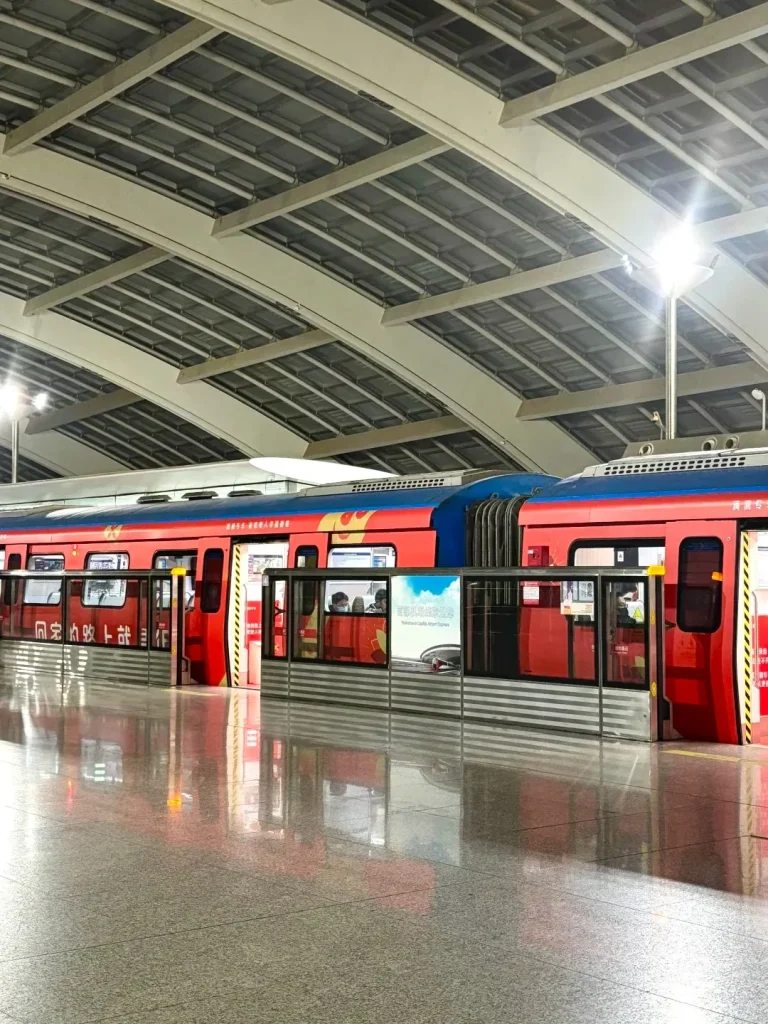
Guilin acts as the transit hub for the region. While many travelers rush immediately to Yangshuo, the city itself offers a gentle introduction to the region’s geography. Arrive via Guilin Liangjiang International Airport (KWL) or high-speed train into Guilin North (Beizhan) or Guilin West (Xizhan) stations.
Logistics: Getting to the City
The airport is about 45 minutes from the city center. Avoid the unmarked drivers in the arrivals hall. Instead, use the Didi (ride-hailing) mini-app inside Alipay to book a car directly to your hotel. It is safer, trackable, and eliminates language barrier pricing disputes.
Afternoon: Reed Flute Cave
Head straight to the Reed Flute Cave. Unlike many “tourist trap” caves, this massive limestone formation is impressive due to its scale. It stays a cool 20°C (68°F) year-round, making it a perfect escape from Guilin’s humidity.
Insider Tip: The neon lighting inside is aggressively colorful—a distinct Chinese aesthetic choice. If you are a photographer, bring a tripod and shoot long exposures to soften the harsh purples and greens.
Evening: Elephant Trunk Hill & The Pagodas
Walk along the river to see Elephant Trunk Hill. Honestly, paying the entrance fee to climb it is often not worth the crowds. The best view is actually from the riverside promenade across the water.
Mistake to Avoid: Do not pay to climb the Sun and Moon Pagodas. The interiors are modern and underwhelming (elevators and gift shops). Instead, view them from the shore of Shan Lake at night when they are illuminated in gold and silver lights.
Day 2: The Longji Rice Terraces Detour
The Longji (Dragon’s Backbone) Rice Terraces are located in Longsheng County, about a 2-hour drive north of Guilin. This day trip requires a private driver or a pre-booked shuttle, as public bus transfers are complex and time-consuming.

Witness the breathtaking beauty of the Longji Rice Terraces during the autumn harvest, where golden fields flow like ribbons across the mountains – a truly unforgettable stop on your Guilin and Yangshuo itinerary.
Choosing Your Village: Ping’an vs. Dazhai
You must choose one entrance, as they are far apart:
- Ping’an Village: More developed, easier to hike (about 2 hours), and closer to the entrance. Ideal for families or those with limited mobility.
- Dazhai (Jinkeng) Village: Further away, features a cable car, and offers grander, more dramatic scales of terraces. It is better for photographers and serious hikers.
The Hike: Ping’an to Ancient Zhuang
For a less crowded experience, take the hiking route from Ping’an Village to the Ancient Zhuang Village. This path takes about 1 hour and avoids the tour bus crowds that congregate at the main Ping’an viewpoints. You will walk through the fields rather than just looking at them.
Food Recommendation: For lunch, try the local specialty, Bamboo Tube Rice. The rice, mixed with peanuts and bacon, is cooked inside a fresh bamboo stalk over an open fire, infusing the grain with a woody, green aroma.
Day 3: The Li River Cruise to Yangshuo
This is the centerpiece of any Guilin Yangshuo itinerary. You will travel 83 kilometers (52 miles) downriver from Guilin to Yangshuo.
The Cruise: 3-Star vs. 4-Star Boats
The boats depart from Zhujiang Wharf (for 4-star) or Mopanshan Wharf (for 3-star) around 9:00 AM – 9:30 AM. According to official ticketing tiers, the 4-star cruise is the superior choice for Western travelers.
- 3-Star: Bench seating, crowded (often 100+ people per deck), simple Chinese box lunch, limited deck space.
- 4-Star: Cushioned seating (fewer passengers), buffet lunch, cleaner restrooms, and significantly better viewing decks for photography.
Afternoon: Xianggong Hill
The cruise arrives in Yangshuo around 1:30 PM. Drop your bags at your hotel and head immediately to Xianggong Hill. It requires a 15-minute climb up steep stairs, but it offers the most iconic bird’s-eye view of the Li River bend—the image seen on postcards.
Evening: West Street or Impression Liu Sanjie
West Street is the heart of Yangshuo but has become incredibly commercialized and loud. If you dislike thumping club music, grab a quick dinner (try the Beer Fish, a local staple) and leave.
Alternatively, watch the Impression Liu Sanjie night show. Directed by Zhang Yimou (who directed the Beijing Olympics opening ceremony), the stage is the Li River itself, with karst peaks as the backdrop. It is a spectacle worth the ticket price.
Day 4: Yulong River & Departure
Yangshuo has two main rivers. The Li River is for the big cruise boats; the Yulong River is for quiet bamboo rafting and cycling.
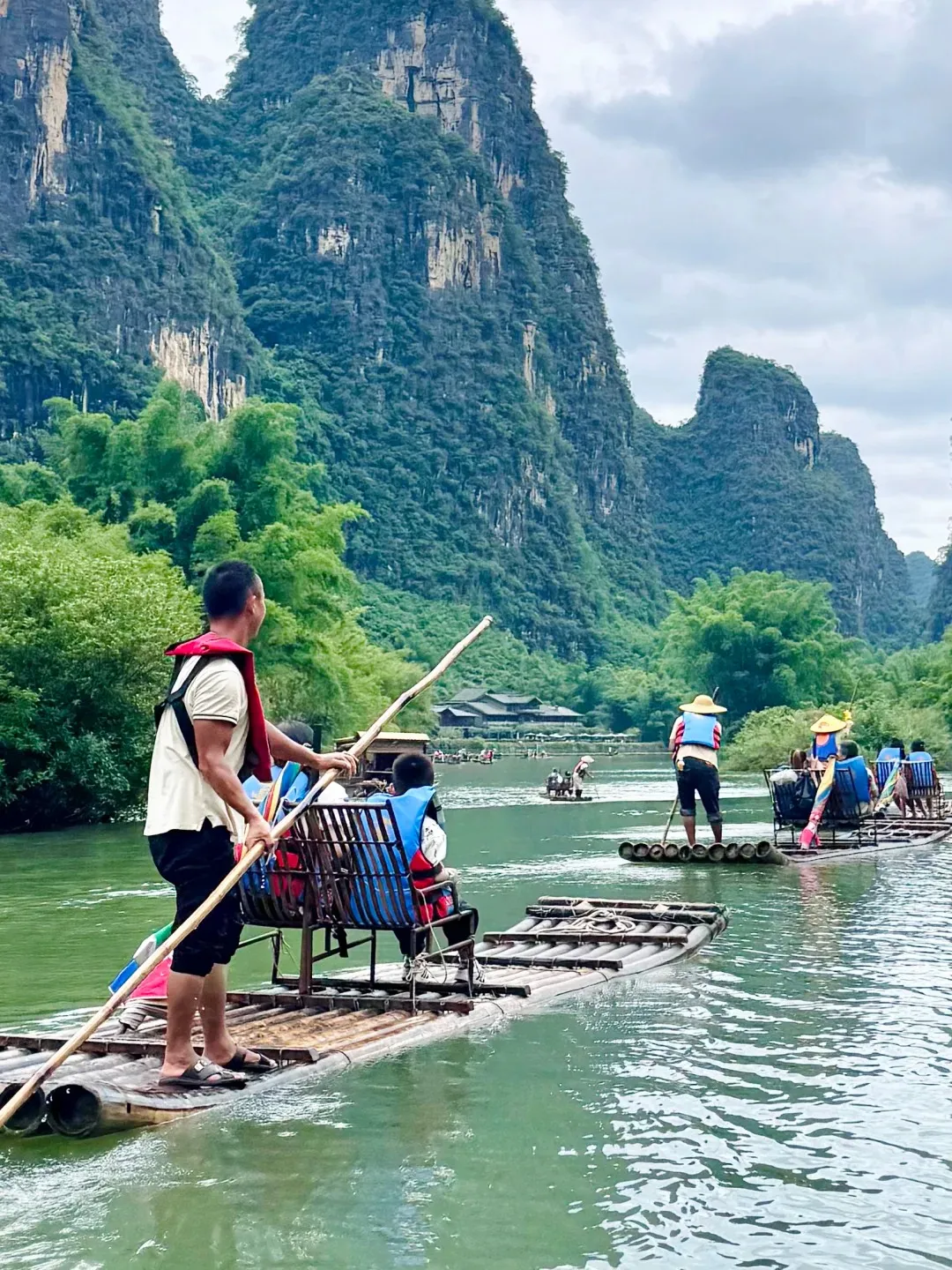
A serene bamboo raft trip down the Yulong River is an unforgettable experience, offering unparalleled views of Yangshuo’s dramatic karst peaks. It’s a highlight of the river cruises recommended in our 4-day Guilin and Yangshuo itinerary.
Morning: The Yulong Bamboo Raft
contrarian Tip: Skip the motorized rafts on the Li River (Xingping stretch) which are noisy and smell of diesel. Instead, book a raft on the Yulong River from Jinlong Bridge. These rafts are hand-poled by boatmen. The silence allows you to hear the water and birds, providing a truly zen experience.
Mid-Day: Cycling the Countryside
Rent an electric scooter or bicycle (widely available at hotels). The roads along the Yulong River are restricted to non-motorized traffic (and e-scooters), making them safe and peaceful. Ride through the Ten-Mile Gallery, but feel free to turn off onto smaller dirt paths to see farmers tending to water buffalo and pomelo orchards.
Departure
To leave, take a high-speed train from Yangshuo Station (located in Xingping, 40 minutes from Yangshuo town) or book a private transfer back to Guilin Airport (approx. 70 minutes).
Practical Planning Guide
What is the 144-Hour Visa-Free Transit?
The 144-hour visa-free transit policy allows travelers from 54 countries (including the US, UK, Canada, and EU) to enter Guilin without a visa for up to 6 days, provided they hold a ticket to a third country/region (e.g., USA -> Guilin -> Hong Kong). You must arrive and depart from Guilin Liangjiang Airport.
Connectivity & Apps
The “Great Firewall” blocks Google, Instagram, Facebook, and WhatsApp.
- Before you fly: Install an eSIM (like Airalo) or a reliable VPN (Astrill is currently the most consistent in China).
- Translation: Download the offline package for Chinese in Google Translate or use the DeepL app.
- Transport: The Trip.com app is essential for booking train tickets and checking schedules in English.