


Phase 1: Renting Your Bike (The Logistics)
Don’t rent a bike in downtown Yangshuo (West Street) if you plan on cycling the river one-way. The logistics of returning it are a hassle. Instead, take a Didi (ride-share) to your starting point and rent from a local villager or guesthouse.
Choosing Your Ride:
- Mountain Bike (Recommended): The Yulong paths are paved but bumpy. Shocks are your friend. Cost: ~40 RMB/day.
- Vintage Sidecar: Great for Instagram, terrible for legs. Only rent these for short distances on flat ground.
- E-Scooters: technically banned on certain ecological paths right along the water, though enforcement is sporadic. If you rent one, stick to the slightly larger village roads (Y-roads) to avoid fines.
Insider Tip: Check the brakes immediately. Rental maintenance standards in rural Guangxi are “relaxed.” Squeeze both levers hard before you hand over your deposit. If they feel spongy, ask for a different bike.
Phase 2: The Route Breakdown
Many guides suggest starting at the Yulong Bridge (Dragon Bridge). I disagree. Yulong Bridge is the epicenter of mass tourism, clogged with buses and aggressive hawkers. For a superior experience, start at Jiuxian Village.
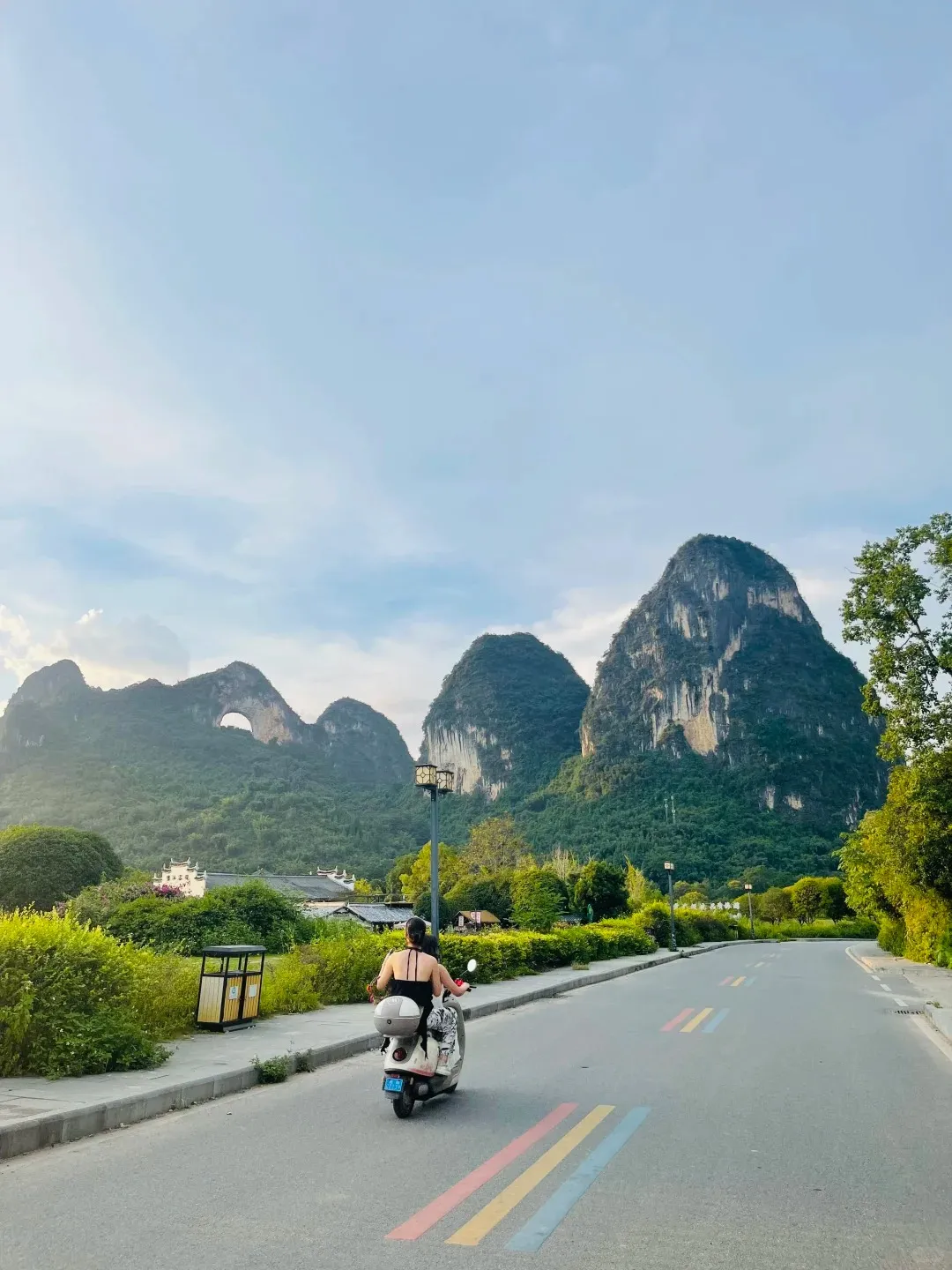
While the Yulong River is famous for its serene bamboo raft trips, the surrounding Yangshuo countryside offers breathtaking routes for cyclists and scooter riders alike. Keep an eye out for iconic landmarks like Moon Hill as you explore!
Leg 1: Jiuxian to the Weirs (The “Secret” Path)
Start your ride at the ancient village of Jiuxian. Navigate toward the river until you hit the red/brown paved ecological trail. Turn South (downstream).
This section is characterized by rice paddies on your right and the jade-green river on your left. You will encounter several “weirs” (small dams). These are fantastic photo ops. In previous years, you could ride across the top of them, but as of 2026, safety rails have been installed on many, requiring you to dismount and walk your bike across.
Leg 2: The Bamboo Raft Junctions
As you cycle south, you will pass the Shui’edi Wharf. This is where many bamboo rafts dock. The path here can get chaotic with tourists disembarking. Ring your bell politely but persistently.
The “Raft & Ride” Dilemma: A common question is, “Can I put my bike on the bamboo raft?” The official answer is no. However, entrepreneurial locals at the docks will offer to transport your bike to the end point on a motorized rickshaw for 20 RMB while you enjoy the raft. I generally advise against this unless you are tired; the cycling path is more scenic than the view from the low-lying raft in this specific section.
Leg 3: Gongnong Bridge (The Finish Line)
The trail eventually merges near the Gongnong Bridge. This bridge offers the classic “postcard” view of bamboo rafts drifting through the valley. It is the natural end point of the Yulong scenic trail before it hits the main road (G321).
Navigation and Connectivity
Getting lost in the rice paddies is part of the charm, until you need to get back for dinner. The signage along the river is inconsistent, often fading from English to Mandarin characters unexpectedly.
To navigate effectively, you need reliable mobile data to access Amap or Apple Maps. Do not rely on hotel Wi-Fi maps or paper maps, which are often outdated regarding closed paths.
💡 Editor’s Pick: We recommend Nomad eSIM for China because it reliably bypasses the Great Firewall with stable speeds. Use code JORICAQLKF at checkout to get $5 USD off your first data plan.
When to Go: Beating the Crowds and Heat
Yangshuo is subtropical. In the summer months (May–September), the humidity is suffocating by 11:00 AM.
- The Morning Strategy (7:00 AM – 10:00 AM): This is the golden window. The water is glass-still (perfect for reflections), and the tour buses from Guilin haven’t arrived yet. You will have the path largely to yourself.
- The Sunset Strategy (5:00 PM – 7:00 PM): The light hits the karst peaks horizontally, creating dramatic shadows. However, be careful not to stay out too late; the ecological paths have zero streetlights, and riding in pitch black next to a river is dangerous.
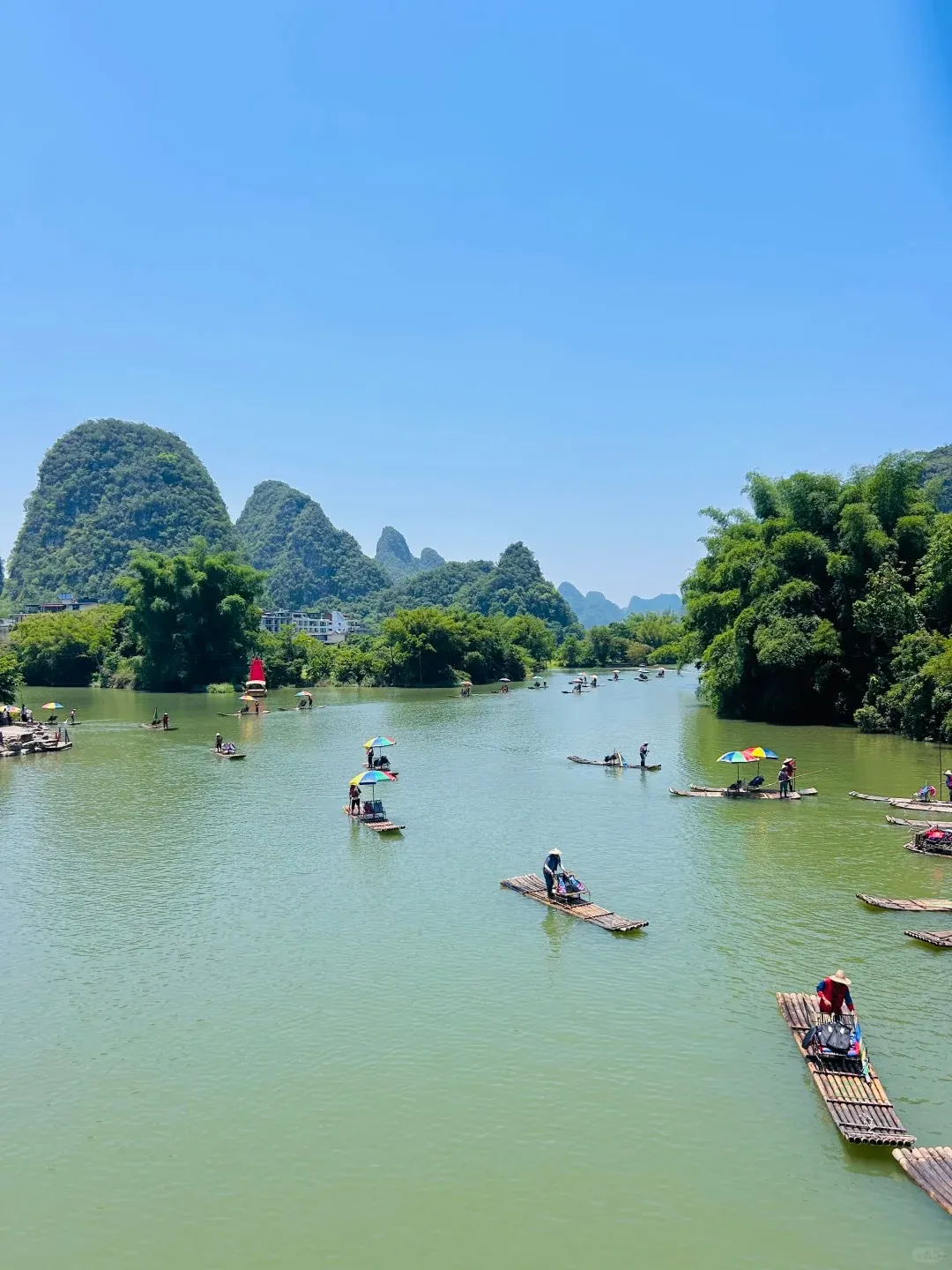
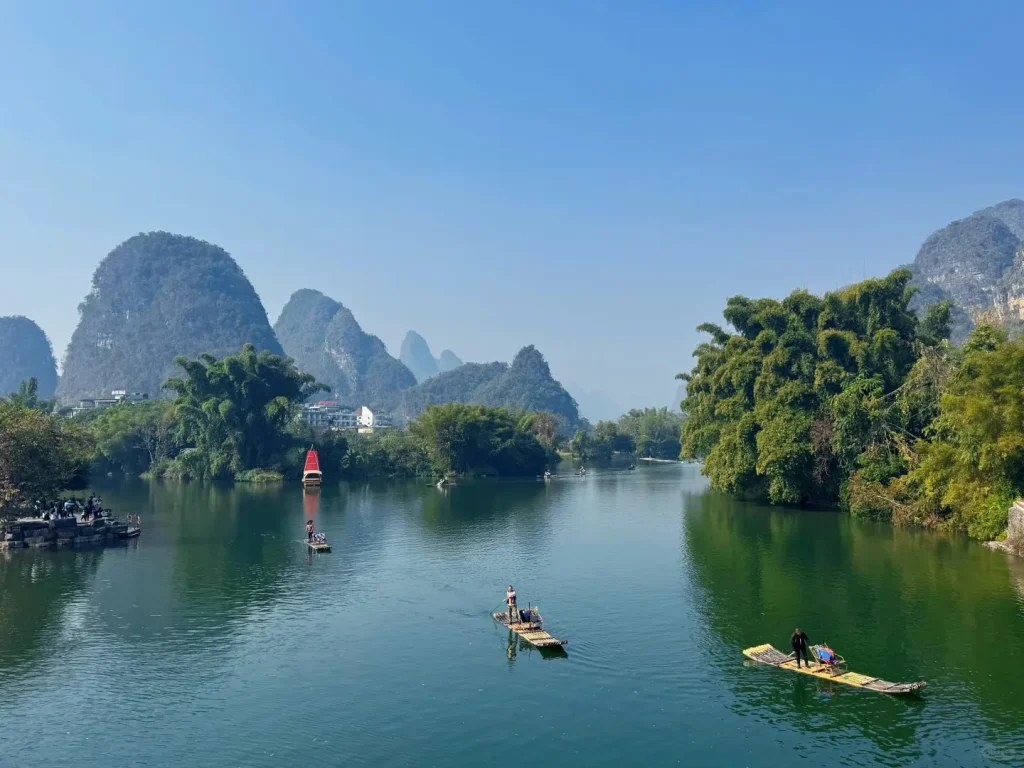
Beyond the cycling paths, a tranquil bamboo raft trip along the Yulong River offers a unique, serene perspective of Yangshuo’s iconic karst peaks, making it a perfect complement to your scenic route adventure.
Safety and Local Etiquette
The “Silent” Threat: Electric scooters are ubiquitous in China and they are silent. Always stay to the right side of the path. If you stop for a photo, pull your bike completely off the pavement. Locals commuting between villages often ride fast and expect tourists to be unpredictable.
Hydration: There are small stalls every 2km selling water and soda. In 2026, the average price for a bottle of water on the trail is 5–8 RMB (inflated from the standard 2 RMB in town). Bring small denominations of cash or have your WeChat Pay ready, as signal can be weak for vendors’ QR codes.