


What is the difference between Hohhot and Hulunbuir Grasslands?
Hohhot (Xilamuren/Huitengxile) is the capital hub, offering accessible, “tourist-ready” grassland parks within a 2-hour drive, often featuring concrete yurts and heavy crowds. Hulunbuir (Hailar) is located 1,000 miles northeast near the Russian border; it preserves the ecological integrity of the steppe, offering vast, lush wilderness and authentic nomadic history, but requires more travel time and budget.
Choosing Your Destination: The Tourist Park vs. The Wild North
Your experience hinges entirely on which region you choose. Here is the honest breakdown.
Option A: Hohhot (Xilamuren & Huitengxile)
Best for: Weekend trippers from Beijing, budget travelers, and those short on time.
Located close to the capital city of Hohhot, these grasslands are easy to reach via a short flight or high-speed train from Beijing. However, be warned: Xilamuren is notorious for desertification. In dry years, the “grassland” can look more like a gravel plain.
The Experience: Expect large tour buses, horse rides on a fixed track, and evening bonfire parties that feel choreographed. It is convenient, but it lacks the silence and majesty of the deep steppe.
Option B: Hulunbuir (The Gold Standard)
Best for: Photographers, nature lovers, and adventure seekers.
This is the “Windows XP wallpaper” scenery. Located in the far northeast, bordering Russia and Mongolia, Hulunbuir is the best-preserved prairie in China. The grass here is lush, rivers wind like blue ribbons, and the air smells of wild sage and damp earth.
contrarian Tip: If you are flying all the way to China for nature, skip Hohhot entirely. The extra cost to fly to Hailar (the gateway to Hulunbuir) pays off in scenery that actually matches your imagination.
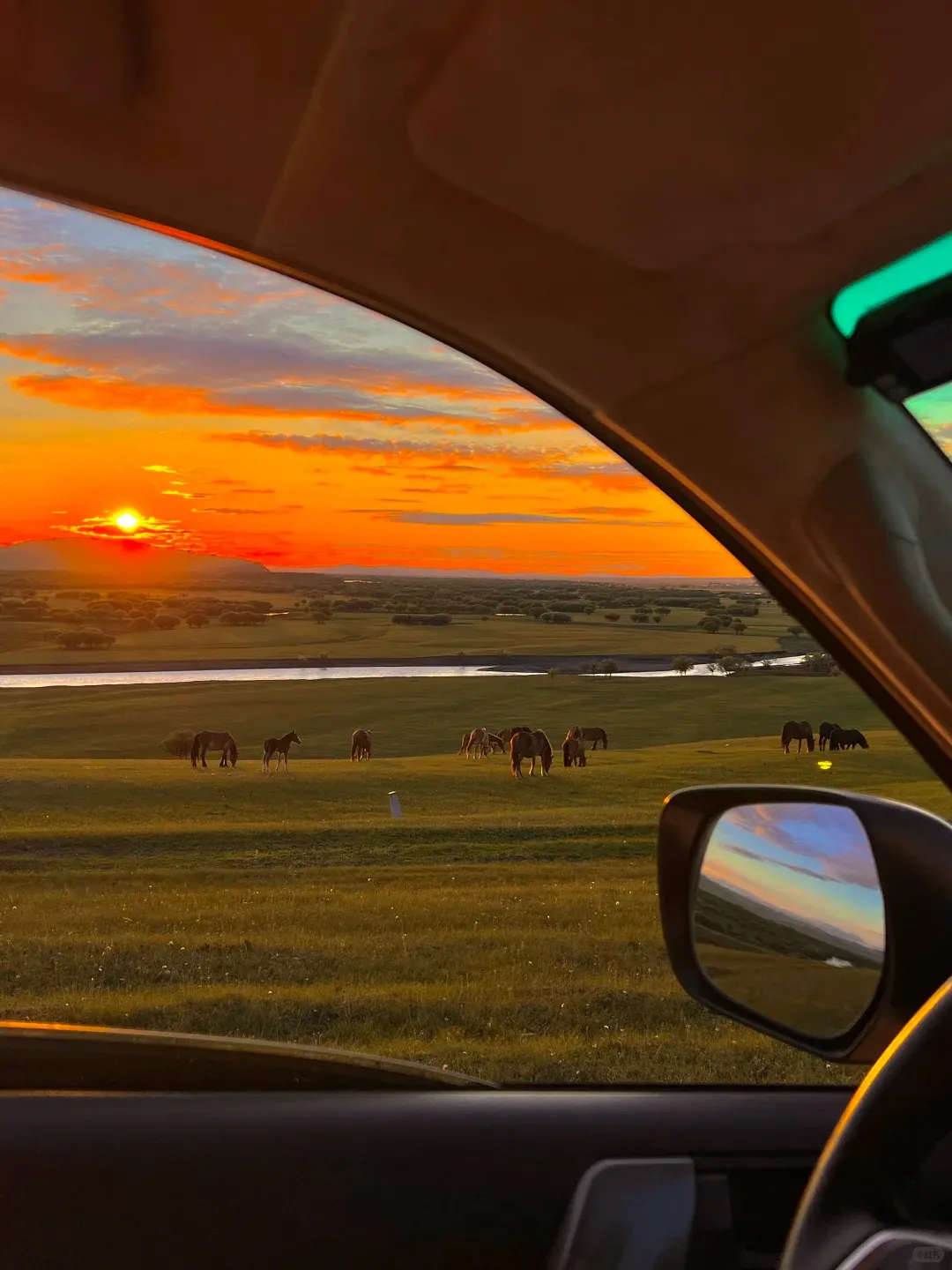
Witnessing wild horses graze under a fiery sunset is just one of the unforgettable moments awaiting you on a road trip through China’s Hulunbuir Grasslands. Our guide helps you plan your journey from Hohhot.
Logistics: Getting There and Getting Around
Flights vs. Trains
To Hulunbuir: You will likely fly into Hailar Dongshan Airport (HLD). Direct flights exist from Beijing (2 hours) and Hohhot.
Insider Note: In July and August, flight prices skyrocket. Book at least 6 weeks out.
The Train Option: There are no bullet trains to Hailar. The “K” trains (slow trains) from Beijing take nearly 30 hours. While cheap, this is grueling. However, if you are traveling within the region, the overnight train from Harbin to Hailar is a classic experience.
According to official 12306 rail policy, ticket sales open 15 days in advance. For summer routes to Inner Mongolia, sleeper berths sell out in seconds. You must use a “snatch” (pre-booking) service on apps like Trip.com or have an agent book the moment they release.
Navigating the Steppe
Once you arrive in Hailar or Hohhot, you cannot simply hail a taxi to the grasslands. The distances are massive—often 200km between towns without cell signal.
- Private Driver: The most efficient option. Expect to pay 600–1000 RMB ($85–$140 USD) per day for a car and driver.
- Tours: Small group tours are safer for solo travelers. Ensure the itinerary includes the Morigele River and the Russian ethnic township of Enhe.
Accommodation: The Truth About Staying in a Yurt
Staying in a Mongolian yurt (ger) is a bucket-list item, but you need to manage your expectations regarding comfort.
Modern vs. Traditional Yurts
Most “tourist yurts” are actually concrete structures built to look like tents, featuring ensuite bathrooms and air conditioning. These are comfortable but lack charm. Traditional yurts are felt-lined wood lattices. They smell of sheep wool and woodsmoke—an authentic sensory detail you won’t forget.
Mistakes to Avoid
- The Hot Water Trap: Many yurt camps use solar heating. If you shower after sunset, the water will be freezing. Shower immediately upon arrival in the afternoon.
- Bugs: You are in nature. Earwigs and beetles are common guests in traditional yurts. Keep your luggage zipped tight.
- Toiletries: Yurt camps rarely provide towels or soap. Bring your own quick-dry towel.
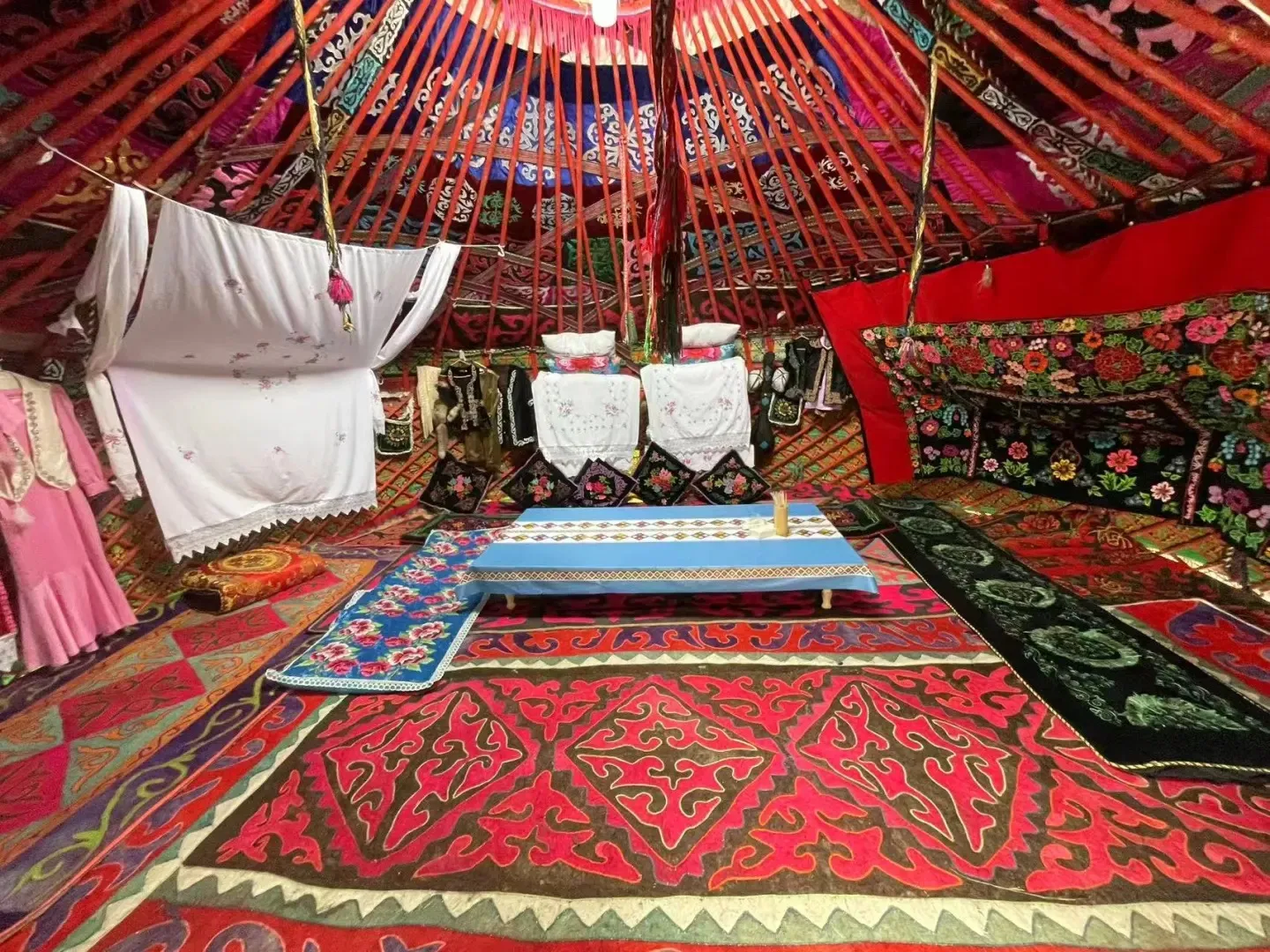
Beyond the endless horizons of China’s grasslands, a stay in a beautifully decorated traditional yurt like this offers an immersive cultural experience for visitors exploring regions from Hohhot to Hulunbuir.
When to Go: Weather and Crowds
The Golden Window: June to August
This is the only time the grass is vibrant green. Average temperatures hover around 25°C (77°F) during the day but can drop to 10°C (50°F) at night. Pack layers.
The “Shoulder” Warning: May and September
May: Avoid this month. The grass hasn’t turned green yet, and brown dust storms are common.
September: The “Golden Season.” The grass turns yellow, and the birch forests of the Greater Khingan Range turn fiery orange. It is beautiful, but freezing at night.
Mosquitoes
In Hulunbuir, particularly near the wetland areas of Erguna, the mosquitoes are legendary. They are large and aggressive. Bring DEET-based repellent; herbal stickers will not work here.
Costs and Practical Tips
- Food Costs: Mutton is the staple. A “Roasted Whole Lamb” feast can cost 2,000+ RMB, but standard meals are affordable. A bottle of water in a tourist area might cost 5 RMB (double the city price).
- Connectivity: Buy a local SIM card (China Mobile has the best rural coverage). Google Maps does not work well here; download Baidu Maps or Gaode Maps for navigation, and use a translation app for menus.
- Visas: Inner Mongolia is not eligible for the 144-hour visa-free transit unless you are staying within specific transit zones (which usually excludes the deep grasslands). You likely need a standard L-Visa.