
7-Day Classic Tibet Itinerary: Lhasa to Everest Base Camp Route

Standing at the foot of Mount Everest is the ultimate bucket-list experience, but the journey there is just as significant as the destination. This route isn’t just a drive; it is a gradual ascent through the heart of the Himalayas, designed to keep you safe from altitude sickness while exposing you to the raw spirituality of the Tibetan Plateau.

Planning a 7-Day Classic Tibet Itinerary: Lhasa to Everest Base Camp Route requires more than just booking a flight. It involves navigating complex permit laws, understanding acclimatization, and preparing for long days on the road. This guide cuts through the noise to give you the logistical realities and sensory details you need to know before you go.

Quick Summary: Key Takeaways

  • The “Golden Rule” of Altitude: Spend at least 3 days in Lhasa (3,650m) before ascending to Everest Base Camp (5,200m) to prevent severe AMS.
  • Permit Reality: You cannot travel independently. A Tibet Travel Permit (TTP) is mandatory and must be arranged by a licensed tour agency at least 20 days in advance.
  • Best Time to Go: April to May and September to October offer the clearest views of Everest. Summer (July/August) brings monsoon clouds that often obscure the peak.
  • The Return Leg Trick: To fit this into 7 days, take the high-speed train from Shigatse back to Lhasa on the final day (2.5 hours) instead of driving (6+ hours).
  • Toilet Situation: Expect squat toilets with no running water outside of Lhasa and Shigatse. Bring your own toilet paper and hand sanitizer.

Summarize with :

Phase 1: Acclimatization in the Holy City

Day 1: Arrival in Lhasa (3,650m)

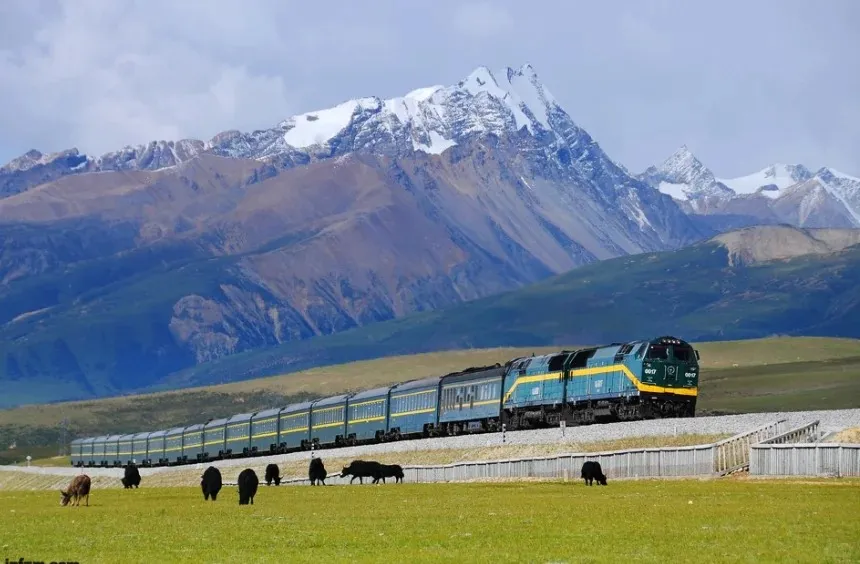
Whether you arrive by the scenic train from Xining or fly in from Chengdu, your only goal today is rest. The air here contains roughly 65% of the oxygen found at sea level.

Insider Tip: Do not shower on your first night. The heat and steam can dilate your blood vessels and accelerate heart rate, worsening altitude headaches. Drink warm water and sleep.

Day 2: Drepung and Sera Monasteries

Today is about testing your legs without overexertion. You will visit two of the “Great Three” Gelugpa university monasteries.

  • Morning (Drepung Monastery): Once the largest monastery in the world. The walking here involves slopes, so take it slow.
  • Afternoon (Sera Monastery): The highlight here is the Monk Debates held in the courtyard between 3:00 PM and 5:00 PM. Unlike the silent meditation you might expect, this is loud, physical, and energetic.

Mistake to Avoid: Don’t take photos of the monks debating with professional cameras without permission. Smartphone snaps are usually tolerated from a distance, but be respectful.

Day 3: The Potala Palace and Jokhang Temple

Now that you have adjusted slightly to the thin air, you tackle the stairs of the Potala Palace.
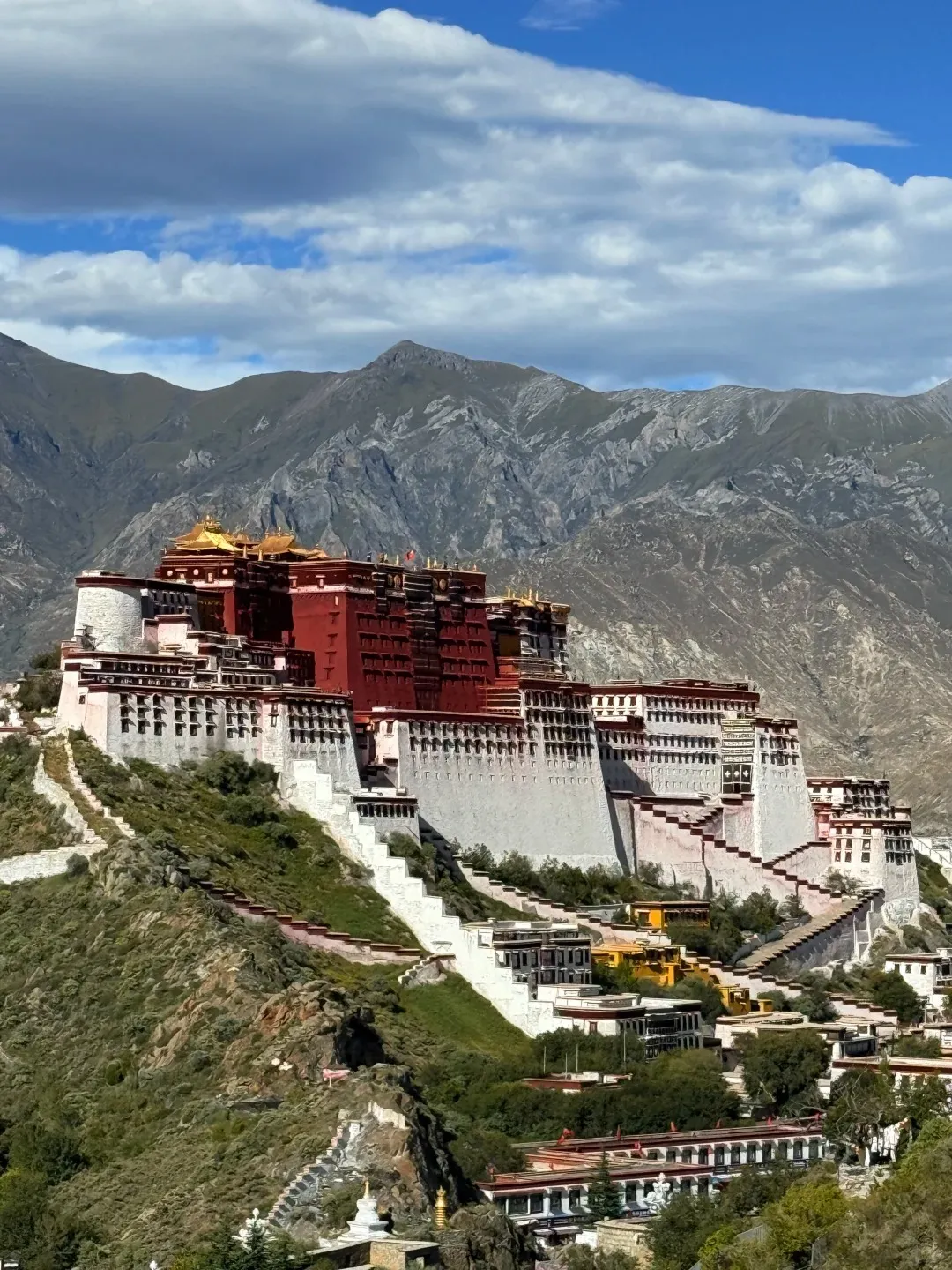
The Potala Palace in Lhasa, a grand multi-story complex featuring prominent red and white sections with golden roofs, stands majestically atop a green, rocky hill. Numerous white steps and terraced structures ascend the hillside towards the palace. In the background, extensive gray and green mountains stretch under a bright blue sky with scattered white clouds.

Begin your 7-day Tibet adventure in Lhasa with a visit to the magnificent Potala Palace, the historic winter residence of the Dalai Lamas and a UNESCO World Heritage site.

Potala Palace Logistics: Tickets are strictly timed. If your ticket says 10:00 AM, you must be at the security checkpoint by 9:40 AM. If you are late, you are denied entry. Inside, you have exactly one hour to tour the complex.

The Spiritual Heart: In the afternoon, visit the Jokhang Temple. The smell here is distinct—a heavy, greasy mix of thousands of yak butter candles burning simultaneously. It is intense but unforgettable. Walk the Barkhor Circuit clockwise with the pilgrims.

Phase 2: The Overland Adventure

Day 4: Lhasa to Shigatse via Yamdrok Lake (360km)

Today involves a long drive (approx. 7 hours), but the scenery is spectacular. You will cross the Kamba La Pass (4,790m) to see Yamdrok Lake, one of Tibet’s three holy lakes.

Contrarian Tip: Skip the paid photo ops with the Tibetan Mastiffs and Yaks at the first lookout point. They are overpriced and crowded. Ask your driver to stop 10 minutes further down the road for a solitary view of the turquoise water.

You will also pass the Karola Glacier. It is one of the few glaciers in Tibet accessible right from the highway. You can literally hear the ice cracking on a quiet day.

Day 5: Shigatse to Everest Base Camp (350km)

This is the climax of the trip. You will leave Shigatse (3,800m) and ascend to the Pang La Pass (5,120m). If the weather holds, you will see a panoramic lineup of four mountains over 8,000 meters: Makalu, Lhotse, Everest, and Cho Oyu.

What is the accommodation like at EBC?

Direct Answer: Accommodation at Everest Base Camp (5,200m) consists of Rongbuk Tent Guesthouses or the monastery guesthouse. These are communal tents with 8-10 beds, heated by a central yak-dung stove. There is no running water and no showering. Toilets are primitive pit latrines outside the tents.

Reality Check: It will be cold. Even in summer, temperatures drop below freezing at night. Sleep with your clothes on and use the provided electric blankets (if the generator is running).
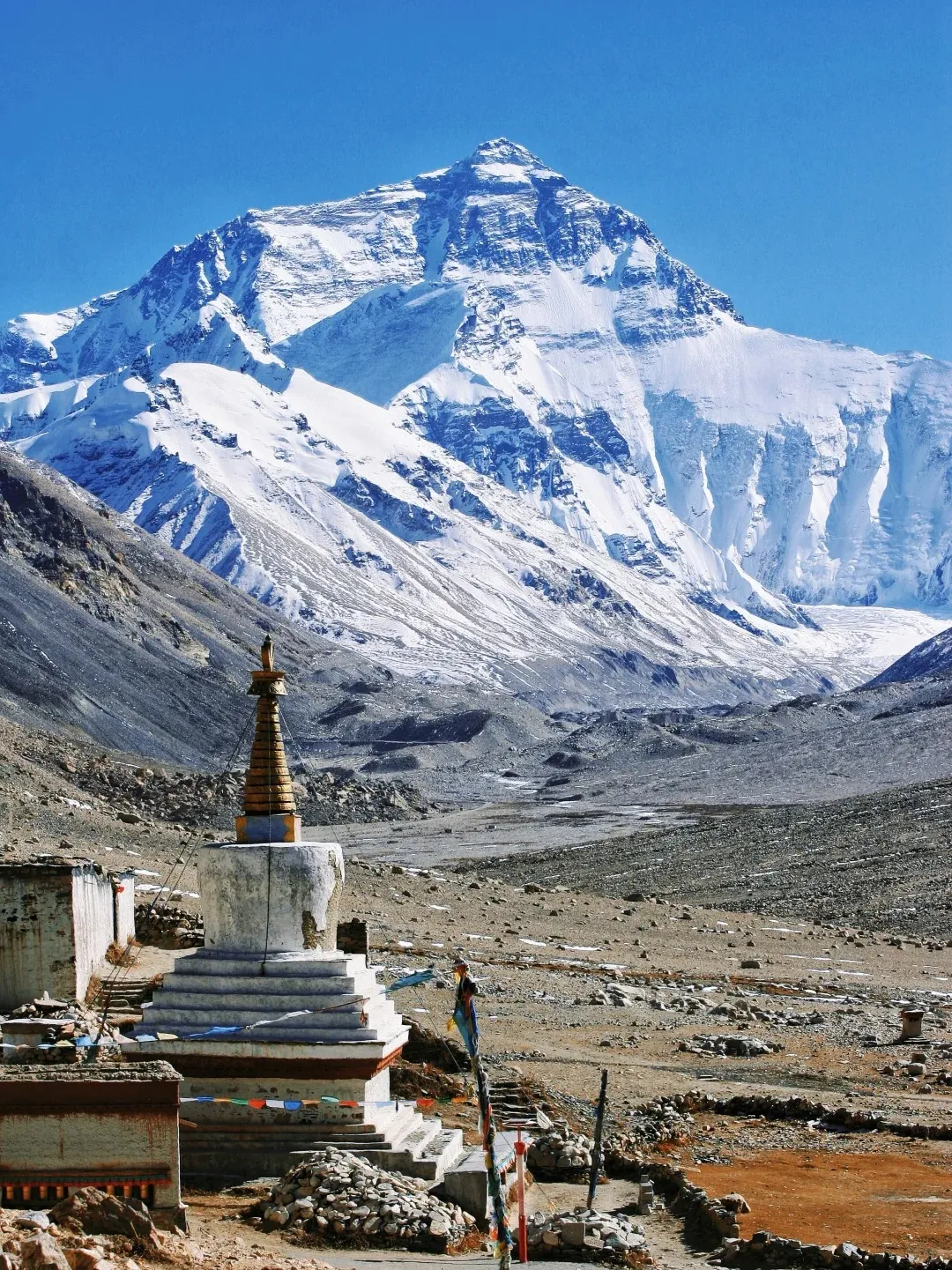
A white Buddhist chorten with a golden spire and colorful prayer flags stands in the foreground of a vast, rocky, barren landscape. In the distance, the majestic, snow-capped peak of Mount Everest dominates the horizon under a clear blue sky.

On the classic Tibet itinerary from Lhasa to Everest Base Camp, the path leads through incredible landscapes, where ancient chortens like this one stand sentinel, guiding pilgrims and travelers towards the awe-inspiring presence of Mount Everest.

Phase 3: The Descent

Day 6: Sunrise at Everest and Return to Shigatse

Wake up before dawn. The sun hitting the peak of Everest (turning it a glowing gold) usually happens around 7:30 AM to 8:00 AM depending on the season. After breakfast, visit Rongbuk Monastery, the highest monastery in the world, before beginning the drive back down to Shigatse.

Health Warning: You may wake up with a “high altitude hangover”—headache and nausea. This is normal. Descending 1,000 meters back to Shigatse usually cures this immediately.

Day 7: Tashilhunpo Monastery and High-Speed Train to Lhasa

Before leaving Shigatse, visit Tashilhunpo Monastery, the seat of the Panchen Lama. It is less crowded than the Potala Palace and features the world’s largest gilded bronze Buddha statue.

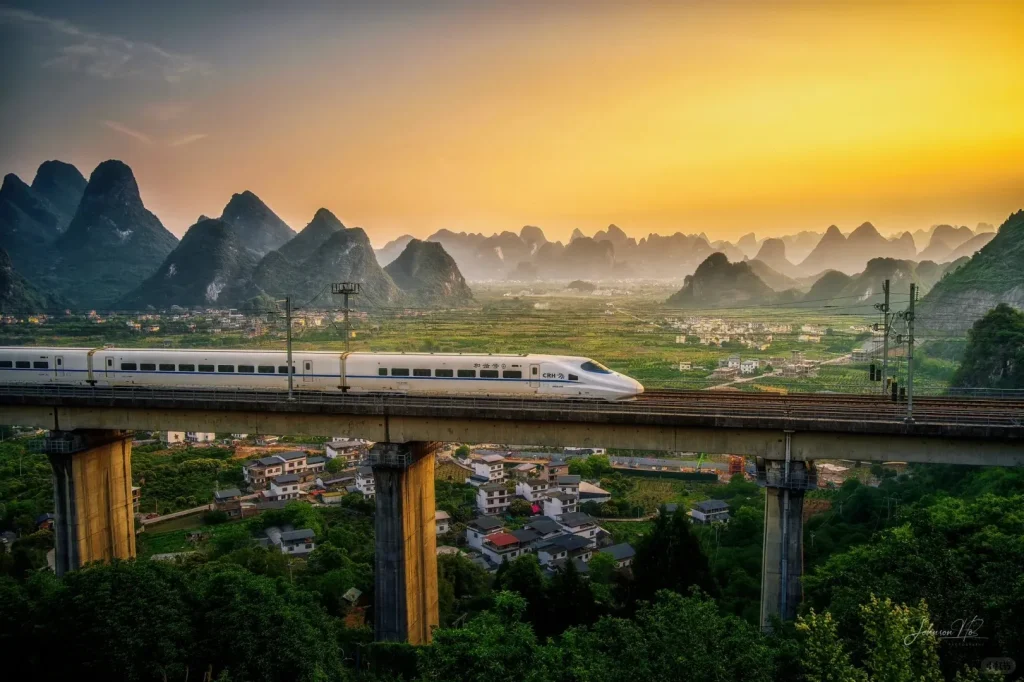
The Logistics Hack: Most older itineraries drive back to Lhasa (6+ hours). However, according to recent infrastructure updates, you should book the C-class high-speed train from Shigatse to Lhasa.

  • Train Duration: ~2.5 hours
  • Benefit: Saves 4 hours of travel time, allowing you to have a farewell dinner in Lhasa or catch a late flight out.

Practical Planning Guide

Visa and Permit Requirements

You cannot backpack Tibet alone. You need a Chinese Visa first, and then your agency will apply for the Tibet Travel Permit (TTP). The TTP is a separate paper document (not a stamp in your passport). Do not lose this. You will need to show it at the train station, airport, and multiple checkpoints on the road to Everest.

Budgeting for the Trip

While tour costs vary, bring extra cash (RMB). While WeChat Pay and Alipay are widely accepted in Lhasa, signal issues at remote passes or EBC can make digital payment difficult. A bowl of noodles at EBC costs roughly 30-50 RMB, which is higher than in the cities due to transport costs.
Essential Questions About Traveling to Tibet

Can I travel to Tibet independently without a tour?

No, independent travel is not permitted in Tibet. You must book through a licensed agency to obtain a Tibet Travel Permit (TTP), which is mandatory for boarding flights or trains to Lhasa and passing checkpoints.

The ‘Golden Rule’ is to spend at least 3 days acclimatizing in Lhasa (3,650m) before ascending higher. Avoid showering on your first night, drink plenty of warm water, and avoid strenuous exercise immediately upon arrival.

Accommodation at EBC (5,200m) is basic, consisting mostly of communal Rongbuk Tent Guesthouses. Expect shared beds, heating via yak-dung stoves, pit latrines, and no running water for showers.

The best visibility for seeing Mount Everest is during April to May and September to October. While summer (July and August) is warmer, monsoon clouds frequently obscure the peak.

Conclusion

The 7-Day Classic Tibet Itinerary from Lhasa to Everest Base Camp is physically demanding but spiritually rewarding. It balances the cultural immersion of the capital with the raw, high-altitude wilderness of the Himalayas. By utilizing the high-speed train for the return leg and properly acclimatizing in Lhasa, you can stand at the Roof of the World safely and comfortably. If you are ready to start planning, contact a registered Tibet tour agency at least 30 days in advance to secure your permits.

Similar posts to this one

Multiple Fuxinghao high-speed bullet trains, silver with red and orange stripes, are parked at platforms inside Shenzhen North Railway Station at night. Station signs show '深圳北站' and 'Shenzhen North Railway Station'. Overhead metal structures and lighting are visible.

Beijing to Shanghai High-Speed Rail: The Complete Station & Seat Guide

For travelers in 2026, the debate between flying or taking the train from Beijing to Shanghai is effectively over. The [...]

A vibrant sunrise or sunset over the modern Beijing cityscape, featuring prominent skyscrapers like the tall, slender CITIC Tower (China Zun) reflecting golden light, the distinctive CCTV Headquarters building, and the spiraling dome of the Phoenix International Media Center. A dense canopy of green and golden trees forms the foreground under a sky with dramatic, colorful clouds.

Emergency Travel in China: Vital Phrases, Apps, and Safety Protocols

Traveling to China is an exhilarating experience, but the unique digital ecosystem and language barrier can make even seasoned globetrotters [...]

Two modern Chinese high-speed trains, including a silver Fuxing bullet train with red, orange, and gold stripes, parked side-by-side at a bright station platform. A white high-speed train with blue stripes is to the left. A yellow tactile paving strip is visible on the platform.

China High-Speed Rail for Tourists: Booking, Classes & Onboard Experience

For many travelers, the first time stepping into a Chinese railway station is more overwhelming than the flight that brought [...]

Get the China Arrival Survival Kit

Planning a trip here has a steep learning curve. Join our newsletter and receive our free “Day One Checklist” covering everything from setting up Alipay and WeChat to bypassing the internet firewall.