


The Logistics: Routes, Tickets, and the “Xining Strategy”
Many travelers make the rookie mistake of booking the Z21 direct from Beijing to Lhasa. While it sounds convenient, spending two full nights on a train before you even reach the plateau is exhausting and unhygienic. By the time you reach the scenic parts, you are often too tired to care.
Insider Tip: The Xining Strategy
The smartest itinerary for 2026 is to fly into Xining (the capital of Qinghai province) and spend 24 hours there. Xining sits at 2,275 meters, offering a perfect “step” for your body to adjust before hitting the 5,000-meter passes. All trains to Tibet eventually funnel through Xining anyway, so you aren’t missing any scenery. You simply board the train fresh, tackle the 21-hour scenic leg, and arrive in Lhasa with more energy.
How to Buy Train Tickets in 2026
Tickets for the Qinghai-Tibet railway are notoriously difficult to secure during peak season (June–October). While the official Chinese railway app, 12306, now has an English version, it often rejects foreign credit cards during high-traffic release times.
The Reality of Booking: Most independent travelers cannot beat the scalper bots on the official site. It is highly recommended to book your train tickets through the same agency handling your Tibet Travel Permit. They often have “guaranteed” ticket allotments. If you are booking independently, use platforms like Trip.com, but be aware that they charge a service fee.
Important: Tickets open for sale 15 days in advance. If you are traveling in August, your agency needs your passport details months prior to be ready the second bookings open.
What is the Tibet Travel Permit?
The Tibet Travel Permit (TTB) is a mandatory document issued by the Tibet Tourism Bureau for all non-Chinese passport holders. You cannot apply for this yourself; a registered tour agency must apply on your behalf. For train travel, you must present a physical photocopy of this permit to enter the station and board the train. Without it, you will be turned away at security.
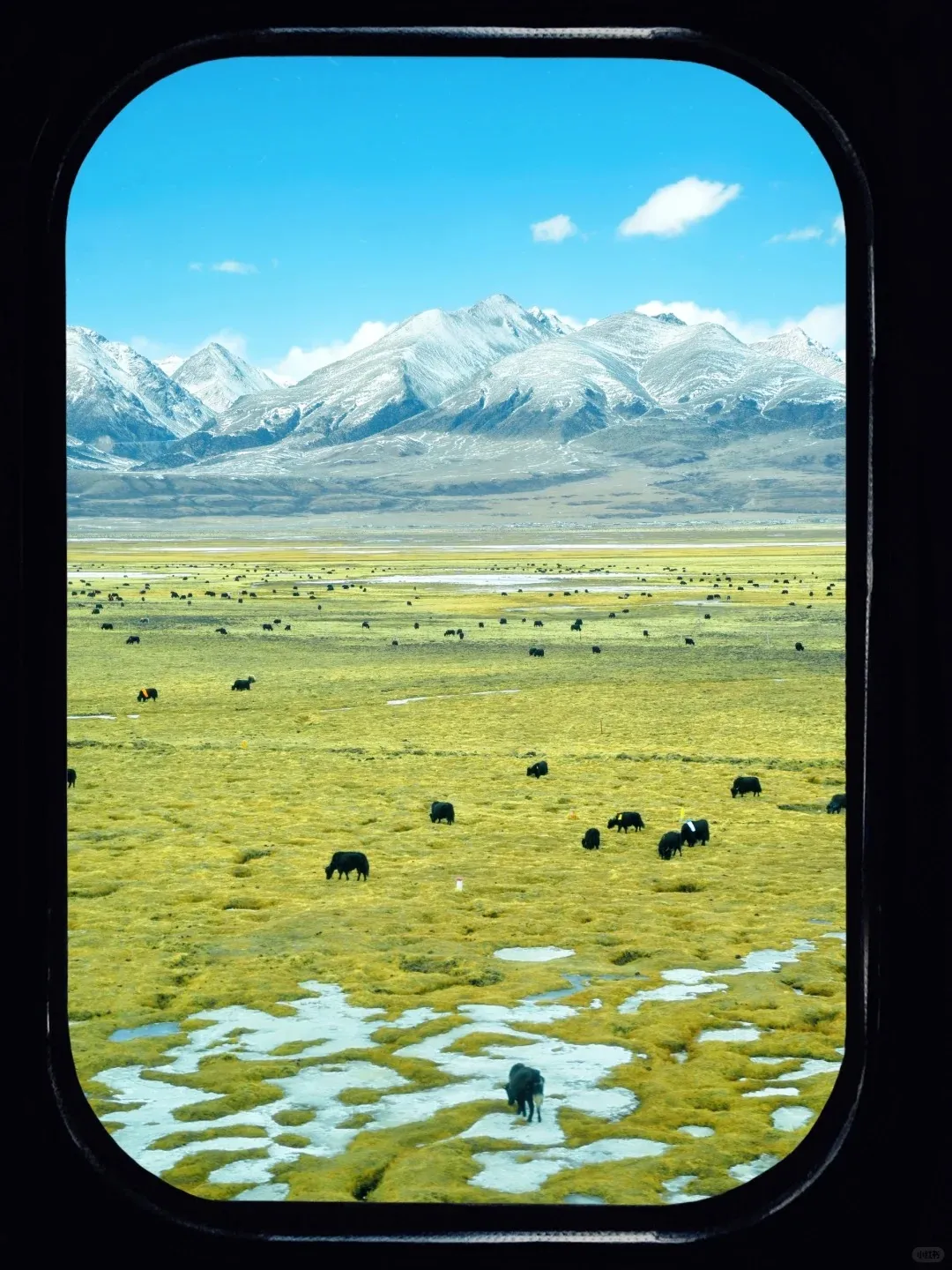
A window seat on the Tibet train offers unparalleled views of the high-altitude Qinghai-Tibet Plateau, where vast grasslands dotted with grazing yaks meet the majestic snow-capped Himalayas. Ensure you book a window seat to capture these unforgettable vistas!
Life on Board: Berths, Toilets, and Connectivity
Chinese trains are efficient, but comfort levels vary drastically depending on your ticket class. Note that there are no showers on the train, regardless of ticket class.
Choosing Your Berth
- Soft Sleeper (Recommended): A private compartment with a lockable door containing four bunks (two upper, two lower). You have a small table, an outlet (usually), and a relatively quiet environment. This is the gold standard for foreigners.
- Hard Sleeper: A misnomer—the beds are padded, but the compartment is open to the aisle. There are six bunks per bay (upper, middle, lower) stacked vertically. It is noisy, smells of instant noodles, and offers zero privacy. Only book this if Soft Sleepers are sold out and you are comfortable with communal living.
- Hard Seat: Do not do this. It involves sitting upright for 22+ hours in a carriage packed with 98 people. It is physically punishing at high altitudes.
The Toilet Situation
In Soft Sleeper carriages, you will typically find one Western-style toilet and one squat toilet at the end of the car. However, “Western-style” does not guarantee cleanliness. Bring your own toilet paper and hand sanitizer—these are rarely restocked after the first few hours. In Hard Sleeper cars, squat toilets are the standard. By hour 15, the floor is usually wet and grim; wear shoes, not socks or slippers, when visiting the restroom.
Connectivity and The Great Firewall
Do not expect reliable Wi-Fi on the train. The signal cuts out frequently as you pass through tunnels and remote permafrost zones. Furthermore, standard Western apps (Gmail, WhatsApp, Instagram) are blocked in China.
To stay connected and share your journey in real-time, you need a reliable data solution that bypasses these blocks automatically. We recommend using an eSIM that routes traffic through servers outside of China.
💡 Editor’s Pick: We recommend Nomad eSIM for China because it reliably bypasses the Great Firewall with stable speeds. Use code JORICAQLKF at checkout to get $5 USD off your first data plan.
Surviving the Altitude: Oxygen and Health
The most unique feature of the Tibet train is its oxygen supply system. As the train climbs past Golmud, the air becomes thin. The train employs two systems to combat this:
- Dispersion System: Enriched oxygen is pumped into the train cabins through the air conditioning vents. This raises the oxygen level slightly higher than the air outside, but it is not sea-level pressure. You will still feel short of breath when moving quickly.
- Personal Outlets: Above every bunk (and under the seats in the corridors), there are individual oxygen outlets. If you feel dizzy or nauseous, you can ask the conductor for a plastic tube (cannula) to plug in and breathe pure oxygen.
Medical Reality Check: According to travel medicine guidelines, the train does not help you acclimatize as well as staying in Xining does. You are essentially sitting passively while ascending to 5,000 meters. Drink plenty of water (boiling water is free at the end of every carriage—bring a thermos), avoid alcohol completely, and bring Acetazolamide (Diamox) if your doctor prescribes it.
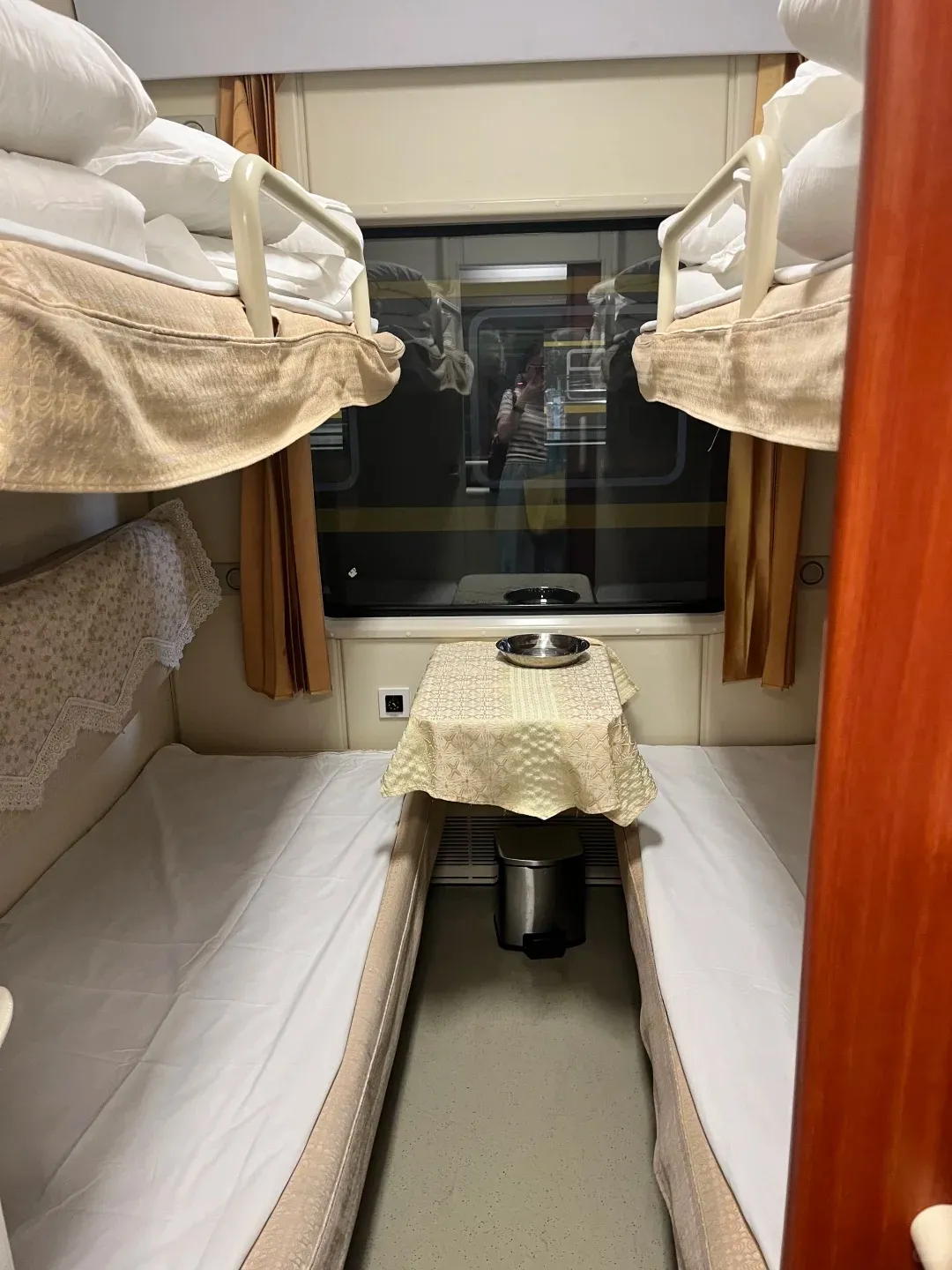
Choosing a soft sleeper cabin offers a comfortable way to travel to Lhasa. While dedicated ‘window seats’ aren’t an option, the large cabin window provides travelers with ever-changing views of the spectacular Tibetan landscape.
The Scenic Route: Key Sections to Watch
If you take the train from Xining, the train departs in the afternoon. The first major sight is Qinghai Lake, the largest salt lake in China, which you will pass roughly an hour or two after departure. However, the most dramatic scenery happens the following morning.
Wake up early (around 6:00 AM) to catch the Kekexili Nature Reserve. This is the “no man’s land” of the plateau. Keep your eyes peeled for Tibetan antelopes, wild donkeys, and yaks grazing against a backdrop of glaciers. This is the highest rail route in the world, peaking at the Tanggula Pass (5,072m). The train will slow down here, but you cannot get off. The landscape is stark, snowy, and incredibly bright—sunglasses are essential to prevent snow blindness.