


Getting Started: Logistics and Visas
What is the 144-Hour Visa-Free Transit?
The 144-hour visa-free transit policy allows travelers from 54 eligible countries (including the US, UK, EU, and Australia) to enter China for up to 6 days without a visa, provided they have a confirmed connecting ticket to a third country. For this itinerary, Kunming is a valid entry port for this policy.
Navigating Payment and Trains
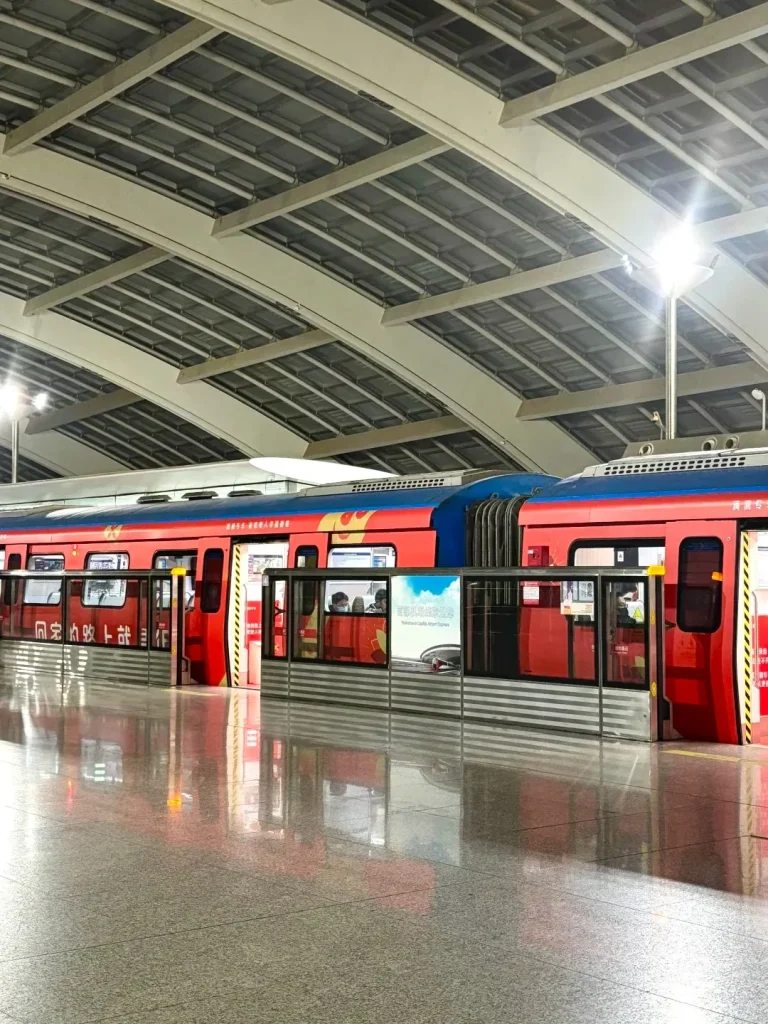
Do not expect to use credit cards at local restaurants or stalls. You must download Alipay or WeChat Pay and link your foreign card before arrival. For train tickets, the official railway app is Trip.com (easier for foreigners) or Railway 12306 (official, English version available but glitchy).
Days 1-2: Kunming – The Gateway
Most travelers treat Kunming merely as a transit hub, which is a mistake. However, do not spend more than 1.5 days here. The goal is to acclimatize and see the unique geology.
The “Insider” Strategy for the Stone Forest
Most tours take you to the main scenic area of the Shilin Stone Forest. Mistake to Avoid: The main park is often overrun with domestic tour groups with megaphones. Instead, head to the Naigu Stone Forest (about 8km away). It is part of the same UNESCO heritage site but features “black” karst rocks, is significantly quieter, and feels more like an adventure than a theme park.
- Food Tip: You must try Guoqiao Mixian (Crossing the Bridge Noodles). A boiling bowl of broth is served with separate plates of raw quail eggs, ham, and vegetables which you cook at the table.
- Accommodation: Stay near Green Lake Park (Cuihu) for a walkable, local vibe.
Days 3-4: Dali – The Bai Kingdom
Take the morning high-speed train from Kunming to Dali (approx. 2 hours). Dali sits between the Cangshan Mountains and Erhai Lake.
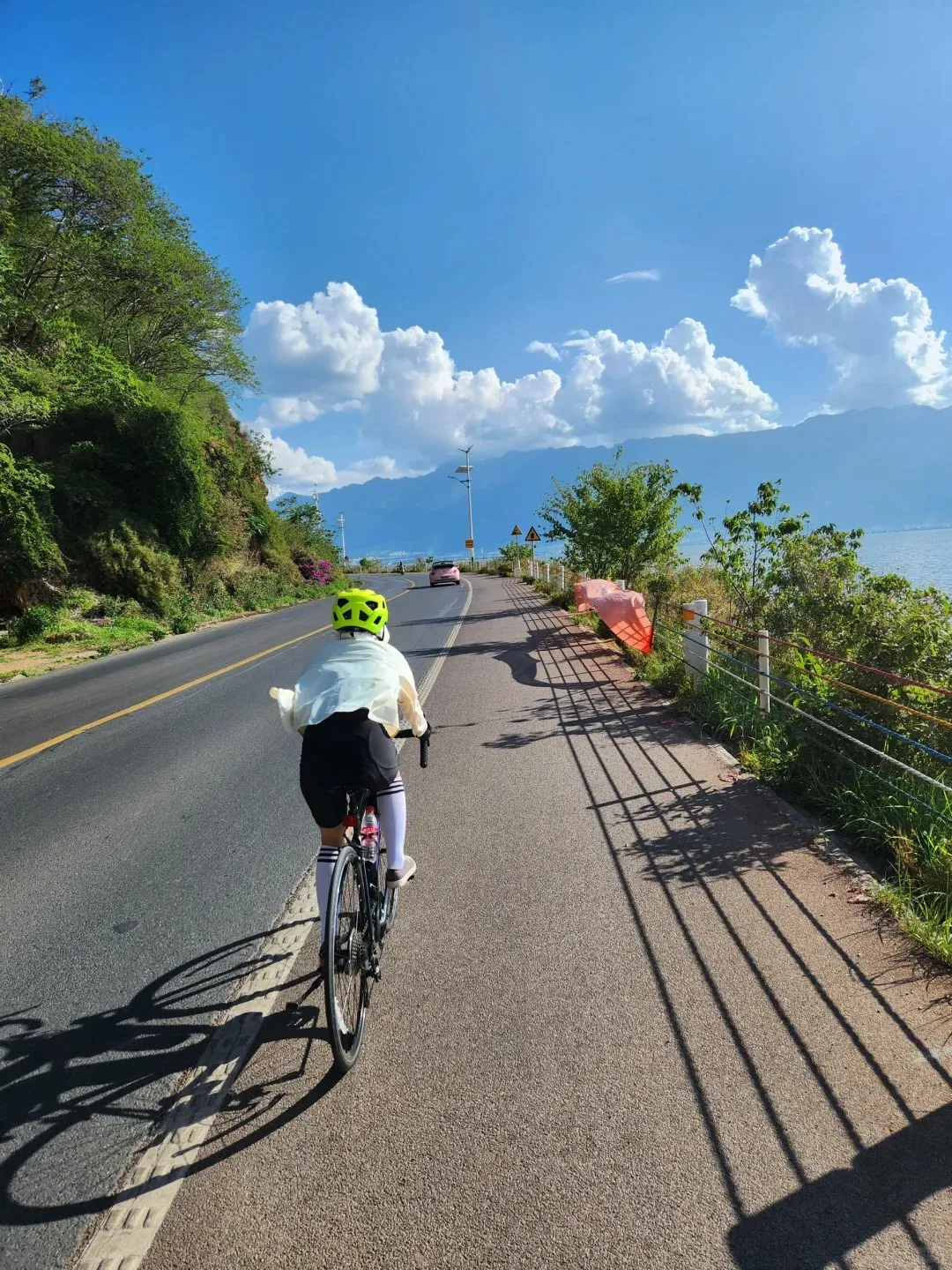
A person wearing a neon yellow helmet, white long-sleeve top, black shorts, and white knee-high socks cycles from behind along the paved ecological corridor of Erhai Lake in Dali, Yunnan. To the left, a main road runs parallel to a lush, green tree-covered hillside. To the right, the vast blue Erhai Lake stretches towards distant mountains under a bright blue sky dotted with fluffy white clouds. A pink car is visible in the distance on the main road, and strong shadows from the cyclist and a nearby fence indicate bright sunlight.
Contrarian Tip: Skip Dali Old Town for Sleeping
While Dali Old Town is famous, it has become incredibly commercialized with loud bars and souvenir shops. For an authentic experience, stay in Xizhou Ancient Town, 20km north. Xizhou preserves the traditional Bai architecture (white walls with painting) and is surrounded by rice paddies, offering a much more serene morning experience.
Must-Do: Cycling the Erhai Ecological Corridor
Rent an e-bike or bicycle. The western shore of Erhai Lake has a dedicated ecological corridor free of cars.
- Route: Start from Caicun Pier and ride north toward Xizhou.
- Sensory Detail: The wind here is strong (Dali is known as the “Windy City”), so bring a windbreaker even in summer.
Day 5: The Shaxi Detour (The Hidden Gem)
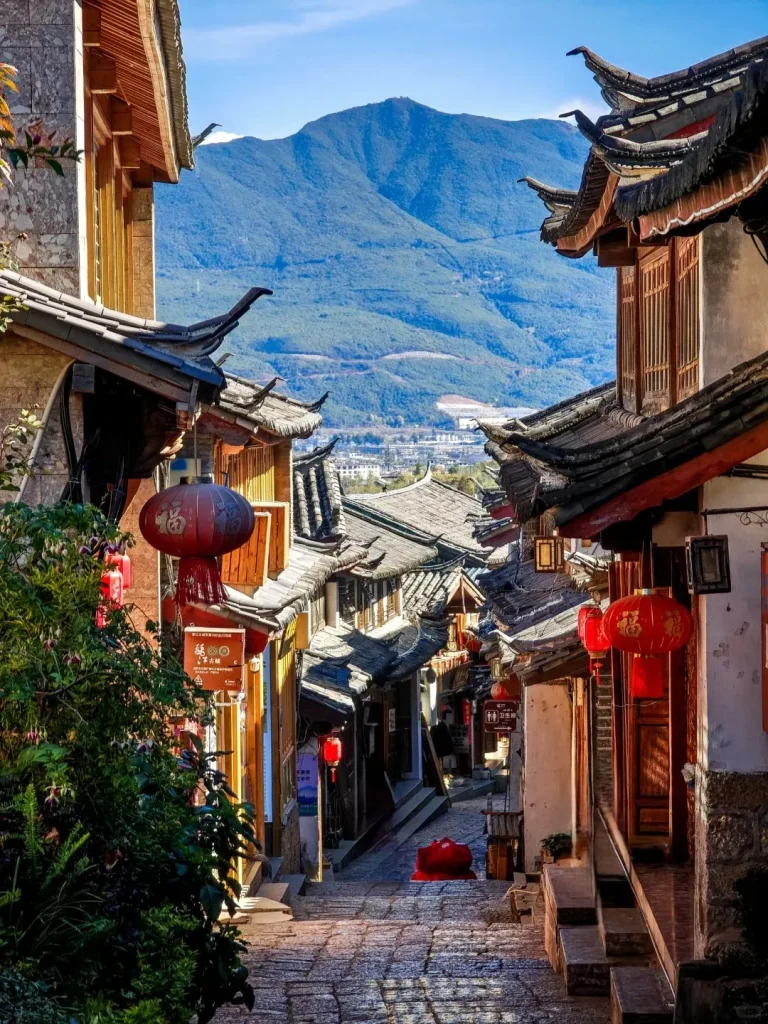
This is the most critical part of the “Ultimate” loop. Do not go straight to Lijiang. Arrange a private driver or take a minibus to Shaxi Ancient Town. This was a vital market station on the ancient Tea Horse Road and remains arguably the most preserved ancient town in Yunnan.
- Why go? No neon lights, no loud bars. Just cobblestones, silence, and history.
- Activity: Walk across the Yujin Bridge at sunset. Visit the Friday Market if your schedule aligns, where Yi and Bai minorities trade mountain goods.
Days 6-7: Lijiang – Naxi Culture and Glaciers
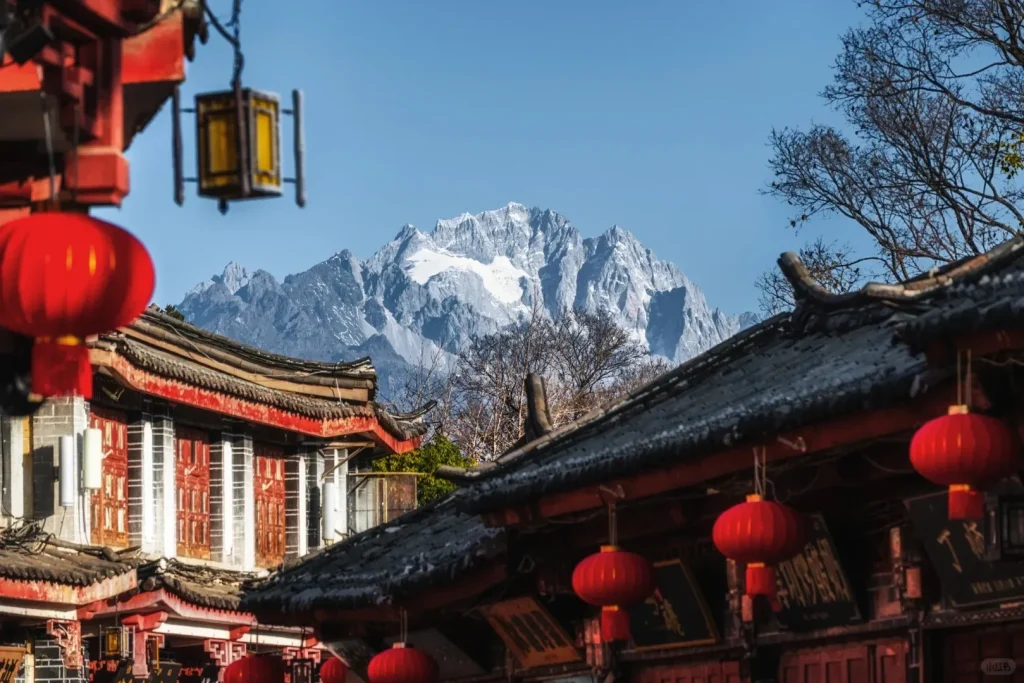
From Shaxi, it is a 1.5-hour drive to Lijiang. Lijiang Old Town is a UNESCO World Heritage site, famous for its water wheels and canals.
Surviving the Crowds in Lijiang
Lijiang is arguably the most crowded tourist spot in Yunnan. To appreciate it, you must wake up at 6:30 AM. Between 6:30 AM and 8:30 AM, the streets are empty, and you can hear the sound of the canals. By 10:00 AM, it becomes a sea of people.
Jade Dragon Snow Mountain
You need to book tickets for the Glacier Park cable car in advance, often through a WeChat mini-program or your hotel, as they sell out daily.
- Altitude Check: The cable car drops you at 4,506m. You can hike up to 4,680m. Oxygen canisters are sold everywhere—buy one in town for 20 RMB (prices triple on the mountain).
- Blue Moon Valley: Located at the base of the mountain, the water here is an electric turquoise due to copper ions. It looks photoshopped but is real.
Days 8-9: Shangri-La – The Tibetan Frontier
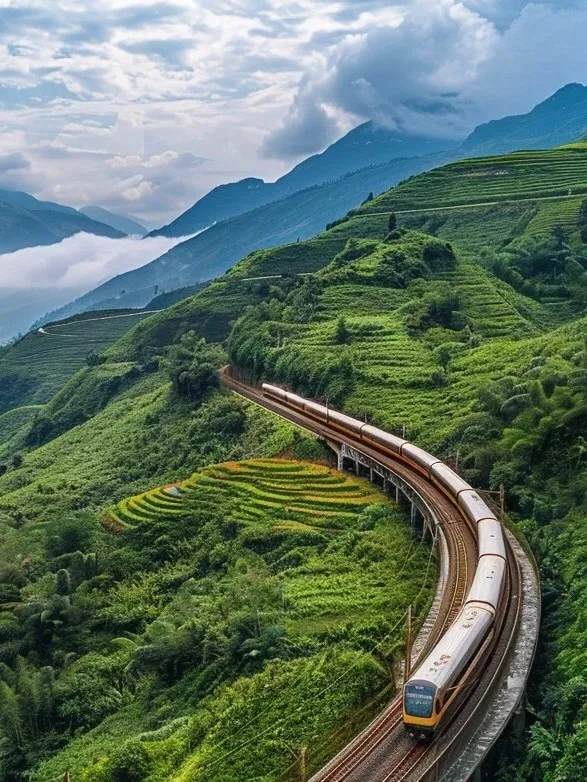
Take the high-speed train or a bus from Lijiang to Shangri-La. As you ascend, the landscape shifts from green valleys to rugged highland barley fields and yak pastures.
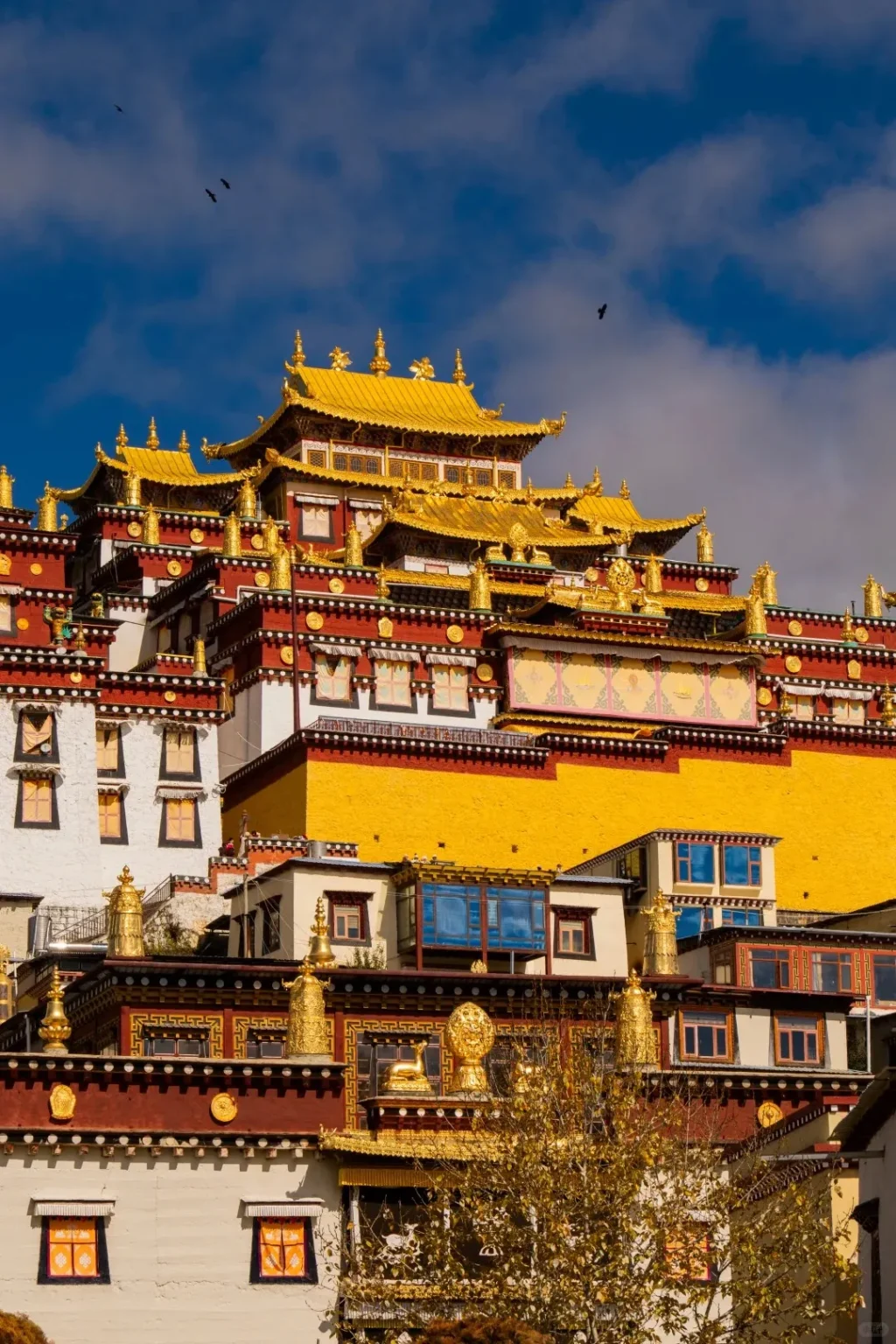
The magnificent Songzanlin Monastery in Shangri-La, Yunnan, featuring brilliant golden tiered roofs, ornate red and white walls, and bright yellow sections, set against a vibrant blue sky with scattered clouds. Golden decorative elements adorn the roofs, and a tree with golden leaves is visible in the foreground of this grand Tibetan Buddhist monastery.
Tiger Leaping Gorge
Situated between Lijiang and Shangri-La, this is one of the deepest gorges on earth.
- For Hikers: The “High Trail” requires 2 days. If you are on this 10-day itinerary, you likely don’t have time.
- For Sightseers: Stop at the “Upper Gorge” viewing platform. The roar of the Jinsha River crashing against the stone is deafening and humbling.
Songzanlin Monastery
Known as the “Little Potala Palace,” this is the largest Tibetan Buddhist monastery in Yunnan.
- Respect: Walk clockwise around temples. Do not photograph monks without permission.
- Experience: Visit in the late afternoon to see the golden roofs glowing against the harsh high-altitude sun.
Day 10: Departure
Shangri-La (Diqing) has a small airport (DIG) with flights connecting to Kunming, Chengdu, or Shanghai. Alternatively, the high-speed train back to Kunming takes roughly 4.5 to 5 hours. If you have a late flight, spend your morning wandering Dukezong Ancient Town, home to the world’s largest prayer wheel.
Practical Tips for the 2025 Traveler
- Altitude Sickness: It is real. Symptoms include headache and shortness of breath. Drink plenty of water. Local remedies like Rhodiola (Hongjingtian) are popular, but consult a doctor.
- Toilets: Outside of 4-star hotels, expect squat toilets. Always carry your own tissue and hand sanitizer.
- Language: English is rarely spoken by taxi drivers or shopkeepers. Download a translation app like Baidu Translate or use the translation feature in WeChat.
- Water: Do not drink tap water. Bottled water is cheap (2-3 RMB).