


The “Wild” Factor: Why Yunnan Mushrooms are Different
Unlike farmed shiitakes, the mushrooms prized in Yunnan are truly wild. They grow in complex symbiotic relationships with high-altitude pine forests and red soil, meaning they cannot be cultivated in a greenhouse. This scarcity drives the price and the flavor profile.
When you sit down for a meal, you aren’t just eating fungus; you are tasting the terroir of the Himalayas. The broth usually starts as a rich, yellow chicken soup (often made with local “black-boned” chicken), which becomes exponentially more flavorful as the mushrooms simmer.
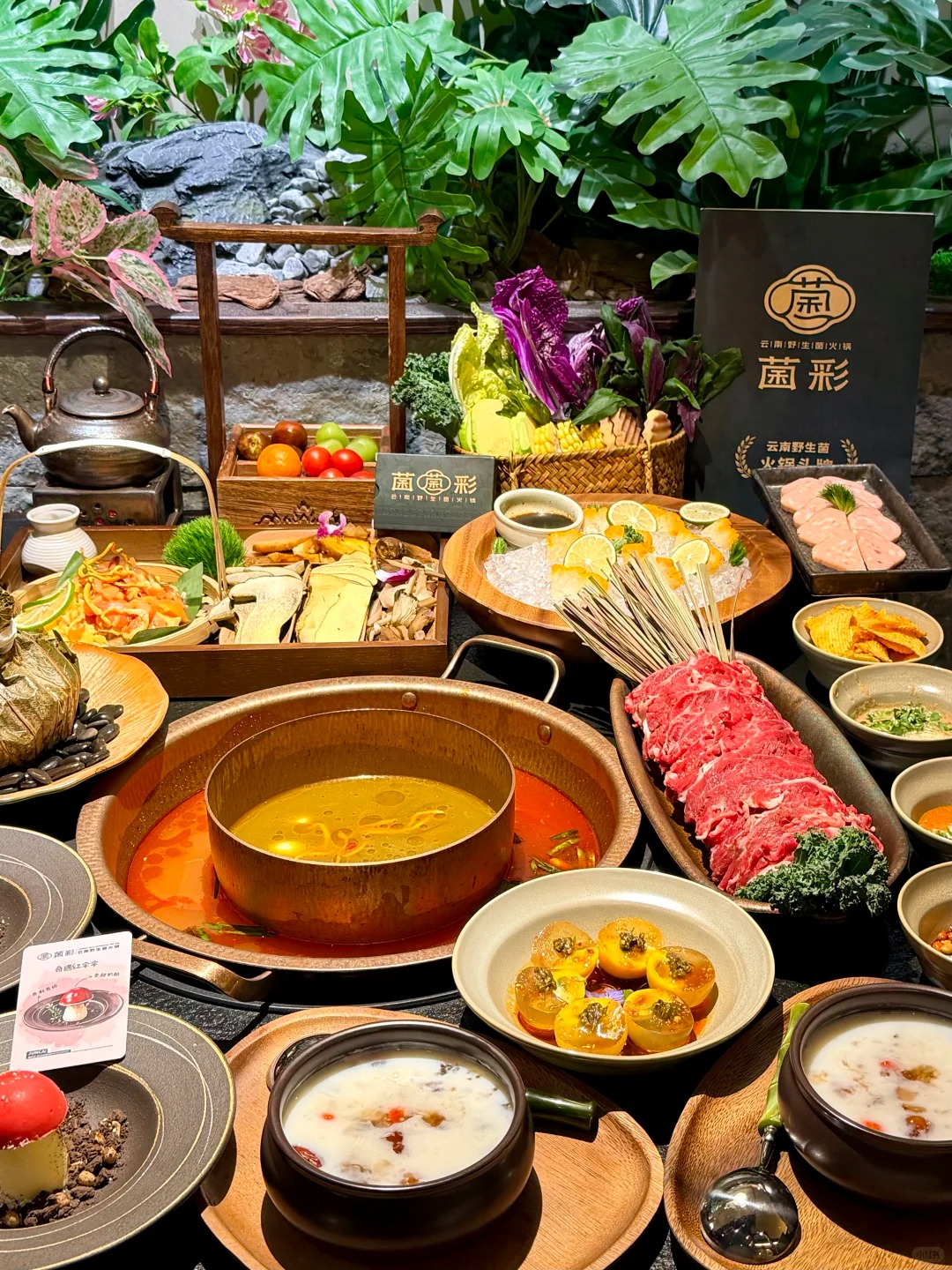
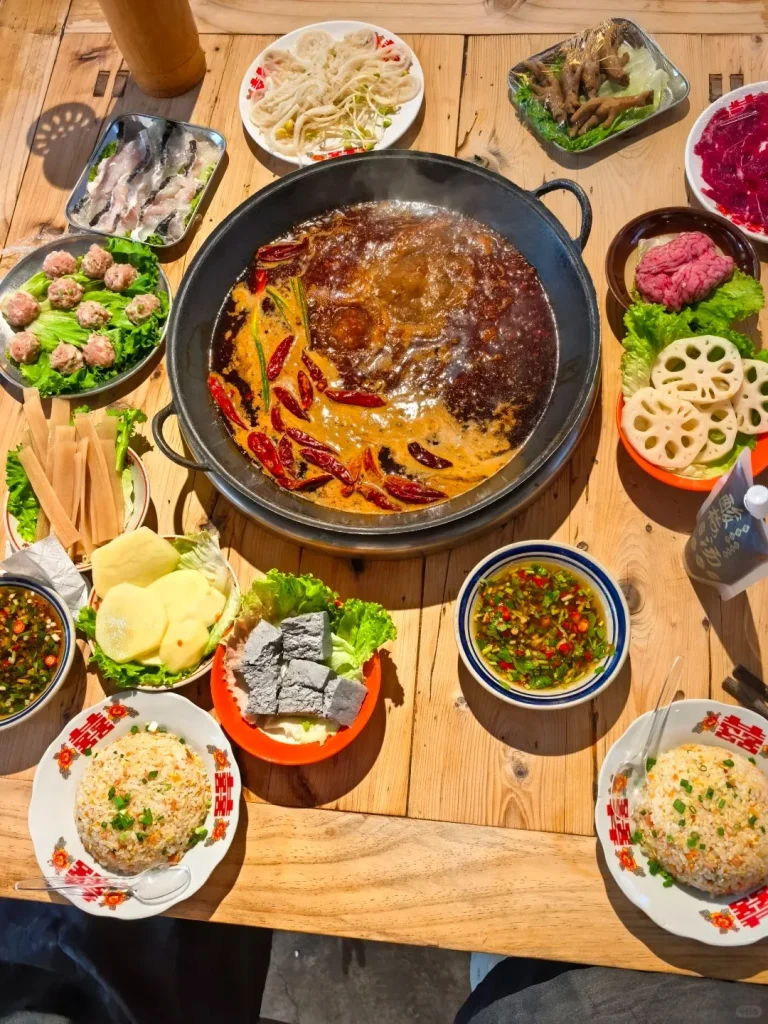
Embark on a culinary adventure with this vibrant spread, showcasing the exquisite offerings of Yunnan’s famous wild mushroom hotpot – a true fungal feast for the senses.
The Varieties: What You Are Eating
The menu will likely be in Chinese, and translation apps often fail to capture the specific species. Here are the three entities you need to recognize:
- Ganba Fungus (Thelephora ganbajun): Dark, wrinkled, and looking somewhat like dried tea leaves. It has an intense pine fragrance and a chewy texture similar to beef jerky. It is expensive and often fried with green chilies rather than boiled.
- Jianshouqing (The Blue-Bruising Boletus): The star of the hotpot. It turns blue when touched (hence the name). It has a creamy, porcini-like texture but must be cooked thoroughly to neutralize toxins.
- Collybia Albuminosa (Chicken Fir Mushroom): Sweet, crunchy, and safe. It pairs perfectly with the heavy broth.
Insider Safety: The “20-Minute” Rule
If you visit a reputable establishment, the service will feel strict. This is for your protection. When the platter of raw mushrooms is dumped into the boiling cauldron, the server will set a timer—usually for 15 to 20 minutes.
Do not eat anything from the pot until the alarm sounds. In 2026, many restaurants use smart induction cookers that lock the heat settings during this countdown. A common mistake tourists make is dipping their chopsticks into the broth to taste it early. This cross-contamination can lead to “Ren Ren” (seeing people)—the local slang for hallucinations caused by mushroom poisoning.
Where to Eat: Kunming & Dali Recommendations
Kunming: The Epicenter
Kunming is the logistics hub for the mushroom trade. For an authentic experience that balances local grit with food safety, head to the Wuhua District.
Xiaoshiguo Fish Restaurant (小石锅鱼)
Location: 16 Building Shengjing Garden, Hua Fei Xin Yu, Wuhua District
Despite the name “Fish,” this spot is legendary for its mushroom hotpot during the rainy season. They use a chicken fat base that seals in the aroma. It is crowded, loud, and incredibly authentic. The Jianshouqing here is top-tier.
Insider Tip: If you want to see the ingredients before you eat them, visit the Shuangqiao Night Market or the specialized Wild Mushroom Street near the wholesale market. Even if you don’t buy, seeing baskets of mushrooms worth thousands of dollars is a spectacle.
Dali: The Atmospheric Choice
In Dali, the experience is more laid back. Look for courtyards in the Old Town serving Hot and Sour Mushroom Fish. The Bai minority influence here adds pickled bamboo shoots to the broth, cutting through the richness of the mushrooms.
Logistics: Money, Maps, and Internet
China in 2026 is a cashless society. You cannot pay for your hotpot with a Visa card or cash at most local spots.
- Payment: Link your foreign credit card to Alipay or WeChat Pay before you board your flight.
- Navigation: Google Maps is unreliable. Download Amap (Gaode Ditu). The interface is Chinese, but you can copy-paste addresses.
- Connectivity: You will need a way to bypass the Great Firewall to post your food photos to Instagram or check your Gmail.
For reliable internet access that works immediately upon landing, I recommend using an eSIM rather than hunting for a physical SIM card shop.
💡 Editor’s Pick: We recommend Nomad eSIM for China because it reliably bypasses the Great Firewall with stable speeds. Use code JORICAQLKF at checkout to get $5 USD off your first data plan.
Is the “Off-Season” Worth It?
A common question is: “Can I get mushroom hotpot in December?” The answer is yes, but with a caveat. In the off-season (November to April), restaurants rely on frozen or dried mushrooms. While dried mushrooms like porcini pack an umami punch, you miss the delicate texture of the fresh harvest. If you are a true food traveler, plan your trip between July and August for the peak harvest.
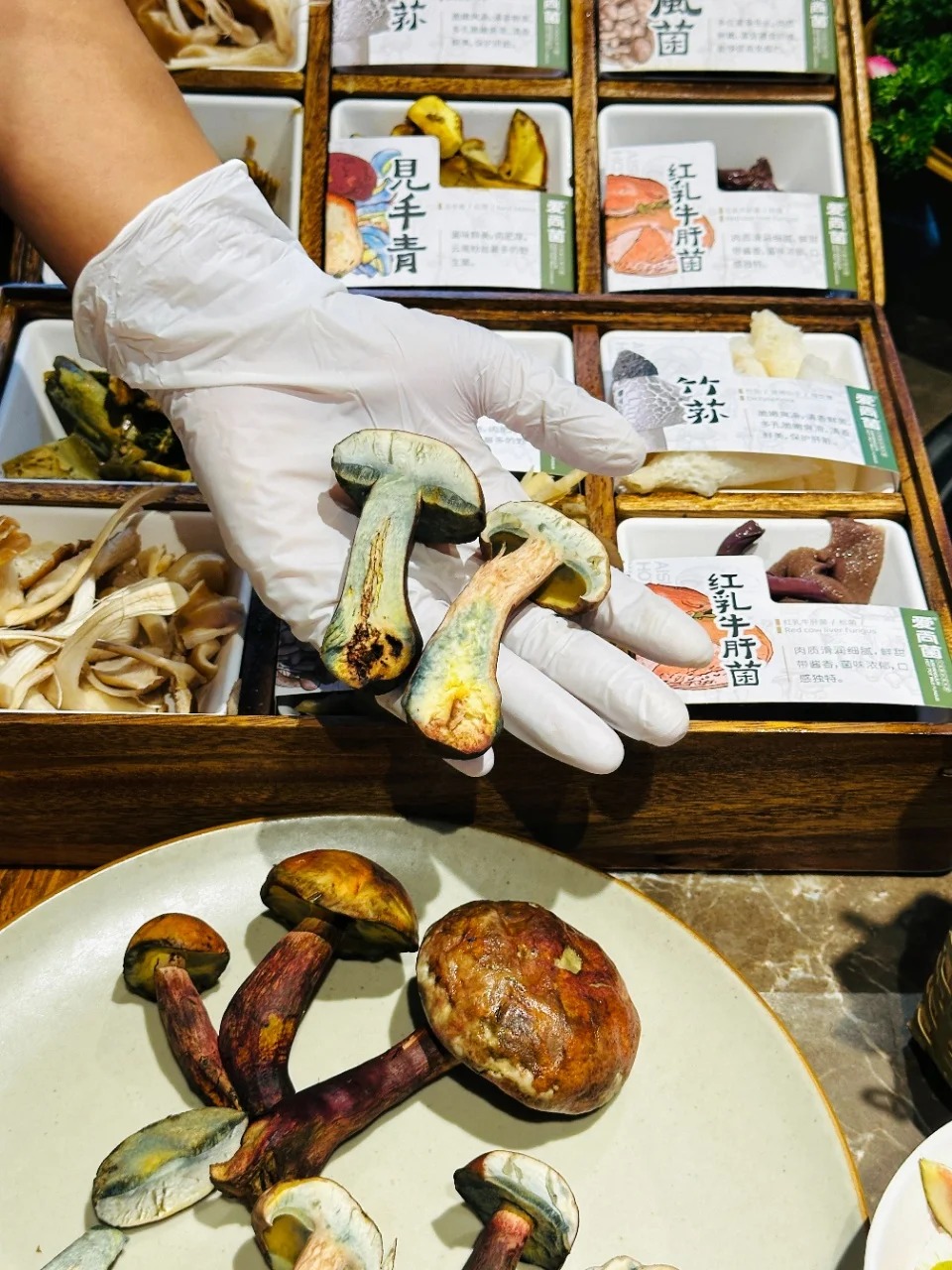
Yunnan is a mushroom paradise! These fresh, blue-staining Jianshouqing mushrooms, a local specialty, are just one of the many exquisite varieties showcased alongside an array of dried fungi, all destined for a rich and aromatic hotpot feast.