


What is the 144-Hour Visa-Free Transit Policy?
The 144-hour visa-free transit policy allows citizens from 54 eligible countries to enter specific Chinese regions, including Hunan Province, for up to six days without a pre-approved visa, provided they hold confirmed onward tickets to a third country or region.
For official documentation and to verify your passport’s eligibility before your 2026 trip, always consult the China National Immigration Administration.
The 5 Main Gates of Zhangjiajie National Forest Park
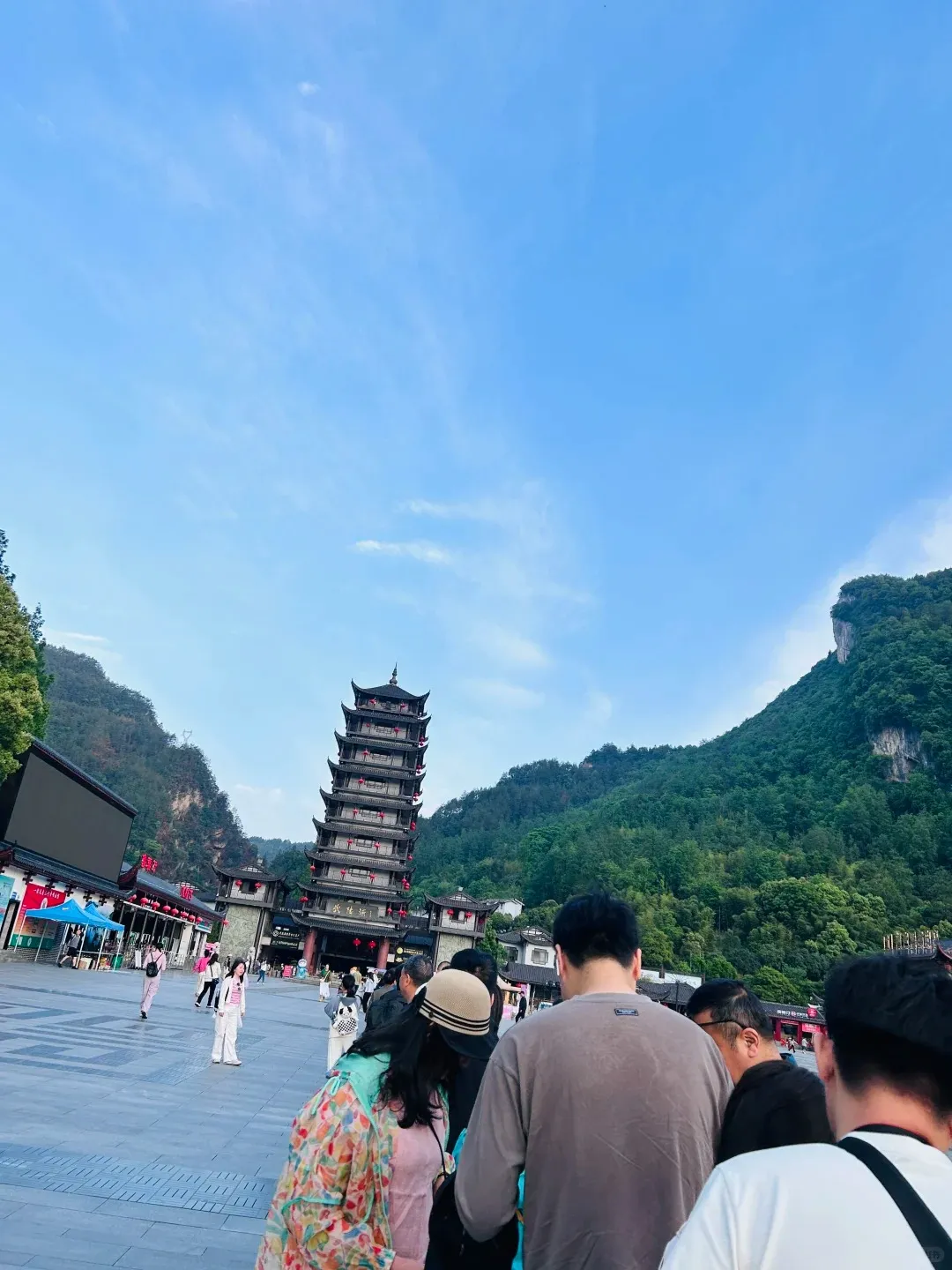
A common sight at the Wulingyuan East Gate, bustling crowds highlight why choosing the right entrance is a crucial part of any Zhangjiajie travel strategy. Learn how to navigate these popular access points for a smoother visit.
1. East Gate (Wulingyuan Ticket Station): The Hub of Convenience
The East Gate is the undisputed heavyweight champion of Zhangjiajie entrances. Located in the bustling town of Wulingyuan, it offers the most robust infrastructure. You will find international hotel chains like the Pullman and Crowne Plaza within walking distance.
Entering here gives you immediate access to the internal shuttle buses heading to the Bailong Elevator and the Tianzi Mountain Cable Car. However, convenience comes at a cost. By 8:00 AM, the air is thick with the sound of tour guides shouting through megaphones, and the humidity of the crowd is palpable.
2. South Gate (Zhangjiajie Forest Park Ticket Station): The Hiker’s Haven
If you prefer the smell of damp moss and the sound of rushing water over diesel bus fumes, the South Gate is your starting line. Located about 45 minutes from downtown Zhangjiajie City, this gate drops you directly onto the valley floor.
From here, you can immediately access the flat, paved Golden Whip Stream hike or take the cable car up to Huangshizhai (Yellow Stone Village). There are fewer large hotels here, making it a quieter base featuring boutique guesthouses like the No. 5 Valley Inn.
3. West Gate (Yangjiajie Ticket Station): The Photographer’s Secret
The West Gate remains largely ignored by domestic mega-tours. It provides direct access to the Yangjiajie Cable Car, whisking you up to the park’s most dramatic, sheer rock walls—the “Natural Great Wall.”
If your goal is to capture the golden hour over the sandstone peaks without elbows digging into your ribs, base yourself near the West Gate. It is remote, so dining options are limited to local Tujia ethnic restaurants serving spicy Hunan smoked pork.
4. North Gate (Tianzi Mountain Ticket Station): The Line-Skipper
This is the ultimate insider hack for peak-season travel. The North Gate is a 90-minute drive from Wulingyuan town, winding through rural mountain roads. Why go out of your way?
Because it is the only gate where shuttle buses drive directly to the summit of Tianzi Mountain. By starting here, you completely bypass the grueling two-hour queues for the cable cars and elevators at the bottom of the mountain.
5. Zimugang Ticket Station: The Niche Alternative
Rarely used by international tourists, the Zimugang Gate is situated between the South and East gates. It is primarily useful if you book a boutique homestay in the immediate vicinity.
It offers a quick shuttle ride to the bottom of the Bailong Elevator, but lacks the comprehensive bus routes found at Wulingyuan. Only use this gate if your accommodation explicitly recommends it.
Connectivity and Navigation in the Park
Navigating Zhangjiajie requires a smartphone loaded with Alipay and WeChat. You will use Alipay to scan QR codes for shuttle buses and buy snacks at summit kiosks. However, China’s Great Firewall blocks Google Maps, WhatsApp, and most Western social media.
💡 Editor’s Pick: We recommend Nomad eSIM for China because it reliably bypasses the Great Firewall with stable speeds.
Do not rely on Apple Maps in the park; the hiking trails are poorly marked. Instead, use the mini-map integrated into the official Zhangjiajie WeChat Mini Program. Be prepared for sensory overload: the trails are steep, the summer humidity will soak your shirt in minutes, and a simple bottle of water costs 15 RMB at the summit compared to 3 RMB in town.
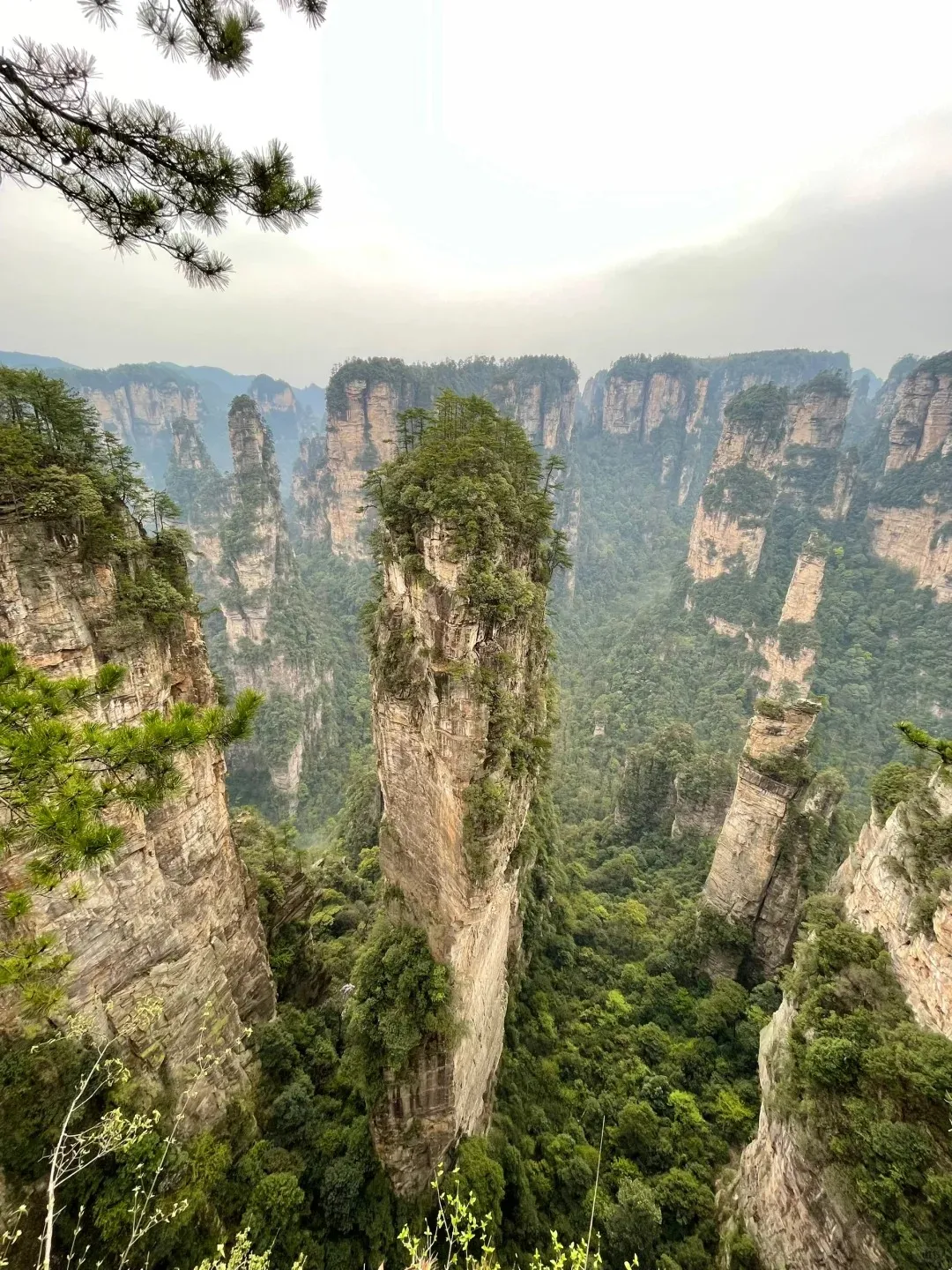
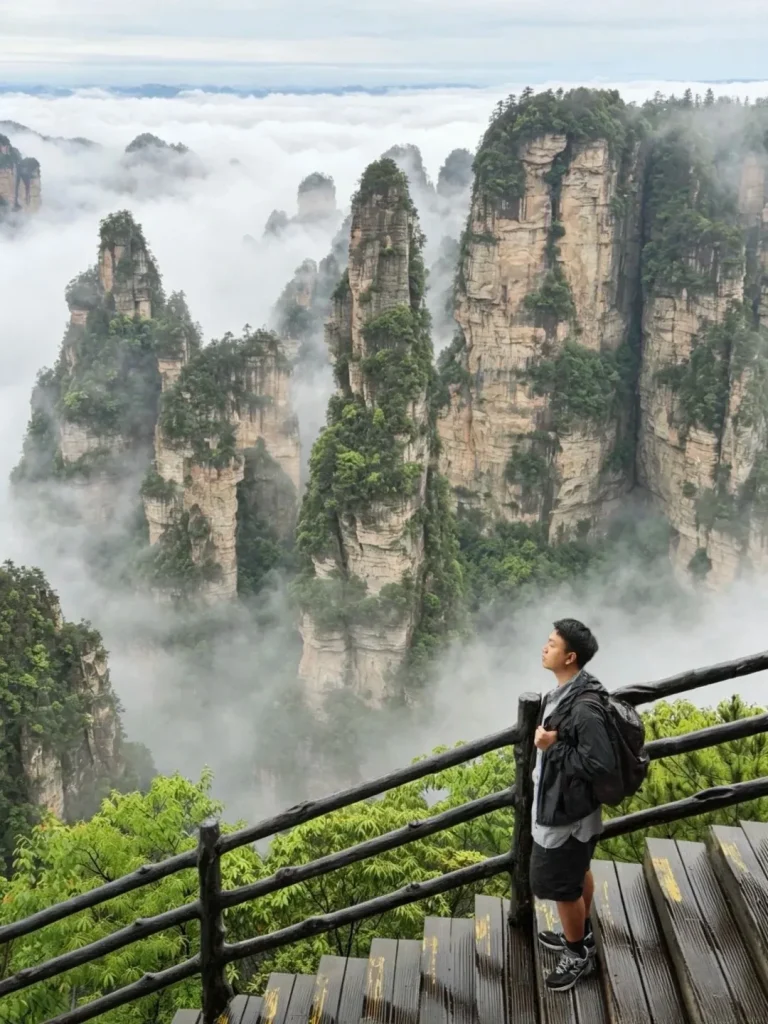
The spectacular sandstone pillars of Yuanjiajie, often called the ‘Avatar Hallelujah Mountains,’ are a prime example of the incredible sights within Zhangjiajie National Forest Park. Discover how picking the optimal entrance can lead you directly to these majestic views.
What to Know Before You Go: Overrated Attractions
Let’s be honest about the Bailong Elevator. Billed as the world’s tallest outdoor glass elevator, it sounds thrilling. In reality, visiting between 10:00 AM and 3:00 PM is a tactical error.
You will stand in a sweltering, unventilated rock tunnel for up to two hours. When you finally board the 90-second ride, you might be shoved into the back of the glass box, staring at the sweaty necks of 40 other tourists instead of the view. Skip the elevator midday. Hike up the Yangjiajie side, or ride the elevator down right before the park closes at 6:00 PM.
Furthermore, beware of the macaques near Golden Whip Stream. They are aggressive and will confidently snatch plastic bags from your hands, assuming they contain food. Keep all snacks securely zipped inside your backpack.
Practical Logistics: Booking Tickets and 2026 Pricing
According to the official Zhangjiajie National Forest Park ticketing platform, a standard 4-day pass costs approximately 227 RMB for adults in 2026. This includes park entry and all green shuttle buses, but does not include cable cars, the Bailong Elevator, or the Ten-Mile Gallery mini-train.
- Bailong Elevator: 65 RMB (one way)
- Tianzi Mountain Cable Car: 72 RMB (one way)
- Huangshizhai Cable Car: 65 RMB (one way)
Always carry your physical passport. In 2026, foreign visitors must still scan their physical passports at the turnstiles—the digital QR code tickets issued to Chinese citizens will not work for international travelers.