


What is the 144-Hour Visa-Free Transit?
The 144-hour visa-free transit allows travelers from 54 eligible countries to enter specific regions of China for up to six days without applying for a visa in advance. To qualify, you must hold a passport from an eligible country and a confirmed connecting ticket to a third country or region (e.g., USA -> Shanghai -> Hong Kong). You cannot simply fly round-trip from the US to China.
1. Kaiping: The Architectural Time Capsule
Located in Guangdong province, Kaiping is often skipped by travelers rushing between Hong Kong and Guangzhou. It is home to the Diaolou—fortified multi-story towers that blend Chinese and Western architectural styles, designated a UNESCO World Heritage site.
Why It’s a Best Value Destination
While a ticket to the Great Wall costs significantly more and involves fighting crowds, exploring the villages of Kaiping is tranquil and affordable. A combination ticket for the main clusters (Zili, Majianglong, and Liyuan) costs approximately 180 RMB ($25 USD), valid for two days.
Insider Tip: Skip the Shuttle
Don’t get trapped by the tourist shuttles. Rent a bicycle in Tangkou town for 30 RMB ($4 USD) a day. The flat, paved paths between the villages wind through rice paddies and offer a sensory experience you miss from a bus window—the smell of burning cedar and the humidity of the subtropics.
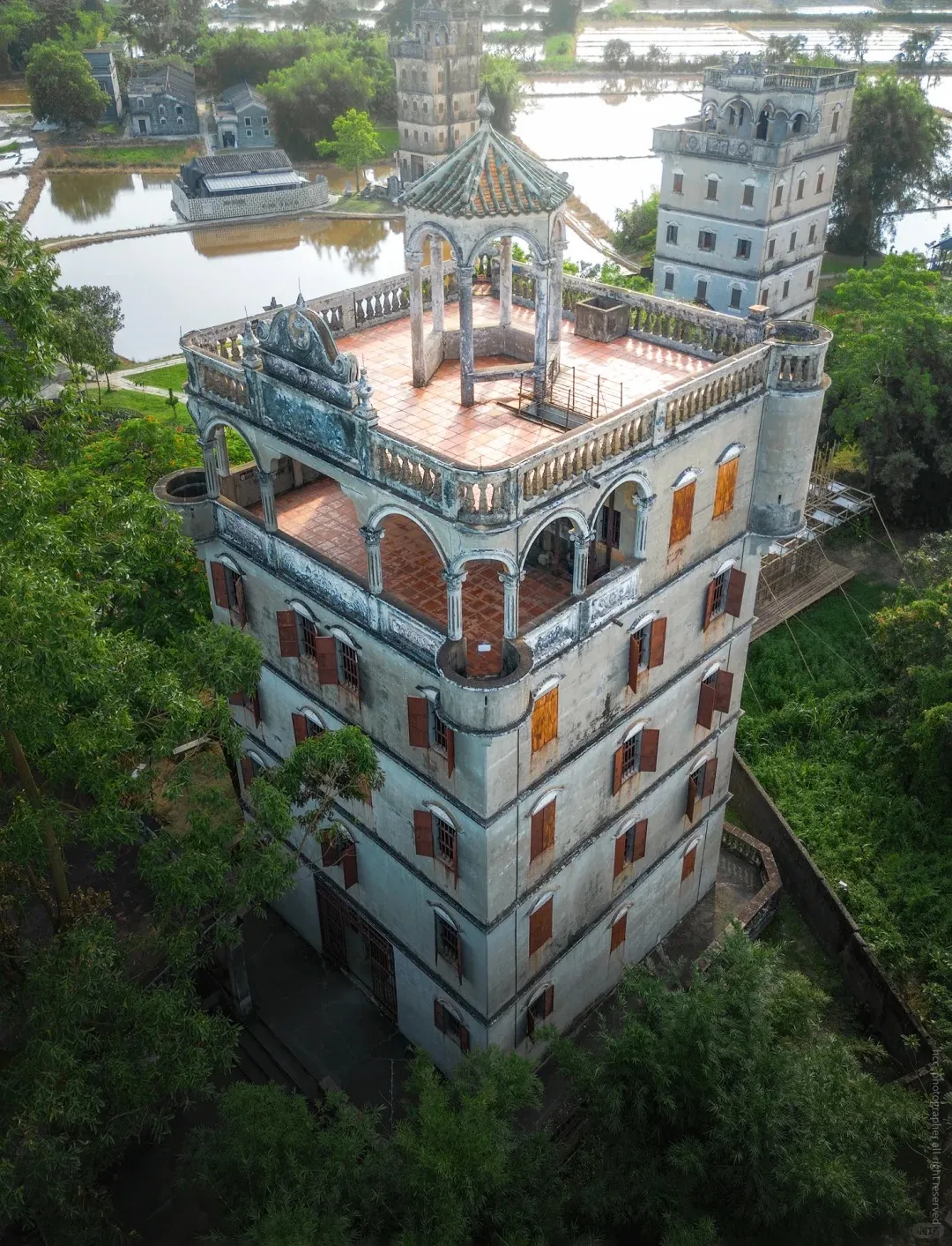
These unique Kaiping Diaolou towers in Guangdong, a UNESCO World Heritage site, blend Chinese and Western architectural styles. Explore these historic fortified residences, a perfect hidden gem for budget travelers seeking unique cultural experiences in China.
2. Enshi Grand Canyon: The Budget “Avatar” Mountains
Everyone knows Zhangjiajie, but the ticket prices and 3-hour queues are punishing. Enshi, located in Hubei province, offers similar karst geology—massive vertical limestone pillars—at a fraction of the cost and stress.
The Experience
The Enshi Grand Canyon is immense. The entrance fee is roughly 170 RMB, but accommodation in Enshi city is incredibly cheap. You can find clean, private rooms in guesthouses for 80–120 RMB ($11–$17 USD). The food here is a highlight: try the “Tujia Shao Bing” (local flatbread), which costs less than $1 USD and is a filling lunch.
Logistics and Connectivity
Enshi is easily accessible via high-speed rail from Chongqing or Wuhan. However, navigating the canyon requires reliable maps. Since Google Maps is blocked, you need a reliable connection to use Baidu Maps or Apple Maps.
Essential Connectivity: Do not rely on hotel Wi-Fi to stay connected. You need a solution that bypasses the Great Firewall.
💡 Editor’s Pick: We recommend Nomad eSIM for China because it reliably bypasses the Great Firewall with stable speeds. Use code JORICAQLKF at checkout to get $5 USD off your first data plan.
3. Jingdezhen: The Porcelain Capital
Once an industrial backwater, Jingdezhen in Jiangxi province has reinvented itself as a hip, artistic hub for young creatives. It is one of the most unique cheap places to travel in China because it offers world-class art culture on a rural budget.
Where to Find Value
Skip the expensive official museums and head to the Sculpture Factory area on a Saturday morning. This is where young artists sell their “imperfect” pieces for pennies on the dollar. You can buy hand-thrown porcelain cups for 10–20 RMB ($1.50–$3 USD) that would cost $50 in New York.
Dining Hack: Eat at the university canteens near the Ceramic Institute or the street stalls selling “Cold Noodles” (Leng Fen) for 8 RMB. The spice level is high, but so is the flavor.
4. Shaxi Ancient Town: The Yunnan of 20 Years Ago
Lijiang and Dali have become commercialized tourist traps. Shaxi, located halfway between them on the ancient Tea Horse Road, retains the silence and authenticity that budget travelers crave.
Why It’s Worth It
There is no entrance fee to the town itself (unlike Lijiang). The Friday Market is the last surviving market of its kind on the Tea Horse Road, where Yi and Bai minority women still trade mountain goods, wild mushrooms, and livestock. It is not a performance for tourists; it is real life.
Getting There
There is no train station in Shaxi. You must take a green minibus from Jianchuan county (approx. 15 RMB). The ride is bumpy and dusty, but it filters out the luxury tour groups, keeping accommodation prices in Shaxi ancient courtyards around 150 RMB ($21 USD) per night.
5. Luoyang: The Affordable Ancient Capital
Xi’an is famous for the Terracotta Warriors, but Luoyang (Henan province) was the capital of 13 dynasties and is significantly cheaper. The Longmen Grottoes are just as impressive as any site in Xi’an, featuring tens of thousands of Buddha statues carved into limestone cliffs.
Budget Dining: The Water Banquet
Luoyang is famous for the “Water Banquet” (Shuixi). Unlike expensive imperial cuisine in Beijing, this series of soups and semi-liquid dishes is designed for the common people. You can order a set for two people for under 100 RMB ($14 USD).
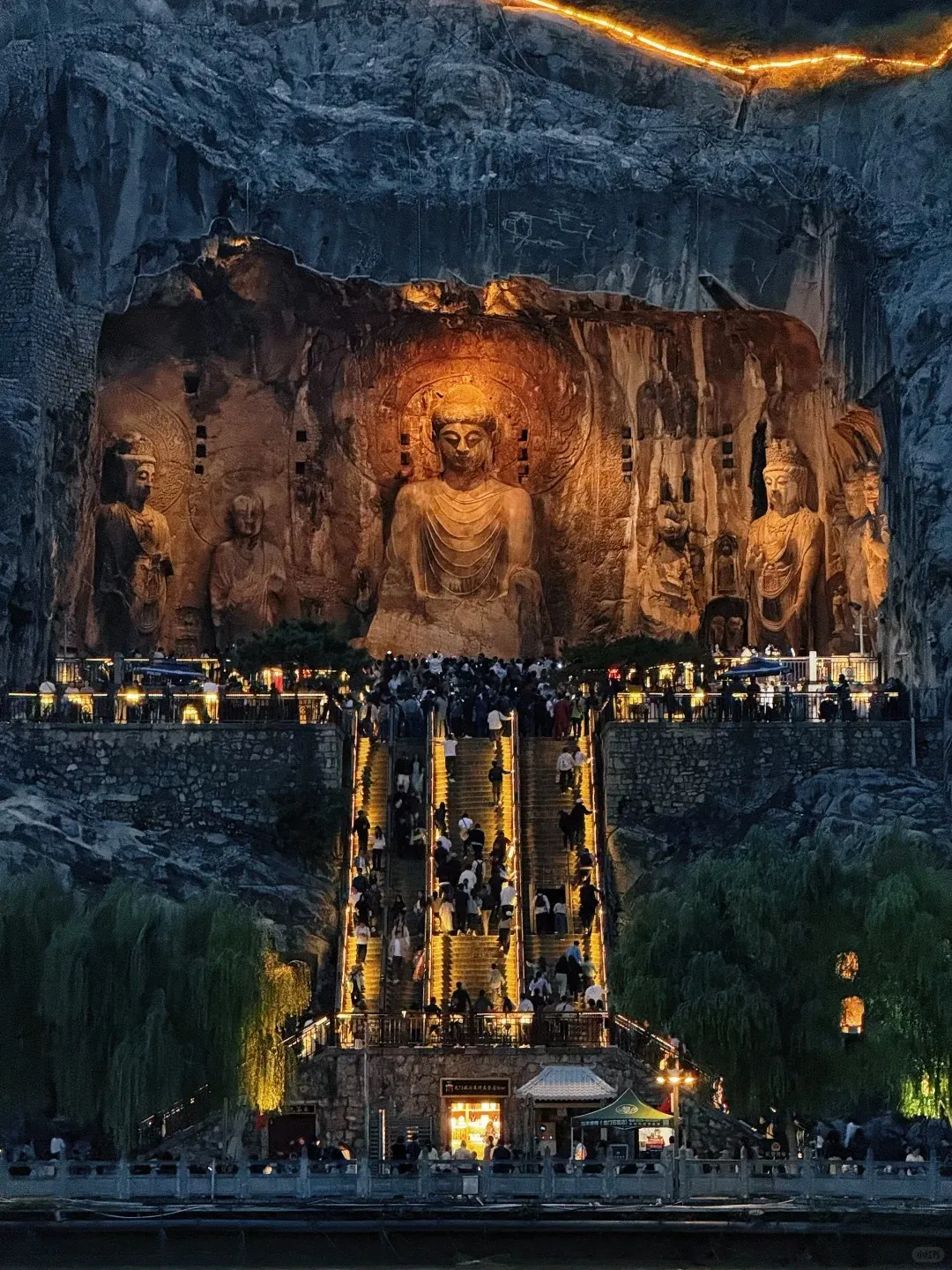
Discover the Longmen Grottoes in Luoyang, a remarkable UNESCO World Heritage site that offers immense cultural value and an unforgettable experience for budget travelers. Witness the ancient Buddha statues, carved into the cliffside, glow majestically under special nighttime illumination – a truly breathtaking sight often overlooked by mainstream itineraries.
6. Turpan: The Silk Road Oven
Xinjiang can be expensive due to distances, but Turpan is a compact, high-value stop. It is the lowest point in China and arguably the hottest. The dry heat preserves the ancient city of Jiaohe, a ruin that rivals Pompeii but costs much less to visit.
Insider Warning
Turpan is strictly controlled. Always carry your passport, even just walking down the street. However, the hospitality is unmatched. In the Grape Valley, you can often stay in family-run guesthouses where you sleep on raised platforms (kangs) under trellises of grapes for very low rates.
7. Guiyang: Spicy Food and Big Data
Guiyang, the capital of Guizhou, is virtually unknown to Western tourists but is a favorite among Chinese budget travelers. It is a city of skyscrapers built amidst karst mountains.
The “Night Market” Economy
Guiyang is arguably the best food city in China for the price. Head to Qingyun Road Night Market. You can feast on “Siwawa” (vegetarian spring rolls you wrap yourself) and sour fish soup. A massive dinner here costs about 40 RMB ($6 USD) per person. The sensory overload of chilies, fermented sour broth, and grilling tofu is unforgettable.
Practical Logistics for 2026
Booking Trains
Use the official Trip.com app or the railway’s own 12306 app (which now supports foreign passports better). Insider Tip: For long distances (e.g., Shanghai to Guizhou), book a “Hard Sleeper” berth. It costs roughly the same as a high-speed seat but saves you a night of hotel costs.
Digital Payment
Do not exchange cash at the airport. Cash is often refused by small vendors. Before you fly, download Alipay and link your Visa or Mastercard. It works seamlessly for everything from scanning subway QR codes to buying a 3 RMB bottle of water at a corner store.