


How to Get to Hua Shan from Xi’an
Forget the bus tours. The most efficient way to reach Mount Hua in 2026 is by High-Speed Rail (HSR). The infrastructure has improved significantly, making this an easy DIY day trip.
Step 1: The Train
Book a ticket from Xi’an North (Xi’anbei) to Huashan North (Huashanbei). The journey takes just 30 minutes. According to the official 12306 rail schedule, trains run frequently, but morning tickets sell out days in advance. Book via Trip.com or the official Railway 12306 app at least 3 days prior.
Step 2: The Transfer
Upon exiting Huashan North station, ignore the aggressive taxi drivers shouting “Mountain! Mountain!” Walk straight to the official green tourist shuttle buses (Route 1 or 2). These are free or cost a nominal 5 RMB fee and take you directly to the Hua Shan Visitor Center.
Choosing Your Route: North vs. West Cableway
This is where most travelers make a mistake. The mountain has five peaks (North, South, East, West, Central). You have two main cable car options, and your choice dictates the difficulty of your day.
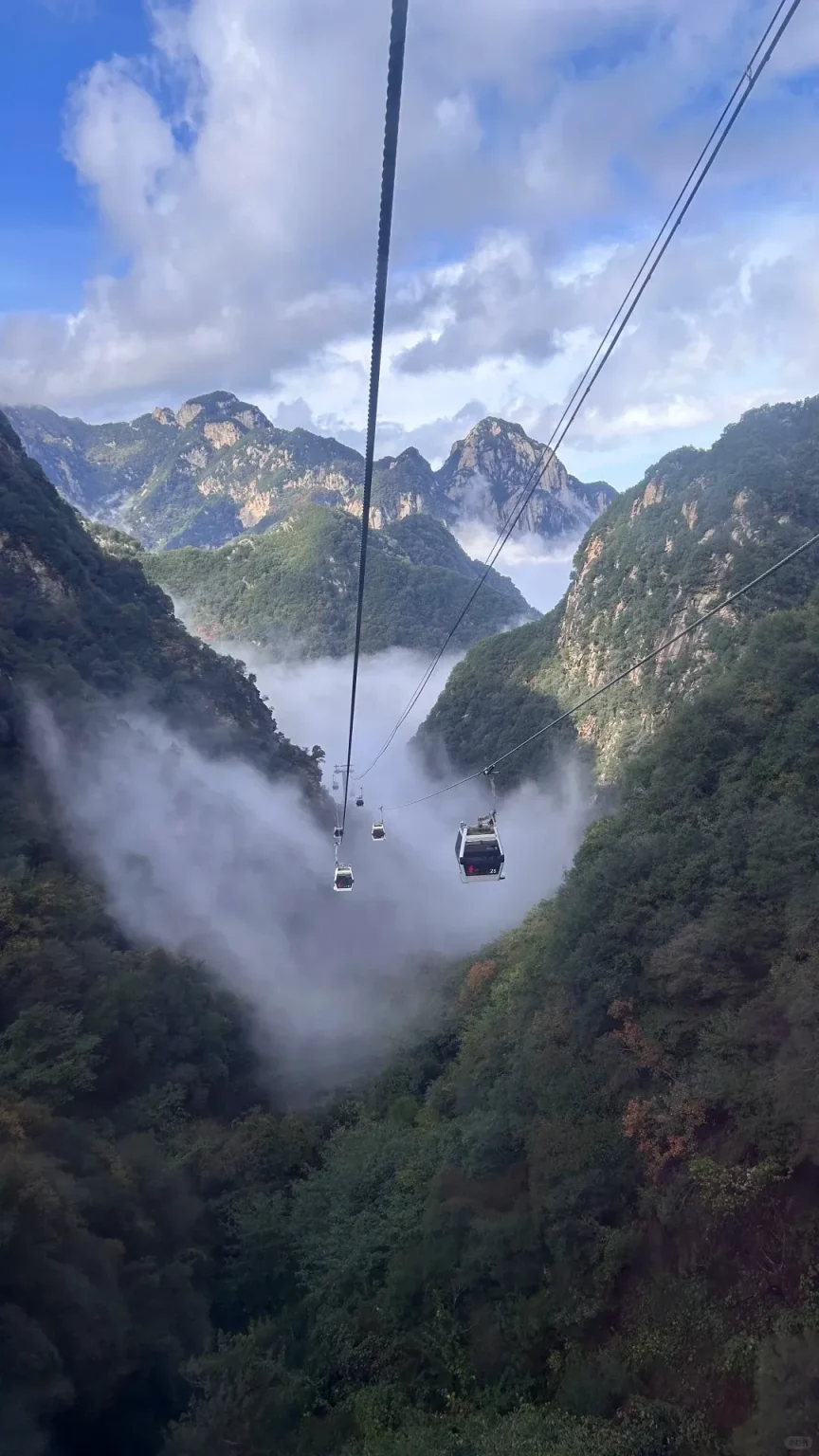
Before tackling the perilous plank walk, the West Peak cable car on Hua Shan offers a breathtaking, albeit swift, journey through the clouds. It’s the perfect prelude to conquering China’s most dangerous hike, showcasing the mountain’s majestic beauty from a unique perspective.
Option 1: The “Perfect Loop” (Highly Recommended)
West Up / North Down. The West Peak cableway is an engineering marvel that drops you near the highest summits. From here, you hike a relatively manageable path to the South and East peaks before descending via the long stairs to the North Peak. This allows you to see everything without the grueling uphill battle.
Option 2: The “Budget” Challenge
North Up / North Down. The North Peak cableway is cheaper, but it drops you at the lowest peak. To reach the famous Plank Walk or South Peak, you must hike upward for 2-3 hours on steep, narrow stairs. Only choose this if you are extremely fit or on a strict budget.
Surviving the Plank Walk in the Sky
Located on the South Peak (the highest point), the Changkong Plank Road is the attraction that put Hua Shan on the map. Is it dangerous? Statistically, accidents are rare because safety protocols are strict.
The Reality of the Walk:
You are required to rent a safety harness (approx. 30 RMB). You clip into an iron safety wire that runs the length of the cliff. The “walk” is a two-way path on narrow wooden boards. The scariest part isn’t the height; it’s unclipping and re-clipping your carabiners when passing people coming the other direction.
Insider Tip: The queue for the Plank Walk can exceed 2 hours by midday. If this is your priority, head straight to the South Peak immediately after getting off the West Cableway. If it’s raining or too windy, the staff will close this section without warning.
Staying Connected: Maps and Translation
Navigating the mountain requires reliable internet. You will need to access Alipay for payments, translation apps to read signs, and maps to find the shuttle buses. The “Great Firewall” blocks Google Maps and WhatsApp, so you need a solution that bypasses this.
💡 Editor’s Pick: We recommend Nomad eSIM for China because it reliably bypasses the Great Firewall with stable speeds. Use code JORICAQLKF at checkout to get $5 USD off your first data plan.
Do not rely on public Wi-Fi in the mountain hotels; it is virtually non-existent. Having your own data connection is a safety necessity here.
What to Know Before You Go (Insider Tips)
Having hiked this mountain multiple times, here are the sensory details and practicalities that guidebooks often miss.
1. The “Water Tax”
As you ascend, prices skyrocket. A bottle of water that costs 2 RMB in Xi’an will cost 10-15 RMB at the North Peak and up to 25 RMB at the South Peak. Porters carry these supplies up manually. Bring at least 2 liters of water with you to save money.
2. Bring “Grip Gloves”
Many sections of the trail involve pulling yourself up steep stone steps using rusty iron chains. Your hands will smell metallic and get raw quickly. You can buy cheap white cotton gloves at the base of the mountain for 5 RMB, or bring a sturdy pair of gym gloves from home.
3. The Toilet Situation
Be mentally prepared. The restrooms on the mountain are squat toilets. While they have improved significantly by 2026 standards, they often lack toilet paper and hand soap. Always carry a pack of tissues and hand sanitizer in your day pack.
Where to Stay for Sunrise
If you want to see the famous sea of clouds at sunrise, you need to stay on the mountain. The East Peak is the designated sunrise spot.
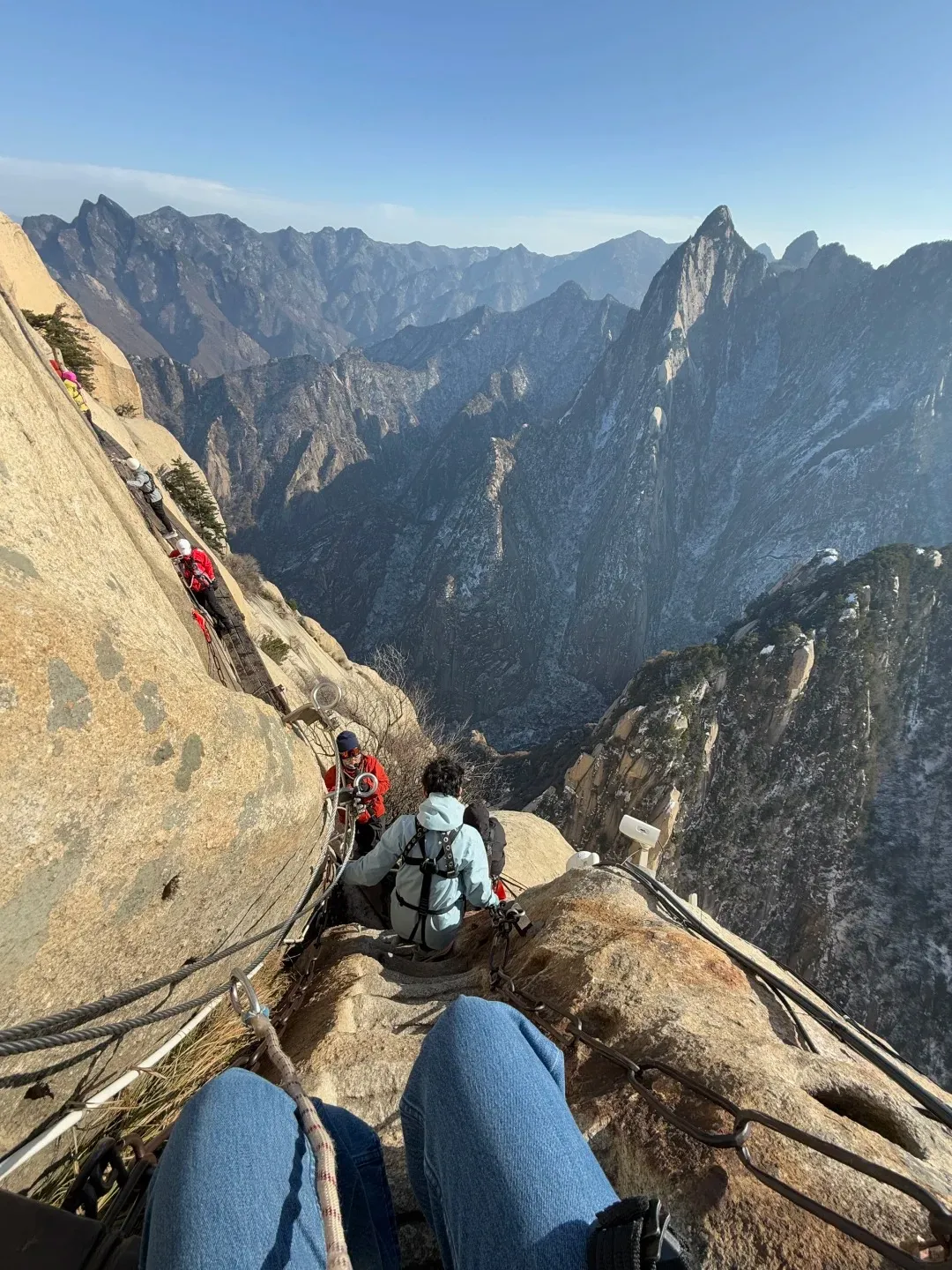
The infamous Plank Walk in the Sky is a highlight (or lowlight for those with vertigo!) of Mount Hua’s trails. Our Hua Shan Survival Guide has everything you need to know about conquering China’s most dangerous hike safely.
Accommodation Reality Check:
Hotels on the summit (like the East Peak Guesthouse) are expensive and basic. You are paying for the location, not luxury. “Dorm” rooms often lack heating and running water. However, waking up 2,000 meters above sea level before the cable cars start running offers a solitude that day-trippers never experience.
Is the 144-Hour Visa-Free Transit Applicable?
Yes. If you are transiting through China, Xi’an (XIY airport) is a participant in the 144-hour visa-free transit policy. This gives you six days to explore Xi’an and hike Mount Hua without a full tourist visa, provided you have a confirmed ticket to a third country.