


Understanding the Geography: Which Village is Which?
The Longji scenic area is massive, but it is divided into three main clusters. Choosing the wrong entry point is the #1 reason travelers get stuck in crowds.
- Ping’an Village: The oldest and most commercialized. It has paved paths and is accessible for casual walkers, but it is overrun with tour groups by midday.
- Dazhai (Jinkeng) Village: The largest area with the most dramatic views. It has a cable car, which attracts heavy foot traffic at the base and the peak.
- Tiantou Zhai: The Insider Choice. This village sits above Dazhai. It is accessible only by hiking (40 mins uphill) or local jeep. Tour buses cannot reach here, making it the quietest place to sleep with the best sunrise views.
Getting There: The Logistics
You do not need a private guide to get to Longji, but you do need to navigate the transfer correctly.
From Guilin or Yangshuo
Official Direct Bus: During peak season, direct buses run from Guilin Qintan Bus Station. However, the most reliable DIY method is the “Express Line” shuttle often bookable via WeChat or your hotel.
Cost: Approx. 50–80 CNY per person.
Time: 2.5 hours from Guilin; 4 hours from Yangshuo.
⚠️ Mistake to Avoid: Do not take the cheap “tourist buses” advertised on the street in Yangshuo for 40 CNY. These are shopping tours disguised as transport. They will stop at pearl factories and tea shops, wasting hours of your hiking time.
The Ultimate Hiking Route: Dazhai to Ping’an
Instead of doing a loop in one village, the best way to experience the scale of the terraces is a point-to-point hike connecting the two main villages. This route covers approximately 14km (9 miles) and takes 4 to 5 hours.
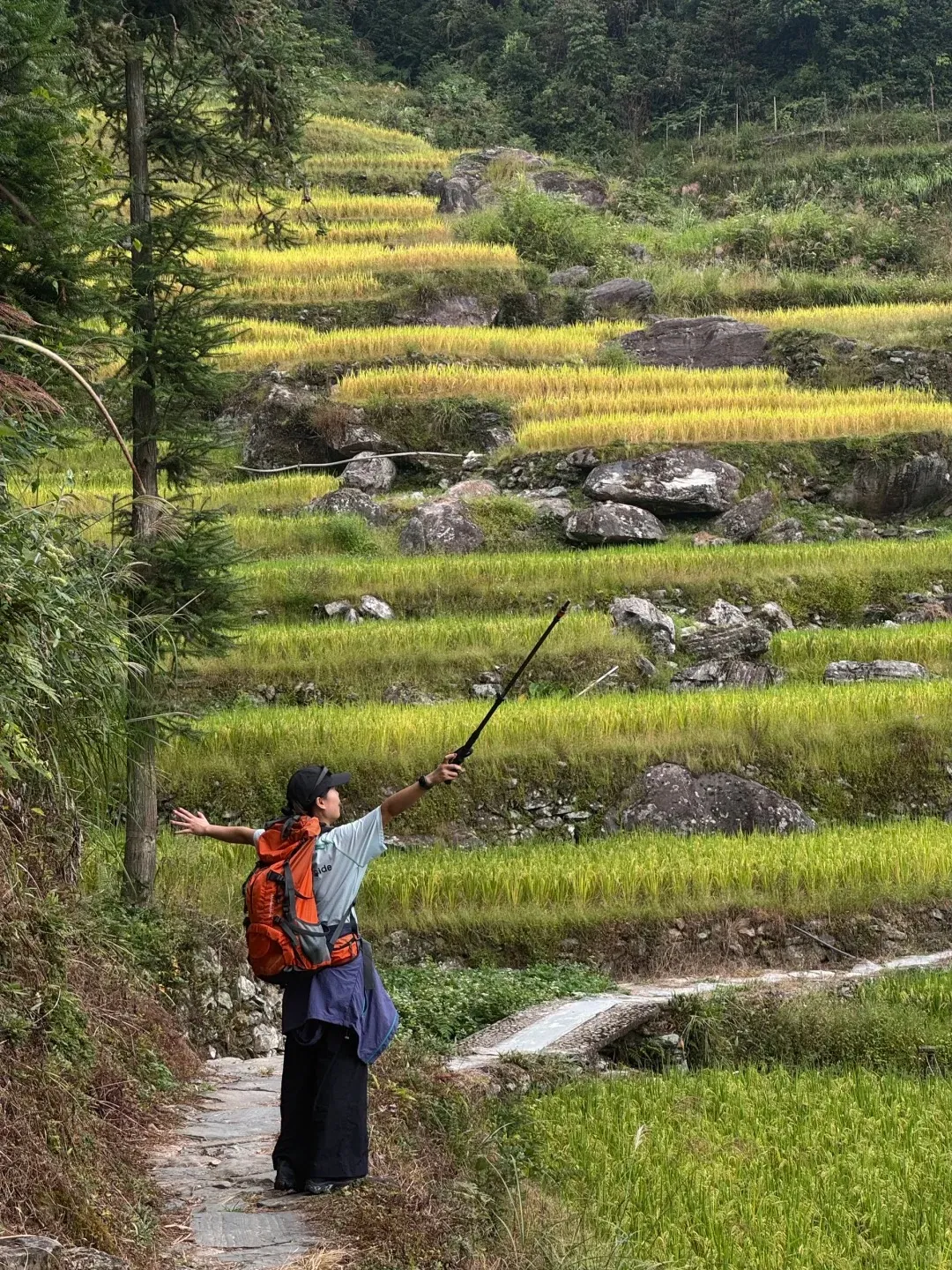
A joyful hiker with an orange backpack stands with arms outstretched on a narrow stone path, holding a selfie stick, amidst vibrant golden and green Longji rice terraces, with lush mountains in the background, showcasing the tranquil beauty without tour crowds.
Step 1: Start High (Dazhai/Tiantou Zhai)
Start your morning in Tiantou Zhai. Watch the sunrise over the “West Hill Music” viewing platform. Because you slept on the mountain, you are viewing this at 6:30 AM, hours before the first tour bus arrives from Guilin.
Step 2: The Middle Section (The Quiet Zone)
Follow the signs toward Zhongliu Village. This is the halfway point. The path here is narrow, paved with flagstones, and winds through thick bamboo forests and small waterfalls. You will likely encounter local Yao women working the fields, but very few tourists.
Sensory Detail: The stone paths can be incredibly slippery if it has rained (which it often does). The air here smells distinctly of wet earth and woodsmoke. Unlike the main paths in Ping’an, there are no vendors selling souvenirs here—bring your own water.
Step 3: Arrival in Ping’an
You will descend into Ping’an via the “Nine Dragons and Five Tigers” viewing point. By arriving in the afternoon on foot, you are entering the back of the village just as the day-trippers are starting to leave.
Contrarian Tip: Skip the “Long Hair Village”
Most guides will tell you to stop at Huangluo Yao Village (the “Long Hair Village”) located near the river at the bottom of the valley. This village holds a Guinness World Record for the women’s hair length.
My advice? Skip it. It has become a “human zoo” experience where tourists pay to watch a staged performance. The interaction feels transactional and lacks the authenticity you find by simply hiking through Zhongliu or Tiantou Zhai, where you can chat with locals naturally without a ticket fee involved.
Critical Logistics: Luggage and Tickets
What is the “Passport Ticket” Rule?
Definition: The Longji Rice Terraces entrance fee (80 CNY) is charged at the main gate at the bottom of the mountain. Your ticket is linked to your passport. You must keep your ticket (or a photo of the QR code) as ticket inspectors may check it again as you pass between village boundaries on the hike.
Handling Your Luggage
You cannot drag a suitcase on the hiking trails. The paths are made of uneven slate steps.
- The Storage Option: Leave your main luggage at the entrance gate luggage office (approx. 30 CNY/day) and pack a day pack for your overnight stay.
- The Porter Option: If you are staying in Tiantou Zhai, locals with bamboo baskets will offer to carry your bag up from the parking lot. Negotiate the price before you start walking. A fair price is usually 50–80 CNY depending on the weight. It looks expensive, but once you see the vertical incline, you will realize it is money well spent.
Best Time to Visit for Photographers
The terraces change color dramatically throughout the year. To avoid disappointment, plan around the agricultural calendar.
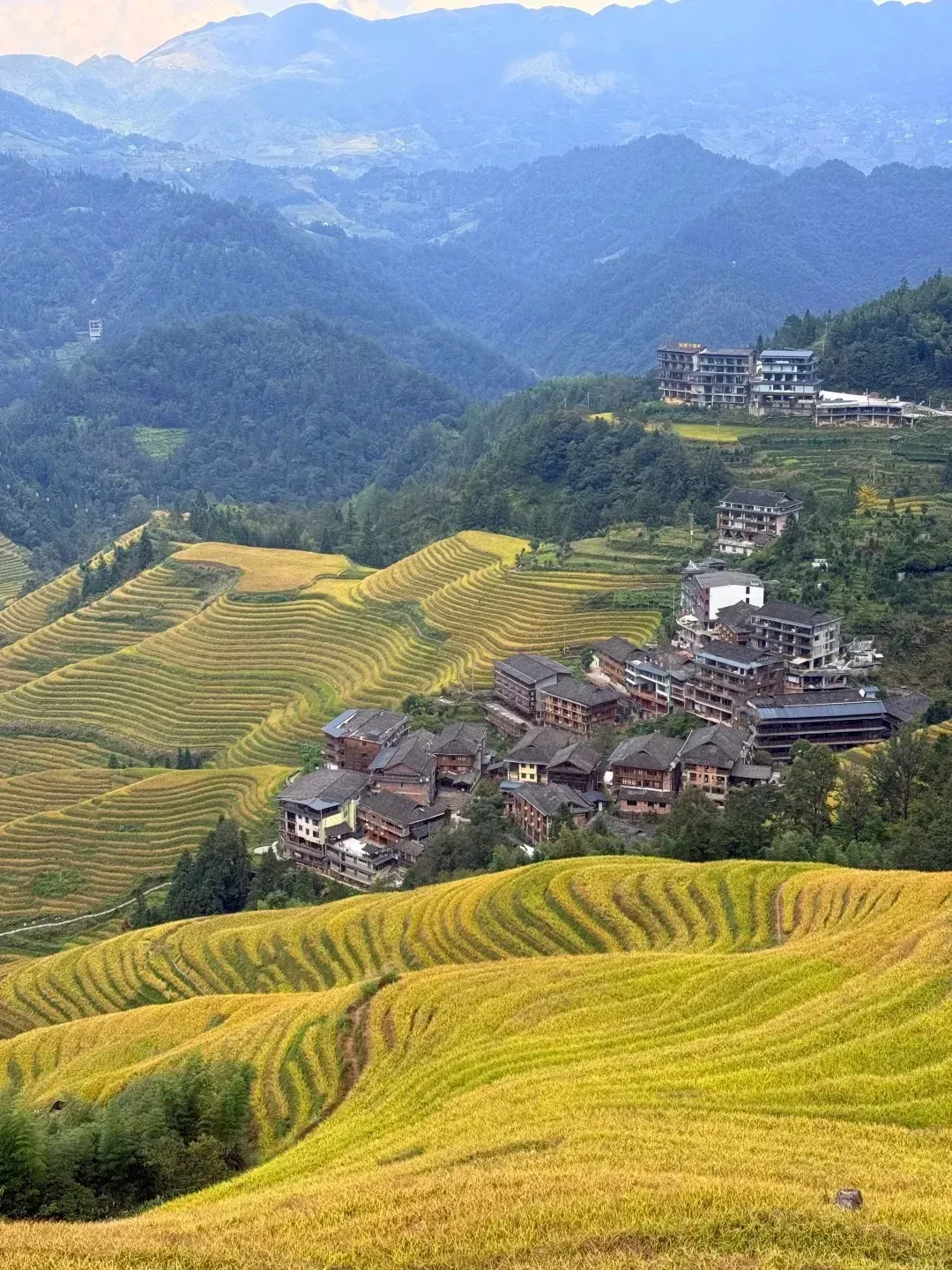
A breathtaking panoramic view of the Longji Rice Terraces, shimmering golden during the autumn harvest season. The intricately curved rice paddies cascade down the hillsides, framing a traditional wooden village nestled in the valley. Beyond, layers of forested mountains extend into a misty blue distance.
- Late May to Mid-June (Mirror Season): The paddies are irrigated but the rice hasn’t grown high yet. The water reflects the sky. This is visually stunning but also the rainy season—prepare for fog.
- July to Mid-September (Green Season): The rice is tall and vibrant green. It is hot and humid, but the hiking is beautiful.
- Late September to Mid-October (Gold Season): The rice turns golden yellow ready for harvest. This is arguably the most beautiful time, but it coincides with the Chinese “Golden Week” holiday (first week of October). Avoid Golden Week at all costs—the hiking trails become gridlocked.