


What Exactly is the Dongchuan Red Land?
The “Red Land” isn’t a single park with a gate; it is a massive, 50-kilometer stretch of terraced fields located in the Wumeng mountainous area. The intense red color comes from the high iron and aluminum content in the soil, which has oxidized over millions of years. Because the land is farmed year-round, the scenery changes constantly based on what is planted—potatoes, barley, or corn—creating a patchwork of red, green, gold, and white.
When is the Absolute Best Time to Visit?
Timing is everything here. If you visit when the crops fully cover the soil, you miss the red contrast. If you visit in winter, the colors can be dull. In 2026, weather patterns have remained consistent with historical data.
The Two Peak Seasons
- May to June: This is arguably the most colorful time. The fields are a mix of the red earth, golden wheat ready for harvest, and blooming white potato flowers. The contrast is spectacular.
- September to November: This is the autumn harvest. Farmers are turning the soil over for the next season, exposing large swathes of fresh, deep crimson earth. In November, you also get distinct yellow patches from rapeseed flowers.
Insider Tip: The absolute best photography conditions occur on the third day after a rainfall. The rain saturates the soil, turning it from a dusty orange to a deep, blood-red, while the air is scrubbed clean of haze. If your itinerary allows flexibility, watch the weather forecast in Kunming.
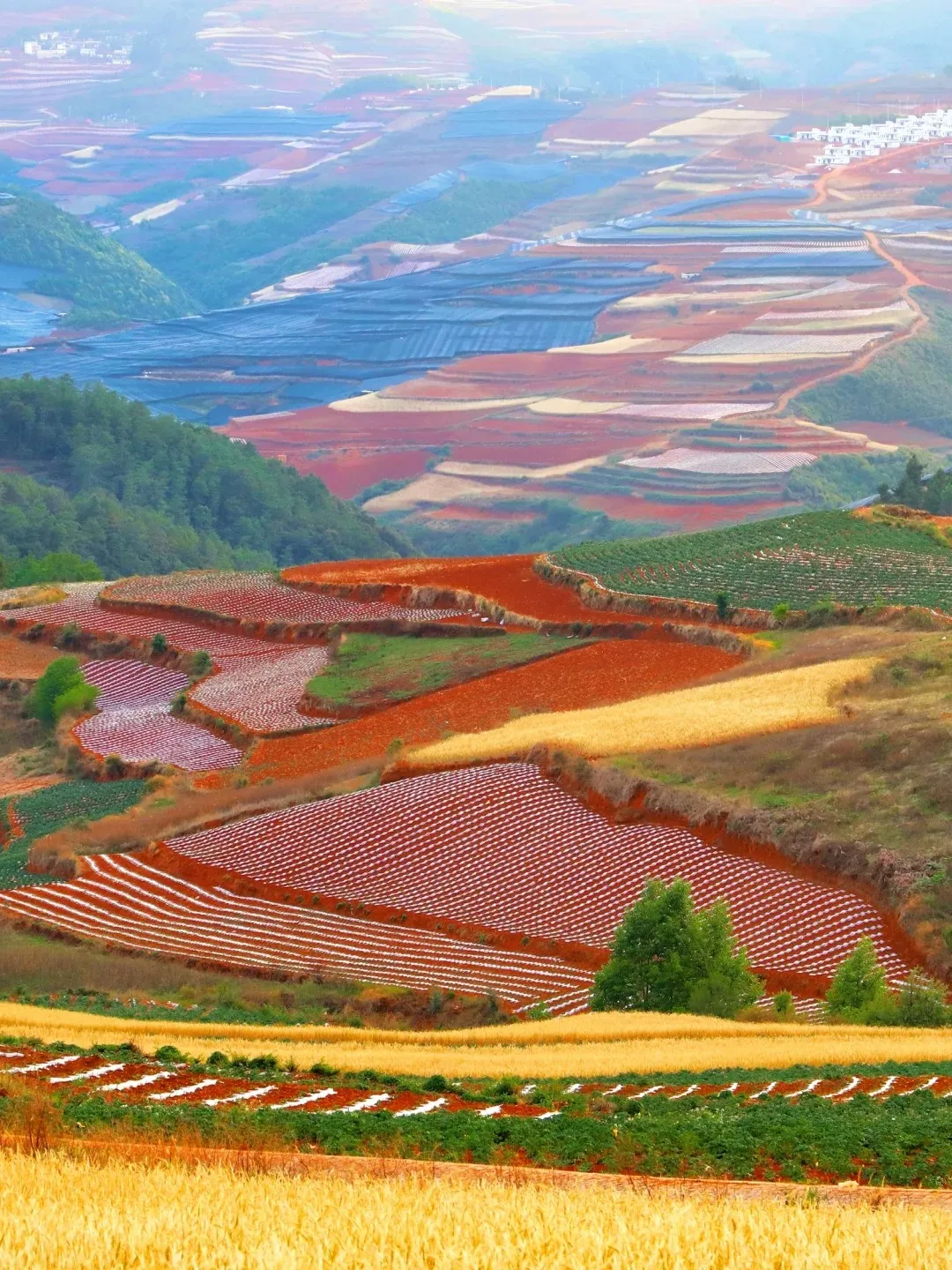
Beyond its striking beauty, Dongchuan Red Land is a testament to the region’s unique iron-rich soil and the ingenious terracing techniques that create China’s most colorful agricultural landscape, inviting travelers to explore its vibrant depths.
How to Get to Dongchuan from Kunming
Logistics are the biggest hurdle for travelers. Dongchuan is technically part of Kunming Municipality, but it is a winding, mountain drive away.
Option 1: Private Car Charter (Recommended)
This is the only way to efficiently see the area. A round-trip charter from Kunming, including a driver for 1-2 days within the scenic area, typically costs between 800 to 1,200 CNY ($110–$165 USD) depending on the vehicle type and fuel prices in 2026. You can book these via WeChat, your hotel concierge in Kunming, or travel apps like Trip.com.
Option 2: Public Bus (The Budget Route)
You can take a bus from Kunming North Bus Station to Fazhe (passing through Huashitou Village). You must tell the driver to drop you off at “Huagou” (Flower Gully) or Huashitou. The trip takes about 4 hours.
The Catch: Once you get off the bus, you are stranded. The viewpoints are kilometers apart. You will still need to hire a local van driver (mianbaoche) to take you around the loop, which defeats the purpose of saving money on the bus unless you are a solo backpacker.
Warning: The road to Dongchuan involves significant elevation changes and winding mountain passes. If you suffer from motion sickness, bring medication.
Navigating the Viewpoints: A Photographer’s Itinerary
The area is loosely divided into locations best for sunrise, sunset, and midday light. You need at least one overnight stay to capture both.
Sunrise: Damakan (打马坎)
Located high on a hill, this is the classic sunrise spot. You look down into a valley where a village sits nestled in the fields. At dawn, smoke from kitchen chimneys often mixes with low-hanging clouds.
Reality Check: It is freezing cold here at 6:00 AM, even in summer. The wind cuts through jackets. Bring gloves and a tripod.
Sunset: Luoxiagou (落霞沟)
Meaning “Sunset Valley,” this is the postcard shot of Dongchuan. The land here rises and falls dramatically, looking like a sunken depression. The late afternoon light hits the ridges, creating shadows that make the colors pop. Arrive by 4:30 PM to secure a spot for your tripod, as it gets crowded with photography tour groups.
Mid-Day: Yuepuao (Music Hollow)
This spot is famous for its rhythmic, line-like terraces that resemble a musical staff. This is also where you will likely encounter the “Old Man and his Dog”—a local gentleman who models for photographers (with his sheepskin coat and pipe) for a small tip. It’s staged, but it makes for a classic Yunnan portrait.
Staying Connected in Rural Yunnan
While Dongchuan is rural, 5G coverage is generally available in the main villages, though it can be spotty in the valleys. Navigating maps and translation apps is critical here since English is rarely spoken.
You will need a reliable internet connection that bypasses the Great Firewall to access Google Maps, Gmail, or Instagram. Roaming with your home carrier often works, but it is expensive and throttled.
💡 Editor’s Pick: We recommend Nomad eSIM for China because it reliably bypasses the Great Firewall with stable speeds. Use code JORICAQLKF at checkout to get $5 USD off your first data plan.
Where to Stay: Managing Expectations
Do not expect 5-star luxury. Accommodation is clustered in Huashitou Village and Huagou. In 2026, boutique guesthouses have improved, but they are still rural.
- The Standard: Most rooms are clean but simple. “Heating” usually means an electric blanket on the bed, not central air conditioning.
- Food: Guesthouses usually serve meals. Expect local farmhouse dishes: stir-fried pork, yak meat, local potatoes (famous in this region), and wild mushrooms.
- Pricing: A decent room ranges from 150 to 400 CNY ($20–$55 USD) per night.
Practical Tips for the Red Land
1. The “Red” Stain Warning
The iron oxide in the soil is potent. If you walk into the fields to get a close-up shot, the red dust will cling to your shoes and pants. If it gets wet, it turns into a dye that is incredibly difficult to wash out of white fabric. Wear dark hiking boots or shoes you don’t mind getting dirty.
2. Bring Cash
While Alipay and WeChat Pay are accepted almost everywhere in China, the signal in some parts of the Red Land can be weak, making digital payments slow. Keep 200-300 CNY in cash for small vendors selling water, roasted potatoes, or for tipping local models.
3. Drone Regulations
As of 2026, Dongchuan is generally a drone-friendly area compared to major cities. The aerial perspective of the red and green patchwork is stunning. However, high winds are common on the ridges (Wafang Liangzi), so fly with caution.
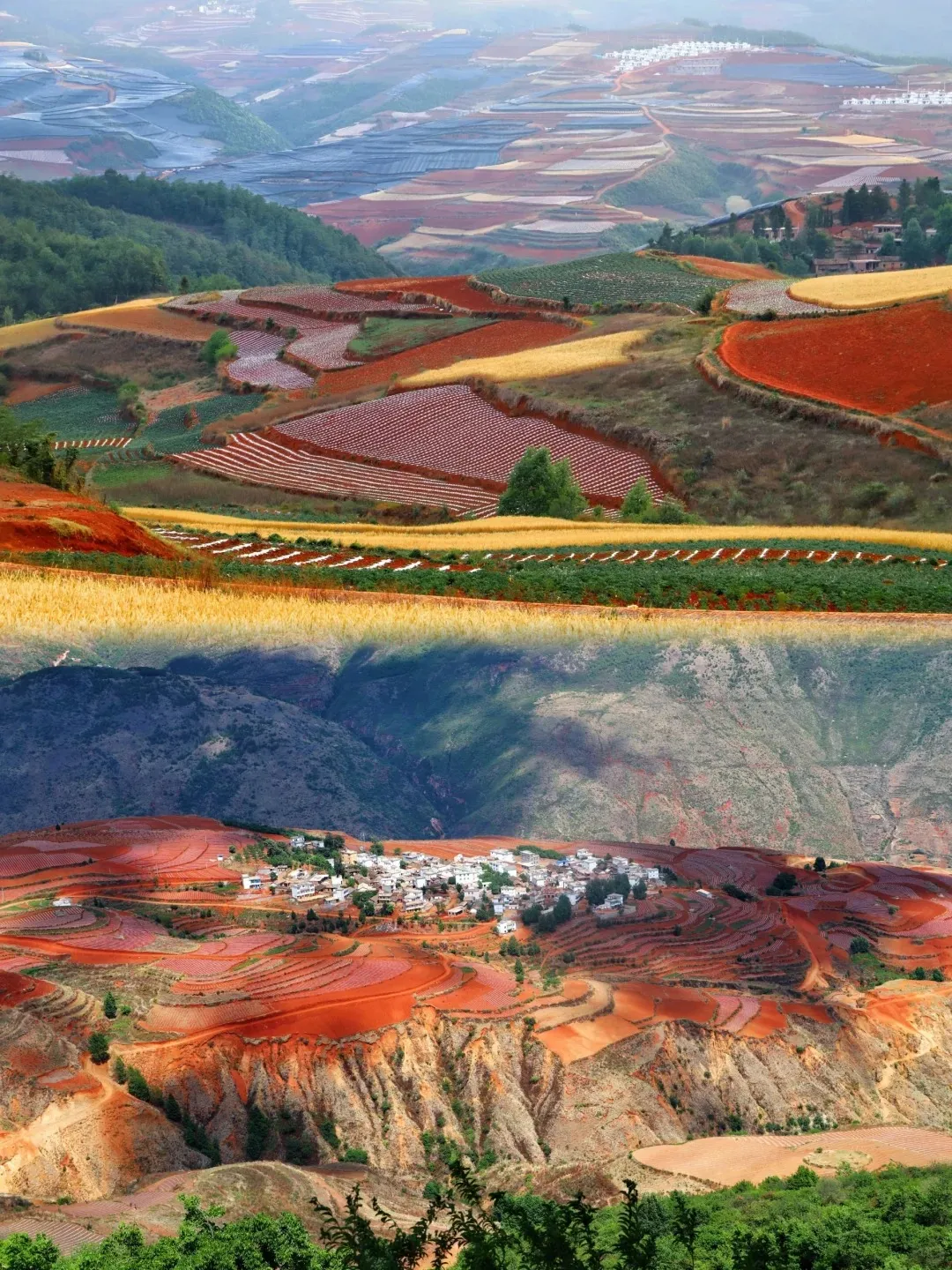
The breathtaking hues of Dongchuan Red Land truly live up to its reputation as China’s most colorful landscape. The unique iron-rich soil creates a stunning palette that changes with the seasons and the crops planted across its iconic terraced fields.
Is Dongchuan Worth It?
If you are looking for a relaxing resort holiday, Dongchuan is not it. The roads are bumpy, the hotels are cold, and the food is simple. However, if you are a photographer or a traveler who wants to see a side of China that feels ancient and geologically unique, it is absolutely worth the detour.
Unlike the Rice Terraces of Yuanyang, which require water to look their best, Dongchuan is vibrant year-round (except mid-winter). For the best experience, pair this trip with a visit to the Stone Forest or purely as a 2-day photography excursion from Kunming.