


What is a “Minsu”?
Definition: A Minsu (民宿) is the Chinese equivalent of a B&B or guesthouse. Unlike standard hotels, these are often family-run, located in historic buildings or scenic rural areas, and offer a more intimate look at local culture. While some are basic, the “Boutique Minsu” market has exploded, offering luxury amenities comparable to 5-star hotels.
The Great Wall: Sleeping Beside History
Most tourists make the mistake of visiting the Great Wall as a crowded day trip from Beijing. The contrarian tip here is to skip the early morning bus and instead book a stay overnight. The wall is empty at sunset and sunrise.
Brickyard Retreat (Mutianyu, Beijing)
Located in Beigou Village, this is a masterclass in adaptive reuse. A former glazed tile factory has been converted into a design-forward eco-retreat. The rooms feature floor-to-ceiling windows that frame the Great Wall, but the real draw is the sensory experience: the smell of woodsmoke in the village winter and the absolute silence of the countryside.
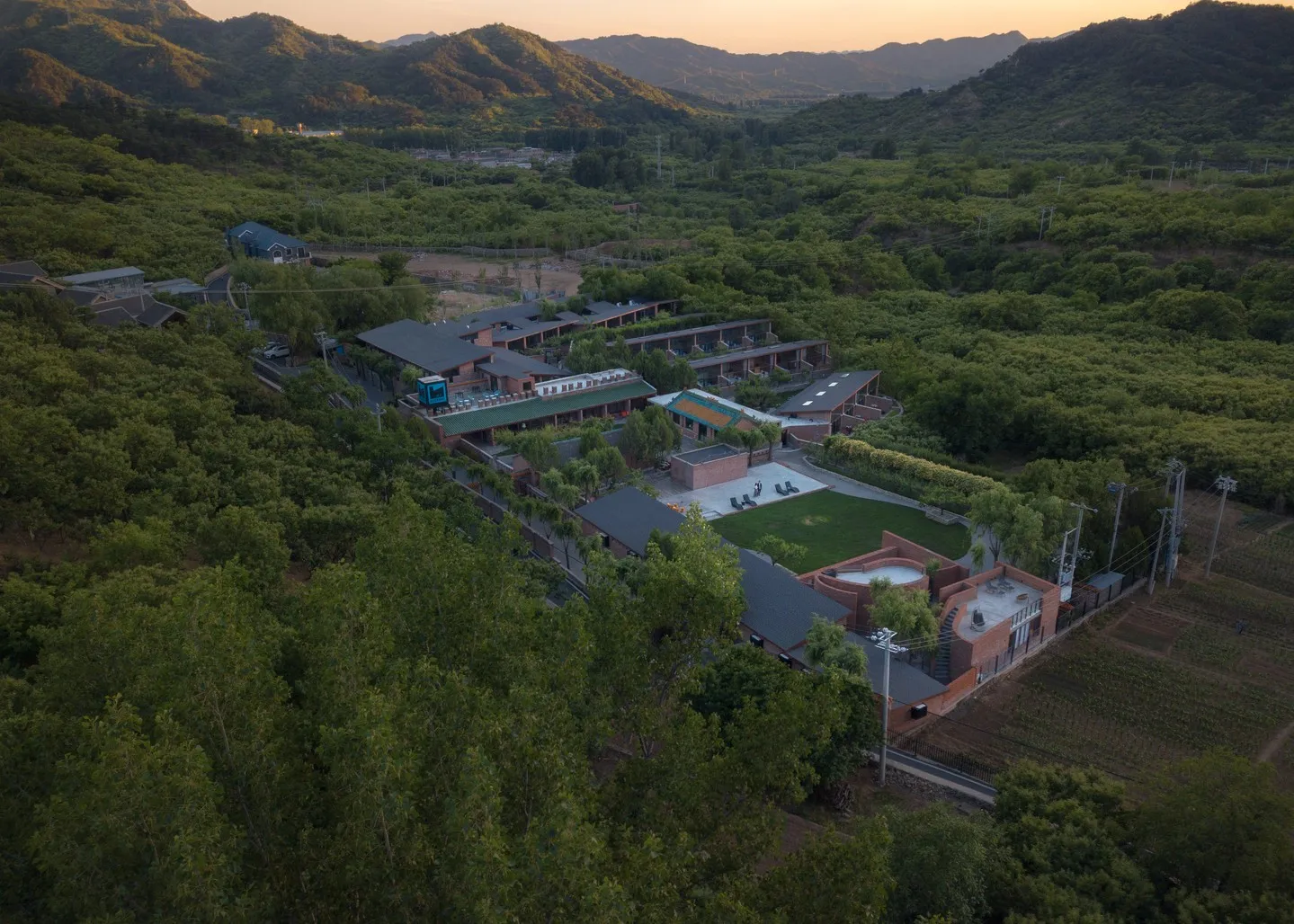
Discover unique stays like the Brickyard Retreat, where contemporary architecture blends seamlessly with the natural beauty of China’s mountainous regions, offering a peaceful and distinctive escape.
- Why it’s unique: The walls feature colorful mosaics made from salvaged factory tiles.
- Insider Tip: Ask for the “Chairman’s Suite” for the best panoramic views. Don’t expect a typical hotel lobby; this feels like a private estate.
- Logistics: It is roughly 1.5 hours from downtown Beijing. Private transfer is recommended over public transit.
Yunnan Province: The Ancient Tea Horse Road
Yunnan offers the highest concentration of heritage architecture converted into luxury accommodation. The air is thinner here, and the pace is slower.
The Linden Center (Shaxi, Yunnan)
Brian Linden, an American expatriate, transformed this heritage site in Shaxi—the only surviving historic market town on the Tea Horse Road. The center is more than a hotel; it is a cultural exchange hub.
The architecture uses “rammed earth” construction, which glows with a subtle sheen in the high-altitude sun. Unlike Lijiang, which has become commercialized and noisy, Shaxi remains quiet after dark.
- Mistake to Avoid: Do not try to visit Shaxi as a day trip from Dali or Lijiang. The roads are winding and take time. Stay at least two nights to explore Shilong Village nearby.
- Price Point: Rooms generally start around $350 USD.
The Bivou (Lijiang, Yunnan)
If you must stay in Lijiang, avoid the overcrowded Old Town center. The Bivou is located in Shuhe (a quieter district) within historic Naxi farmyards. It blends rustic farm aesthetics with modern comfort.
Crucial Health Tip: If you are heading to higher altitudes like Shangri-La afterward, consider staying at the LUX* Shangri-La. It is one of the few hotels equipped with an oxygen-infusion system in the rooms, which can save your trip if you suffer from altitude sickness.
Rice Terraces & Karst Mountains: The View from Above
Getting to the best views often involves physical effort. In these regions, luxury means exclusivity of location, not just thread count.
LiAn Lodge (Longsheng, Guangxi)
Perched high above the Dragon’s Backbone rice terraces, this lodge is built entirely of wood using traditional Chinese tongue-and-groove joinery (no nails). The building creaks with history and wind.
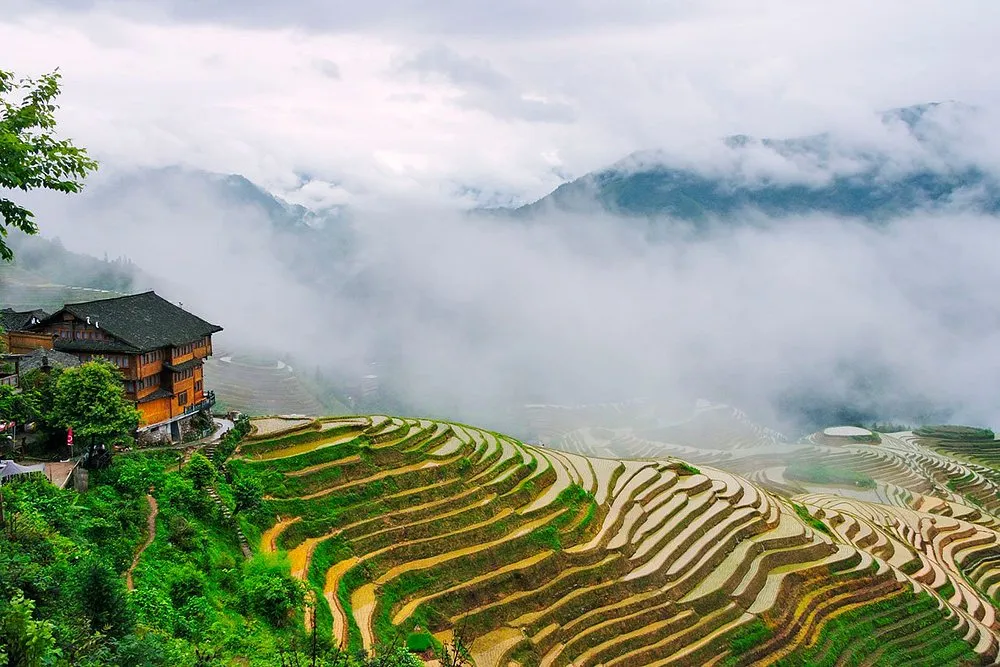
Experience a truly unique stay at LiAn Lodge, perched amidst the magnificent Longsheng rice terraces, offering unparalleled views and a serene retreat in China.
- The Logistics Reality: You cannot drive to the front door. Reaching the lodge requires a 30-40 minute hike up stone paths.
- Service Note: The lodge arranges luggage porters (often strong local women with baskets). Do not attempt to drag a rolling suitcase up these mountain paths yourself; you will break the wheels.
- Best Time to Visit: Late May for water-filled terraces (mirror effect) or October for the golden harvest.
The Well House (Dali Dong Village, Guizhou)
Located in the remote “Pearl Hidden in the Mountains,” this property uses cedarwood and blackened bricks to match the village’s Drum Tower. It offers a tactile richness that concrete hotels lack.
Booking Challenge: This property does not have a standard website. You must book via their WeChat channel (ID: dongtianminsu). This is common for the most exclusive unique hotels in China; if you can’t use WeChat, you may need a travel agent to secure the room.
Ancient Walled Cities: Sleeping in the Qing Dynasty
Jing’s Residence (Pingyao, Shanxi)
Pingyao is China’s best-preserved ancient walled city. Jing’s Residence is a renovated Qing Dynasty silk merchant’s mansion featuring grey-brick pavilions and four serene courtyards.
- Atmosphere: While the streets of Pingyao are chaotic with tourists, the courtyards here are dead silent. As evening descends, subtle lighting illuminates the bamboo groves.
- Dining: The on-site restaurant offers refined versions of Shanxi noodle dishes, which are often oily and heavy in street stalls.
Practical Guide to Booking & Logistics
To secure these stays, you need to adjust your booking strategy.
1. The “Foreigner Capability” Check
According to Chinese public security regulations, hotels must register guests with the local police (PSB). Many small guesthouses lack the software or license to register non-Mainland ID holders. Always message the property: “Do you accept foreign passports?” before paying.
2. Navigation Apps
Google Maps does not work reliably in China. Download Amap (Gaode Ditu) or use the built-in map in the Alipay app (which has an English translation feature) to find these hidden boutique hotels. Taxi drivers will often refuse to drive into narrow ancient alleyways; be prepared to walk the last 200 meters.
3. Connectivity
Most of these boutique hotels offer Wi-Fi, but they are behind the “Great Firewall.” You must install a reliable VPN (Virtual Private Network) or an eSIM with roaming data before you board your flight to China if you want to access Gmail, Instagram, or WhatsApp.