



The Digital Duopoly: Alipay vs. WeChat Pay
While Western countries have fragmented payment systems, China runs on a duopoly. You will see two colors everywhere: Blue (Alipay) and Green (WeChat Pay/Weixin).
Which one should you download? The short answer: Both. However, if you can only manage one, prioritize Alipay. Based on recent traveler experiences, Alipay’s interface is more intuitive for English speakers and the identity verification process is often faster (sometimes completed within an hour).
Step-by-Step: Setting Up Alipay
Do not wait until you land in Beijing to do this. The verification process requires SMS codes and passport uploads, which are much easier to handle from home.
- Download the App: Ensure you download the international version of Alipay (not AlipayHK, which is specific to Hong Kong).
- Register: Sign up using your home mobile number. You will receive an SMS verification code.
- Add Your Card: Go to “Me” > “Bank Cards” > “Add Card”. You can input your Visa, Mastercard, Discover, or Diners Club details here.
- Identity Verification: This is the critical step. You will need to scan your passport face page and likely perform a facial recognition scan. Without this, your spending limits will be severely restricted.
What is the TourCard?
If your direct credit card link fails, Alipay offers a “TourCard” mini-program. This creates a virtual prepaid Chinese bank account valid for 180 days. You top it up using your foreign currency. Note: There is usually a 5% service charge for top-ups, so use this only as a backup if direct linking doesn’t work.
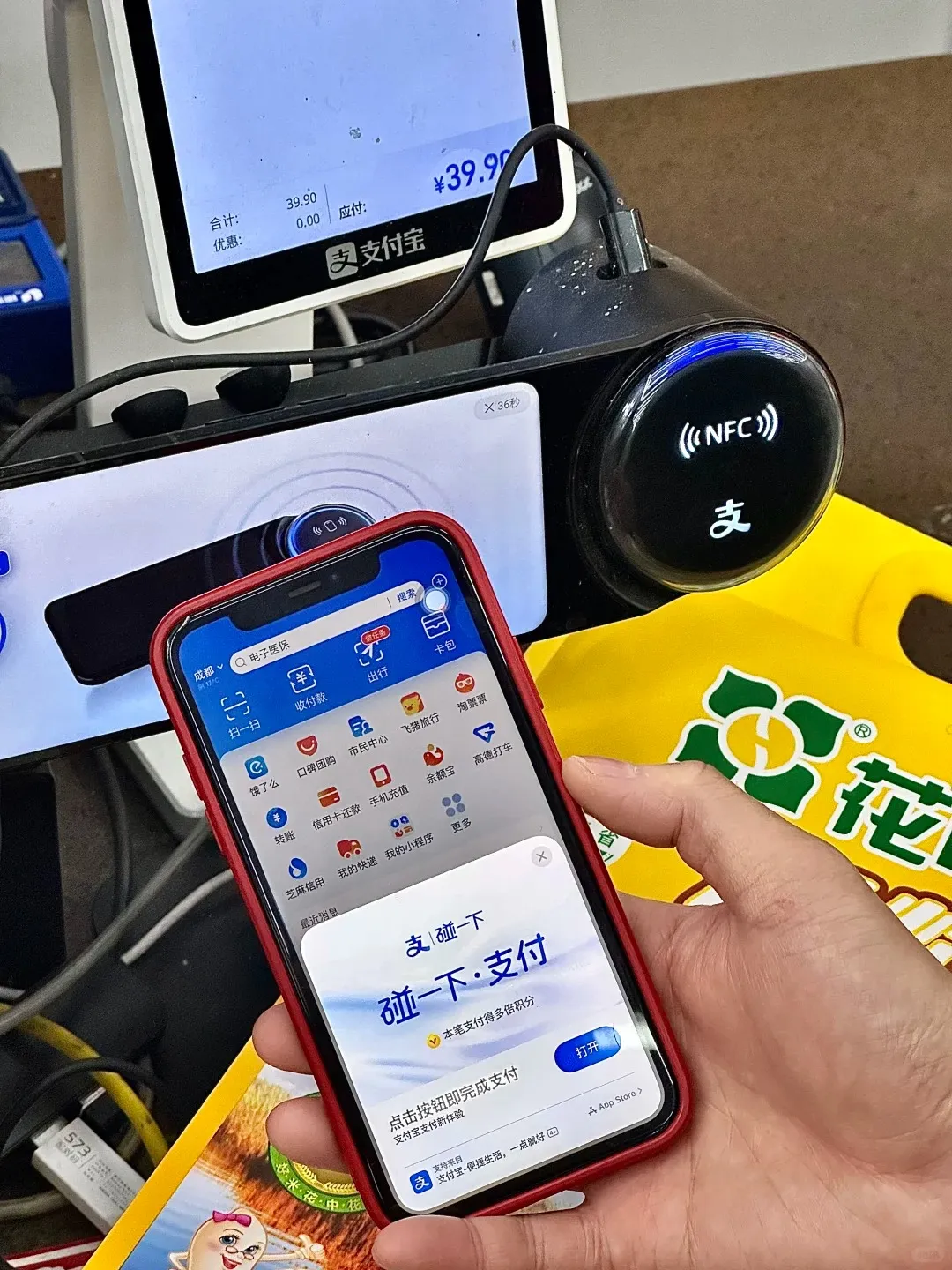
Alipay, a cornerstone of China’s mobile payment revolution, offers seamless ‘Tap to Pay’ NFC options in addition to QR codes, making transactions faster and more convenient for shoppers.
Step-by-Step: Setting Up WeChat Pay
WeChat (known domestically as Weixin) is more than a payment app; it is China’s social lifeline. However, its security protocols can be stricter.
- Download WeChat: Sign up with your international number.
- Activate the Wallet: Go to “Me” > “Services” > “Wallet”. If you don’t see “Services,” you may need to wait a few days or ask a friend who uses WeChat to send you a “Red Packet” (a small digital cash gift) to trigger the wallet function.
- Verification: Like Alipay, you must upload your passport details.
- Linking Cards: WeChat now accepts most major international cards. However, if a transaction fails, it is often a security block from your bank, not WeChat. Call your bank to authorize transactions to “TenPay” or “WeChat.”
Crucial Logistics: Connectivity
You cannot participate in the cashless economy without reliable mobile data. Public Wi-Fi in China often requires a Chinese phone number to log in, leaving you stranded.
Insider Tip: Do not rely on roaming from your home carrier, as it is often throttled and expensive. More importantly, standard roaming or local Chinese SIM cards will block Google, Gmail, Instagram, and WhatsApp due to the “Great Firewall.” To access your apps and pay smoothly, you need a high-quality eSIM.
💡 Editor’s Pick: We recommend Nomad eSIM for China because it reliably bypasses the Great Firewall with stable speeds. Use code JORICAQLKF at checkout to get $5 USD off your first data plan.
How to Pay: The “Scan” vs. “Pay” Confusion
This is the most common mistake first-time visitors make. There are two distinct ways to pay, and using the wrong one will confuse the cashier.
1. You Scan Them (The “Scan” Button)
Used at: Small street vendors, taxi drivers, mom-and-pop noodle shops.
- Look for a printed QR code on the wall or counter.
- Open the app and tap “Scan”.
- Point your camera at their code.
- You type in the amount (in RMB) and enter your 6-digit PIN to confirm.
- Show the “Success” screen to the vendor.
2. They Scan You (The “Pay/Receive” Button)
Used at: Supermarkets (7-Eleven, FamilyMart), Starbucks, KFC, Subway turnstiles.
- Open the app and tap “Pay/Receive” (Alipay) or “Money” (WeChat).
- A barcode and QR code will appear on your screen.
- Hold your phone screen up to their scanner gun.
- You will hear a “beep,” and the money is deducted automatically. You do not need to type the amount.
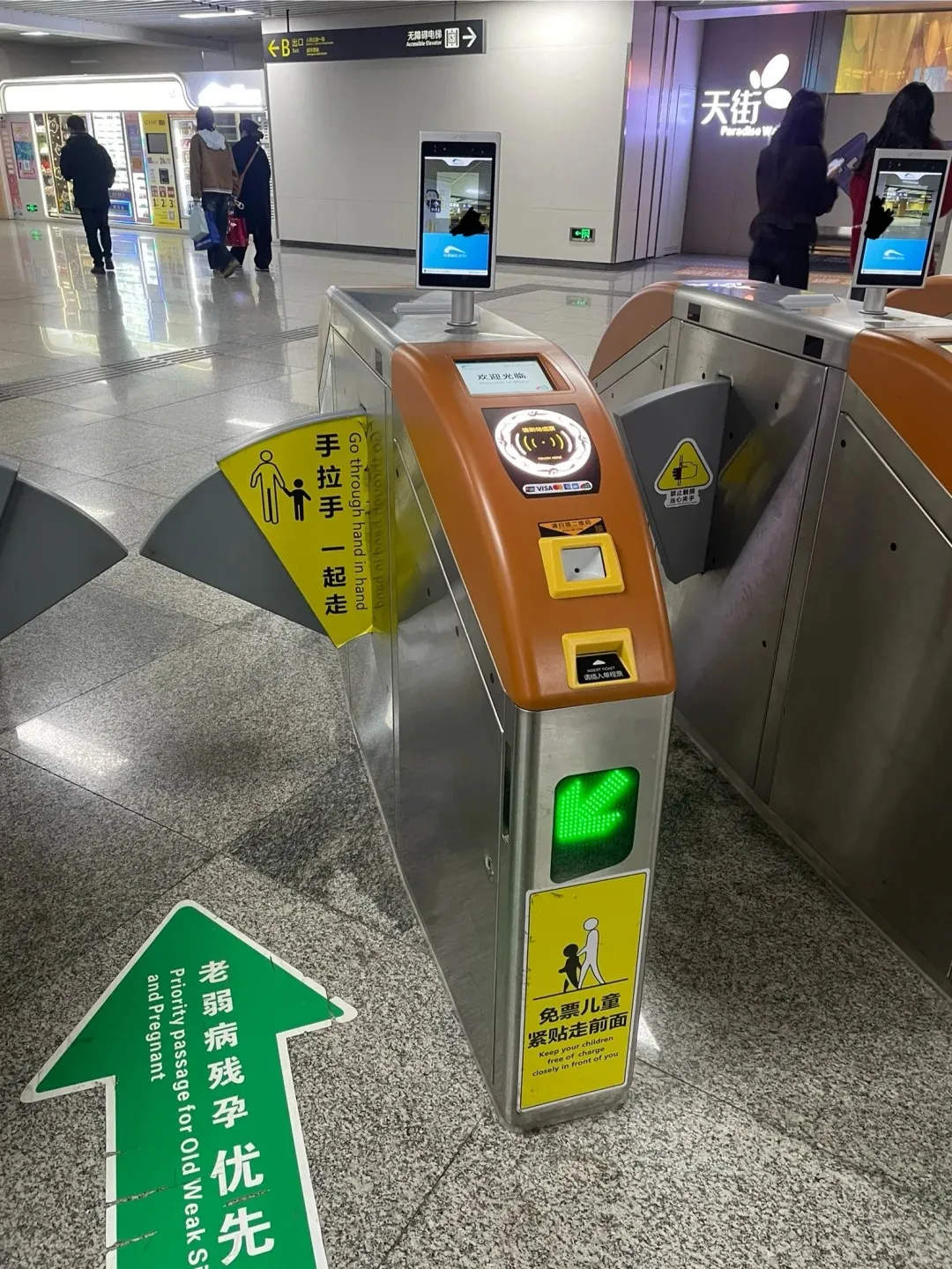
Navigating China’s extensive metro systems is made seamless with ubiquitous mobile payment options, including popular apps like WeChat Pay and Alipay, eliminating the need for physical tickets and streamlining your journey.
Insider Tips for 2026 Travelers
The “Transport” Mini-App
Stop buying single-journey plastic tokens for the metro. Inside Alipay, look for the “Transport” button. You can activate a transit card for almost any major Chinese city (Beijing, Shanghai, Guangzhou). This generates a specific QR code that works on subway turnstiles and buses. It is faster, cheaper, and saves you from queuing at ticket machines.
The “Split Bill” Hack
As mentioned, transactions over 200 RMB often incur a 3% fee. If you are buying souvenirs totaling 300 RMB at a market stall, ask the vendor if you can split the payment into two transactions of 150 RMB. Most are happy to oblige, saving you the extra fee.
Is Cash Completely Dead?
Legally, merchants must accept cash, but practically, it is a hassle. Drivers may not have change for a 100 RMB note. If you must carry cash, stock up on 10 RMB and 20 RMB notes. However, be prepared for sighs and delays. The only time cash is truly superior is if your phone battery dies—so bring a portable charger.