



What is SF Express?
SF Express (顺丰速运) is China’s premier logistics and courier company, widely considered the Chinese equivalent of FedEx or UPS. For travelers, it offers reliable, next-day or second-day domestic luggage delivery between hotels, allowing you to ride high-speed trains hands-free without wrestling heavy suitcases through crowded stations.
Why You Should Stop Dragging Bags on Bullet Trains
Many first-time visitors assume they can just roll their massive suitcases onto a bullet train. This is a common mistake to avoid. According to the official China Railway 12306 policy, adult passengers are strictly limited to 20 kg (44 lb) of carry-on baggage.
More importantly, the total dimensions (length + width + height) cannot exceed 130 cm (51 inches) on high-speed trains (G, D, and C class). If you bring a massive 28-inch suitcase, you will find that the overhead racks are too small, and the tiny luggage closets between cars fill up within minutes of boarding.
The sensory experience of navigating a Chinese railway station with oversized luggage is overwhelming. You will feel the jarring friction of dragging heavy wheels over yellow tactile paving strips, navigate shoulder-to-shoulder crowds smelling faintly of humid summer air and steaming instant noodles, and struggle through narrow security checkpoints. Shipping your bag eliminates this entirely.
Step-by-Step: How to Book SF Express via Alipay
You do not need to speak fluent Mandarin to ship your bags. The easiest way for foreigners to book SF Express in 2026 is through the Alipay app, which you likely already have set up for mobile payments.
To use Alipay’s mini-programs smoothly, you will need a reliable, uncensored mobile data connection. Public Wi-Fi in China requires a local phone number for SMS verification, which is a major hassle for tourists.
💡 Editor’s Pick: We recommend Nomad eSIM for China because it reliably bypasses the Great Firewall with stable speeds. Use code JORICAQLKF at checkout to get $5 USD off your first data plan.
1. Access the Mini-Program
Open Alipay and type “SF Express” into the top search bar. Tap the official mini-program. Ensure your Alipay language is set to English, and the SF Express interface will auto-translate the core booking functions.
2. Enter Your Addresses
Select “Send Parcel.” You will need to input your current hotel as the pickup address and your next hotel as the destination. Insider Tip: Have your hotel’s business card handy. You can copy and paste the Chinese characters for the address directly into the app, which is much more accurate than relying on English pinyin.
3. Choose Your Service Level
SF Express offers a few speed tiers. For luggage, select the standard heavy freight or next-day delivery option. You will be prompted to estimate the weight. Don’t worry if you are off; the courier will weigh it upon pickup and adjust the final price.
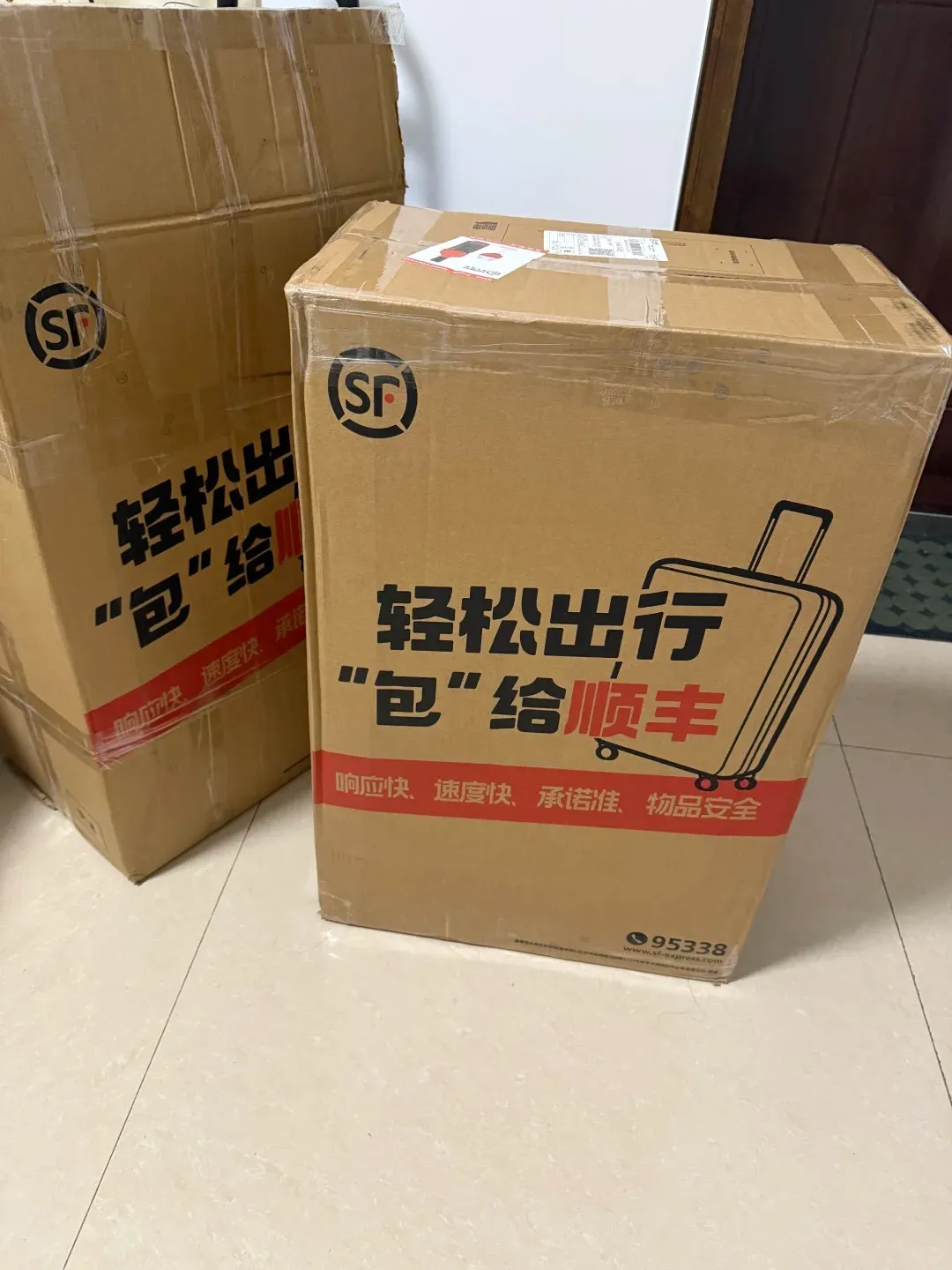
SF Express makes traveling across China easier by offering specialized services for luggage, often using boxes like these adorned with a suitcase graphic, ensuring your bags arrive safely at your destination.
Coordinating with Hotel Front Desks
While the app is easy to use, the absolute most foolproof method is leveraging your hotel concierge. Chinese hospitality is highly accommodating, and front desk staff handle SF Express shipments daily.
Simply bring your packed bag to the lobby and say: “Qing bang wo yong Shunfeng ji xingli” (Please help me send my luggage via SF Express). They will usually input the details on their own corporate account, and you simply pay the hotel directly via Alipay or WeChat Pay.
Crucial step: Always contact your receiving hotel in advance. Send them a quick message on WeChat or via your booking platform stating: “I am checking in on [Date]. I have a suitcase arriving via SF Express under the name [Your Passport Name]. Please hold it for me.”
Pricing and Delivery Timelines
Shipping luggage across China is shockingly affordable compared to Western countries. While grabbing a cold, 2 RMB bottle of Nongfu Spring water at the station, you can rest easy knowing your heavy bag is being transported for less than the cost of a cheap dinner.
- Estimated Cost: Sending a 20kg (44 lb) suitcase from Beijing to Shanghai typically costs between 100 to 150 CNY ($14 to $21 USD).
- Delivery Time: Between Tier 1 cities (Beijing, Shanghai, Guangzhou, Shenzhen), delivery is usually overnight. For secondary cities (e.g., Chengdu to Guilin), allow 48 hours.
- Insurance: Always declare the value of your luggage and pay the nominal insurance fee (usually 2-5 CNY). It provides peace of mind in the rare event of damage.
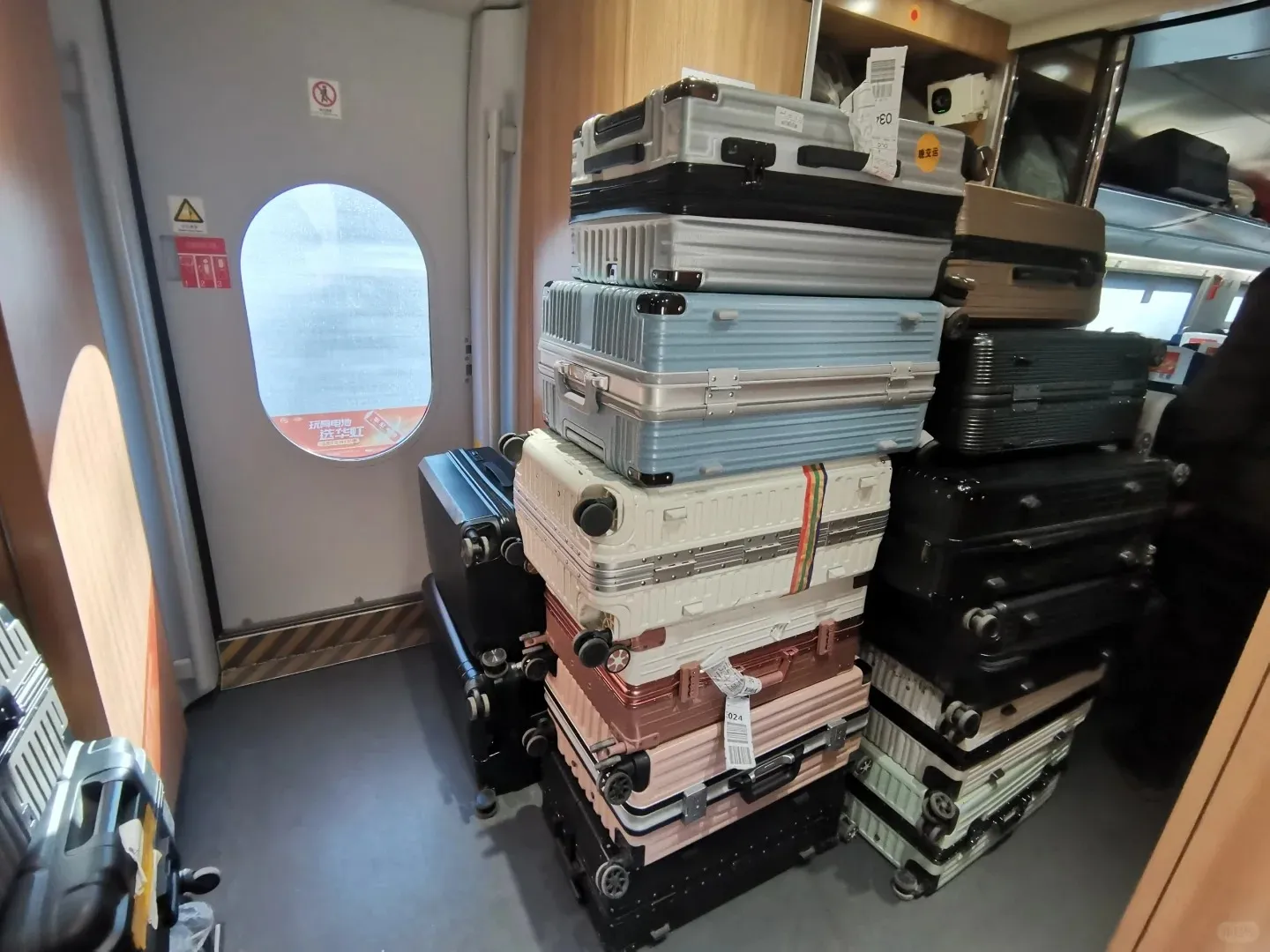
Dealing with a mountain of luggage on a packed Chinese bullet train can be a traveler’s nightmare. Find out how SF Express can ship your bags directly to your destination, freeing up your hands.
What to Know Before You Ship: Prohibited Items
SF Express couriers will open your suitcase to inspect the contents before sealing it. This is standard Chinese logistics law. Do not pack prohibited items, or your shipment will be rejected.
Do not pack:
- Power banks or loose lithium batteries (these must fly/travel with you in your carry-on).
- Aerosol cans larger than 120ml (like hairspray or sunscreen sprays).
- Flammable liquids, including nail polish remover or high-proof alcohol.
- Passports, cash, or irreplaceable valuables.
Is the “Red Cap” Porter Service a Better Alternative?
If you decide not to use SF Express and absolutely must take your oversized bag on the train, you might hear about the “Red Cap” (小红帽) porters. For about 20-30 CNY ($3-$4 USD) per bag, these station workers will haul your luggage and let you board the train before the general public.
Is it worth it? Only in an emergency. While skipping the boarding line is nice, you still have to deal with the lack of physical storage space once you get onto the high-speed train. If the racks are full, you will spend your 4-hour journey to Xi’an awkwardly nursing a 28-inch suitcase between your knees. Shipping your bag ahead of time remains the superior strategy.