


While the “Fuxinghao” trains hit top speeds of 350 km/h (217 mph), navigating the massive stations and understanding the unwritten rules of Chinese rail travel can be daunting. This guide covers the specific logistics of the G-class bullet trains, seat selection strategies, and how to survive the crowds at Beijing South.
Train vs. Plane: Why the Rail Wins
In 2026, domestic flights in China still suffer from frequent air traffic control delays, particularly on the busy Beijing-Shanghai corridor. By contrast, the high-speed rail boasts a punctuality rate of over 98%.
Insider Tip: Do not just look at the travel time (2.5 hours flight vs. 4.5 hours train). When you factor in the 60-minute drive to Beijing Capital Airport (PEK) or Daxing (PKX), the 90-minute pre-flight arrival requirement, and the likely delays, the train is consistently faster door-to-door. Plus, you arrive at Shanghai Hongqiao, which is directly connected to the city center via Metro Line 2 and 10.
Schedules and Ticket Booking
High-speed trains run from approximately 6:00 AM to 7:00 PM, departing every 15 to 20 minutes. There are also overnight “sleeper” bullet trains (D-class), but these take 12 hours and are generally not recommended unless you are trying to save on a hotel bill.
How to Buy Tickets
Foreign travelers often struggle with the official railway app, “Railway 12306,” due to its clunky English interface and strict payment verification systems.
The Most Reliable Method: Use third-party platforms like Trip.com or the “Train” mini-app inside Alipay. While they charge a small service fee (usually $3–$5 USD), they offer 24/7 English support and, crucially, allow you to “queue” for tickets before they are officially released.
What is the 144-hour visa-free transit?
This policy allows travelers from 54 countries to enter China for up to 6 days without a visa, provided they stay within a specific region (like the Shanghai-Jiangsu-Zhejiang triangle or the Beijing-Tianjin-Hebei region) and have a confirmed onward ticket to a third country. Critical Note: You generally cannot take the train from Beijing to Shanghai on this visa, as it crosses into restricted administrative regions not covered by the single-entry permit.
Seat Classes: Is the Upgrade Worth It?
Choosing the right seat depends entirely on your budget and your tolerance for noise. Prices below are estimates for 2026.
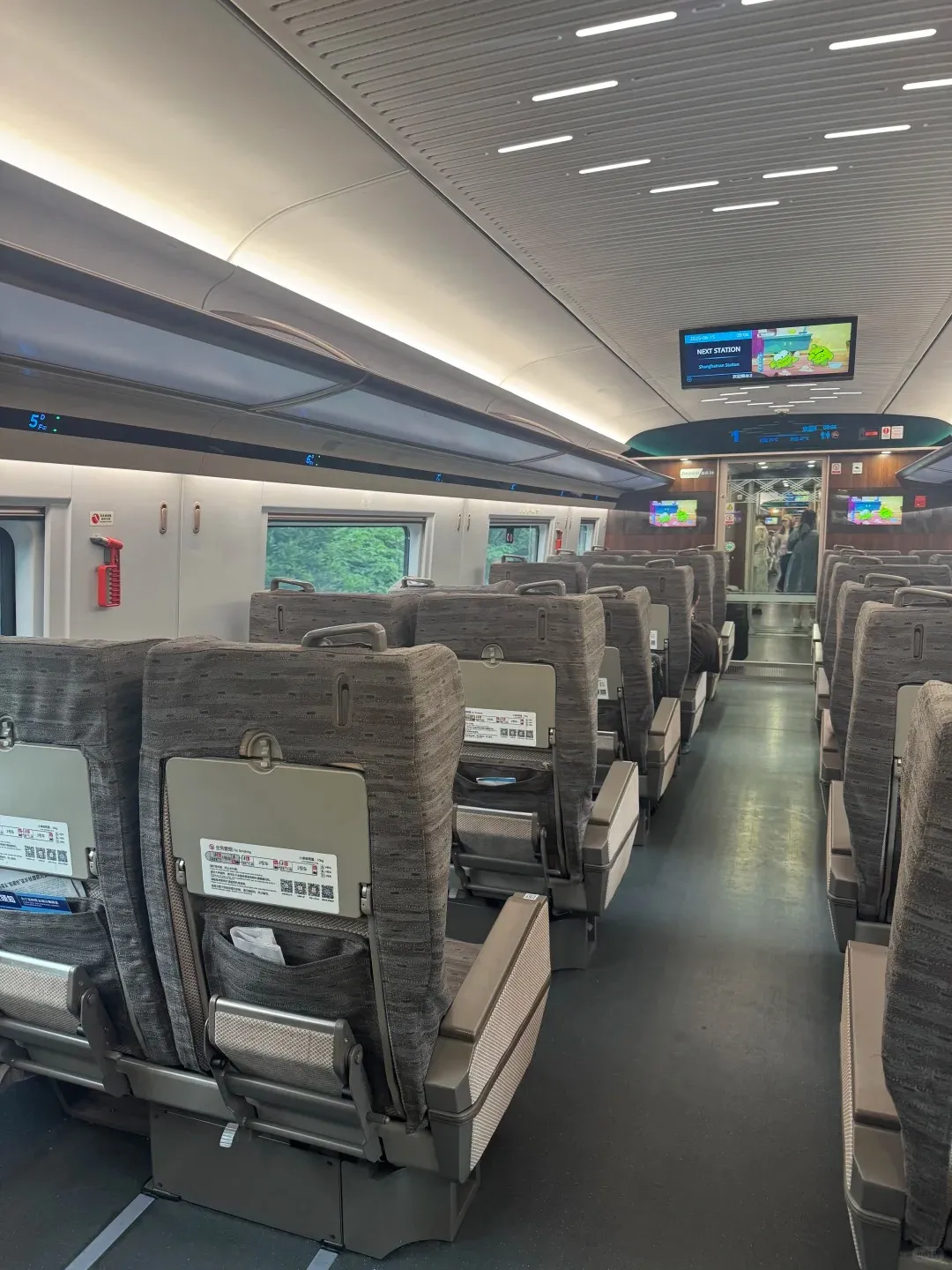
The Fuxinghao Second Class carriages, as seen here, offer a comfortable and efficient travel experience, making them the most popular choice for journeys like the Beijing to Shanghai high-speed rail. Learn more about seat options in our detailed guide!
Second Class (Approx. ¥660 CNY / $92 USD)
The standard choice for 90% of travelers. The layout is 3+2 (three seats on one side of the aisle, two on the other). Legroom is surprisingly generous—better than economy on an airline. However, these carriages are loud. People will play videos without headphones, shout on phone calls, and eat pungent instant noodles.
First Class (Approx. ¥1,050 CNY / $145 USD)
The layout is 2+2. The seats are wider, have footrests, and the cabin is significantly quieter. If you need to work on a laptop, the extra $50 is absolutely worth it for the peace and the larger tray table.
Business Class (Approx. ¥2,300 CNY / $320 USD)
This is the VIP experience. The layout is 1+1 or 1+2. Seats recline fully flat (180 degrees) into a bed. You get access to the VIP lounge at the station, complimentary snacks, and a dedicated attendant. It rivals international business class flights.
Navigating the Stations
Chinese railway stations are built on a scale that is hard to comprehend until you are standing in one. They function more like airports.
Beijing South Railway Station (Beijing Nan)
Located on Subway Line 4 and Line 14. Arrive 60 minutes before departure. You will need to clear two checks:
- ID Check: Scan your passport at the manual lane (look for the “Red Cap” staff or the glass booth if the automated gates reject your passport).
- Security: Bags go through X-ray. Warning: Aerosols (hairspray, deodorant) over 120ml and knives of any size are strictly prohibited and will be confiscated.
Shanghai Hongqiao Railway Station
This is one of the busiest transportation hubs in the world. Upon arrival, you can walk directly to Terminal 2 of Hongqiao Airport or take the subway. The taxi queue here can be over an hour long on Friday nights; use the “DiDi” app (China’s Uber) to hail a ride from the designated e-hailing pickup zone in the P9 or P10 parking garage to skip the line.
Connectivity and Essential Apps
The “Great Firewall” is active on the train and at the stations. Google Maps, Gmail, Instagram, and WhatsApp will not work without a workaround. Station Wi-Fi requires a Chinese phone number to authenticate, making it useless for most short-term tourists.
To navigate the station, translate signs, and access your booking apps, you need reliable mobile data that bypasses censorship.
💡 Editor’s Pick: We recommend Nomad eSIM for China because it reliably bypasses the Great Firewall with stable speeds. Use code JORICAQLKF at checkout to get $5 USD off your first data plan.
Insider Tip: Download offline maps for Beijing and Shanghai in Apple Maps (which works well in China) or use the Amap (Gaode Ditu) interface within the Alipay app if you can recognize basic landmarks.
The Onboard Experience: What to Expect
Once the train hits 350km/h, the ride is incredibly smooth—you can balance a coin on its edge on the windowsill. However, there are a few cultural nuances to prepare for.
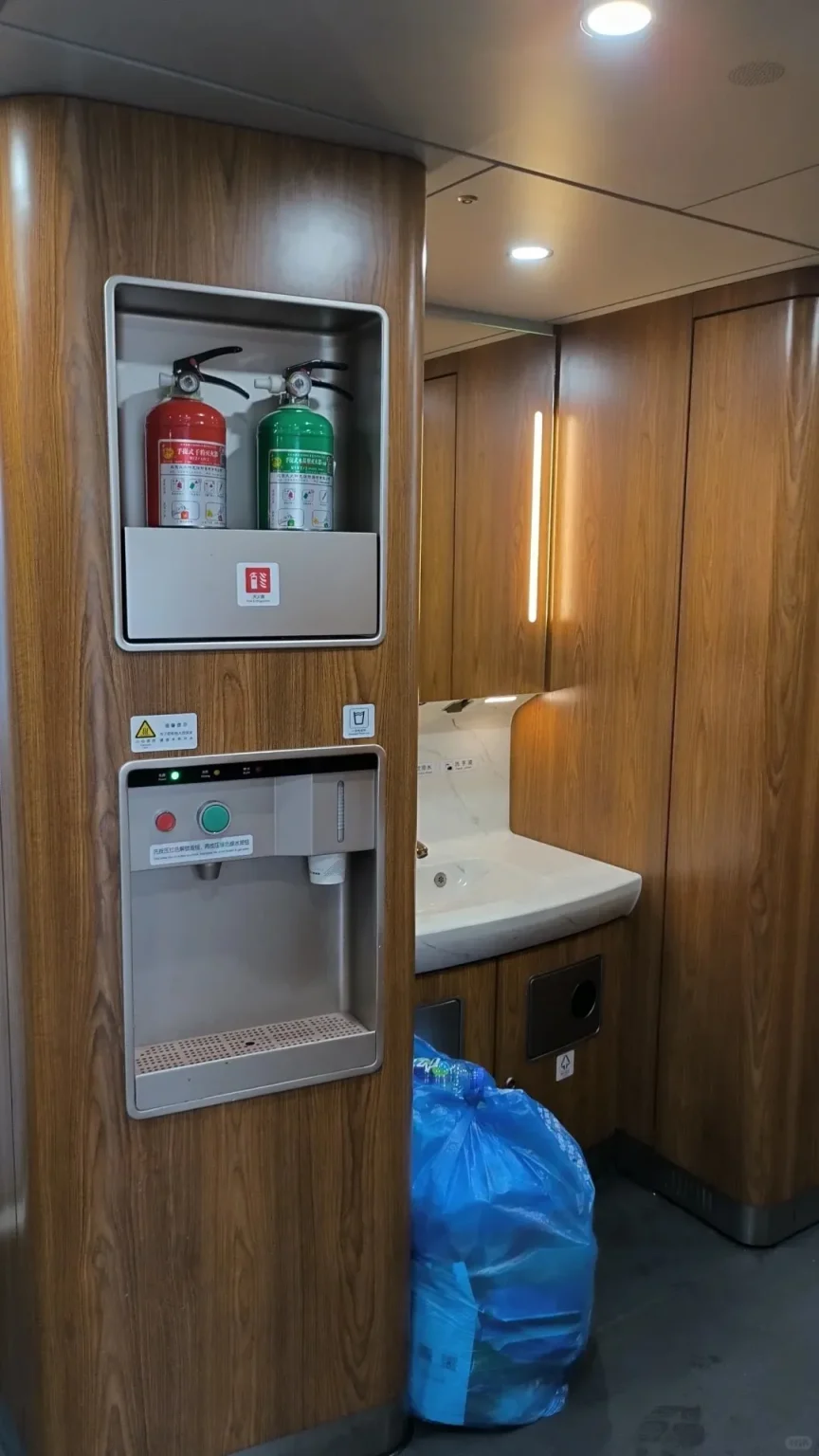
Chinese high-speed trains, including those operating on the popular Beijing to Shanghai route, offer a range of amenities. Passengers can easily find hot water dispensers, like this one, and essential safety equipment located in common areas between carriages.
- The Hot Water Culture: Every carriage has a boiling water dispenser at the end. You will see locals making tea or instant noodles. Bring a thermos to fit in.
- Food & Drink: A trolley will come through selling overpriced bento boxes (approx. ¥60 CNY) and warm beer. The quality is mediocre. Recommendation: Buy sandwiches or snacks at the station (Starbucks and McDonald’s are plentiful at Beijing South) before you board.
- Toilets: G-trains have both western-style toilets and squat toilets. They are generally kept clean, but by hour 4, toilet paper often runs out. Always carry a packet of tissues.