


How to Buy Train Tickets (Without a Chinese ID)
In 2026, the days of lining up at a physical ticket window are largely over, even for tourists. The system is fully digital. However, because you likely don’t have a Chinese Resident Identity Card, you face a few specific hurdles.
The “Trip.com” vs. “12306” Debate
You have two primary options for booking. Each has a trade-off between convenience and cost.
Option 1: Trip.com (Recommended for First-Timers)
This is a third-party agent, but it is the most reliable for international travelers. The interface is in perfect English, and they accept foreign credit cards without triggering fraud alerts.
The Insider Benefit: They offer a “reservation” service where you can pay *before* tickets are released. Their bots will instantly attempt to snag your seat the second the 15-day window opens.
Option 2: The Official 12306 App
This is the official government platform. It now supports an English interface and accepts Alipay and international cards.
The Drawback: The verification process can be buggy. You must upload a photo of your passport and wait for manual approval, which can take days. If the app rejects your photo, you are stuck.
Connectivity is Critical
To access your tickets, view your seat number, or use translation apps at the station, you must have reliable mobile data. The station Wi-Fi usually requires a Chinese phone number to log in, leaving tourists stranded.
💡 Editor’s Pick: We recommend Nomad eSIM for China because it reliably bypasses the Great Firewall with stable speeds. Use code JORICAQLKF at checkout to get $5 USD off your first data plan.
Navigating the Station: Controlled Chaos
Chinese train stations are not like European rail hubs; they operate exactly like airports. You cannot simply walk onto the platform. Here is the flow you should expect:
- Entry & ID Check: You will see rows of automated gates. As a foreigner, look for the “Manual Lane” (often on the far left or right) staffed by a human. Hand them your passport; they will scan it to verify your ticket booking.
- Security Screening: All bags go through X-ray. Insider Tip: Do not pack a Swiss Army knife or scissors with blades longer than 6cm. They will be confiscated. Unlike airports, you can bring full bottles of water and food.
- The Waiting Hall: You will enter a cavernous waiting area. Look for your train number (e.g., G123) on the giant LED boards to find your specific gate number.
- Boarding: Gates open exactly 15 minutes before departure and close 3 minutes before. Do not be late.
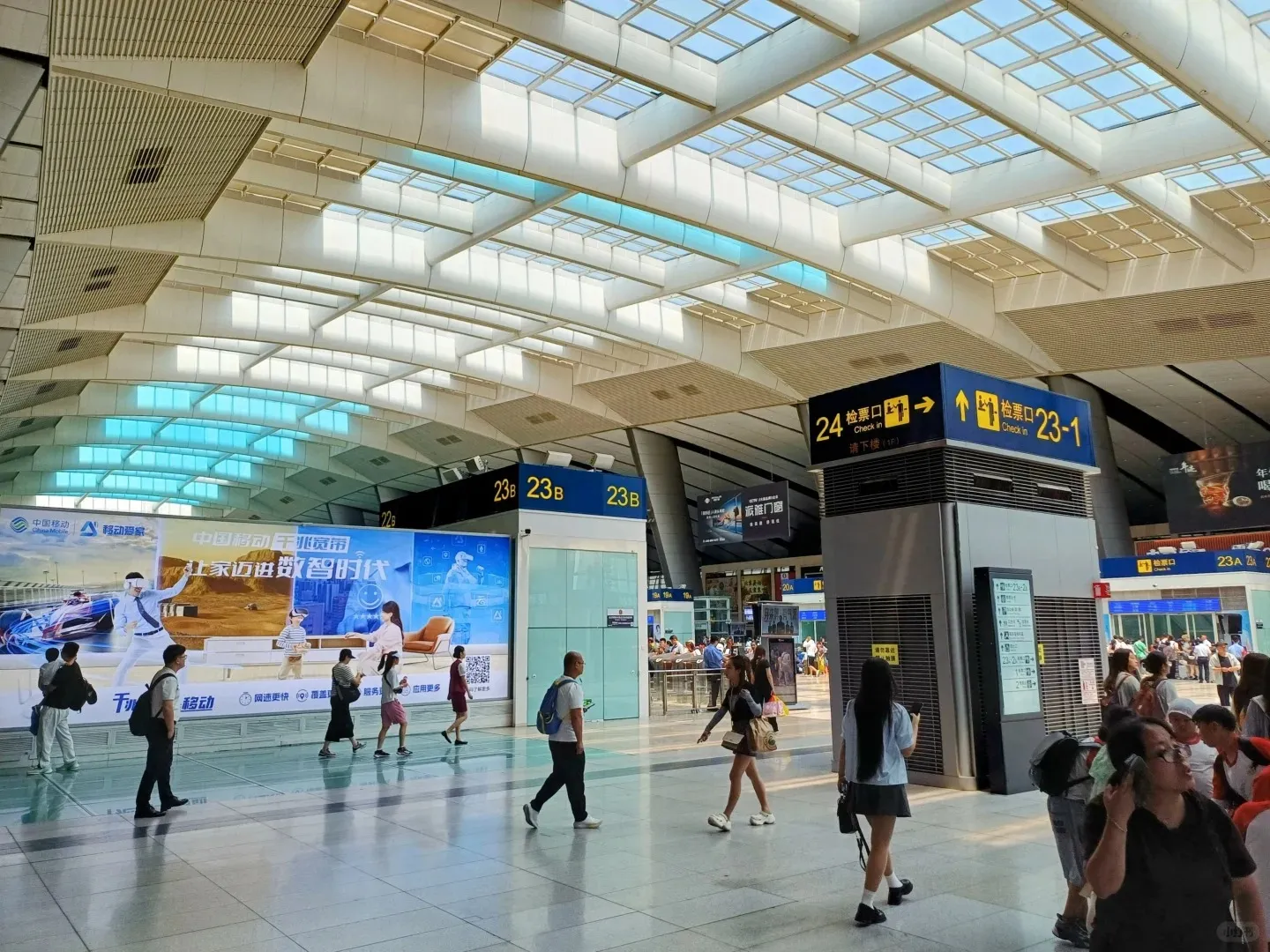
Step into the future of travel at one of China’s modern high-speed rail stations, like Beijing South. These expansive waiting halls are designed for efficiency and comfort, setting the stage for the seamless booking, diverse classes, and exceptional onboard experience that awaits tourists exploring China by train.
Deciphering Seat Classes: Is First Class Worth It?
The price difference between classes is significant, but so is the comfort level. Here is the honest breakdown of what you get for your money.
Second Class (2nd Class)
Layout: 3 seats on one side, 2 on the other (3+2).
The Vibe: This is how most of China travels. It is loud, lively, and often packed. The legroom is surprisingly generous (better than economy flights), and seats recline slightly.
Insider Warning: Avoid the “B” seat. In the 3-seat row (A, B, C), “B” is the middle seat. You will feel squeezed. Also, during holidays, “Standing Tickets” are sold for Second Class carriages, meaning people might be standing in the aisles next to you.
First Class (1st Class)
Layout: 2 seats on each side (2+2).
The Vibe: quieter and wider. You get a footrest, a better charging outlet, and significantly more elbow room. If you need to work on a laptop or value personal space, the 40% price markup is absolutely worth it.
Business Class
Layout: 1 seat on one side, 2 on the other (or 1+1).
The Vibe: This is true luxury. The seats are fully lie-flat pods similar to international business class flights. You get access to a VIP lounge at the station (with free snacks), a private boarding lane, and a complimentary meal onboard. It costs 3x the price of Second Class, often rivaling airfare.
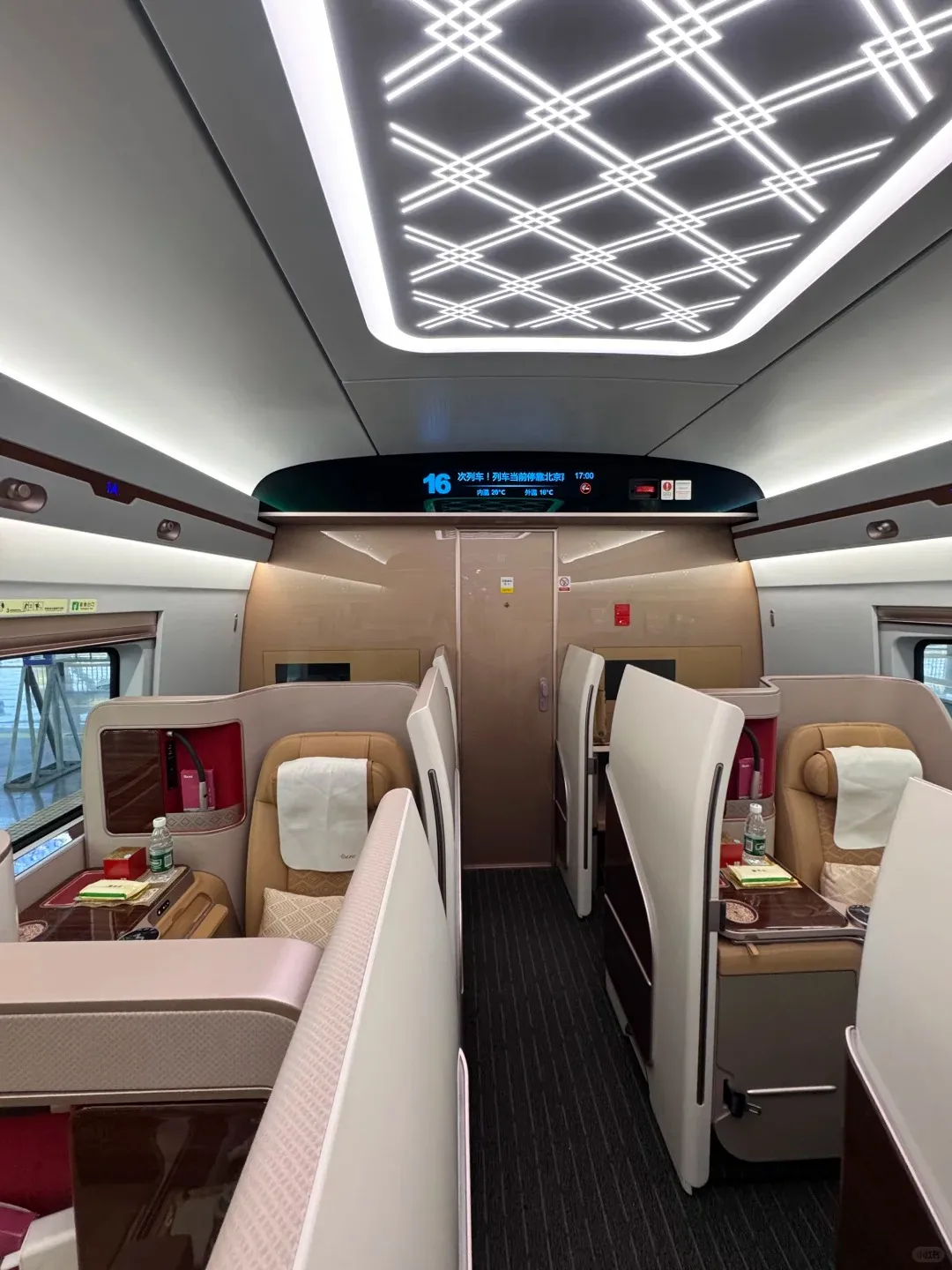
For tourists exploring China, upgrading to Business Class on a Fuxing high-speed train provides a premium onboard experience with luxurious individual pods, ample space, and dedicated service, far beyond standard second-class options.
Onboard Amenities & Experience
Once you are moving at 350km/h, the ride is incredibly smooth—smooth enough to balance a coin on its edge. However, the amenities have a learning curve.
- Hot Water: Every carriage has a boiling water dispenser at the end. This is why you will see locals carrying thermoses or pots of instant noodles. It is free and safe to drink.
- Toilets: High-speed trains (G and D trains) usually have Western-style toilets in at least one cubicle per carriage, but squat toilets are still common. Always bring your own tissue paper; it often runs out.
- Food Delivery: This is a futuristic feature. You can scan a QR code on your armrest (using WeChat or Alipay) and order food from restaurants at upcoming stations. The staff will bring KFC, McDonald’s, or local dumplings to your seat shortly after the train stops at that city.
Insider Tips for the 2026 Traveler
The “Trip-Stacking” Mistake
Do not book a train that arrives only 60 minutes before an international flight. While Chinese trains are punctual (98% on-time rate), the transfer time between the railway station and the airport in cities like Shanghai or Beijing can take over an hour by taxi due to traffic.
The 144-Hour Visa Transit
If you are utilizing the 144-hour visa-free transit policy, you generally cannot leave the designated region. For example, you cannot take the train from Shanghai (East China region) to Beijing (Jing-Jin-Ji region) without violating your visa terms. Always check the regional boundaries before booking cross-country rails.