

High-Speed Trains in China: How to Book, Board, and Not Get Lost

Walking into a Chinese train station for the first time can feel like entering a small city. The scale is massive, the announcements are loud, and the pace is frantic. However, High-Speed Trains in China: How to Book, Board, and Not Get Lost is not just a title; it is a necessary skill for navigating the world’s largest high-speed rail network. Whether you are zipping from Beijing to Shanghai in 4 hours or heading inland to Xi’an, the “Gaotie” (high-speed rail) is faster than flying and infinitely more punctual.

This guide cuts through the confusion of booking apps, passport controls, and station navigation to ensure you make your departure on time.

Quick Summary: Key Takeaways for Travelers

  • Book Early: Tickets open 15 days in advance. Popular routes (like Beijing-Shanghai) sell out in minutes.
  • The App to Use: Use Trip.com for English support and international credit cards. Avoid the official 12306 app unless you read Chinese fluently.
  • The Golden Rule: You need your physical passport for every step: booking, ticket collection, and boarding. Copies usually won’t work.
  • Arrive Time: Arrive at the station 60 minutes before departure. Security lines can be massive.
  • Manual Lanes: Foreigners cannot use the automatic gates. Always look for the “Manual Channel” (人工通道) at check-in.

Summarize with :

Understanding the Train Types

Before you book, you need to know what you are looking at. Not all trains are created equal.

What is the difference between G, D, and Z trains?

G-Trains (Gaotie) are the fastest bullet trains (300-350 km/h) connecting major hubs with few stops. D-Trains (Dongche) are slightly slower (250 km/h) and cheaper. Z/T/K trains are older, conventional speed trains (often overnight sleepers) that are significantly slower and not considered “high-speed.”

How to Buy High-Speed Train Tickets

There are two main realities for buying tickets: the local way and the traveler way. Do not try to wing this at the station on the day of travel.

Option 1: Trip.com (Recommended for Foreigners)

For 99% of international travelers, Trip.com is the safest bet. While they charge a small service fee, the interface is in perfect English, and they accept Visa/Mastercard. Crucially, their customer service can help if a train is cancelled—something you won’t get easily elsewhere.

Option 2: The 12306 App (The “Official” Route)

This is the official state railway app. While there is an English version, it is notoriously glitchy with foreign credit cards and often requires a Chinese phone number for verification. Use this only if you are living in China or have WeChat Pay/Alipay set up with a local bank card.

The “Ticket Machine” Trap

Mistake to Avoid: Do not line up for the automatic ticket machines at the station. Most of these machines cannot read foreign passports. You will waste 20 minutes in line only to find out you can’t print anything. If you need physical assistance, go directly to the counter labeled “Ticket Office” (售票处).
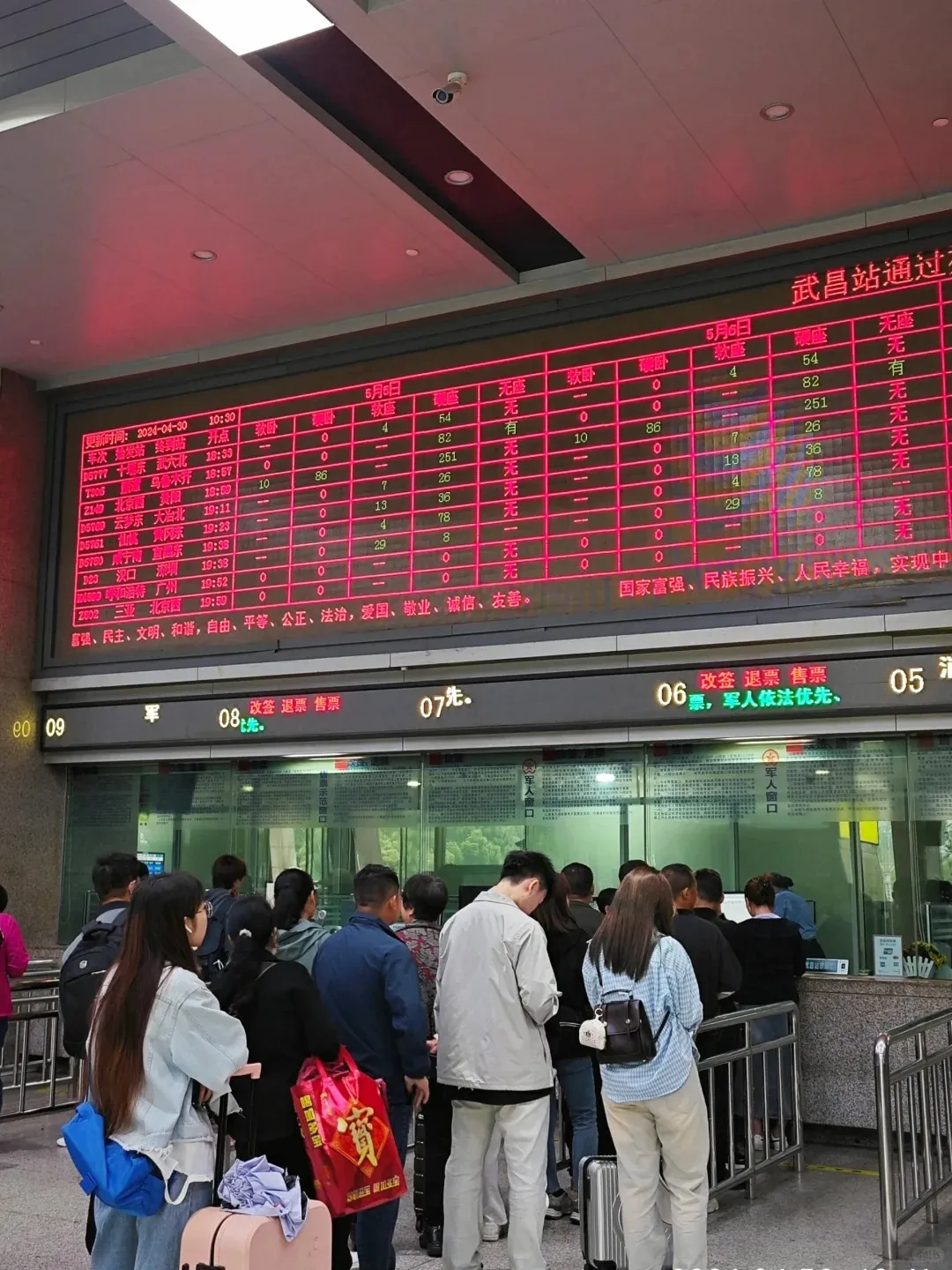
Travelers, some with luggage, queueing at manual ticket counters in a bustling Chinese high-speed railway station. A large red LED display board above shows real-time train schedules, destinations like Beijing and Guangzhou, departure times, and ticket availability. Passengers are waiting to book, change, or refund tickets, reflecting the process for international travelers using passports to navigate train travel in China.

Travelers, some with luggage, queueing at manual ticket counters in a bustling Chinese high-speed railway station. A large red LED display board above shows real-time train schedules, destinations like Beijing and Guangzhou, departure times, and ticket availability. Passengers are waiting to book, change, or refund tickets, reflecting the process for international travelers using passports to navigate train travel in China.

Navigating the Station: A Step-by-Step Guide

Chinese train stations function more like airports. Here is the sensory experience of getting from the curb to your seat.

1. Entrance and Security

You do not need a paper ticket to enter most stations; your passport is your e-ticket. However, you must pass a security screening. Put your bags on the belt.

Insider Tip: Do not pack aerosol cans (hairspray) or large knives (fruit knives). They will be confiscated immediately. If you have a water bottle, the guard may ask you to take a sip to prove it is not gasoline.

2. Finding Your Gate

Check the massive LED screens for your Train Number (e.g., G123). The screen will display the “Check-in Gate” (检票口). Go to that area. The Waiting Halls are cavernous, often smelling faintly of instant noodles from the thousands of passengers eating lunch.

3. The “Manual Channel” Rule

When the gate opens (usually 15 minutes before departure), a stampede will occur. Do not follow the locals to the automated gates. Look for the lane on the far left or right staffed by a human, usually marked “Manual Channel” or “Staff Passage.” Hand them your passport; they will scan it and let you through.

Critical Warning: Gates close exactly 5 minutes before departure. If you are late, you will not be let on. There is no negotiating.

Onboard: Seats, Food, and Facilities

Once you are on the platform, look for your Car Number (indicated on the floor). The train will stop precisely at the markings.

Choosing Your Seat Class

  • Second Class (2nd): The standard choice. Layout is 3+2. It is clean and comfortable (better than economy flights), but it can get noisy and crowded.
  • First Class (1st): Layout is 2+2. Wider seats, more legroom, and a quieter atmosphere. Recommended for trips longer than 4 hours.
  • Business Class: The ultimate luxury. Lie-flat seats in a private shell, similar to international business class flights. Includes lounge access at the station.

The Hot Water Culture

You will notice a dispenser at the end of every carriage. This dispenses boiling water. This is why you see so many locals carrying thermoses and pots of instant noodles. It is safe to drink, but be careful—it is scalding hot.
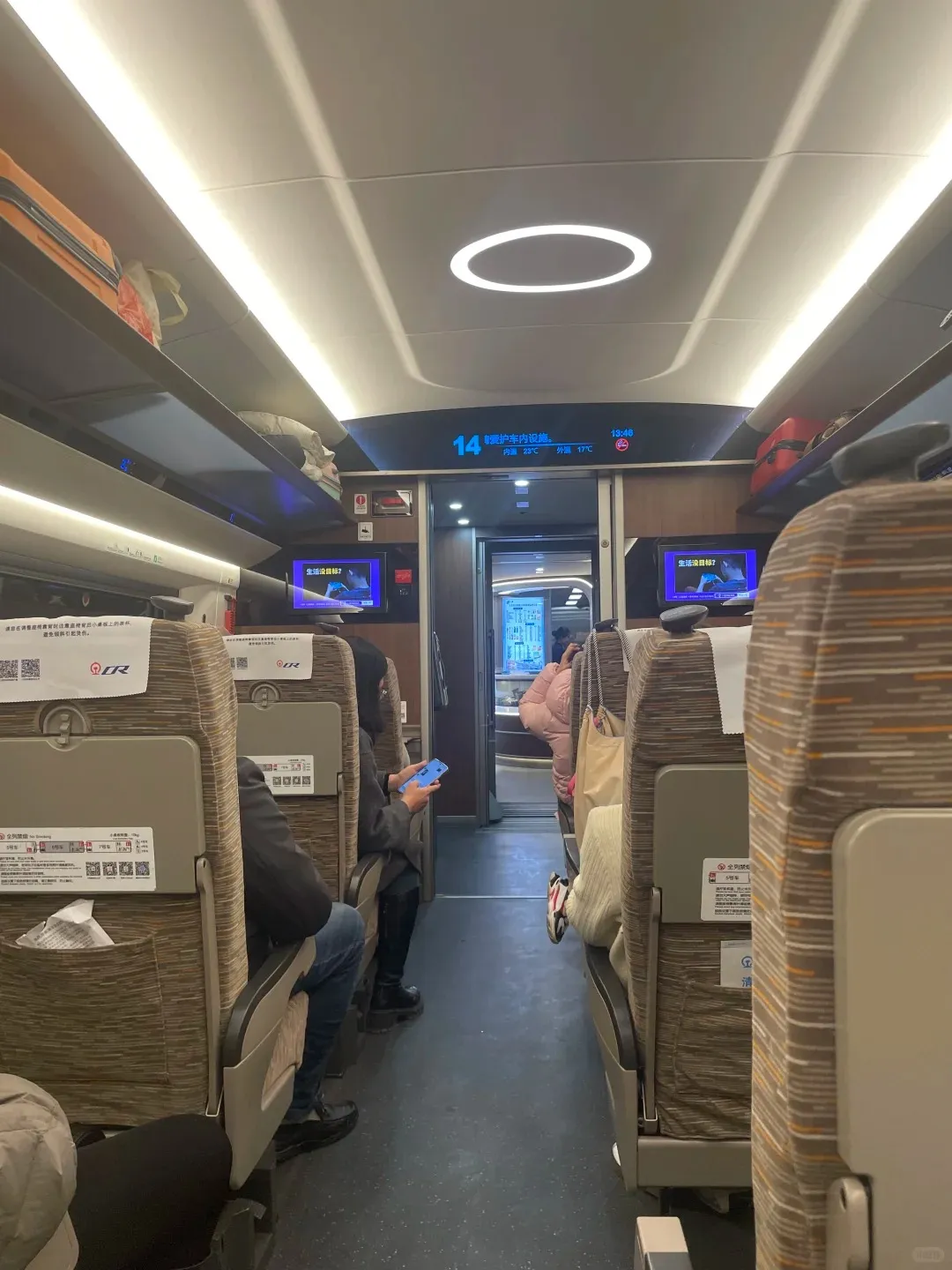
Interior of a modern Chinese high-speed train second-class carriage, showcasing a 3+2 seating layout with rows of comfortable brown and beige striped seats occupied by passengers. A central aisle runs through the carriage, with overhead luggage racks filled with bags above the windows. An LED display at the front shows carriage number '14', the current time '13:48', and temperature details (inside 23°C, outside 17°C). Smaller screens are mounted above some seats for entertainment, and the brightly lit ceiling features both linear strips and a prominent circular light, highlighting the clean and modern design.

Interior of a modern Chinese high-speed train second-class carriage, showcasing a 3+2 seating layout with rows of comfortable brown and beige striped seats occupied by passengers. A central aisle runs through the carriage, with overhead luggage racks filled with bags above the windows. An LED display at the front shows carriage number ’14’, the current time ’13:48′, and temperature details (inside 23°C, outside 17°C). Smaller screens are mounted above some seats for entertainment, and the brightly lit ceiling features both linear strips and a prominent circular light, highlighting the clean and modern design.

Food and Wi-Fi

A trolley attendant will pass through selling snacks, but they are overpriced. A better option is to bring your own food. You can bring almost anything on board—McDonald’s, fruit, or bento boxes.

Contrarian Tip: Don’t rely on the train Wi-Fi. It usually requires a Chinese phone number to authenticate and is often slow. Ensure you have an eSIM for China with a solid data plan to stay connected.

Common Questions About China Train Travel

What is the best app to book trains in China for foreigners?

For most international travelers, Trip.com is the best option because it offers an English interface, accepts foreign credit cards (Visa/Mastercard), and provides customer support. The official 12306 app is often glitchy with non-Chinese payment methods.

No, you do not need a paper ticket. Your physical passport acts as your e-ticket. However, foreigners cannot use the automatic gates and must go to the “Manual Channel” (人工通道) where staff will scan your passport.

It is recommended to arrive at least 60 minutes before your departure time. Chinese train stations operate like airports with strict security checks, and ticket gates close exactly 5 minutes before the train departs.

Yes, security is tight. You cannot bring aerosol cans (like hairspray), large fruit knives, or other sharp objects. Unlike airplanes, you can bring water and food, though security may ask you to take a sip of your water to prove it isn’t gasoline.

Conclusion

Mastering the high-speed rail system unlocks the real China. It allows you to see the countryside shift from the skyscrapers of Shanghai to the karst mountains of Guilin in mere hours. While the stations can be intimidatingly large and the language barrier frustrating, the system is a marvel of modern engineering. Remember: book on Trip.com, bring your physical passport, and always look for the manual lane. Safe travels!

Similar posts to this one

Multiple Fuxinghao high-speed bullet trains, silver with red and orange stripes, are parked at platforms inside Shenzhen North Railway Station at night. Station signs show '深圳北站' and 'Shenzhen North Railway Station'. Overhead metal structures and lighting are visible.

Beijing to Shanghai High-Speed Rail: The Complete Station & Seat Guide

For travelers in 2026, the debate between flying or taking the train from Beijing to Shanghai is effectively over. The [...]

A vibrant sunrise or sunset over the modern Beijing cityscape, featuring prominent skyscrapers like the tall, slender CITIC Tower (China Zun) reflecting golden light, the distinctive CCTV Headquarters building, and the spiraling dome of the Phoenix International Media Center. A dense canopy of green and golden trees forms the foreground under a sky with dramatic, colorful clouds.

Emergency Travel in China: Vital Phrases, Apps, and Safety Protocols

Traveling to China is an exhilarating experience, but the unique digital ecosystem and language barrier can make even seasoned globetrotters [...]

Two modern Chinese high-speed trains, including a silver Fuxing bullet train with red, orange, and gold stripes, parked side-by-side at a bright station platform. A white high-speed train with blue stripes is to the left. A yellow tactile paving strip is visible on the platform.

China High-Speed Rail for Tourists: Booking, Classes & Onboard Experience

For many travelers, the first time stepping into a Chinese railway station is more overwhelming than the flight that brought [...]

Get the China Arrival Survival Kit

Planning a trip here has a steep learning curve. Join our newsletter and receive our free “Day One Checklist” covering everything from setting up Alipay and WeChat to bypassing the internet firewall.