


Understanding the Route and Train Types
The railway stretches over 1,000 kilometers from Kunming, the capital of Yunnan Province, to Vientiane, the capital of Laos. It slices through the Annamite Range, meaning you spend about 40% of the time in tunnels. Don’t expect constant views, but when the train pops out, the limestone karst scenery is spectacular.
What is the Lancang (Lane Xang) Bullet Train?
The “Lancang” is the EMU (Electric Multiple Unit) high-speed train used on this route. In China, it runs up to 160-200 km/h. Inside Laos, it maintains a steady 160 km/h. It features Second Class (2+3 seating), First Class (2+2 seating), and Business Class. Insider Note: Second class is perfectly comfortable and clean, but First Class offers significantly more legroom for the taller traveler.
Step 1: Buying Your Tickets (The Tricky Part)
Booking tickets is the biggest hurdle because the systems are not fully unified. You are dealing with China Railway (CR) and Laos-China Railway (LCR).
Booking the Cross-Border Ticket
For the direct train (D887) from Kunming to Luang Prabang/Vientiane, tickets usually open 14 days in advance. You can book these via the Trip.com app or the official Railway 12306 app. As of 2026, demand is high. Tickets often sell out within minutes of release at 8:00 AM Beijing time.
Using the LCR Ticket App
If you plan to hop off in Laos (e.g., stop in Luang Prabang then continue to Vang Vieng), you need the LCR Ticket App. It is essential for domestic travel within Laos.
- Registration: You can register with an international phone number and email.
- Payment: The app accepts WeChat Pay, Alipay, and some international credit cards (VISA/Mastercard acceptance has improved significantly since 2024).
- QR Codes: There are no paper tickets in Laos anymore. You scan the QR code generated in the app to enter the station.
Insider Tip: If the direct international train is sold out, use the “Split Ticket” strategy. Book a domestic train from Kunming to Mohan (the border). Walk across the border to Boten. Then, buy a separate ticket from Boten to Luang Prabang on the LCR app. It takes longer but guarantees you get there.
Step 2: Digital Survival & Connectivity
The Great Firewall exists on the Chinese side, and digital infrastructure is developing on the Laos side. You will need internet access to pull up your QR code tickets and complete health declarations.
💡 Editor’s Pick: We recommend Nomad eSIM for China because it reliably bypasses the Great Firewall with stable speeds. Use code JORICAQLKF at checkout to get $5 USD off your first data plan.
Step 3: The Border Crossing Procedure
This is not a “stay in your seat” border crossing like in the EU. It involves physical movement and strict timing. The train stops at Mohan (China side) and Boten (Laos side).
- Arrival at Mohan: Everyone gets off with all luggage. You pass through Chinese exit immigration and customs. This usually takes 45-60 minutes.
- Re-boarding: You get back on the same train and sit in the same seat. The train moves a short distance to Boten.
- Arrival at Boten: Everyone gets off again with luggage. You proceed to Lao immigration.
- Visa Processing: If you have an E-Visa, go to the dedicated lane. If you need a Visa on Arrival, have your passport photo and US Dollars (clean, crisp bills) ready. The fee is generally around $40 USD depending on nationality.
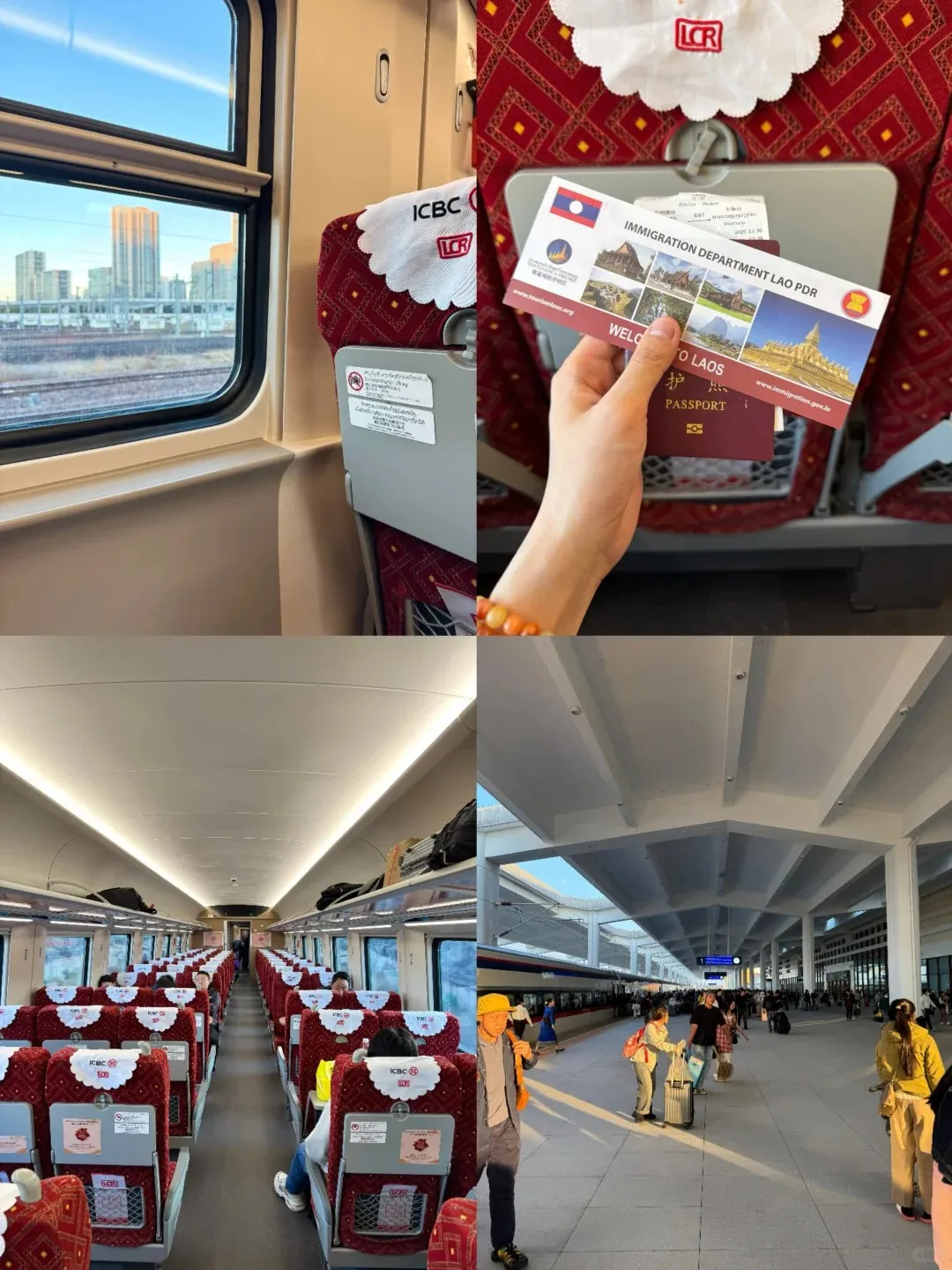
Experience the modern comforts and efficiency of the China-Laos Railway, from the journey’s scenic views and immigration preparations onboard to the bustling, grand arrival halls. This train journey connects cities like Kunming to the heart of Laos, including the enchanting Luang Prabang.
Warning: The train waits for about 60-90 minutes at the border. If you get stuck in a visa issue and miss the re-boarding window, the train will leave without you. This is why I strongly recommend getting an E-Visa in advance.
7-Day Itinerary: Kunming to Vientiane
While you can rush through in a day, the magic lies in the stops along the way. Here is an optimized 2026 itinerary.
Days 1-2: Kunming (The City of Eternal Spring)
Acclimatize in Kunming. Skip the overrated tourist traps and head to the Dounan Flower Market at night—it’s the largest in Asia and a sensory overload. For food, try the “Crossing the Bridge Noodles” at a local spot like Jianxinyuan, not the hotel restaurant.
Day 3: The Journey to Luang Prabang
Take the morning train from Kunming South. Enjoy the transition from the pine forests of Yunnan to the banana plantations of northern Laos. Arrive in Luang Prabang in the late afternoon. The railway station is about 30 minutes outside the town; shared minivans are available for 35,000 LAK (approx $1.50 USD).
Days 4-5: Luang Prabang (UNESCO Heritage)
Wake up early for the Alms Giving Ceremony, but please observe from a respectful distance across the street rather than shoving a camera in a monk’s face. Rent a motorbike to visit Kuang Si Falls early (8:00 AM) to beat the tour buses.

After a memorable journey on the China-Laos Railway to Luang Prabang, a visit to the iconic Kuang Si Waterfalls offers a refreshing escape into nature’s stunning beauty.
Day 6: Vang Vieng (Adventure Capital)
Take a short 50-minute train ride to Vang Vieng. The town has cleaned up its act from its wild partying days. It is now an eco-adventure hub. Rent a buggy or bicycle to explore the Blue Lagoons. Is it worth it? Yes, the karst landscape here is arguably more dramatic than Guilin or Halong Bay because you are right in the middle of it.
Day 7: Vientiane
The final leg to Vientiane takes about an hour. Visit the golden Pha That Luang stupa. Vientiane is sleepy for a capital city. Use this day to enjoy excellent French-Lao fusion cuisine at restaurants like Kualao before flying out or heading south.
Practical Costs & Budgeting (2026 Estimates)
Prices have stabilized since the railway’s opening. Here is what you should budget for the transport:
- Kunming to Vientiane (2nd Class): Approx. 540 CNY ($75 USD).
- Kunming to Vientiane (1st Class): Approx. 860 CNY ($120 USD).
- Station Transfers: Budget $2-5 USD per stop for minivans or tuk-tuks from the station to the town centers.