

Navigating China's Cities: Your Essential Guide to Taxis, Subways & Ride-Hailing

Stepping out of Beijing Capital Airport or Shanghai Pudong, the first thing that hits you isn’t just the humidity or the scale of the skyline—it’s the kinetic energy of the movement. For first-time visitors, the prospect of navigating a China city transportation guide can feel overwhelming. The subway maps look like circuit boards, and the street signs are a mix of characters and Pinyin that fly by too fast to read.

However, the reality of travel in China in 2026 is surprisingly streamlined. The days of haggling with drivers in broken Mandarin are largely over, replaced by efficient algorithms and world-class infrastructure. Whether you are rushing to see the Terracotta Warriors in Xi’an or navigating the neon canyons of Chongqing, mastering the “Holy Trinity” of Chinese urban transport—Metro, DiDi, and Feet—is the key to a stress-free trip.

Quick Summary: Key Takeaways for Your Trip

  • Download Alipay immediately: It is not just for payments; it houses the “Transport” code for subways and the DiDi mini-app for ride-hailing.
  • Subways are faster than cars: In Tier 1 cities like Beijing and Shanghai, traffic gridlock is severe. The metro is almost always the faster option during daylight hours.
  • Avoid “Black Taxis”: Never take a ride from a driver standing inside the airport or train station terminal. Only use official queues or the DiDi app.
  • Carrying a passport is mandatory: You now need your physical passport to buy subway tickets at counters and for inter-city train travel.

Summarize with :

The Prerequisite: Digital Payment & Connectivity

Before you even attempt to hail a car or enter a subway station, you must understand that cash is virtually obsolete in Chinese urban transport. While legally taxis must accept cash, drivers often do not have change for a 100 RMB note. To travel smoothly, you need Alipay or WeChat Pay linked to your international credit card.

Furthermore, these apps require an active data connection to generate QR codes. Relying on public Wi-Fi is a rookie mistake that will leave you stranded at a street corner.

💡 Editor’s Pick: We recommend Nomad eSIM for China because it reliably bypasses the Great Firewall with stable speeds. Use code JORICAQLKF at checkout to get $5 USD off your first data plan.

Mastering the Metro: The Backbone of Urban Travel

China’s subway systems are modern, punctual, and aggressively air-conditioned. In cities like Shanghai, Beijing, Guangzhou, and Shenzhen, the network is so extensive that you are rarely more than a 10-minute walk from a station. For the budget-conscious traveler, this is your primary mode of transport, with rides costing between 3 to 8 RMB ($0.40–$1.10 USD).
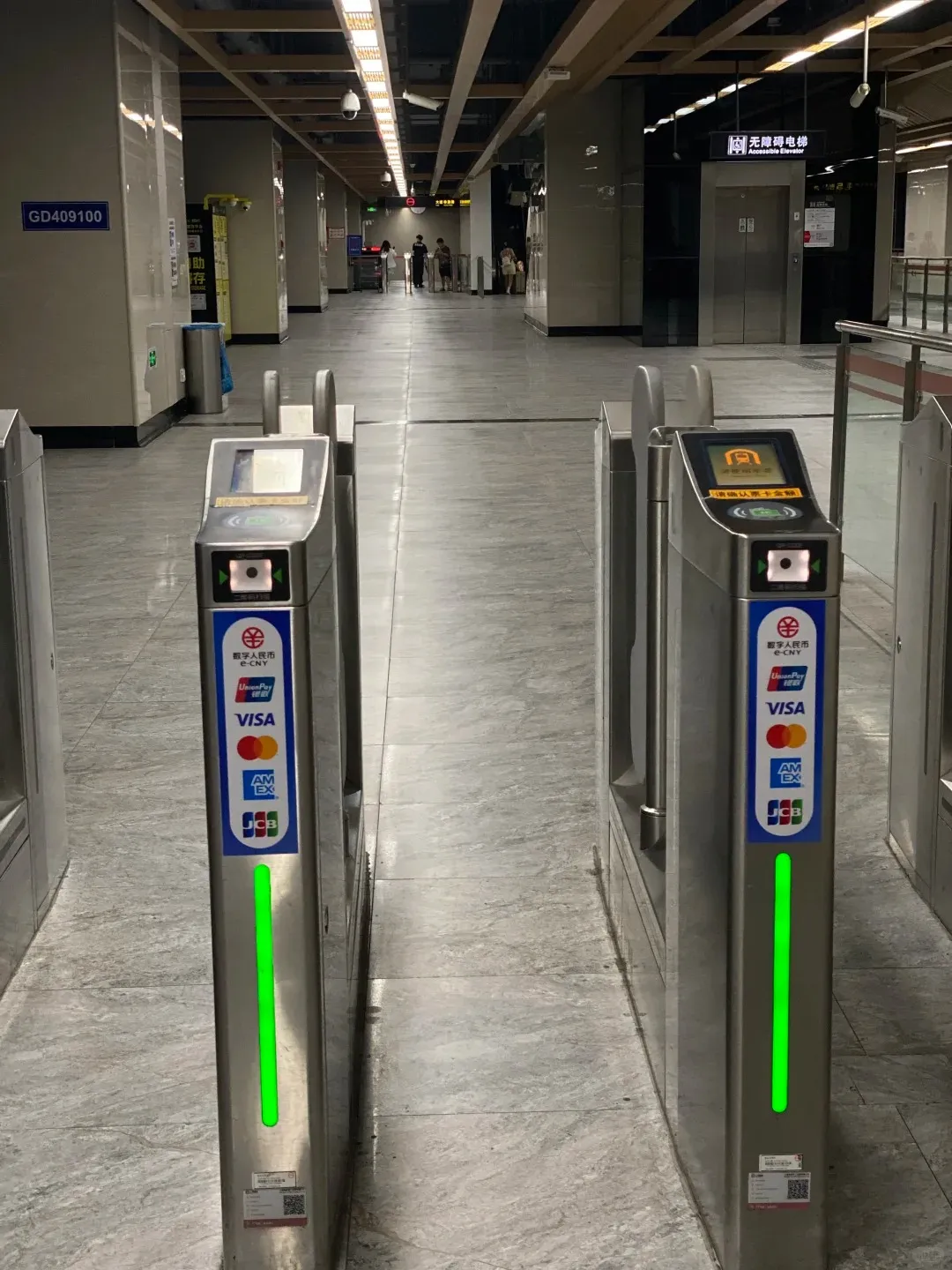
Two modern silver subway turnstiles with glowing green indicator lights stand prominently in the foreground. The turnstiles display accepted payment methods including e-CNY, UnionPay, Visa, American Express, and JCB. In the background, a wide, brightly lit metro station hallway stretches into the distance with a few commuters and an accessible elevator sign.

China’s efficient subway systems are designed for seamless urban navigation. Modern ticket gates, like those seen here, often accept a range of payment options from e-CNY and UnionPay to international cards like Visa and Amex, making metro travel a breeze for exploring the country’s bustling cities.

How to Buy Tickets

Gone are the days of fumbling for coins at a kiosk. In 2026, the standard method for tourists is the QR Code scan.

  • Open Alipay.
  • Click on “Transport” (sometimes labeled “Travel”).
  • Select the city you are in (e.g., “Beijing”).
  • A QR code will appear. Scan this at the turnstile to enter, and scan it again to exit. The fee is deducted automatically.

Insider Tip: If your phone battery dies, you can still buy single-journey plastic tokens at the station kiosks. However, look for the machines labeled “English” and have small bills (5 or 10 RMB) ready. The older machines often reject crumpled notes.

The Security Check Bottleneck

Unlike subways in London or New York, every subway station in China has an airport-style security checkpoint. You must put your bag through an X-ray machine. If you are carrying a water bottle, the guard may ask you to take a sip to prove it is not gasoline. Do not carry aerosol sprays (like large deodorants) or knives, as they will be confiscated immediately.

Ride-Hailing: Why You Should Use DiDi

What is DiDi?

DiDi Chuxing (commonly just “DiDi”) is China’s equivalent of Uber. It is the dominant ride-hailing platform that allows you to book private cars or official taxis via an app, offering an English interface and automatic translation for messaging drivers.

For international travelers, DiDi is a lifesaver because it removes the language barrier. You input your destination in English, the driver gets the GPS coordinates, and the payment is handled automatically via Alipay. You never have to explain where you are going.

How to Use DiDi

You do not need to download a standalone app. Inside the Alipay app, there is a “DiDi Ride” mini-app.

  1. Select “Express” (private car) or “Taxi” (metered cab).
  2. Confirm your pickup spot (look for the green dot on the map).
  3. Crucial Step: When the car arrives, check the license plate number displayed in the app against the car in front of you.

Insider Tip: During rush hour (7:30–9:30 AM and 5:00–7:00 PM), DiDi queues can be 40+ minutes long. In these instances, select the “Any Ride” option, which hails multiple types of cars simultaneously to get you picked up faster, though it may cost slightly more.

Taking Regular Taxis: The Old School Way

Sometimes your phone battery is low, or you see a taxi right in front of you. Regular taxis are color-coded by city (e.g., Red in Beijing, Cyan/Green in Shanghai). While safe, they require a bit more “street smarts.”
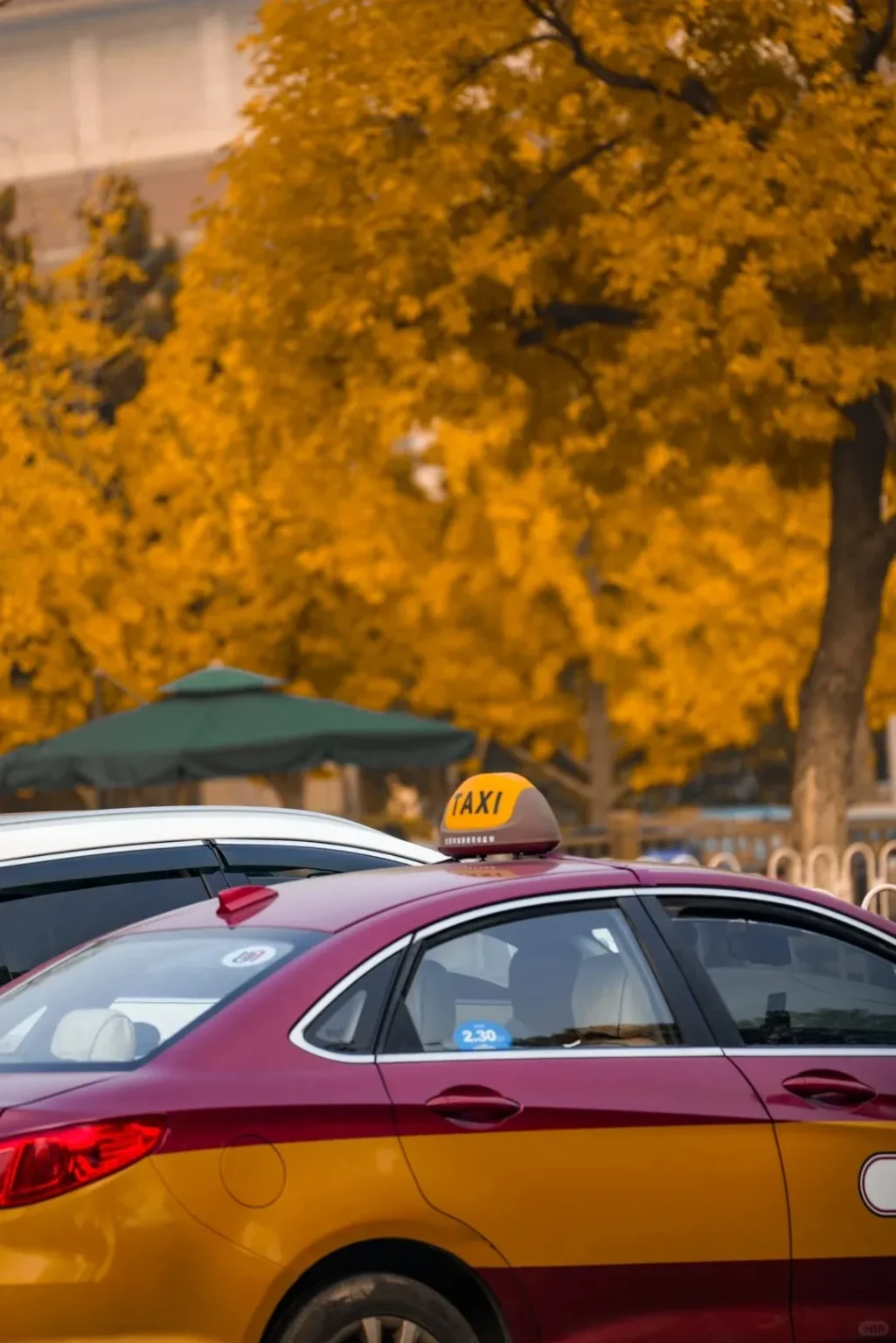
Side view of a red and yellow taxi car with a 'TAXI' sign on its roof, parked on a street. Behind it, a green umbrella and numerous trees with vibrant yellow and orange autumn foliage are visible.

Against a backdrop of vibrant autumn leaves, knowing how to navigate China’s cities by taxi is key for travelers. Our guide covers everything from traditional hails to ride-hailing apps, ensuring a smooth journey.

The “Meter” Rule

When you get in, ensure the driver pulls the flag down to start the meter. If a driver tries to negotiate a flat price before you start moving, get out. This is illegal and almost always a scam to overcharge tourists. Point to the meter and say “Da biao” (Da by-ow) if they hesitate.

The Receipt is Your Insurance

Always ask for the receipt (Fapiao) at the end of the ride. It is printed automatically by the meter. If you leave your phone or wallet in the car, the receipt contains the taxi’s ID number and the company’s phone number. Without it, your lost items are gone forever.

The “Last Mile”: Shared Bikes

You will see thousands of yellow (Meituan) and blue (HelloBike) bicycles parked on sidewalks. These are dockless shared bikes perfect for bridging the gap between the subway station and your hotel.

To use them, simply open Alipay, select “Scan,” and scan the QR code on the bike’s handlebars. The lock snaps open, and you are charged roughly 1.5 to 3 RMB per 30 minutes. Be warned: Chinese traffic laws regarding bikes are loose. Stick to the bike lanes, follow the flow of local riders, and never assume a car will stop for you.

Frequently Asked Questions About Traveling in China

Is there Uber in China for tourists?

No, Uber does not operate in China. The dominant ride-hailing app is DiDi Chuxing. Tourists can easily use DiDi through the Alipay app, which offers an English interface, automatic translation for messaging drivers, and seamless payment via international credit cards.

Cash is rarely used. The most efficient way is to use the “Transport” QR code inside the Alipay app. Simply select the city you are in, scan the code at the turnstile to enter, and scan again to exit. Fees are automatically deducted from your linked card.

Yes, you should carry your physical passport. While you can use QR codes for the subway, a physical passport is mandatory if you need to buy tickets at a counter, for inter-city train travel, and often for hotel check-ins or security checkpoints.

Official taxis are generally safe, but you must ensure the driver uses the meter (say “Da biao”). Avoid “Black Taxis” (unlicensed drivers) who approach you inside terminals. Always ask for a printed receipt (Fapiao) at the end of the ride in case you leave items behind.

Conclusion

Navigating China’s cities does not have to be an ordeal. By setting up your digital payment methods before you arrive and utilizing the efficiency of the Metro and DiDi, you can bypass the confusion that plagues unprepared travelers. The infrastructure is there to help you; you just need the right digital keys to unlock it. So, charge your phone, double-check your VPN connection, and get ready to explore the urban sprawl with confidence.

Similar posts to this one

Multiple Fuxinghao high-speed bullet trains, silver with red and orange stripes, are parked at platforms inside Shenzhen North Railway Station at night. Station signs show '深圳北站' and 'Shenzhen North Railway Station'. Overhead metal structures and lighting are visible.

Beijing to Shanghai High-Speed Rail: The Complete Station & Seat Guide

For travelers in 2026, the debate between flying or taking the train from Beijing to Shanghai is effectively over. The [...]

A vibrant sunrise or sunset over the modern Beijing cityscape, featuring prominent skyscrapers like the tall, slender CITIC Tower (China Zun) reflecting golden light, the distinctive CCTV Headquarters building, and the spiraling dome of the Phoenix International Media Center. A dense canopy of green and golden trees forms the foreground under a sky with dramatic, colorful clouds.

Emergency Travel in China: Vital Phrases, Apps, and Safety Protocols

Traveling to China is an exhilarating experience, but the unique digital ecosystem and language barrier can make even seasoned globetrotters [...]

Two modern Chinese high-speed trains, including a silver Fuxing bullet train with red, orange, and gold stripes, parked side-by-side at a bright station platform. A white high-speed train with blue stripes is to the left. A yellow tactile paving strip is visible on the platform.

China High-Speed Rail for Tourists: Booking, Classes & Onboard Experience

For many travelers, the first time stepping into a Chinese railway station is more overwhelming than the flight that brought [...]

Get the China Arrival Survival Kit

Planning a trip here has a steep learning curve. Join our newsletter and receive our free “Day One Checklist” covering everything from setting up Alipay and WeChat to bypassing the internet firewall.