


Schedules and Route: What You Need to Know
As of 2026, there are generally three to four pairs of direct trains running daily between Hong Kong and Guilin. While transfers are possible in Shenzhen or Guangzhou, the direct train is vastly superior for avoiding the hassle of hauling luggage through transfer halls.
Key Direct Trains (Times subject to seasonal adjustment):
- G2964: Departs ~10:00 AM (Good for hotel check-outs)
- G320: Departs ~11:55 AM (The most popular slot)
- G408: Departs ~12:05 PM (Fastest option)
Insider Tip: All direct high-speed trains from Hong Kong arrive at Guilin West (Guilinxi), not the central Guilin Railway Station. Guilin West is located about 40 minutes by taxi from the city center. Do not book a hotel walking distance from “the train station” expecting to walk there from the high-speed terminal.
Ticket Prices and Seat Classes
Pricing is dynamic based on exchange rates, but 2026 fares remain relatively stable. Note that official prices are set in RMB (CNY), so the HKD/USD price fluctuates slightly.
- Second Class (~$58 USD / ¥412 CNY): The standard choice. Seats are arranged 3+2. It is clean, comfortable, and has decent legroom (more than an airline economy seat).
- First Class (~$92 USD / ¥659 CNY): Arranged 2+2. Offers wider seats, a footrest, and a quieter cabin.
- Business Class (~$168 USD / ¥1,204 CNY): The ultimate luxury. Fully reclining lie-flat seats (1+1 or 1+2 configuration). Includes a meal and lounge access at West Kowloon.
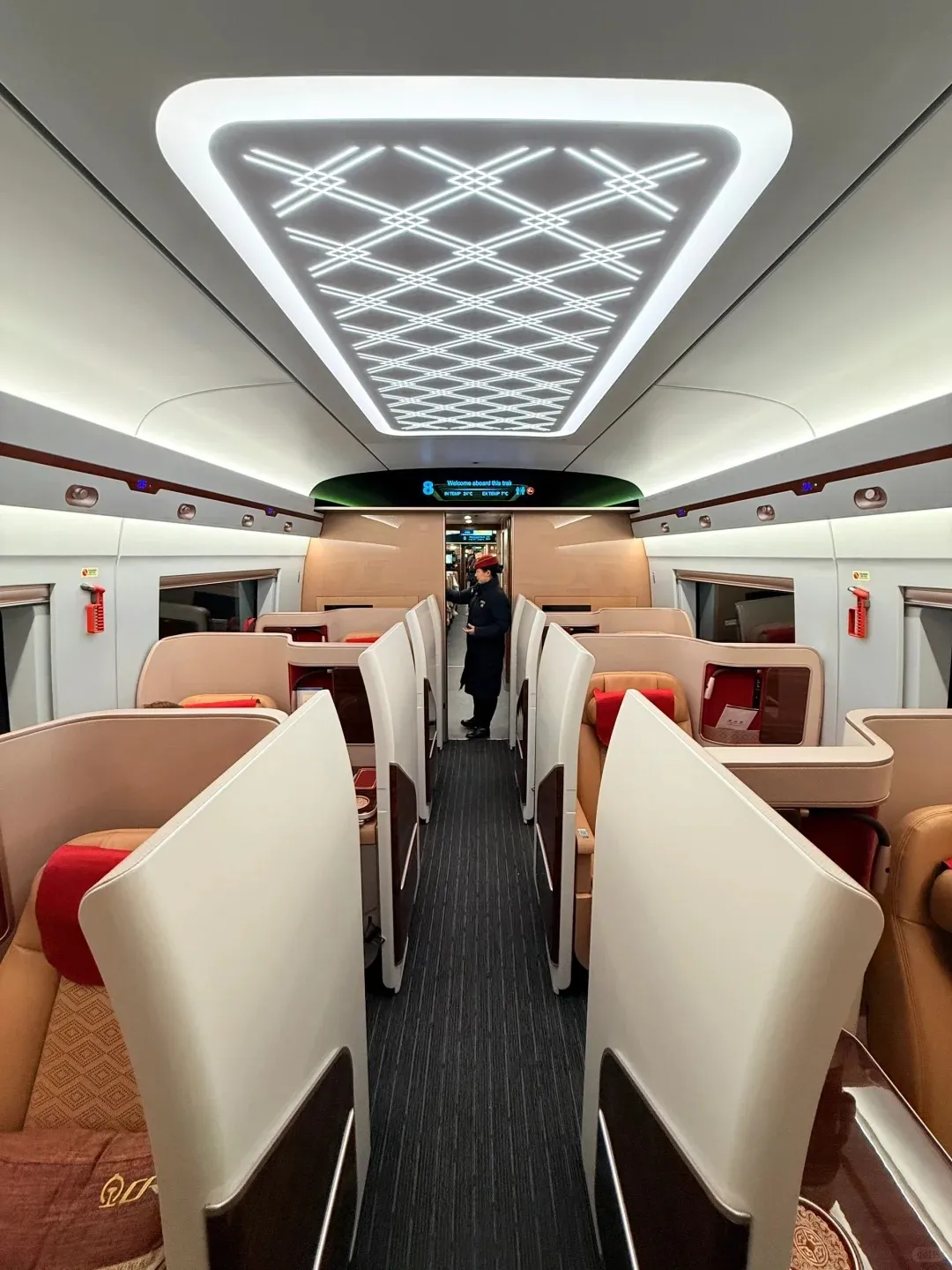
Travel in comfort and style when you opt for a First Class seat on China’s high-speed rail, connecting vibrant cities like Hong Kong to scenic Guilin. These modern carriages offer ample space and a premium journey experience for cross-border travel.
How to Buy Tickets: App vs. Station
Option 1: Trip.com (Recommended for Foreigners)
For most international travelers, paying the small service fee on Trip.com is worth it. The interface is in perfect English, it accepts foreign credit cards without triggering fraud alerts, and their customer service can rebook you if things go wrong.
Option 2: The 12306 App (Official)
This is the official China Railway app. It has an English version, but it is notoriously glitchy with foreign passport verification and credit card processing. Only use this if you are comfortable navigating potential tech hurdles.
Option 3: At the Station (Not Recommended)
Buying tickets at West Kowloon on the day of travel is risky. The Hong Kong to Guilin high speed train is a popular route for domestic tourists, and tickets frequently sell out days in advance.
Navigating West Kowloon Station: The “Co-Location” Setup
West Kowloon Station is unique because it houses the “Mainland Port Area.” This means you complete immigration for both Hong Kong and China inside the station in Hong Kong before you board.
- Level B1 (Ticketing): If you booked online, you do not need a paper ticket. Your passport is your ticket. Link your passport to your ticket order and head straight to the gates.
- Level B3 (Departure): You will pass through Hong Kong immigration (exiting) and then walk across a yellow line to China immigration (entering).
- Customs: Your bags will be X-rayed. Crucial: Aerosols, fruit, and knives are strictly prohibited. I have seen travelers forced to throw away expensive hairspray and pocket knives here.
- Boarding: Gates open 15 minutes before departure and close strictly 5 minutes before.
What is the 144-Hour Visa-Free Transit?
This policy allows travelers from 54 countries to enter specific regions of China for up to 6 days without a visa if they have a confirmed ticket to a third country. However, entering Guilin via train from Hong Kong complicates this. As of 2026, travelers are strongly advised to secure a standard tourist visa (L Visa) before taking this train, as rail ports of entry often have stricter documentation requirements than airports.
Connectivity and Internet
Once the train departs West Kowloon and crosses the invisible border into Shenzhen (about 15 minutes in), you are inside the “Great Firewall.” Your standard roaming data might work depending on your carrier, but it is often throttled. Wi-Fi on the train requires a Chinese phone number to verify, making it useless for most tourists.
To access Google Maps, Gmail, WhatsApp, and social media, you need a reliable solution that routes your traffic outside of China.
💡 Editor’s Pick: We recommend Nomad eSIM for China because it reliably bypasses the Great Firewall with stable speeds. Use code JORICAQLKF at checkout to get $5 USD off your first data plan.
The Onboard Experience & Scenery
The train hits speeds of up to 300km/h (186 mph). The ride is incredibly smooth—you can balance a coin on the windowsill.
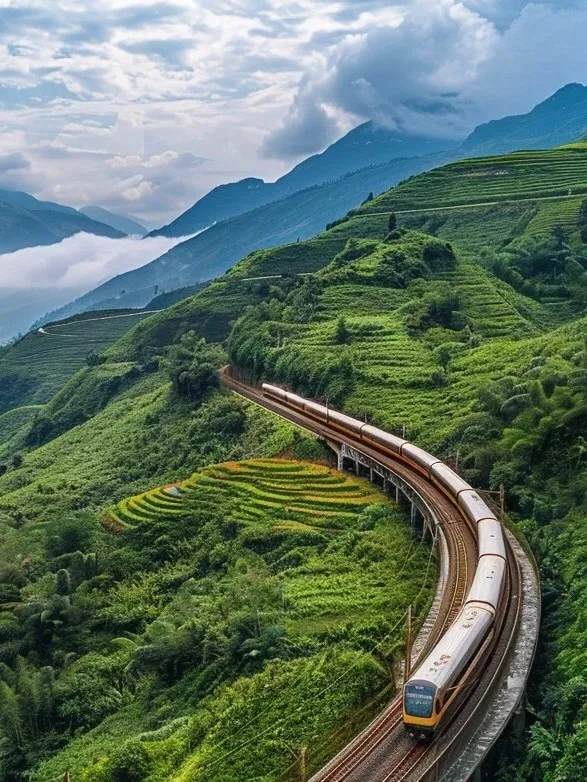
Insider Tip: When booking, try to request a window seat (A or F). The first hour through Guangdong province is mostly urban sprawl and tunnels. However, the final hour approaching Guilin is spectacular. You will see the landscape shift from industrial factories to the iconic limestone karst mountains rising out of rice paddies.
Food is available onboard, but it consists of overpriced, microwave-heated bento boxes (~40-60 CNY). I strongly recommend buying sandwiches or dim sum at the food court in West Kowloon Station (Level B1 or B2) before you go through the gates.
Arrival at Guilin West: The Final Leg
Guilin West Station (Guilinxi) is a functional, concrete transport hub located in Lingchuan County. It is not scenic, and it is not near the Twin Pagodas.
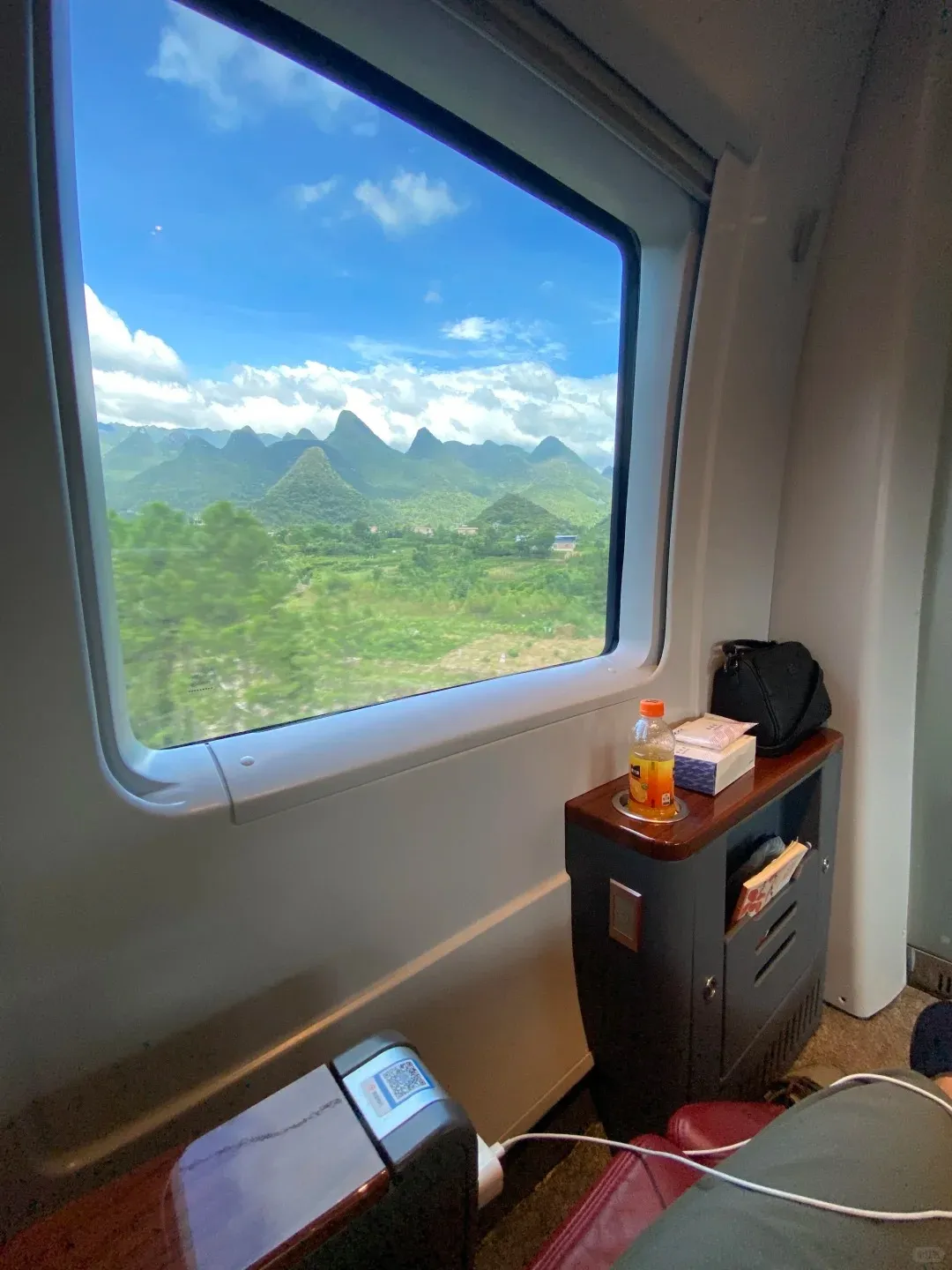
The journey itself is a destination! Prepare to be captivated by the dramatic karst peaks that greet you on your high-speed rail trip to Guilin.
Getting to the City:
- Taxi: Head to the official taxi queue. Do not follow drivers who approach you in the arrival hall offering “cheap rides”—they will overcharge you. A meter ride to downtown Guilin costs roughly 40-60 CNY.
- Ride-Hailing: The Alipay app has a built-in Didi (Uber equivalent) mini-app. This is often easier than explaining your hotel address to a taxi driver who doesn’t speak English.
- Bus: There are public buses, but they are crowded, slow, and lack English signage. After a long travel day, the $5 USD savings isn’t worth the headache.