
Gulangyu Ferry Guide: How to Book Tickets as a Foreigner

If you are planning a trip to Xiamen, Gulangyu Island is undoubtedly on your itinerary. However, getting there is not as simple as walking up to the nearest dock. In fact, the ferry system is the single most common frustration for international travelers visiting Fujian province.

Here is the reality: Xiamen has multiple ferry terminals, and if you go to the one listed in older guidebooks or the one locals use, you will be turned away. The ticketing system is strictly regulated, linked to your passport, and demand often outstrips supply.

This Xiamen Gulangyu ferry guide cuts through the confusion, detailing exactly which terminal to navigate to, how to handle the “foreigner ticket” situation in 2026, and how to ensure you don’t get stuck on the mainland.

Quick Summary: Key Takeaways for Your Trip

  • Wrong Terminal Warning: Do not go to the “Lundu” Ferry Terminal; this is for locals only during the day. Tourists must use the Xiagu Cruise Terminal (Dongdu).
  • Passport is King: You cannot board without your physical passport. Photos or copies are rarely accepted.
  • Book in Advance: Tickets sell out days in advance during holidays. Buy them as soon as your itinerary is set.
  • The Return Trip: Your ticket is round-trip. You can return from any tourist wharf, but after 5:40 PM, you must return to the Lundu terminal (downtown), not the cruise terminal.
  • Ticket Price: Approximately 35 RMB to 50 RMB depending on the destination wharf.

Summarize with :

The “Two Terminal” Problem: Where to Go

The most critical mistake travelers make is confusing the terminals. Xiamen separates commuter traffic from tourist traffic to manage congestion.

1. The Tourist Terminal: Xiamen International Cruise Center (Xiagu)

This is where you must go. Located at Dongdu, this is often referred to on maps as the “Xiamen International Cruise Center” (厦鼓码头). From 7:10 AM to 5:30 PM, all non-residents must depart from here. It is a large, airport-style facility with security checkpoints.

2. The Local Terminal: Lundu Ferry Terminal

Located on scenic Lujiang Avenue near Zhongshan Road, this terminal is strictly for Xiamen residents with local ID cards during the day. Do not line up here before 5:30 PM. However, there is a loophole: this terminal opens to tourists for the night ferry (typically after 5:50 PM), which runs throughout the night.
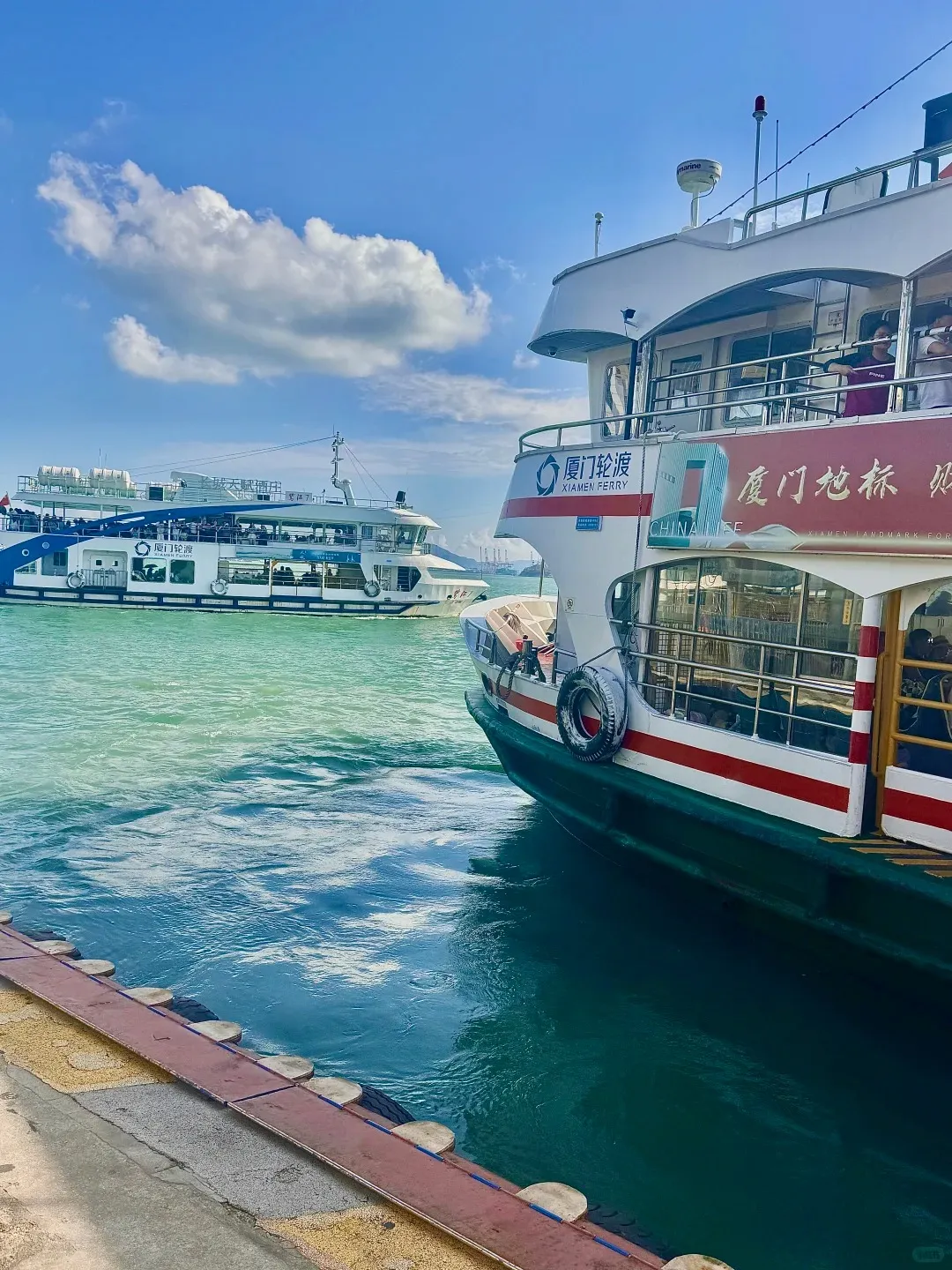
Two Xiamen ferries on turquoise water. The closer ferry is white with red stripes, docked at a concrete pier edge, displaying 'Xiamen Ferry' and 'Xiamen Landmark Ferry'. A second white and blue ferry is visible further in the background. The sky is blue with white clouds.

Your journey to the car-free paradise of Gulangyu Island begins on one of these distinctive Xiamen ferries. Our guide will help foreign visitors navigate ticket booking with ease!

How to Buy Tickets: The “Foreigner” Hurdle

In 2026, the digital integration in China is seamless for locals but can still be a “walled garden” for those without a Chinese ID card. Here is how to secure your passage.

Option 1: The WeChat/Alipay Mini-Program (The Tech-Savvy Route)

The official ticketing platform is the “Xiamen Ferry Company” (厦门轮渡有限公司) Mini-Program within WeChat or Alipay. While the interface has improved, it often requires a Chinese mobile number to register.

If you have Alipay set up with your international credit card:

  1. Search for “Xiamen Ferry” in the app.
  2. Select “Xiagu Cruise Terminal” as your departure.
  3. Choose your arrival wharf: Sanqiutian (closest to tourist action) or Neicuo’ao (quieter, further walk).
  4. Enter your name exactly as it appears on your passport.

Option 2: Buying at the Counter (The Reliable Route)

According to recent traveler reports and consistent with strict ID policies, many foreigners find the app rejects international passport formats. If the app fails you, you must buy tickets at the Xiagu Cruise Terminal ticket windows.

Insider Tip: Arrive at the terminal at least 90 minutes before your desired departure. Tickets for immediate departure are rarely available. You might arrive at 9:00 AM and find the next available boat is at 11:30 AM. Bring this time buffer into your schedule.

What is the Sanqiutian vs. Neicuo’ao Wharf difference?

Sanqiutian Wharf is located near the main village. It lands you right next to the bustling markets and the Organ Museum. It operates 24 hours for return trips. Neicuo’ao Wharf is on the quieter side of the island. It costs slightly more (50 RMB vs 35 RMB) but offers a more peaceful arrival. Choose Neicuo’ao if your hotel is on the western side of the island to avoid dragging luggage through crowds.

Connectivity and Navigation

Once you arrive at the terminal, you will need to show your booking code or access your map to find your gate. The terminal is massive, and free Wi-Fi is spotty at best.

To ensure you can access Alipay for your ticket and navigate the island upon arrival, reliable mobile data is non-negotiable. I strongly recommend setting up your connection before you land.

💡 Editor’s Pick: We recommend Nomad eSIM for China because it reliably bypasses the Great Firewall with stable speeds. Use code JORICAQLKF at checkout to get $5 USD off your first data plan.

The Crossing Experience: What to Expect

The ferry ride takes approximately 20 minutes. The boat will be crowded. As soon as you board, locals will rush to the upper deck for photos of the skyline. If you want a seat, stay on the lower deck. The air conditioning is better down there, and the view is largely the same.

Once you step off at Gulangyu, the sensory shift is immediate. There are no cars and no bicycles allowed on the island. The only “vehicles” you will see are electric buggies (which are expensive tourist shuttles) and manual carts used to haul construction materials and luggage.
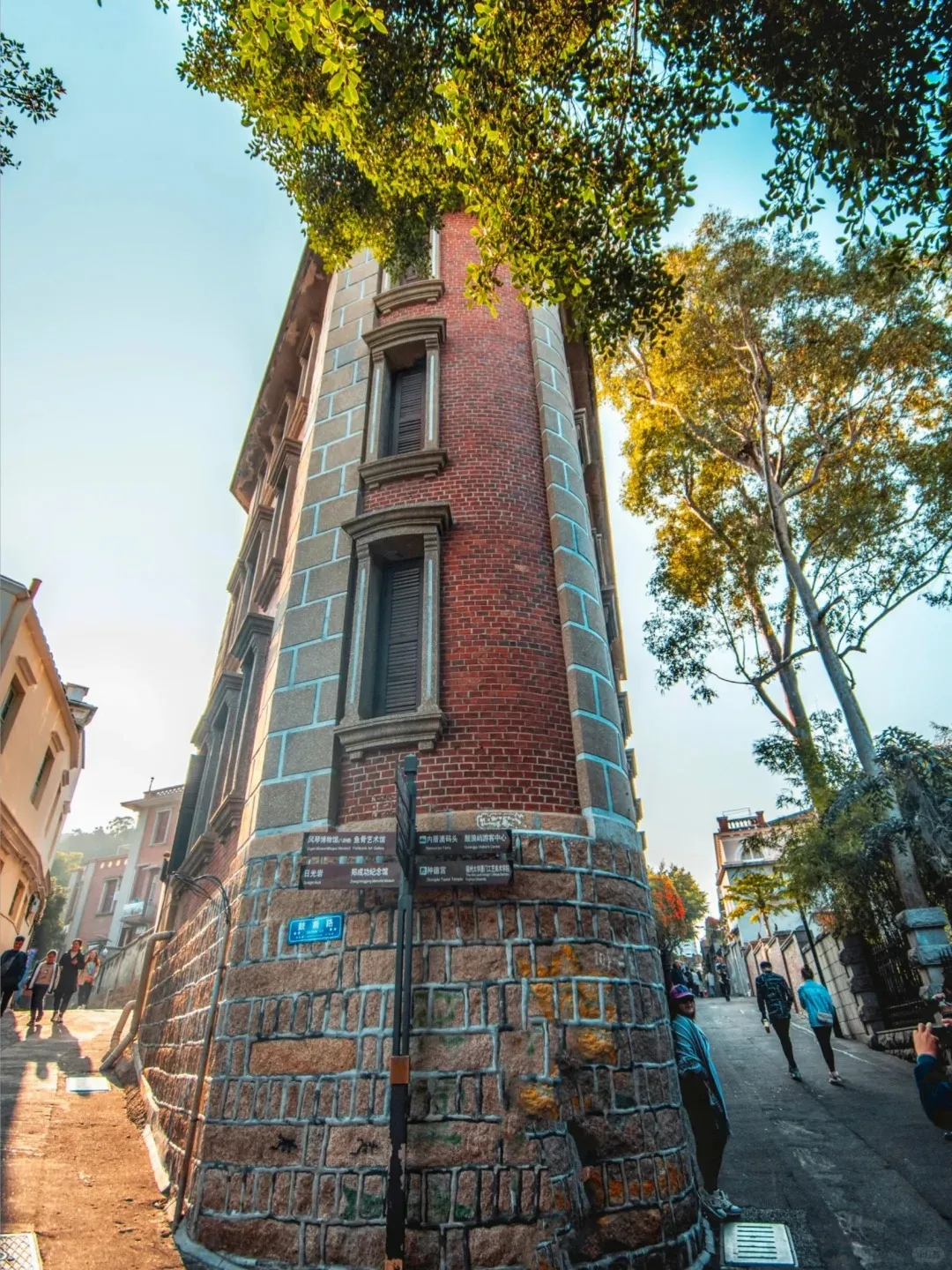
A narrow pedestrian street on Gulangyu Island featuring a colonial-style corner building with a rough stone block base and red brick upper floors. Green trees with dense foliage are visible against a bright blue sky. Several pedestrians walk along the street, and a street sign with Chinese characters stands at the corner.

Beyond the ferry ride, Gulangyu Island offers a delightful escape into a world of historic charm. Wander its car-free streets and discover unique colonial architecture like this corner building, a perfect welcome to your island adventure.

Insider Tips for a Smooth Visit

  • The Return Trip Hack: You do not need to book a specific time for your return. Your ticket covers the return trip within 20 days. You simply line up at the wharf when you are ready to leave.
  • Night Owl Advantage: If you stay on Gulangyu past 6:00 PM, you can take the ferry back to the Lundu Terminal. This drops you right at the foot of Zhongshan Road pedestrian street, saving you a taxi ride from the cruise terminal. This is the smartest way to end your day.
  • Avoid “Golden Week”: During Chinese National Day (early October) or Labor Day (May), the island reaches maximum capacity. Tickets can sell out weeks in advance. If you must travel then, book a hotel on the island, as hotel guests have priority access to ferry tickets.
  • Luggage Logistics: Because there are no cars, you will be dragging your suitcase over cobblestones and up steep hills. If you are staying overnight, pack a light backpack and leave your heavy luggage at a storage locker at the Xiamen Cruise Terminal or your mainland hotel.


Gulangyu Ferry Logistics: Common Questions Answered

Which Xiamen ferry terminal should tourists use?

Tourists must use the Xiagu Cruise Terminal (Dongdu) between 7:10 AM and 5:30 PM. The Lundu Ferry Terminal is strictly for local residents during the day but opens to tourists for the night ferry after 5:50 PM.

Yes, you can use the ‘Xiamen Ferry Company’ mini-program on Alipay or WeChat. However, the system often rejects international passport formats or requires a Chinese phone number, so buying tickets at the Xiagu Terminal counter is often more reliable.

Yes, your physical passport is mandatory for both booking tickets and boarding the vessel. Digital copies or photos on your phone are rarely accepted by terminal security.

Your ticket is round-trip and valid for 20 days. You do not need to book a specific return time; simply line up at the wharf. If you return after 5:40 PM, the ferry will drop you at the downtown Lundu Terminal instead of the cruise center.

Conclusion

Navigating the Xiamen Gulangyu ferry guide requirements comes down to one rule: respect the logistics. The system is rigid, but it is designed to protect the UNESCO heritage site from being overrun. By going to the Xiagu Cruise Terminal, having your passport ready, and downloading Alipay before you arrive, you will breeze past the confused travelers at the gate. Enjoy the car-free silence and the colonial architecture—it is worth the extra effort to get there.

Similar posts to this one

Two commercial airplanes at an airport during sunset. One large white plane is parked at a gate, connected to a jet bridge, with ground crew working near its engines and landing gear. In the background, another airplane is seen taking off, ascending into the vibrant orange and yellow sky.

Smooth Connections: A Guide to International Airport Transfers in China

Navigating a massive Chinese aviation hub in 2026 can feel like stepping into a sprawling, futuristic metropolis. Whether you are [...]

A white, red, and gray Fuxinghao high-speed train, blurred by motion, speeds across an elevated railway track. Below, a person on a motorcycle rides on a road under a concrete overpass in an urban environment.

Beijing to Shanghai: High-Speed Train vs. Flight Showdown

Covering the 1,318 kilometers (819 miles) between China's two most important cities is a rite of passage for travelers. But [...]

A white and green Chongqing monorail train curves on an elevated track, heading towards the viewer. In the background, a dense city skyline features many modern skyscrapers and residential buildings under a bright blue sky with large white clouds. A prominent tall building with a distinctive pointed top dominates the center of the skyline. To the left, a wide river flows, with a bridge visible in the distance, and a yellow taxi drives on a road beneath the monorail track.

Chongqing Metro Guide: Navigating the Vertical City with Ease

If you rely solely on 2D maps in Chongqing, you will get lost. Known as China’s "Mountain City" (or more [...]

Get the China Arrival Survival Kit

Planning a trip here has a steep learning curve. Join our newsletter and receive our free “Day One Checklist” covering everything from setting up Alipay and WeChat to bypassing the internet firewall.