


What are the Mogao Grottoes?
The Mogao Grottoes, also known as the Caves of the Thousand Buddhas, comprise a UNESCO World Heritage site featuring 492 temples carved into a desert cliff in Dunhuang, China. Spanning 1,000 years of Buddhist art, they house some of the world’s finest ancient murals and monumental painted sculptures.
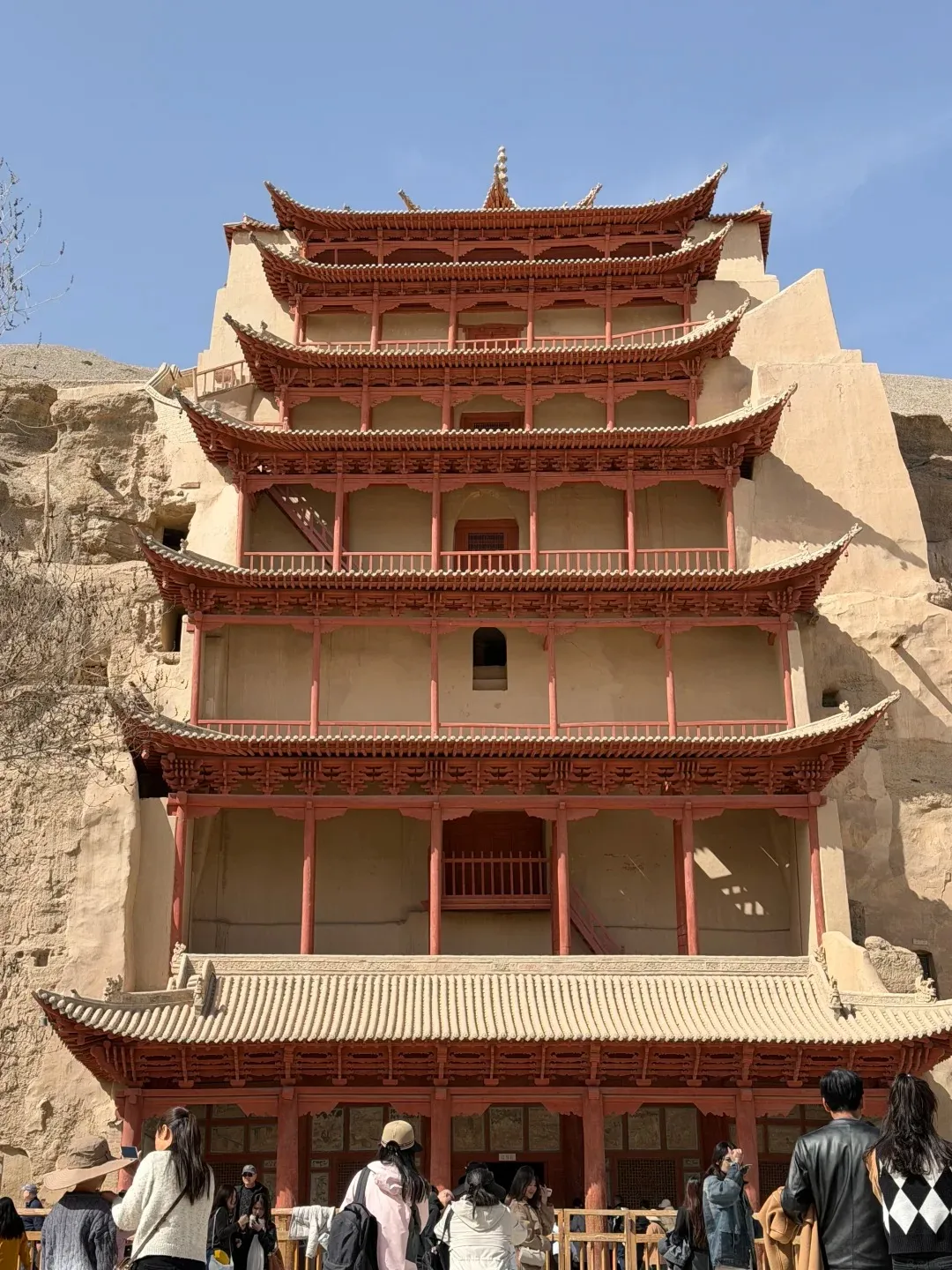
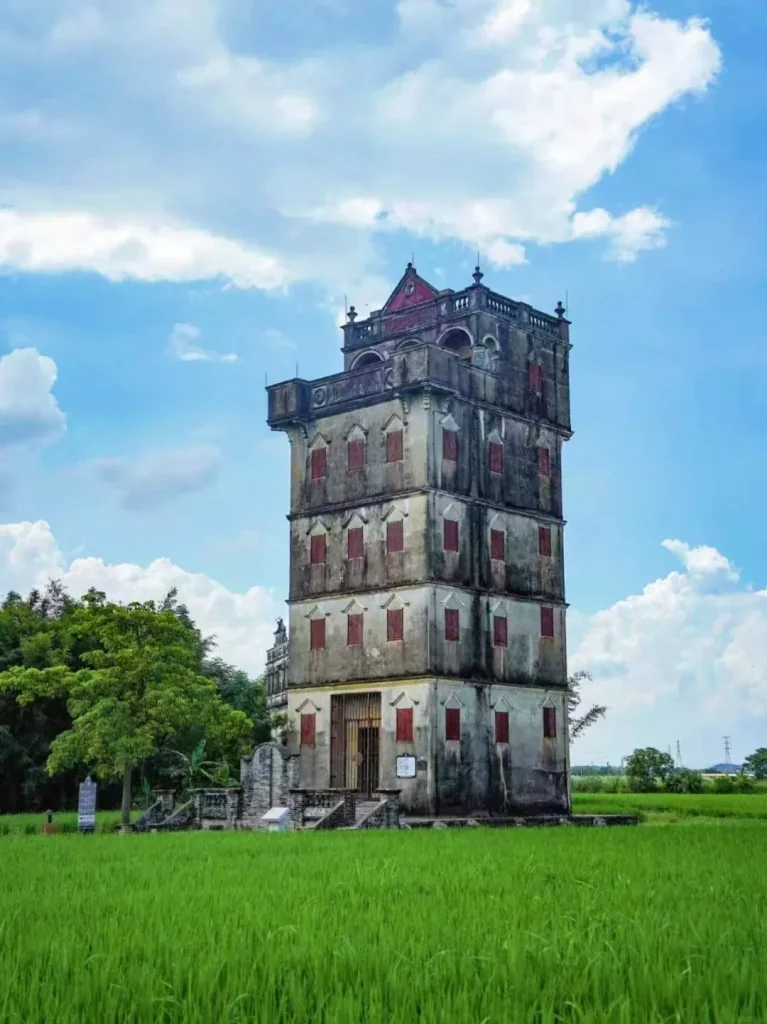
The stunning nine-story building at the Mogao Grottoes, a UNESCO World Heritage site. Navigating the ticket system can be complex, but the reward is access to these ancient Buddhist caves.
Understanding Your Options: Type A vs. Type B Tickets
According to the 2026 ticketing policy from the official Dunhuang Research Academy website, visitors must choose between three distinct ticket tiers. Choosing the wrong one can drastically alter your experience.
The Premium Experience: Type A Tickets
The Type A ticket (258 RMB) is the gold standard for international visitors. It grants you a comprehensive two-hour guided tour covering eight different caves, including the famous Cave 17 (the Hidden Library Cave) and Cave 96, which houses the towering 35.5-meter Maitreya Buddha.
Crucially, Type A tickets include English-language tours (typically running at 9:00 AM, 12:00 PM, and 2:30 PM). Your ticket also covers two 30-minute films at the visitor center—one of which is an incredible IMAX-style deep dive into cave interiors that are permanently closed to the public.
The Budget or Last-Minute Option: Type B Tickets
The Type B ticket (100 RMB) is designed for high-volume crowd management. It only grants access to four caves and does not include the immersive cinema films. More importantly for international travelers, Type B tours are conducted entirely in Chinese.
If you have a tight itinerary or Type A tickets are sold out, Type B is better than nothing, but you will miss the deep historical context unless you are fluent in Mandarin.
How to Buy Mogao Grottoes Tickets via WeChat
Purchasing tickets as a foreigner is notoriously clunky. The official desktop site requires a Chinese ID card and a local phone number. Therefore, international travelers must use the official WeChat Mini-Program (莫高窟参观预约网).
You will need a reliable internet connection to search for the Mini-Program, translate the interface, and display your dynamic QR code at the entry gates.
💡 Editor’s Pick: We recommend Nomad eSIM for China because it reliably bypasses the Great Firewall with stable speeds.
Search for “Mogao Grottoes” in WeChat, select your date, and input your passport details carefully. The name on your booking must exactly match your passport, as facial recognition and manual passport checks are strictly enforced at the turnstiles.
Insider Tip: What to Know Before You Go
Many guides romanticize the desert, but the reality of visiting Dunhuang in peak season is intense. By midday in July, temperatures easily hit 40°C (104°F). The air smells of dry dust, and the glare from the sand is blinding.
Manage your expectations regarding crowds. Inside the caves, it gets incredibly claustrophobic. You will likely be shoulder-to-shoulder with 30 other tourists in a dimly lit, unventilated space. Bring a handheld fan, and do not rely on the visitor center for cheap hydration—a small bottle of lukewarm water there costs 5 RMB.
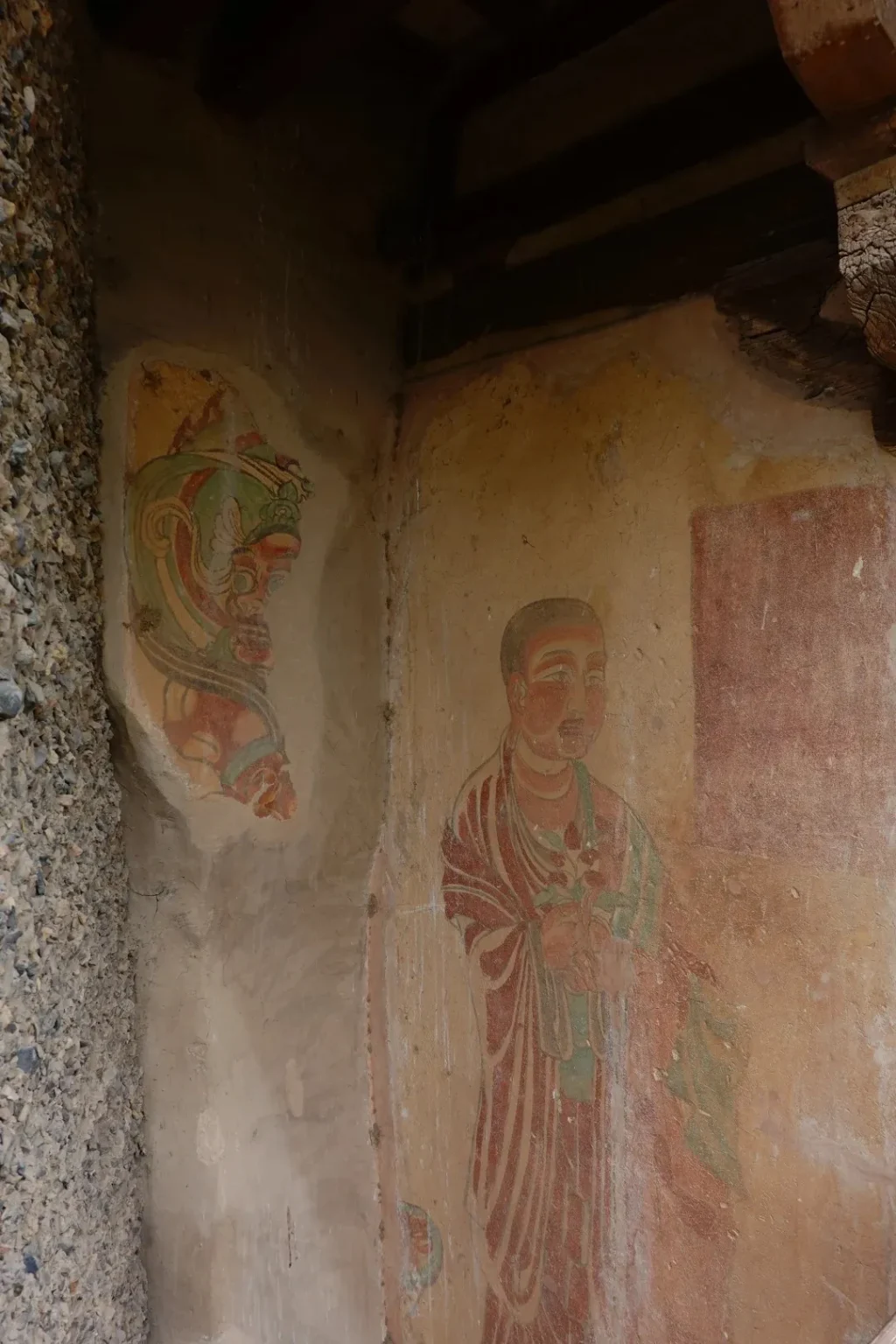
Step inside the artistic heritage of the Mogao Grottoes. While navigating the booking system can be intricate, the preservation of these ancient frescoes, like the bodhisattva and stylized deity shown here, offers a glimpse into centuries of Buddhist art and devotion.
An overrated attraction to skip: Many tourists rush from Mogao straight to the Singing Sands Dune to ride camels at Crescent Moon Lake. It is essentially a noisy, crowded amusement park filled with dune buggies and megaphones. Skip the camel ride; instead, hike out into the quieter dunes at sunset for a much more authentic desert experience.
Essential Logistics: Getting to the Visitor Center
A very common mistake travelers make is taking a taxi directly to the Mogao Grottoes. You will be turned away. All tours legally must begin at the Mogao Grottoes Digital Exhibition Center, located about 5km from central Dunhuang near the train station.
- By Minibus: Catch the green minibus (3 RMB one-way) from outside the Silk Road Yiyuan Hotel. It departs every 30 minutes.
- By Taxi: A taxi from downtown Dunhuang to the Exhibition Center costs roughly 20 RMB and takes 15 minutes.
After checking your passport and watching the introductory films, official dedicated coaches will shuttle you the remaining 15km down the strictly controlled desert road to the actual cave site.
What to Do If Tickets Are Sold Out
If you arrive in Dunhuang without a digital booking, do not panic. Head immediately to the Mogao Grottoes Reservation and Ticket Center (莫高窟参观预约售票中心) located on Yangguan Dadao in the east of town. English-speaking staff are usually on hand.
While Type A tickets sell out weeks in advance during the summer, the staff can often secure you a Type B ticket for the following day. Remember that if there is heavy rain, snow, or a severe sandstorm, the caves will be closed immediately to protect the ancient pigments from humidity and abrasion.