


Digital Survival: Connectivity and Ordering
China’s digital ecosystem in 2026 is entirely self-contained. You cannot simply walk into a heritage restaurant, ask for an English menu, and hand over a foreign credit card. Every dim sum order happens via a WeChat Mini Program scanned directly from a QR code taped to your table.
To load these menus—and translate them in real-time—you need a reliable internet connection that reliably bypasses the Great Firewall. I learned the hard way that roaming on a home network often leads to agonizingly slow menu loading while hungry locals hover for your table.
💡 Editor’s Pick: We recommend Nomad eSIM for China because it reliably bypasses the Great Firewall with stable speeds. Use code JORICAQLKF at checkout to get $5 USD off your first data plan.
Once connected, use the WeChat built-in translation tool. Simply screenshot the Chinese menu on your phone, open the translation feature, and select your dishes. Alipay’s translation feature is also highly accurate for staple items like har gow (shrimp dumplings) and siu mai (pork dumplings).
What is the 144-Hour Transit Visa?
According to the official China National Immigration Administration, the 144-hour transit visa exemption allows eligible foreign nationals to stay in Guangdong Province for up to six days without a prior visa. You must hold a valid passport and a confirmed onward ticket to a third country or region within the 144-hour window.
The Unwritten Rules of Yum Cha Etiquette
Stepping into a traditional spot in the Liwan District hits you with the earthy smell of aged pu’er tea and the sizzle of fried turnip cakes. Before you eat, you must partake in the ritual of washing your dishes.
The waiter will drop off a large plastic basin and a pot of boiling water. Do not drink this water. Pour it over your chopsticks, teacup, and small plates, letting the runoff fall into the basin. It is a sanitary tradition dating back decades, and skipping it instantly marks you as an outsider.
When someone pours your tea, tap your bent index and middle fingers on the table. This “finger kowtow” is a subtle nod of thanks, allegedly originating from Qing Dynasty Emperor Qianlong’s incognito travels when his guards needed a way to bow without blowing his cover.
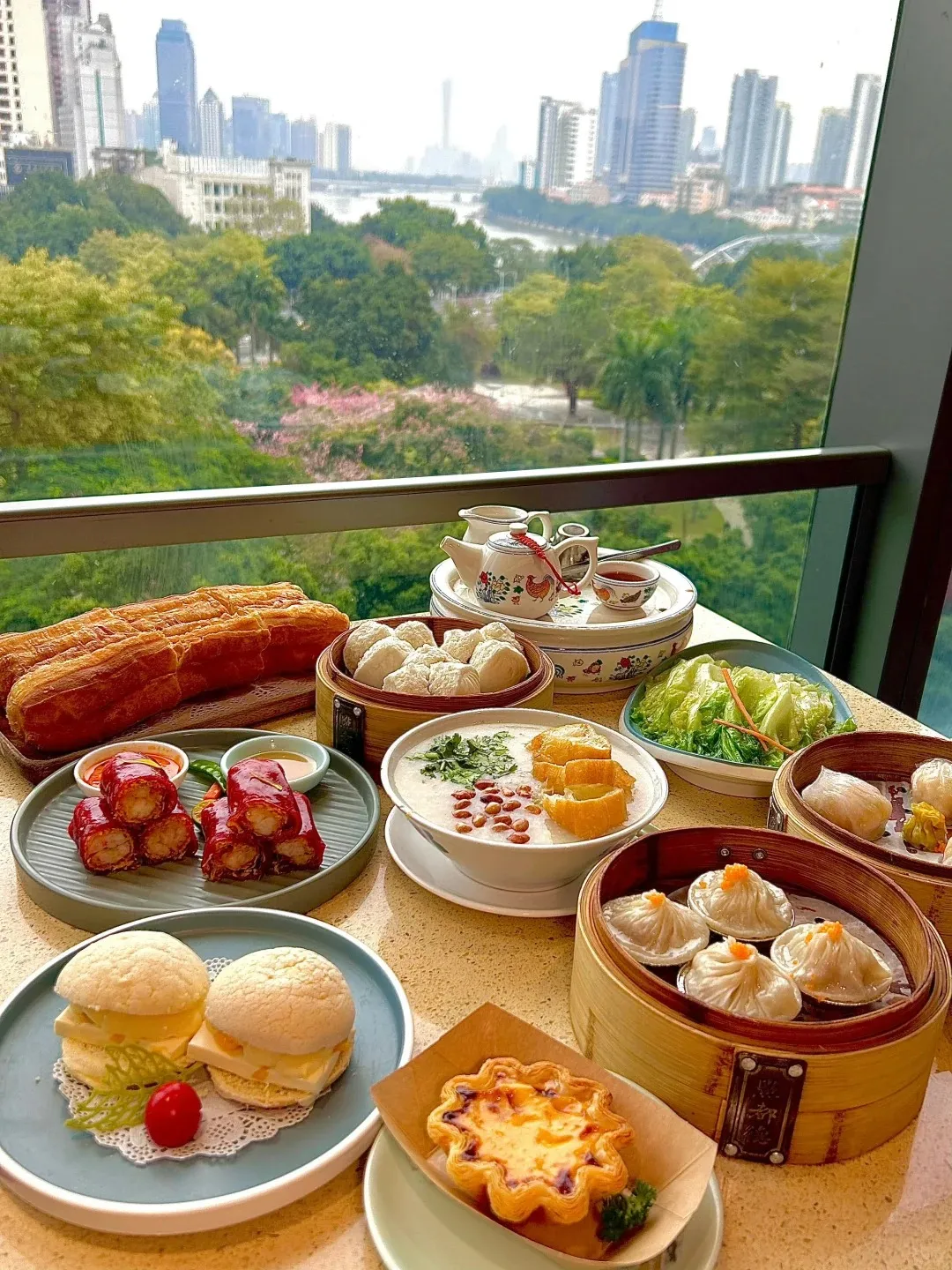
This vibrant dim sum spread with a stunning city view embodies the best of Guangzhou’s culinary heritage. Discover how to navigate the teahouse scene and enjoy a true local experience with our comprehensive guide.
Top Teahouses: Where to Eat and What to Skip
The Historic Heavyweight: Rong Hua Lou
Founded in 1876, Rong Hua Lou is slightly run-down, but it is the real deal. You will hear live Cantonese opera performances over the din of clinking teacups. Order the steamed spare ribs with black beans; the pork is impossibly tender and flavorful.
Insider Tip: While the atmosphere is unbeatable, the aging air conditioning struggles in the humid Guangzhou summers. Dress lightly, expect a chaotic environment, and be prepared to share a large table with local elders.
The Premium Garden: North Garden (Beiyuan)
If you want a refined, Michelin-recognized experience, Beiyuan offers stunning Lingnan-style garden architecture. The shrimp dumplings (har gow) here are absolute masterpieces with translucent, perfectly pleated wrappers.
What to Know Before You Go: Skip the weekend brunch rush here. According to local foodies, the waitlists on Saturdays can exceed two hours, and the frantic service detracts from the elegant courtyard setting. Go on a Tuesday morning instead.
The Modern Standard: Diandude
For first-timers intimidated by old-school teahouses, Diandude is a wildly popular modern chain. They have picture menus integrated directly into their WeChat ordering system, making it incredibly foreigner-friendly and easy to navigate.
Their signature red rice noodle rolls with crispy shrimp are legendary. It costs about 85 RMB ($12 USD) per person for a massive feast here, making it exceptional value for the quality provided.
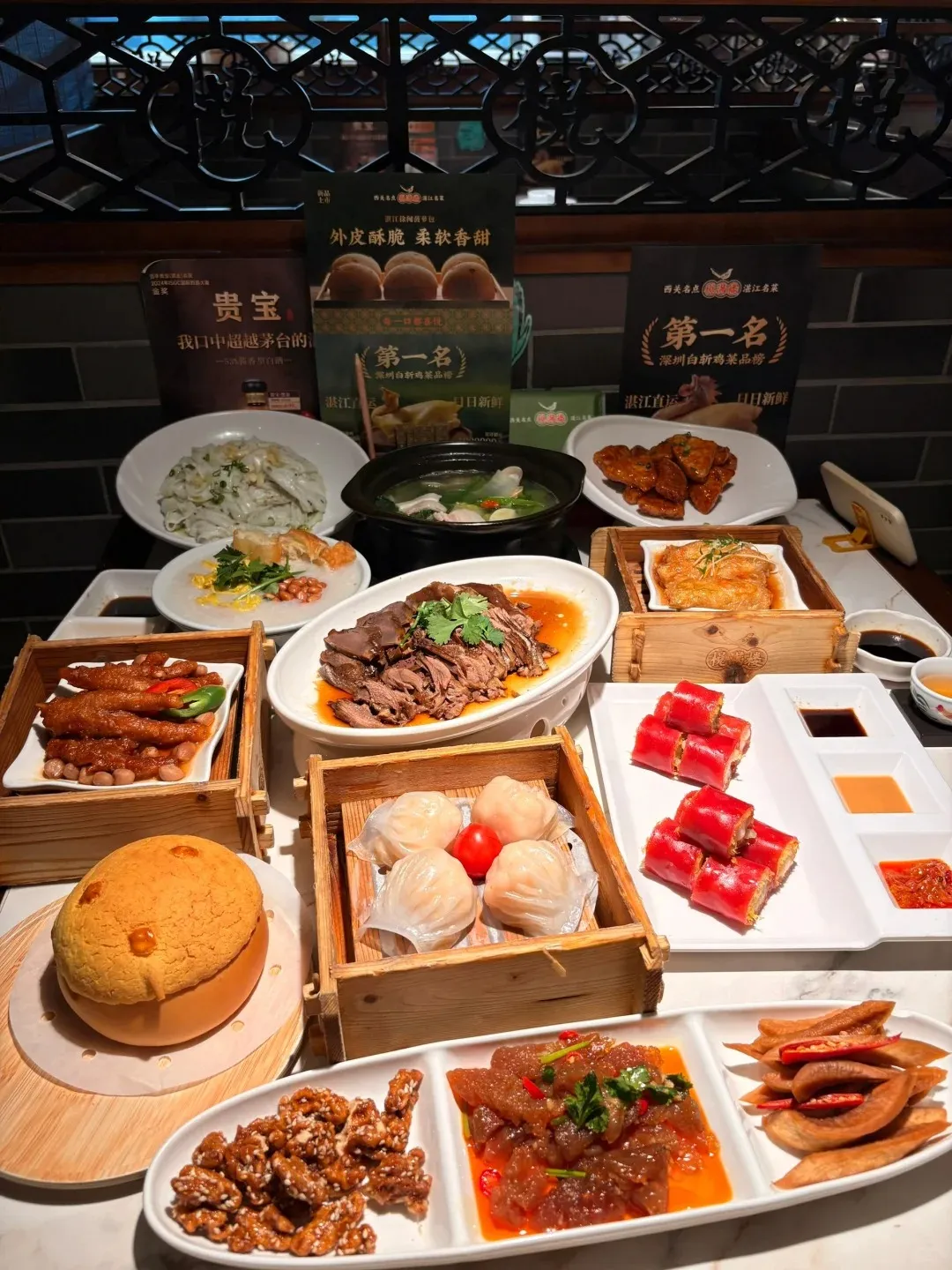
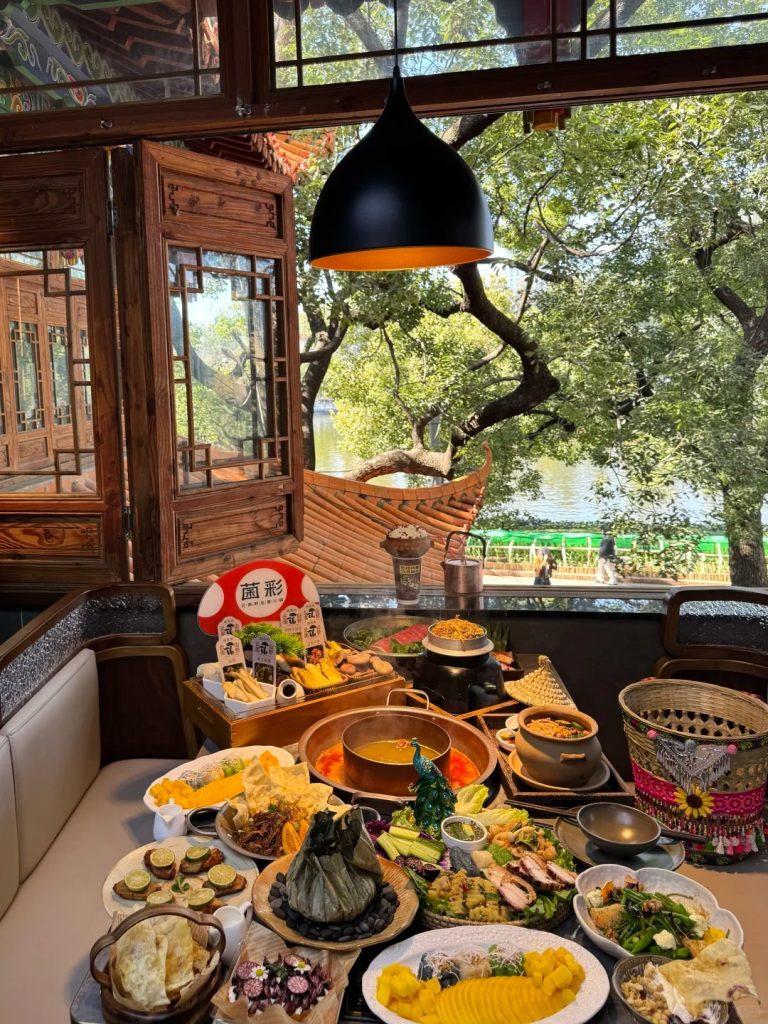
Experience the true essence of Cantonese dining with a glorious spread of dim sum. This bustling table showcases the incredible variety and flavors you can expect at Guangzhou’s top teahouses, from classic steamed delights to unique regional specialties.
Practical Tips for Your Dim Sum Run
Watch for hidden charges: Most teahouses automatically charge a “tea fee” (cha wei) per person, usually between 5 to 15 RMB. This is standard and non-negotiable. They may also place pre-packaged snacks or wet wipes on the table; if you open them, you buy them.
A standard bottle of mineral water at a convenience store costs about 2-3 RMB, but you won’t need it at the table. Drinking cold water with dim sum is a local faux pas—Cantonese culinary philosophy dictates that hot tea aids the digestion of fatty, rich dishes.