
Yunnan's Mushroom Hotpot: A Traveler's Guide to a Fungal Feast

There is a saying in Yunnan: “If you eat wild mushrooms and don’t see the little green men, you didn’t cook them right.” While local humor often dances around the hallucinogenic properties of certain fungi, the reality of the Yunnan mushroom hotpot guide is serious business—and seriously delicious. Every summer, the mountains of Southwest China erupt with thousands of species of wild fungi, drawing foodies from across the globe to Kunming and Dali.

This isn’t the button-mushroom soup you find in the West. This is an earthy, rich, and sensory overload where the broth is liquid gold and the ingredients are foraged that very morning. However, navigating this culinary landscape in 2026 requires more than just an appetite; it requires timing, safety knowledge, and the right digital tools.

Quick Summary: Key Takeaways for Your Trip

  • Best Season: Late June to early September (The rainy season is non-negotiable for fresh wild varieties).
  • Must-Try Dish: Jianshouqing (sliced boletus) cooked in a chicken broth base.
  • Safety Rule #1: Never touch your chopsticks to the pot until the 20-minute timer set by the waitress expires. Undercooked mushrooms can be toxic.
  • Top Location: Kunming is the hub, specifically the restaurants near the Guandu wild mushroom market.

Summarize with :

The “Wild” Factor: Why Yunnan Mushrooms are Different

Unlike farmed shiitakes, the mushrooms prized in Yunnan are truly wild. They grow in complex symbiotic relationships with high-altitude pine forests and red soil, meaning they cannot be cultivated in a greenhouse. This scarcity drives the price and the flavor profile.

When you sit down for a meal, you aren’t just eating fungus; you are tasting the terroir of the Himalayas. The broth usually starts as a rich, yellow chicken soup (often made with local “black-boned” chicken), which becomes exponentially more flavorful as the mushrooms simmer.
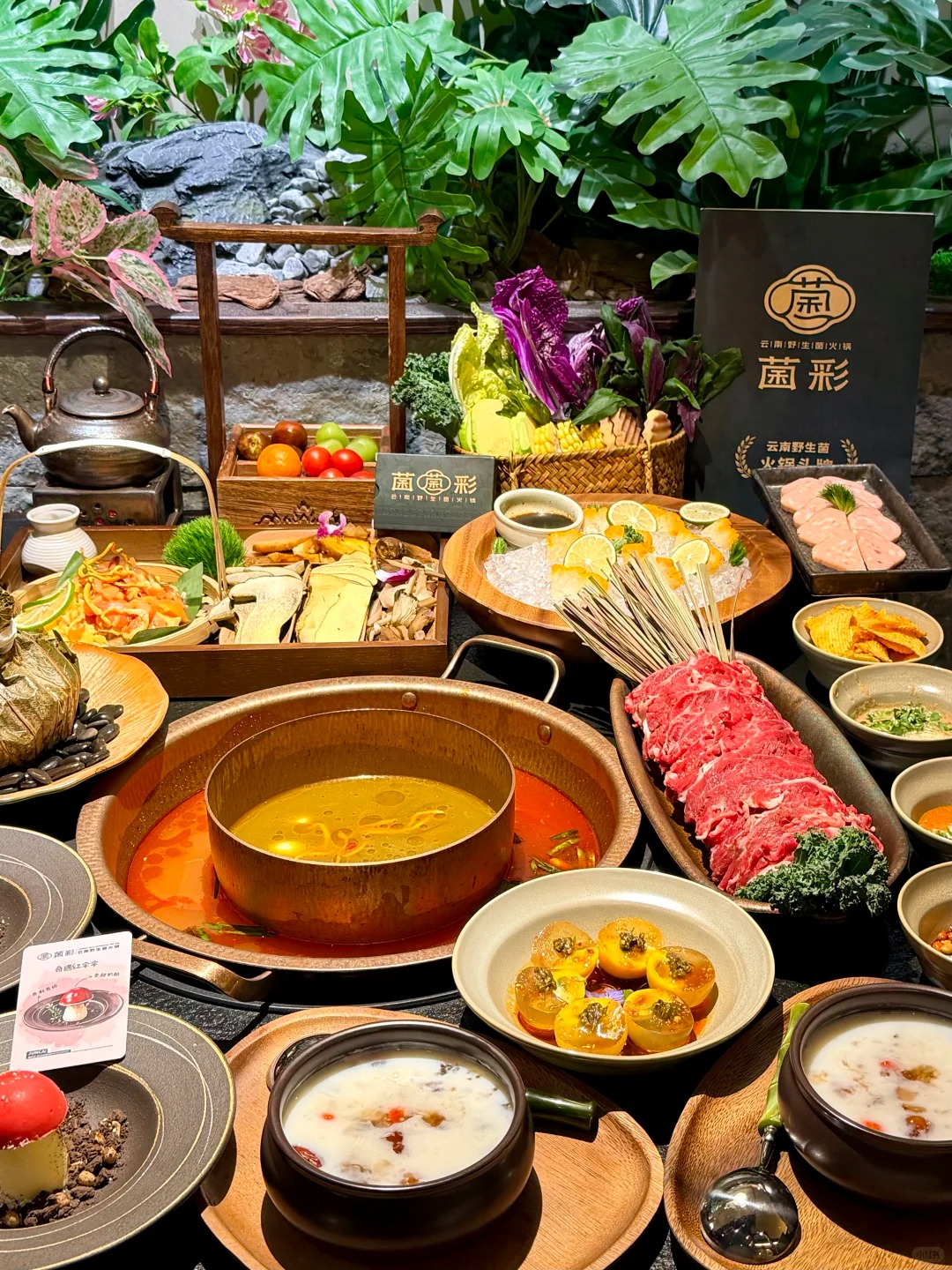
A large table is set with a traditional Chinese hotpot meal, featuring a copper split pot with two broths: one yellowish mushroom broth and one reddish spicy broth. Around the hotpot are various ingredients including plates of thinly sliced raw beef, fresh vegetables like purple cabbage and corn, a selection of dried and fresh wild mushrooms, sliced fish on ice, and baskets of fresh fruits. Several small bowls of sauces, two creamy desserts, and a mushroom-shaped cake are also visible. A menu for 'Yunnan Wild Mushroom Hotpot' stands in the background amidst lush green foliage.

Embark on a culinary adventure with this vibrant spread, showcasing the exquisite offerings of Yunnan’s famous wild mushroom hotpot – a true fungal feast for the senses.

The Varieties: What You Are Eating

The menu will likely be in Chinese, and translation apps often fail to capture the specific species. Here are the three entities you need to recognize:

  • Ganba Fungus (Thelephora ganbajun): Dark, wrinkled, and looking somewhat like dried tea leaves. It has an intense pine fragrance and a chewy texture similar to beef jerky. It is expensive and often fried with green chilies rather than boiled.
  • Jianshouqing (The Blue-Bruising Boletus): The star of the hotpot. It turns blue when touched (hence the name). It has a creamy, porcini-like texture but must be cooked thoroughly to neutralize toxins.
  • Collybia Albuminosa (Chicken Fir Mushroom): Sweet, crunchy, and safe. It pairs perfectly with the heavy broth.

Insider Safety: The “20-Minute” Rule

If you visit a reputable establishment, the service will feel strict. This is for your protection. When the platter of raw mushrooms is dumped into the boiling cauldron, the server will set a timer—usually for 15 to 20 minutes.

Do not eat anything from the pot until the alarm sounds. In 2026, many restaurants use smart induction cookers that lock the heat settings during this countdown. A common mistake tourists make is dipping their chopsticks into the broth to taste it early. This cross-contamination can lead to “Ren Ren” (seeing people)—the local slang for hallucinations caused by mushroom poisoning.

Where to Eat: Kunming & Dali Recommendations

Kunming: The Epicenter

Kunming is the logistics hub for the mushroom trade. For an authentic experience that balances local grit with food safety, head to the Wuhua District.

Xiaoshiguo Fish Restaurant (小石锅鱼)
Location: 16 Building Shengjing Garden, Hua Fei Xin Yu, Wuhua District
Despite the name “Fish,” this spot is legendary for its mushroom hotpot during the rainy season. They use a chicken fat base that seals in the aroma. It is crowded, loud, and incredibly authentic. The Jianshouqing here is top-tier.

Insider Tip: If you want to see the ingredients before you eat them, visit the Shuangqiao Night Market or the specialized Wild Mushroom Street near the wholesale market. Even if you don’t buy, seeing baskets of mushrooms worth thousands of dollars is a spectacle.

Dali: The Atmospheric Choice

In Dali, the experience is more laid back. Look for courtyards in the Old Town serving Hot and Sour Mushroom Fish. The Bai minority influence here adds pickled bamboo shoots to the broth, cutting through the richness of the mushrooms.

Logistics: Money, Maps, and Internet

China in 2026 is a cashless society. You cannot pay for your hotpot with a Visa card or cash at most local spots.

  • Payment: Link your foreign credit card to Alipay or WeChat Pay before you board your flight.
  • Navigation: Google Maps is unreliable. Download Amap (Gaode Ditu). The interface is Chinese, but you can copy-paste addresses.
  • Connectivity: You will need a way to bypass the Great Firewall to post your food photos to Instagram or check your Gmail.

For reliable internet access that works immediately upon landing, I recommend using an eSIM rather than hunting for a physical SIM card shop.

💡 Editor’s Pick: We recommend Nomad eSIM for China because it reliably bypasses the Great Firewall with stable speeds.

Is the “Off-Season” Worth It?

A common question is: “Can I get mushroom hotpot in December?” The answer is yes, but with a caveat. In the off-season (November to April), restaurants rely on frozen or dried mushrooms. While dried mushrooms like porcini pack an umami punch, you miss the delicate texture of the fresh harvest. If you are a true food traveler, plan your trip between July and August for the peak harvest.
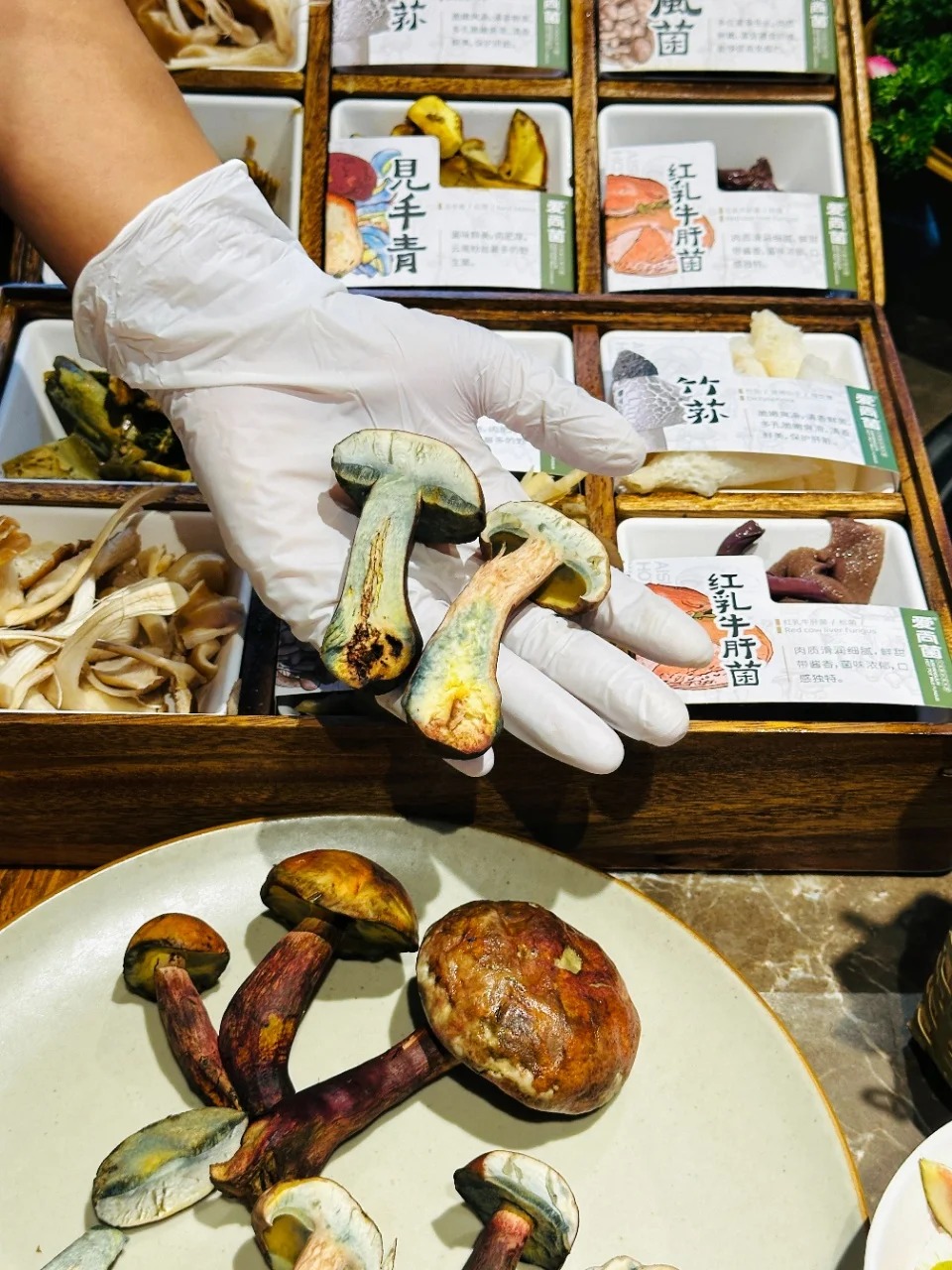
A gloved hand holds three fresh, blue-staining Jianshouqing mushrooms over a multi-compartment wooden display box filled with various dried mushroom varieties and other hotpot ingredients. In the foreground, a white plate holds several more fresh bolete mushrooms.

Yunnan is a mushroom paradise! These fresh, blue-staining Jianshouqing mushrooms, a local specialty, are just one of the many exquisite varieties showcased alongside an array of dried fungi, all destined for a rich and aromatic hotpot feast.


Common Questions About Yunnan Mushroom Hotpot

When is the best time to eat wild mushroom hotpot in Yunnan?

The best time is during the rainy season, specifically from late June to early September. This is when fresh wild varieties like Jianshouqing are harvested daily from the mountains. Visiting in winter means relying on frozen or dried ingredients.

Yes, it is safe if you strictly follow the restaurant’s protocols. Most reputable spots set a mandatory 20-minute timer once the mushrooms enter the boiling broth to neutralize toxins. Never eat before the timer finishes or dip chopsticks in early.

China is a cashless society in 2026, so credit cards are rarely accepted directly at local spots. You must link your foreign credit card to the Alipay or WeChat Pay apps on your phone before your trip to scan QR codes for payment.

The most prized varieties include Jianshouqing (a blue-bruising boletus known for its creamy texture), Ganba Fungus (chewy with a pine scent), and Collybia Albuminosa (sweet and crunchy). Jianshouqing is considered the star of the hotpot experience.

Conclusion

Eating Yunnan mushroom hotpot is more than a meal; it is a seasonal ritual that connects you to the land and the local culture. The flavors are unlike anything else in Chinese cuisine—savory, earthy, and deeply comforting. Just remember the golden rules: visit during the rainy season, download Alipay before you go, and strictly obey the timer on your table. If you follow these steps, you’ll leave with a full stomach and zero hallucinations.

Similar posts to this one

A close-up overhead view of four bowls of Guilin rice noodles on a wooden table. The bowl in the foreground contains thick noodles topped with slices of dark beef, crispy pork belly, pickled vegetables, peanuts, and lettuce. The other bowls contain noodles with various toppings including eggs, pickled vegetables, meat, and herbs, with some bowls showing broth.

Guilin's Best Street Food: A Foodie's Walking Tour Guide

The moment you step out of your hotel in Guangxi, the humid southern air hits you, carrying the unmistakable scent [...]

A person in a yellow hat and white clothing stands with their arms outstretched in a large, paved courtyard in front of a multi-tiered traditional Chinese temple with dark wood and gray tiled roofs. Mountains are visible in the background under a bright blue sky with scattered white clouds.

Jianshui Travel Guide: Ancient Gates, Tofu, and Confucian Culture in Yunnan

Traveling through Yunnan often means battling intense crowds in Dali and Lijiang. If you want to experience authentic Ming and [...]

A panoramic view of the Nanjing cityscape at sunrise, with a modern skyscraper dominating the skyline and a traditional multi-tiered pagoda in the foreground, nestled among lush green trees.

Nanjing's Morning Rituals: A Guide to the City's Best Breakfast Spots

Forget the standard hotel buffet. To truly understand this former imperial capital, you need to wake up at 6:30 AM [...]

Get the China Arrival Survival Kit

Planning a trip here has a steep learning curve. Join our newsletter and receive our free “Day One Checklist” covering everything from setting up Alipay and WeChat to bypassing the internet firewall.