
Guangzhou Food Neighborhoods Guide: Where to Eat Beyond Dim Sum

Most travelers land in Guangzhou with one goal: eat as much dim sum as humanly possible. While the yum cha tradition at spots like the White Swan Hotel is legendary, stopping there means missing 80% of the city’s culinary soul. The real flavor of Canton lies in the grimy, bustling alleyways of the old districts, where shops have specialized in single dishes for generations.

Guangzhou is a massive sprawl, but the best food is concentrated in specific, walkable clusters. This guide strips away the polished hotel dining rooms and takes you into the smoke-filled Da Pai Dongs (open-air stalls) and dessert streets where the locals actually eat. If you are willing to navigate a few plastic stools and limited English menus, you will be rewarded with the best Cantonese food of your life.

Quick Summary: Key Takeaways for the Hungry Traveler

  • Must-Visit Neighborhoods: Liwan (for history and snacks) and Yuexiu (for claypot rice and desserts).
  • Payment is Digital: Cash is rarely accepted at street stalls. You must set up Alipay or WeChat Pay and link your foreign credit card before you fly.
  • Navigation: Google Maps is unreliable in China. Download Amap (Gaode Ditu) or Apple Maps for accurate transit info.
  • Timing Matters: Many traditional shops close between 2:00 PM and 5:00 PM. Plan your food crawl for early morning or late evening.
  • The “Golden Rule”: If a shop has a line of elderly locals and a dirty floor, the food is guaranteed to be excellent.

Summarize with :

Essential Logistics: Before You Take a Bite

Eating in Guangzhou’s local neighborhoods requires a bit of setup. Unlike Shanghai or Beijing, where English is somewhat common, the backstreets of Guangzhou are strictly Cantonese and Mandarin.

How to Pay and Navigate

Do not rely on cash. I cannot stress this enough. Even small grandmothers selling water chestnuts on the street use QR codes. Download Alipay, go to “Account,” and add your Visa or Mastercard. It works seamlessly for transactions under 200 RMB without a transaction fee.

What is a “Da Pai Dong”?

Definition: A Da Pai Dong is a traditional open-air food stall in southern China characterized by low plastic stools, high-heat wok cooking, and a no-frills atmosphere. They are the epicenter of Cantonese nightlife (ye cha) and usually specialize in stir-fries and seafood.

Neighborhood 1: Liwan District (Xiguan) – The Old Soul

Liwan is the historic heart of Guangzhou. Known historically as Xiguan, this is where the wealthy merchants lived during the Qing Dynasty. Today, it is a labyrinth of banyan trees, crumbling architecture, and the city’s most famous snacks.

The Route: Enning Road to Pantang Road

Skip the tourist-heavy Shangxiajiu Pedestrian Street. Instead, head to Enning Road and walk toward Pantang Road alongside Liwan Lake Park. This area is famous for “Xiguan snacks.”
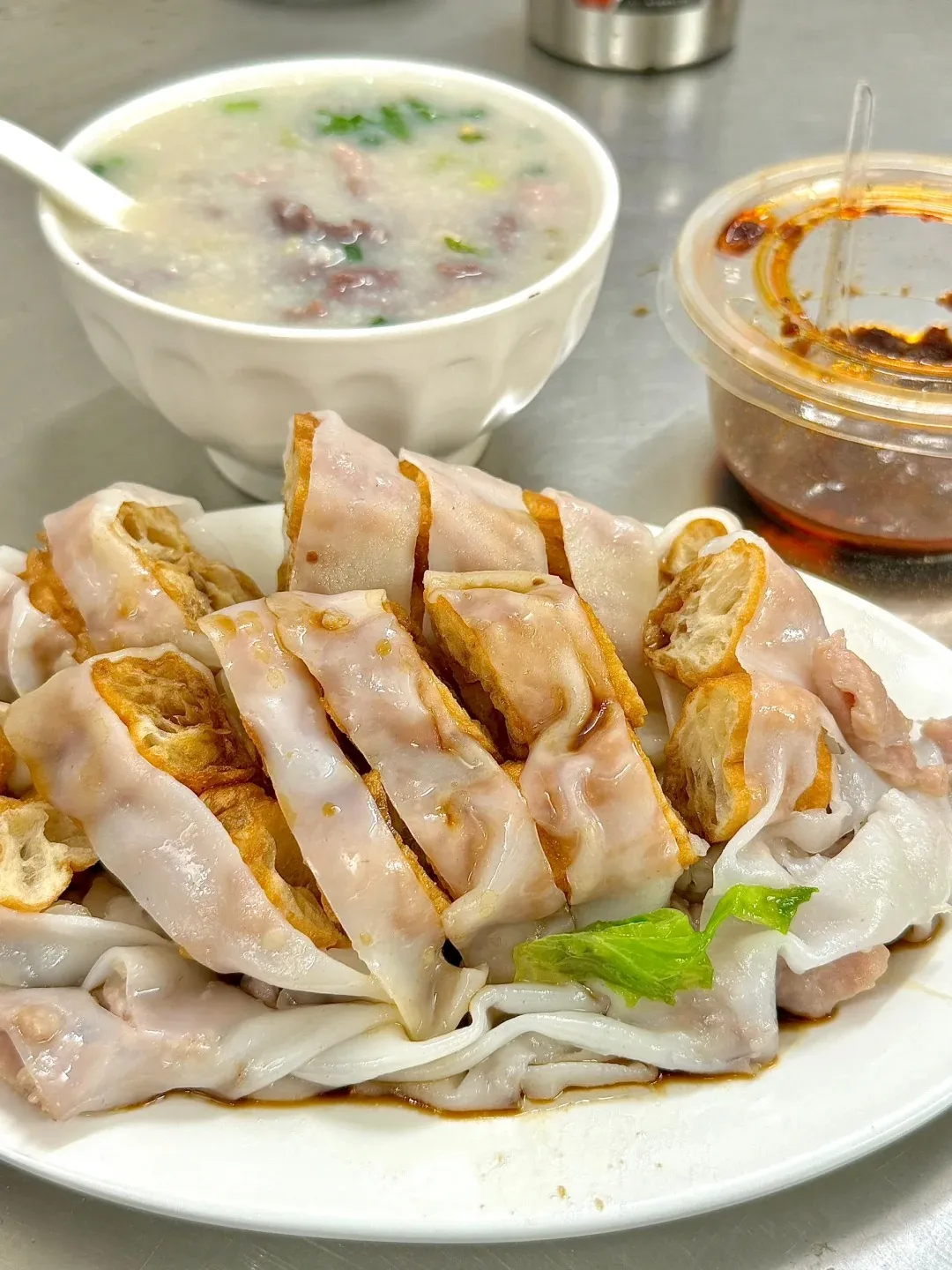
A traditional Cantonese breakfast meal featuring a plate of silky smooth rice noodle rolls (Chee Cheong Fun) with crispy fried dough (youtiao) filling, drizzled with soy sauce, next to a white bowl of savory congee (porridge) topped with meat and green onions, and a small container of chili oil, representative of Guangzhou food.

A traditional Cantonese breakfast meal featuring a plate of silky smooth rice noodle rolls (Chee Cheong Fun) with crispy fried dough (youtiao) filling, drizzled with soy sauce, next to a white bowl of savory congee (porridge) topped with meat and green onions, and a small container of chili oil, representative of Guangzhou food.

Stop 1: Fish Skin at Chen Tiam Kee

Located down a small alley off Baohua Road, Chen Tiam Kee is an institution. They are famous for one thing: Crispy Fish Skin (Yu Pi). The skin is blanched, iced for texture, and tossed with peanuts, cilantro, soy sauce, and sesame oil. It is crunchy, refreshing, and costs roughly 25 RMB ($3.50 USD).

Contrarian Tip: Most guides tell you to order the Sampan Congee here. While good, the portion is small. Eat the fish skin here, but save your stomach space for congee elsewhere.

Stop 2: Water Chestnut Cake at Pantang Road

As you walk along Pantang Road, you will see vendors steaming large trays of translucent cakes. This is Water Chestnut Cake (Ma Ti Gao). It is sweet, gelatinous, and features crunchy bits of water chestnut. It’s the perfect palate cleanser after savory snacks.

Neighborhood 2: Yuexiu District (Wenming Road) – The Dessert & Rice Hub

While Beijing Road is famous for shopping, the real foodies walk 10 minutes east to Wenming Road. This street is known locally as “Dessert Street” and is the best place to try traditional Cantonese tongsui (sweet soups) and claypot rice.

The Dish to Order: Claypot Rice (Bao Zai Fan)

Cantonese claypot rice is an art form. Rice is cooked in a clay pot over an open flame until a crispy layer of rice (fan jiao) forms at the bottom. It is typically topped with preserved meats, eel, or beef and an egg.

Where to eat: Look for Zhou Xin Claypot Rice on Wenming Road. Expect a 20-minute wait as every pot is cooked to order.

Price: 20–30 RMB ($3–$4 USD).

The Sweet Finish: Double Skin Milk

After the savory rice, walk a few doors down to Baihua Dessert Store or Nanxin Milk Dessert. You are here for the Double Skin Milk (Shuang Pi Nai). Made from buffalo milk, it has a rich, velvety texture similar to panna cotta but served warm.

Mistake to Avoid: Do not expect Western-style service on Wenming Road. You often have to share a table (da tai) with strangers. It is polite to nod, sit down, and focus on your food.
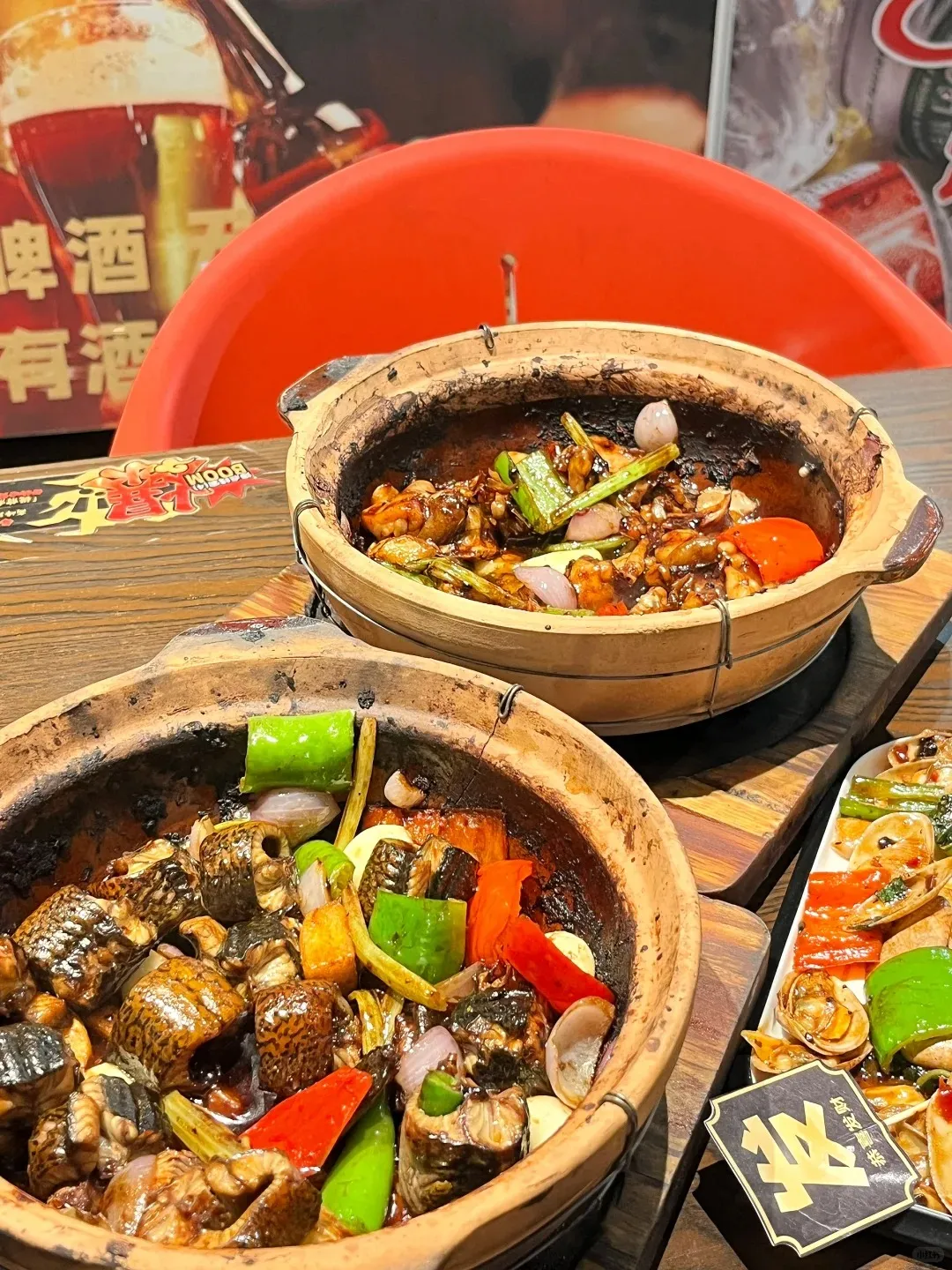
Two traditional Cantonese clay pots, steaming hot, filled with generous portions of braised freshwater eel or fish segments, vibrant green and red bell peppers, crisp white onions, and green onions, all simmered in a dark, savory sauce. The clay pots show rustic, charred edges from cooking. In the background, another dish with clams and vegetables is visible on a rectangular plate, alongside a blurred restaurant poster featuring beer and Chinese characters.

Two traditional Cantonese clay pots, steaming hot, filled with generous portions of braised freshwater eel or fish segments, vibrant green and red bell peppers, crisp white onions, and green onions, all simmered in a dark, savory sauce. The clay pots show rustic, charred edges from cooking. In the background, another dish with clams and vegetables is visible on a rectangular plate, alongside a blurred restaurant poster featuring beer and Chinese characters.

How to Order Without Mandarin

Navigating these local neighborhoods with limited language skills can be intimidating, but it is manageable with the right tools.

  • Use Translation Apps: Download the offline Chinese package for Google Translate or use the “Scan” feature in the WeChat app to translate menu boards instantly.
  • The QR Code System: Many restaurants now have a QR code stuck to the table. Scan it with Alipay or WeChat. The menu will pop up on your phone. You can copy-paste the text into a translator, select your items, and pay directly on your phone. The food will be brought to your table number.
  • The “Point and Nod”: In open-kitchen stalls, simply walk up to the cooking station, point at the ingredients (e.g., brisket, wontons, greens) you want, and hold up one finger.

Common Questions About Eating in Guangzhou

How do I pay for street food in Guangzhou as a tourist?

Cash is rarely accepted at local stalls. You must download Alipay or WeChat Pay and link your foreign credit card (Visa/Mastercard) before arriving. These apps work seamlessly for small transactions.

Google Maps is unreliable and often outdated in China. For accurate transit and walking directions to food neighborhoods, download Amap (Gaode Ditu) or use Apple Maps if you have an iPhone.

A Da Pai Dong is a traditional open-air food stall found in Southern China, known for wok-fried dishes, plastic stools, and a lively atmosphere. They are the best places to experience authentic Cantonese nightlife and cuisine.

Not necessarily. While English is limited in local districts, you can use translation apps like Google Translate (offline mode) or scan QR codes on tables to view menus and order directly on your phone.

Conclusion

Guangzhou rewards the curious. While the dim sum palaces offer refinement, the plastic stools of Liwan and Yuexiu offer reality. These neighborhoods serve food that hasn’t changed in decades, priced for locals rather than tourists. So, charge your phone, load up your Alipay, and take a walk down Wenming Road. The best meal of your trip is waiting in a clay pot.

Similar posts to this one

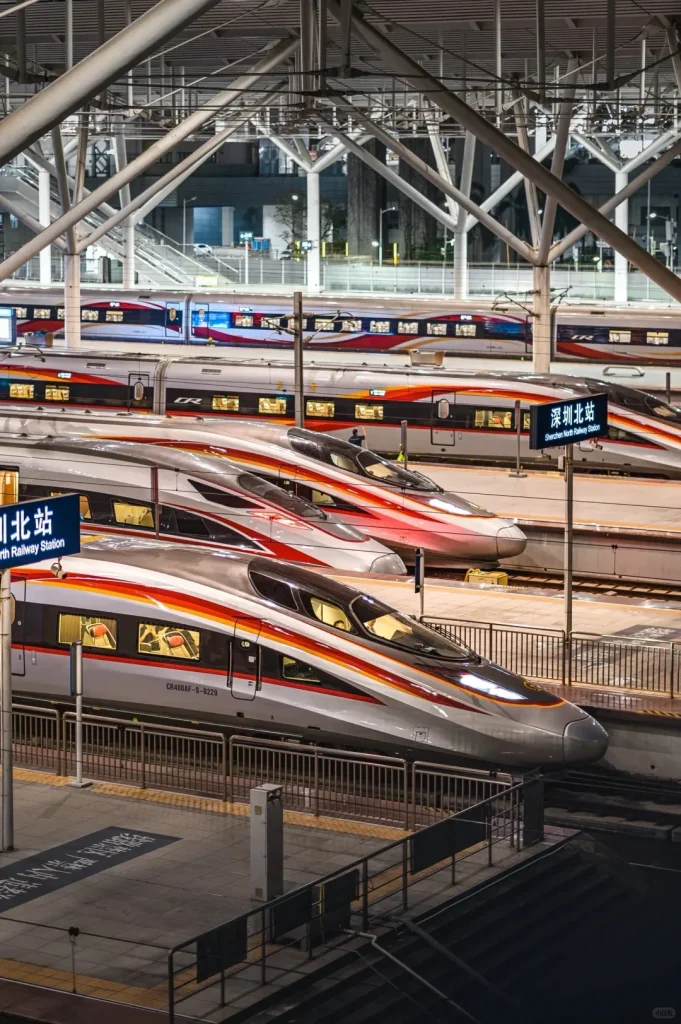
Multiple Fuxinghao high-speed bullet trains, silver with red and orange stripes, are parked at platforms inside Shenzhen North Railway Station at night. Station signs show '深圳北站' and 'Shenzhen North Railway Station'. Overhead metal structures and lighting are visible.

Beijing to Shanghai High-Speed Rail: The Complete Station & Seat Guide

For travelers in 2026, the debate between flying or taking the train from Beijing to Shanghai is effectively over. The [...]

A vibrant sunrise or sunset over the modern Beijing cityscape, featuring prominent skyscrapers like the tall, slender CITIC Tower (China Zun) reflecting golden light, the distinctive CCTV Headquarters building, and the spiraling dome of the Phoenix International Media Center. A dense canopy of green and golden trees forms the foreground under a sky with dramatic, colorful clouds.

Emergency Travel in China: Vital Phrases, Apps, and Safety Protocols

Traveling to China is an exhilarating experience, but the unique digital ecosystem and language barrier can make even seasoned globetrotters [...]

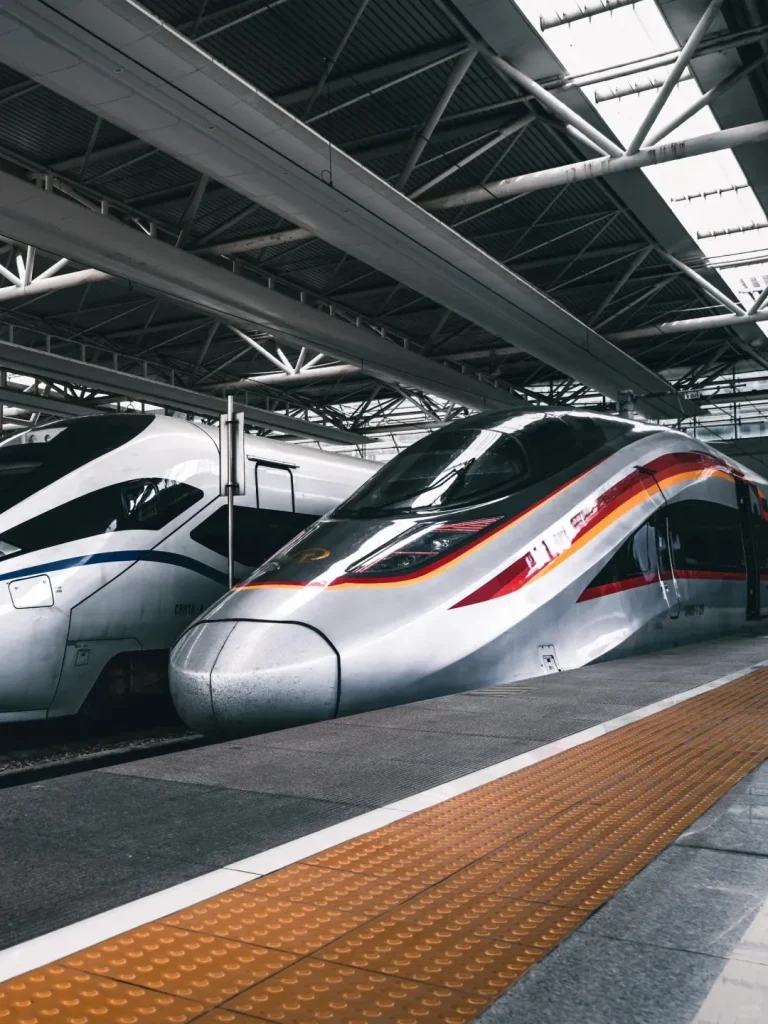
Two modern Chinese high-speed trains, including a silver Fuxing bullet train with red, orange, and gold stripes, parked side-by-side at a bright station platform. A white high-speed train with blue stripes is to the left. A yellow tactile paving strip is visible on the platform.

China High-Speed Rail for Tourists: Booking, Classes & Onboard Experience

For many travelers, the first time stepping into a Chinese railway station is more overwhelming than the flight that brought [...]

Get the China Arrival Survival Kit

Planning a trip here has a steep learning curve. Join our newsletter and receive our free “Day One Checklist” covering everything from setting up Alipay and WeChat to bypassing the internet firewall.