



What is Yum Cha?
Yum Cha literally translates to “drink tea,” but in Cantonese culture, it refers to the traditional brunch meal involving tea and dim sum. It is a social ritual that can last for hours, typically enjoyed in the morning or early afternoon. It is the primary way locals socialize, do business, and connect with family.
Liwan District: The Old Soul of Canton
If you want to understand where Cantonese cuisine started, you go to Liwan. This is “Old Xiguan,” where the streets are lined with banyan trees and the buildings date back to the Qing Dynasty. The vibe here is slower, louder, and significantly more authentic than the business districts.
Where to Eat in Liwan
Panxi Restaurant (畔溪酒家)
Located next to Liwan Lake Park, this isn’t just a restaurant; it’s a sprawling garden complex. It claims to be the largest garden restaurant in China.
Insider Tip: Ask for a table in the “Floating Boat” section if available. Order the Rabbit-shaped Shrimp Dumplings—they are kitschy but delicious and a signature here.
Rong Hua Lou (荣华楼)
For a raw, unfiltered experience, visit this century-old tea house. It is one of the few places left where you might catch a bit of Cantonese Opera being performed while you eat. The decor is faded and the service is brisk (don’t expect smiles), but the Steamed Spare Ribs with Black Beans are legendary.
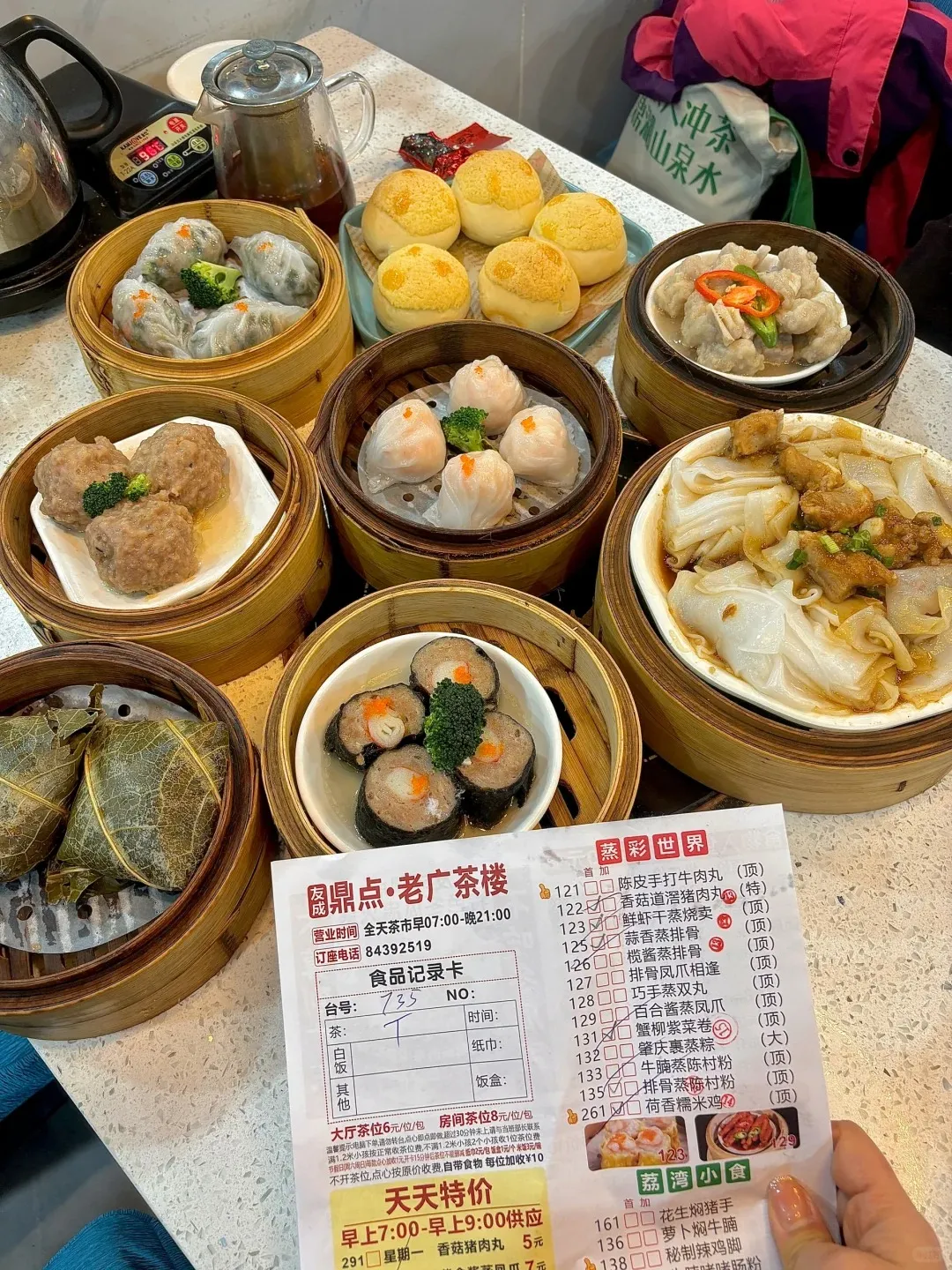
Indulge in an authentic dim sum feast at a traditional Guangzhou teahouse, where the clatter of steamer baskets and the aroma of freshly brewed tea create an unforgettable culinary experience. This spread, featuring everything from delicate har gow to sweet pineapple buns, highlights the best of what Guangzhou’s vibrant food scene has to offer.
Yuexiu District: History Meets Street Food
Yuexiu is the political and historical center. It’s crowded, chaotic, and smells perpetually of roasting meats and herbal soups. This is the best area for walking and snacking.
The Beijing Road Pedestrian Street Circuit
While the main drag is touristy, the small side streets (hutongs) branching off Beijing Road are goldmines.
- Tiger Prawn (Vietnam/Cantonese Fusion): A local favorite that always has a line. While not strictly traditional, it represents the modern Guangzhou palate.
- Wenming Road (Dessert Street): Just a short walk from Beijing Road. You come here for Tong Sui (sweet soups). Look for small shops selling Double Skin Milk (Shuang Pi Nai). It should be served warm and have a texture like silken tofu.
Insider Tip: The “White Cut” Test
In Yuexiu, look for restaurants displaying whole poached chickens hanging in the window. White Cut Chicken (Bai Qie Ji) is the litmus test for a Cantonese chef. The meat should be bone-in, served cold or room temperature, and accompanied by a ginger-scallion dipping sauce. If the skin isn’t jelly-like and the bone marrow isn’t slightly pink, the locals won’t eat it.
Tianhe District: Modern Luxury & Michelin Stars
Tianhe is the face of 2026 Guangzhou—gleaming skyscrapers, the Canton Tower, and luxury malls. The food here is more expensive, refined, and often plated individually rather than in communal baskets.
BingSheng (Mansion location)
If you only have one fancy dinner, make it BingSheng. They are famous for their Black Char Siu (BBQ Pork), which is glazed with a secret dark soy reduction that creates a savory, sticky crust unlike the standard red version.
Lei Garden
For a high-end dim sum experience where the service is impeccable and the tablecloths are white. Their Crispy Roasted Pork Belly is world-class, with skin that shatters like glass.
Dim Sum Decoded: How to Order Like a Pro
Walking into a loud dim sum hall can be intimidating. Here is the drill for 2026:
- The Rinse: As mentioned in the summary, use the hot water provided to rinse your cup, bowl, and chopsticks. Pour the waste water into the large plastic bowl provided. This is a hygiene ritual that signals you know what you are doing.
- The Order: Traditional push-carts are rare now. Most places use a paper card you tick with a pencil, or increasingly, a QR code on the table. Scan the code with Alipay or WeChat to see the menu with photos.
- The Tea: You must order tea. Pu’er (fermented, dark) is the standard digestive aid for greasy food. Guk Po (Chrysanthemum and Pu’er mix) is a popular local blend.
- The “Thank You”: When someone pours tea for you, tap two fingers on the table twice. This is a silent “thank you” rooted in imperial history.
Logistics: Connectivity and Payments in 2026
China is a cashless society. You cannot rely on Visa or Mastercard plastic at street stalls or small eateries. Before you fly, download Alipay and bind your foreign credit card to the “TourCard” or international wallet section.
Staying Connected
You cannot access Google Maps, Instagram, or WhatsApp using standard Chinese Wi-Fi or local SIM cards due to the “Great Firewall.” You need a reliable roaming solution to translate menus and navigate.
💡 Editor’s Pick: We recommend Nomad eSIM for China because it reliably bypasses the Great Firewall with stable speeds. Use code JORICAQLKF at checkout to get $5 USD off your first data plan.
Having reliable data is a safety issue, not just a luxury. You will need it to hail rides via Didi (China’s Uber) and translate voice notes from taxi drivers.
Essential Cantonese Dishes (Beyond Dim Sum)
Don’t leave Guangzhou without trying these dinner staples:
- Claypot Rice (Bao Zai Fan): Rice cooked over an open flame in a clay pot, topped with cured meats or beef. The best part is the fan jiao—the crispy scorched rice layer at the bottom.
- Rice Noodle Rolls (Cheung Fun): In Guangzhou, these are made with cloth-pulling techniques that make them thinner and smoother than versions you find abroad. Try the Gold Coin version (fried dough inside the noodle roll).
- Roasted Goose (Shao E): Distinct from Peking Duck. Goose is roasted in a charcoal furnace until the skin is crispy and the fat renders into the meat. It is served with a plum sauce.
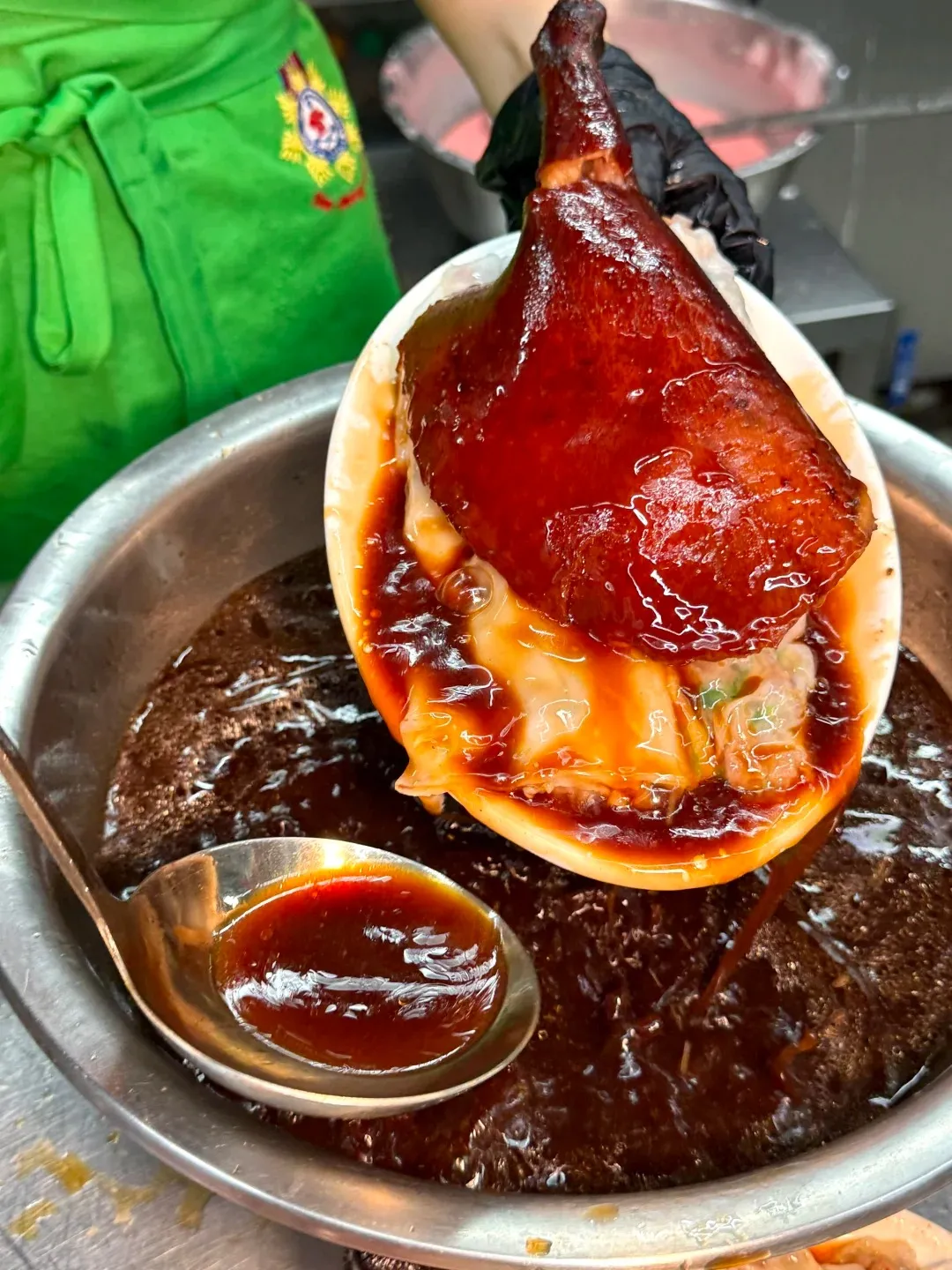
Discover the irresistible flavors of Guangzhou’s street food scene with a succulent roasted goose leg, lavishly coated in its signature savory sauce. This Cantonese classic is a must-try culinary experience you’ll find in our neighborhood guide!
Useful Cantonese Phrases for Foodies
While many young people speak Mandarin (Putonghua), Cantonese is the language of the heart (and stomach) here.
- M’goy (Mm-goy): Excuse me / Thank you (for service). Use this to get a waiter’s attention.
- Mai dan: The bill, please.
- Ho sek: Delicious.
- Yum cha: Let’s go eat dim sum.