


Getting to Macau and Logistics
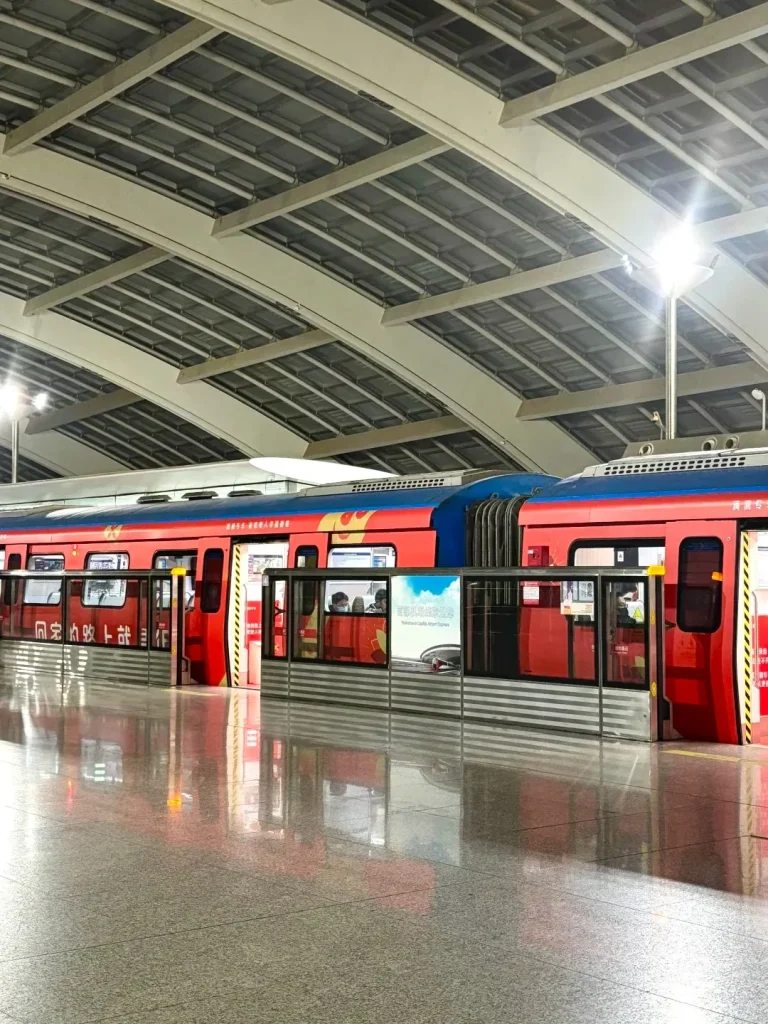
For most travelers in 2026, the journey begins in Hong Kong. While the high-speed TurboJET and Cotai Water Jet ferries are the traditional nostalgic choice (taking about 60 minutes), the Hong Kong-Zhuhai-Macau Bridge offers a seamless bus connection that takes about 40 minutes from the Hong Kong port. If you are prone to seasickness, take the bus.
Connectivity and The Great Firewall
Unlike mainland China, Macau has uncensored internet (Google, Instagram, and WhatsApp work freely). However, if you plan to cross the border into Zhuhai or want seamless connectivity across the Greater Bay Area, you need a reliable connection.
Insider Tip: Public Wi-Fi in Macau is spotty at best outside of the casinos. Relying on hotel Wi-Fi is a recipe for navigation frustration.
💡 Editor’s Pick: We recommend Nomad eSIM for China because it reliably bypasses the Great Firewall with stable speeds. Use code JORICAQLKF at checkout to get $5 USD off your first data plan.
The Historic Peninsula: More Than Just Ruins
The Macau Peninsula is the beating heart of the old city. It is dense, humid, and hilly. Wear your most comfortable walking shoes; the Portuguese calçada (mosaic pavement) is beautiful but slippery when wet.
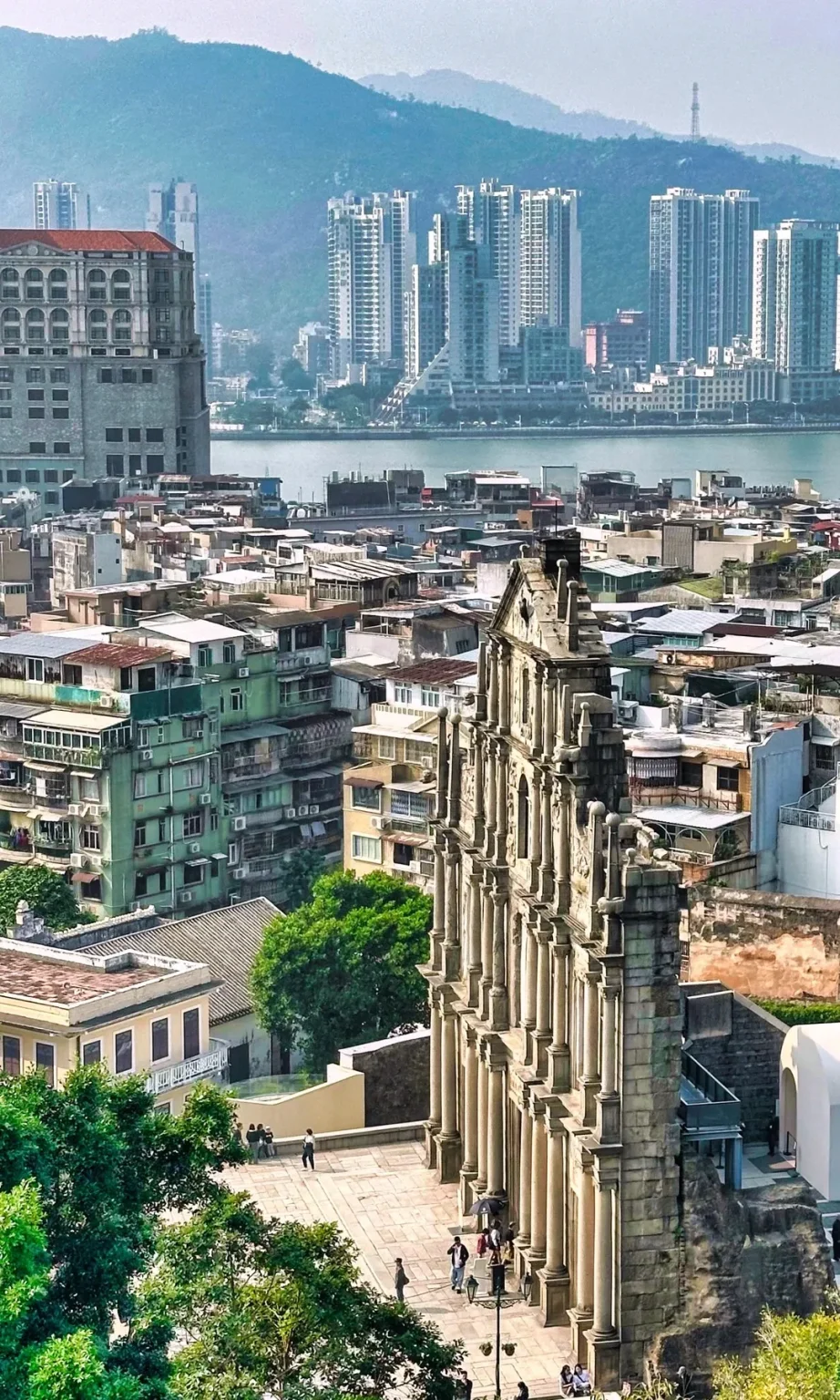
The iconic Ruins of St. Paul, a UNESCO World Heritage site, beautifully symbolize Macau’s profound East-meets-West cultural heritage, standing proud amidst its evolving cityscape.
Ruins of St. Paul’s (and How to See Them)
The Ruins of St. Paul’s are the undisputed icon of the city. This 17th-century facade is all that remains after a fire in 1835. The mistake most tourists make is arriving at 11:00 AM. By then, the stairs are a sea of selfie sticks.
Arrive at 8:30 AM. You will have the steps largely to yourself. After snapping your photo, walk immediately to the right of the ruins up to Monte Fort. It offers a panoramic view of the city where you can see the jarring contrast of the ancient cannons pointing directly at the garish Grand Lisboa casino.
Senado Square and Hidden Courtyards
From the ruins, flow down towards Senado Square. While the square itself is touristy, the side streets are gold. Duck into Lou Kau Mansion. It is often free to enter and offers a stunning example of a traditional Chinese courtyard house (Siheyuan) with Portuguese decorative influences—a physical manifestation of Macanese culture.
What is Macanese Cuisine?
Macanese cuisine is widely considered the world’s first fusion food, dating back over 400 years. It blends Portuguese techniques with ingredients collected along the spice routes of Africa, India, and Malaysia. Key ingredients include turmeric, cinnamon, coconut milk, and bacalhau (salted cod), adapted to local Chinese palates.
The Cotai Strip: The “Vegas” Experience
Cross the bridge to the islands of Taipa and Coloane, now fused together by the reclaimed land known as Cotai. This is where the mega-resorts live. Even if you despise gambling, the architecture is worth a walk-through.
The Venetian Macao recreates Venice with terrifying accuracy, including indoor canals and gondoliers singing ‘O Sole Mio’. It is kitschy, air-conditioned, and impressive. Across the street, The Londoner features a life-sized Big Ben replica.
Is it worth it? If you have been to Las Vegas, you can skip the interiors unless you want to escape the heat. The casinos here focus heavily on baccarat and lack the rowdy party atmosphere of Vegas; the gaming floors are serious, smoky, and intense.
Food Guide: Where to Eat Like a Local
You cannot leave Macau without eating. The food scene here rivals Hong Kong, often at a better price point.
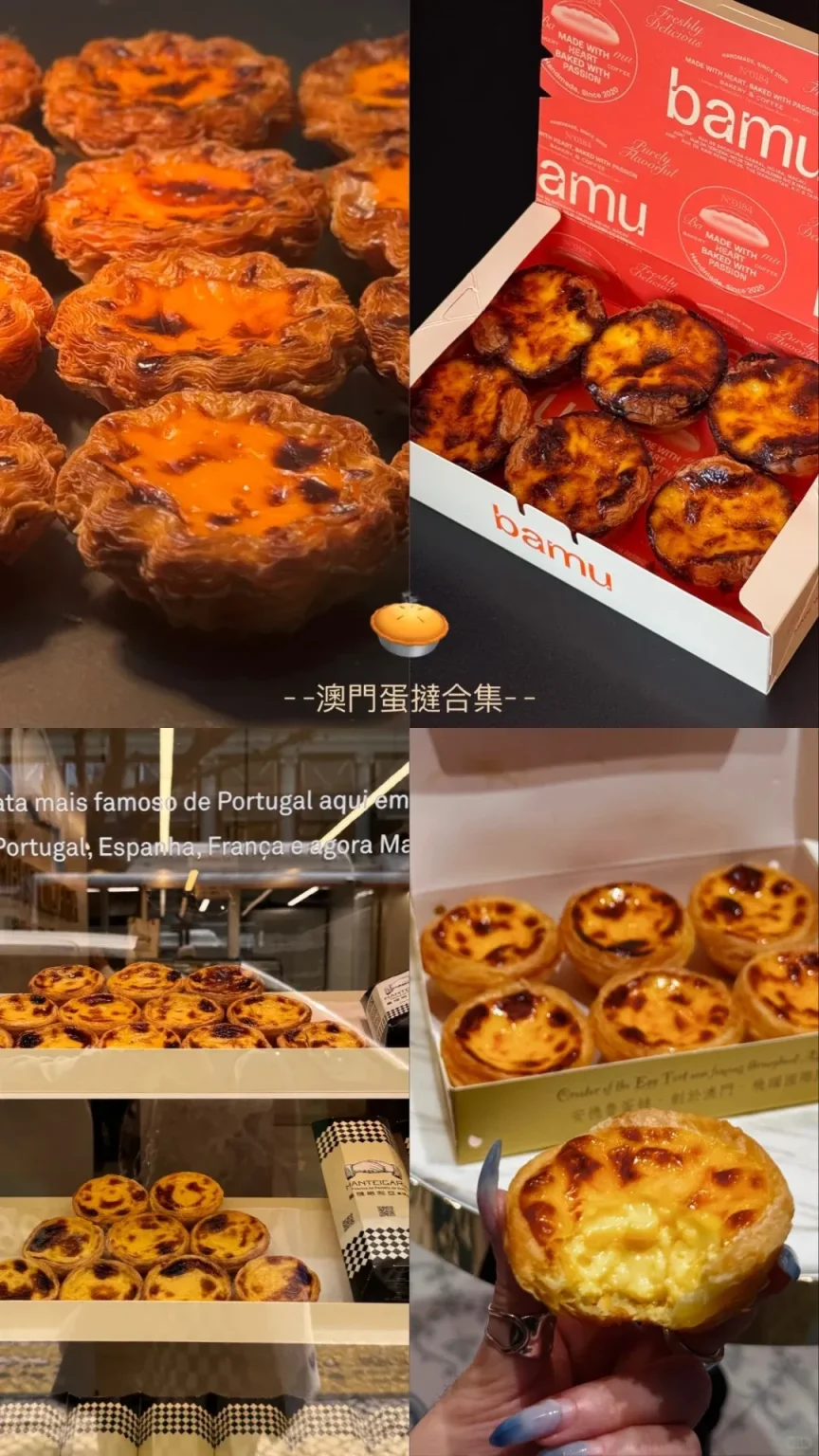
No visit to Macau is complete without savoring its iconic Portuguese egg tarts (Pastéis de Nata)! These golden, creamy delights are a delicious testament to the city’s unique East-meets-West heritage, offering a taste of its rich cultural fusion for any traveler.
The Egg Tart Wars
The Portuguese Egg Tart (Pastel de Nata) is the city’s edible emblem. The custard is scorched on top (crème brûlée style) and the crust is flaky, not shortcrust.
- Lord Stow’s Bakery (Coloane): The original. It is worth the trek to Coloane Village to eat one fresh from the oven by the seaside.
- Margaret’s Café e Nata (Peninsula): Founded by Lord Stow’s ex-wife. The crust is slightly saltier. Expect a long line and grumpy service—it’s part of the charm.
Authentic Macanese Dinner
Skip the hotel buffets and head to Riquexó or A Lorcha. These are institutions.
- Must-Order: Minchi (minced meat with potatoes and a fried egg), African Chicken (roasted with piri-piri and coconut), and Serradura (sawdust pudding) for dessert.
Street Snacks in Taipa Village
Rua do Cunha in Taipa is a narrow pedestrian street packed with vendors. It is crowded and chaotic. Here, you must try a Pork Chop Bun from Tai Lei Loi Kei. It is bone-in pork, fried and slapped on a crispy bun. No lettuce, no sauce, no nonsense.
Insider Practical Tips for 2026
- Payment Apps: While cash is accepted, AlipayHK and WeChat Pay are the standards. Ensure your apps are linked to your credit card before arrival.
- The Taxi Situation: Taxis can be scarce during shift changes (around 4:00 PM). Use the Macau Taxi app or the free casino shuttle buses, which form a surprisingly efficient public transport network connecting the ferry terminals to the major hotels.
- Language: Don’t expect widespread Portuguese fluency. Cantonese is the lingua franca. English is spoken in hospitality, but a translation app is essential for local dining.