


Getting There: The Logistics of the Loop
The “Northern Sichuan Circuit” is the classic route. While the Sichuan-Tibet Railway construction has improved access to major hubs, the true gems remain reachable only by road.
Navigating the Transport Network
Your journey begins in Chengdu. From here, you have two primary options to enter the Tibetan plateau:
- High-Speed Rail: Take the train from Chengdu to Zhenjiangguan or Huanglongjiuzhai (for the north) or the newly expanded line toward Kangding (the gateway to the west). Check official schedules on China Railway (12306).
- Long-Distance Bus: For direct access to deep Kham, buses depart from Chengdu’s Chadianzi Bus Station. Note that a bus to Ganzi (Garze) can take 10+ hours.
Staying Connected in the Mountains
The Great Firewall is strictly enforced in these sensitive border regions, and Western social media apps will not work without a workaround. Furthermore, public Wi-Fi in Tibetan homestays is often too slow for video calls. I strongly recommend arriving with a high-quality eSIM that routes traffic through servers outside mainland China.
💡 Editor’s Pick: We recommend Nomad eSIM for China because it reliably bypasses the Great Firewall with stable speeds.
Tagong: The Grassland Gateway
Many guidebooks will tell you to stay in Kangding to acclimatize. Insider Tip: Skip sleeping in Kangding city, which is essentially a concrete valley trap. Instead, head straight up to Tagong (3,700m) if you have already spent a day at intermediate elevation, or stay in the quieter Zhonglu Tibetan Village in Danba first.
Tagong feels like the frontier. The town is dominated by the Lhagang Monastery, but the real magic is the Tagong Grasslands. Avoid the fenced-off “tourist viewing platforms” where they charge you to park. Drive 5km out of town towards Bamei, pull over by the river, and hike up the ridge for free, unobstructed views of the sacred Yala Snow Mountain.
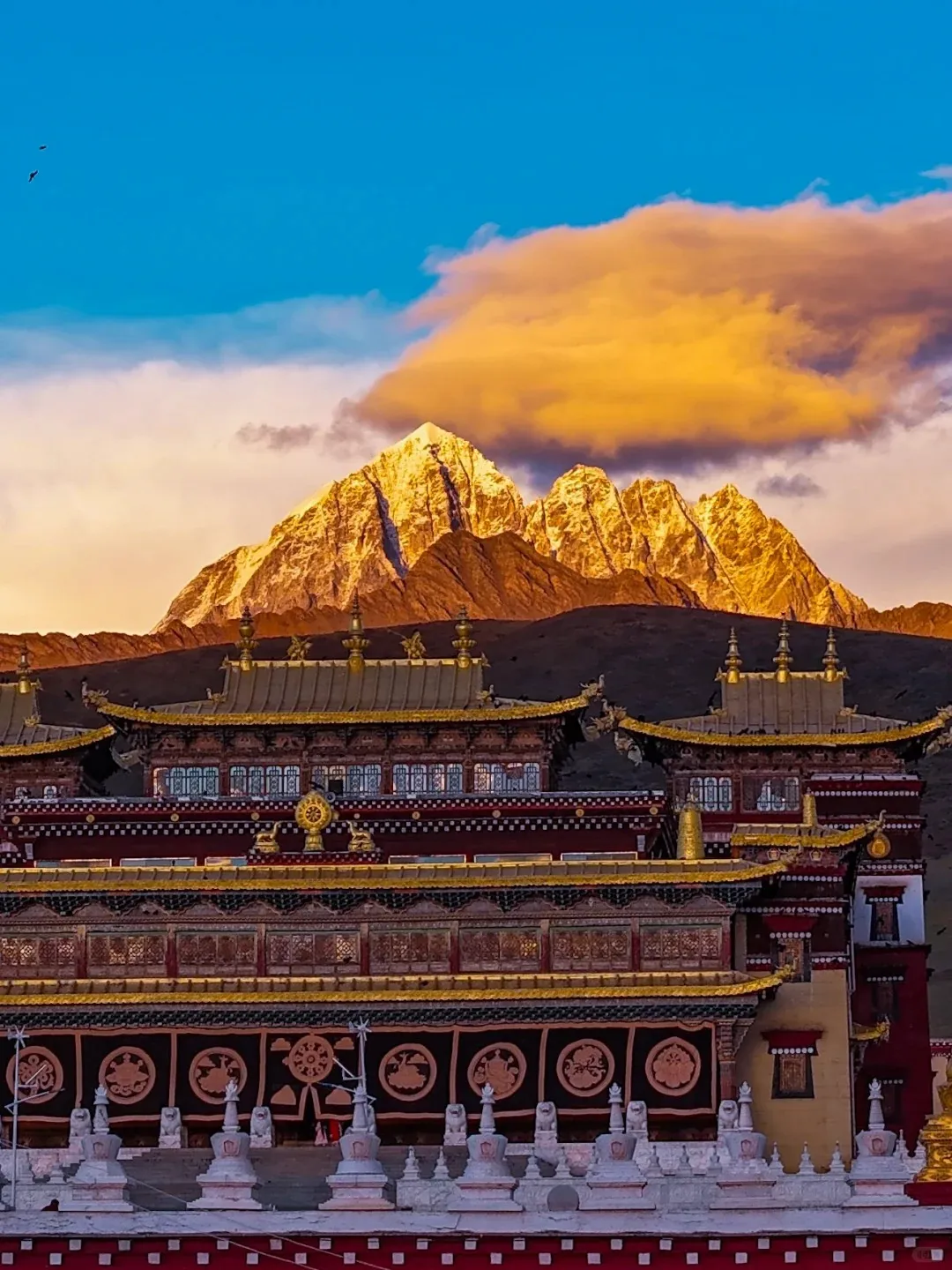
Witness the golden hour illuminate Lhagang Monastery in Tagong, one of Sichuan’s most revered Tibetan monasteries. With the majestic Yala Snow Mountain as its backdrop, this spiritual haven offers an authentic glimpse into the vibrant culture of Sichuan’s off-the-beaten-path Tibetan towns.
Ganzi (Garze): The Rough-and-Tumble Hub
Six hours west of Tagong lies Ganzi. This is not a polished tourist town; it is a working trade hub for Khampa nomads. The town sits in a bowl surrounded by jagged peaks. The Ganzi Monastery looms over the Tibetan quarter—a maze of mud-brick houses and narrow alleyways that feel centuries removed from modern China.
What to expect: The “market vibe” here is intense. You will see nomads on motorcycles with daggers strapped to their waists (a traditional Khampa accessory) and monks buying smartphones. It is safe, but it is raw.
Dege: The Cultural Heart
If you make it as far as Dege, you have earned your stripes. Located near the border of the TAR, Dege houses the Dege Parkhang (Printing Press), an institution of immense cultural significance. This is not a museum; it is an active printing house where workers still use centuries-old woodblocks to hand-print Buddhist sutras.
The Sensory Experience: Walking into the Parkhang is overwhelming. The smell of ink and old paper is thick. The sound is rhythmic—the thwack-whoosh of two workers moving in tandem to ink and press the paper. You are allowed to walk through the shelving aisles, but strictly no photography is allowed in the library sections to protect the pigments. Respect this rule; the monks are vigilant.
Dzongsar: The Hidden Valley
For those truly seeking silence, head south from Dege to the Mesho Valley to visit Dzongsar Monastery. Unlike the Gelugpa (Yellow Hat) dominance seen elsewhere, Dzongsar is historic for its “Rime” (non-sectarian) movement.
Where to Stay: In 2026, the standout option remains the Khyenle Guesthouse in Mdzda village. Run by a local family connected to the art center, it offers a level of comfort (and clean toilets) rarely found this deep in the mountains. From here, you can hike to high-altitude glacial lakes where you are unlikely to see another soul, perhaps just a blue sheep or a marmot.
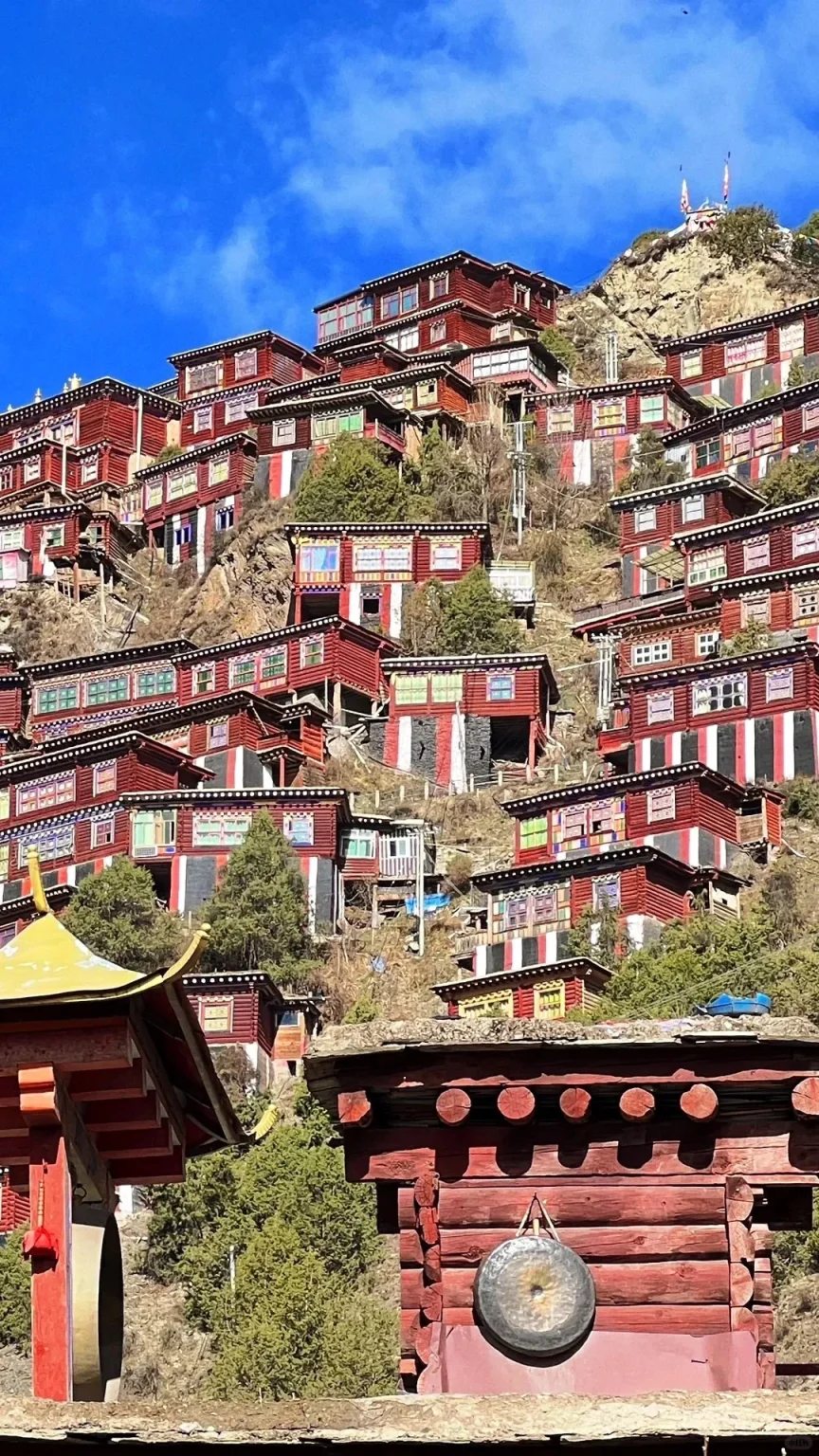
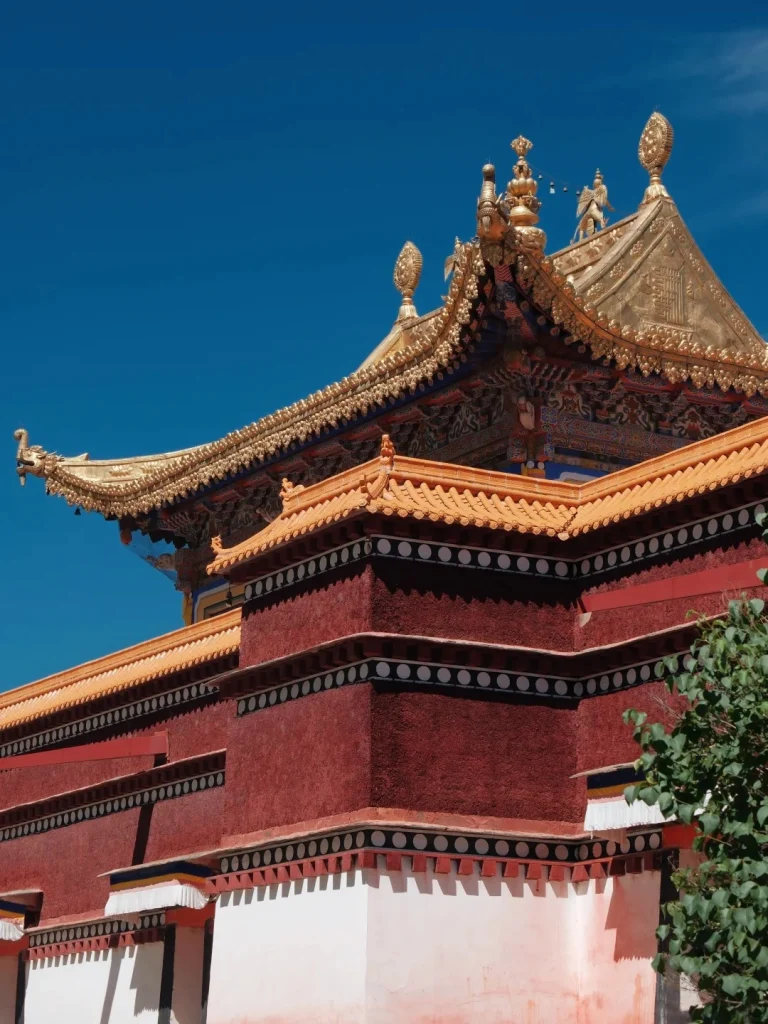
Perched dramatically on a Sichuan hillside, the distinctive red wooden dwellings of Dzongsar Monastery are a stunning example of the region’s unique Tibetan architecture. This remote site offers a window into the spiritual heart of an off-the-beaten-path Tibetan town.
A Note on Sertar (Larung Gar) and Yarchen Gar
You may have seen viral photos of thousands of red log cabins sprawling across the valleys at Sertar (Larung Gar) or Yarchen Gar. Here is the reality for 2026: Access to these monastic cities is volatile. Yarchen Gar has been largely closed to foreign tourists since 2019. Sertar occasionally opens to foreigners, but often requires booking through a specific Chinese agency or is subject to sudden “maintenance” closures.
My advice: Do not build your entire itinerary around Sertar. Plan for Ganzi and Dege as your anchors. If Sertar is open when you arrive in Ganzi, treat it as a lucky bonus. Always ask your driver for the latest “road status”—they have the most up-to-date network of information regarding checkpoints.
Practical Tips for the Road
The “Yak Butter” Reality
You will be offered Yak Butter Tea. It is salty, oily, and an acquired taste. Refusing it can be rude if you are in a private home. Hack: If you can’t stomach it, take a small sip and leave the bowl full. Tibetan etiquette dictates that a host will refill an empty bowl, but will leave a full one alone.
Cash vs. Alipay
In Chengdu, you can survive on Alipay linked to your foreign credit card. In Western Sichuan, signal dead zones mean your app won’t load. Always carry 500-1000 RMB in small denominations (10s and 20s) for roadside fruit sellers, donations at temples, or emergency tyre repairs.
What is the “High Altitude Ticket”?
This is slang for the headache almost everyone gets on day two. To mitigate this:
- Drink 3 liters of water daily.
- Avoid alcohol for the first 48 hours.
- Pack Diamox (Acetazolamide) from home—it is difficult to buy over the counter in China without a Chinese ID in some pharmacies.