


How to Get Tickets and Navigate Entry
Let’s get the most common misconception out of the way: just because the museum is free does not mean you can walk right in. In 2026, China’s travel ecosystem is almost entirely digital.
The Reservation Process
You must book a slot in advance. Tickets are released 7 days prior to the visit date. During peak travel seasons (summer and Golden Week), slots can vanish within minutes of release.
- Official Method: Use the Shanghai Museum official website or their WeChat Mini-Program.
- ID Requirement: You must enter your passport number exactly as it appears on your document. You will need to show the physical passport to the security guards at the entrance—a photo on your phone usually won’t cut it.
Connectivity is Crucial
To access your reservation QR code and use the on-site translation apps, you need reliable mobile data. Public Wi-Fi in China is often gated behind local phone number verification, which can be a headache for tourists.
For seamless connectivity that bypasses the Great Firewall (allowing you to use Google Maps, Gmail, and Instagram while inside the museum), I highly recommend setting up an eSIM before you land.
💡 Editor’s Pick: We recommend Nomad eSIM for China because it reliably bypasses the Great Firewall with stable speeds. Use code JORICAQLKF at checkout to get $5 USD off your first data plan.
Getting There: The Logistics
The museum is located at 201 Renmin Avenue (People’s Avenue). It is the anchor of People’s Square.
- Metro: Take Line 1, 2, or 8 to People’s Square Station. This is a massive station with nearly 20 exits. Look for Exit 1, which brings you out closest to the museum’s south gate.
- Taxi/Ride-hailing: If you are using DiDi (the local Uber equivalent), set your destination to the “South Gate” of the Shanghai Museum. Taxis cannot stop directly on the main avenue, so you may be dropped off at a designated point nearby.
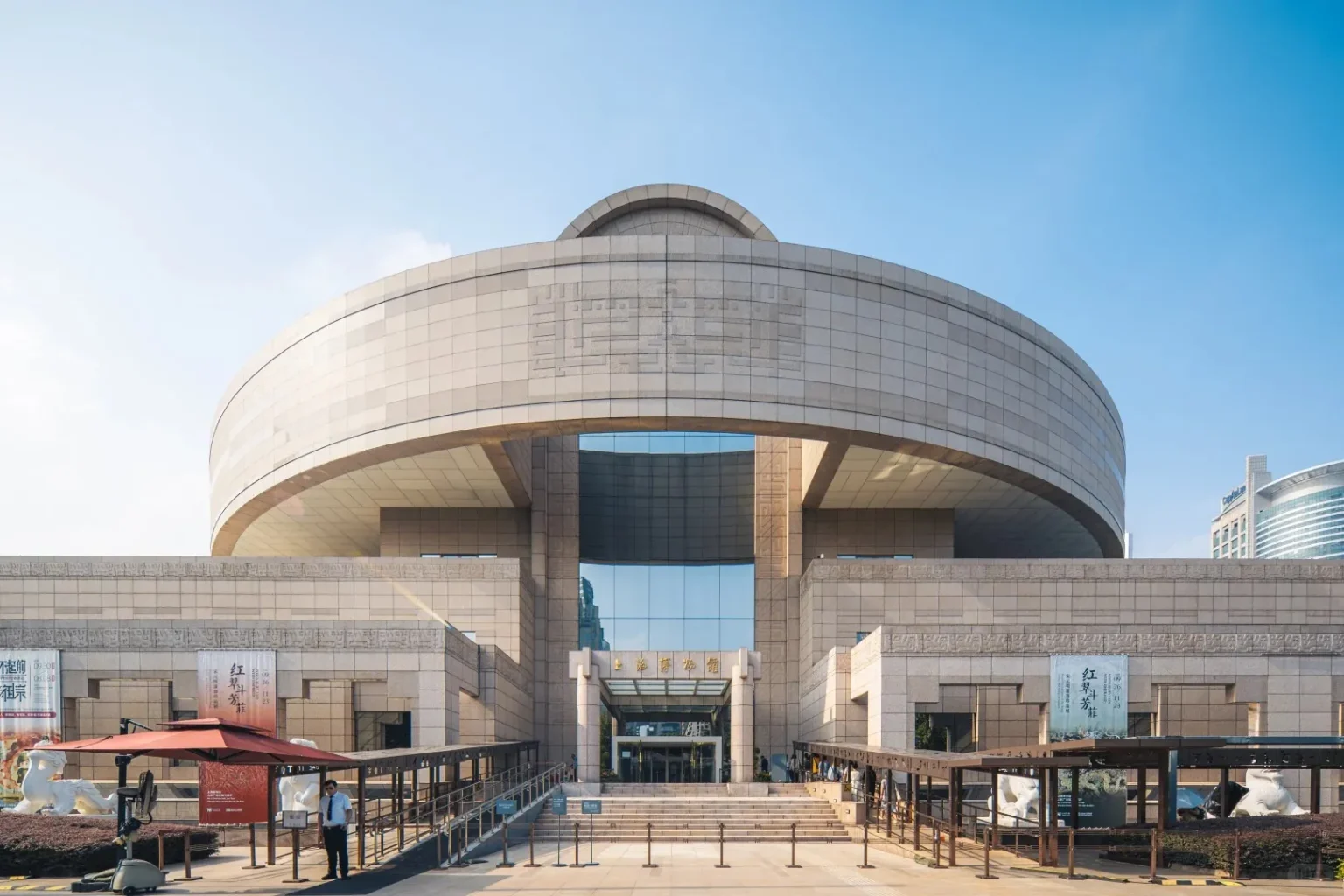
The distinctive architecture of the Shanghai Museum, with its round top representing the heavens and square base symbolizing the earth, is an iconic landmark in People’s Square. Step inside to discover its world-class collection of ancient Chinese art, an essential part of your visit to Shanghai!
Inside the Collection: What Not to Miss
The museum spans four floors, housing over 120,000 precious relics. If you aren’t an art historian, the sheer volume can be overwhelming. Here is a curated path to ensure you see the highlights without getting museum fatigue.
1. The Ancient Chinese Bronzes (1st Floor)
This is the museum’s crown jewel. The collection contains over 400 pieces dating from the 18th century BC to the 3rd century BC. The lighting here is dark and atmospheric, highlighting the green patina of the ancient metal.
Look for: The Da Ke Ding. It is a massive food vessel from the Western Zhou Dynasty. The intricate inscriptions inside are crucial historical records of land grants.
2. The Zande Lou Ceramics Gallery (2nd Floor)
China invented porcelain, and this gallery traces that history from crude Neolithic pottery to the perfection of the Jingdezhen kilns. The Tang Dynasty (618–907 AD) tri-colored glazed pottery (Sancai) figures are particularly vibrant.
3. Chinese Painting and Calligraphy (3rd Floor)
The lighting is kept very low here to protect the paper and silk. These exhibits rotate frequently because the materials are so fragile. It’s a quieter, more meditative space compared to the bronze hall.
Insider Tips for a Better Experience
Is the Audio Guide Worth It?
Yes. While the placards have English descriptions, they are often dry and academic. The audio guide (available for rental in the lobby for roughly 40 RMB, usually requiring a passport or deposit) provides the narrative context—stories of emperors, wars, and trade routes—that brings the objects to life.
Managing the Environment
The Temperature: The museum keeps the climate control aggressive to protect the artifacts. Even if it is 35°C (95°F) outside in the Shanghai summer, bring a light cardigan or long-sleeved shirt for the galleries.
The Noise: Chinese museums are lively places. Do not expect the hushed reverence of the Louvre. It is common for local tour groups to use amplified speakers. If you are sensitive to noise, bring noise-canceling headphones.
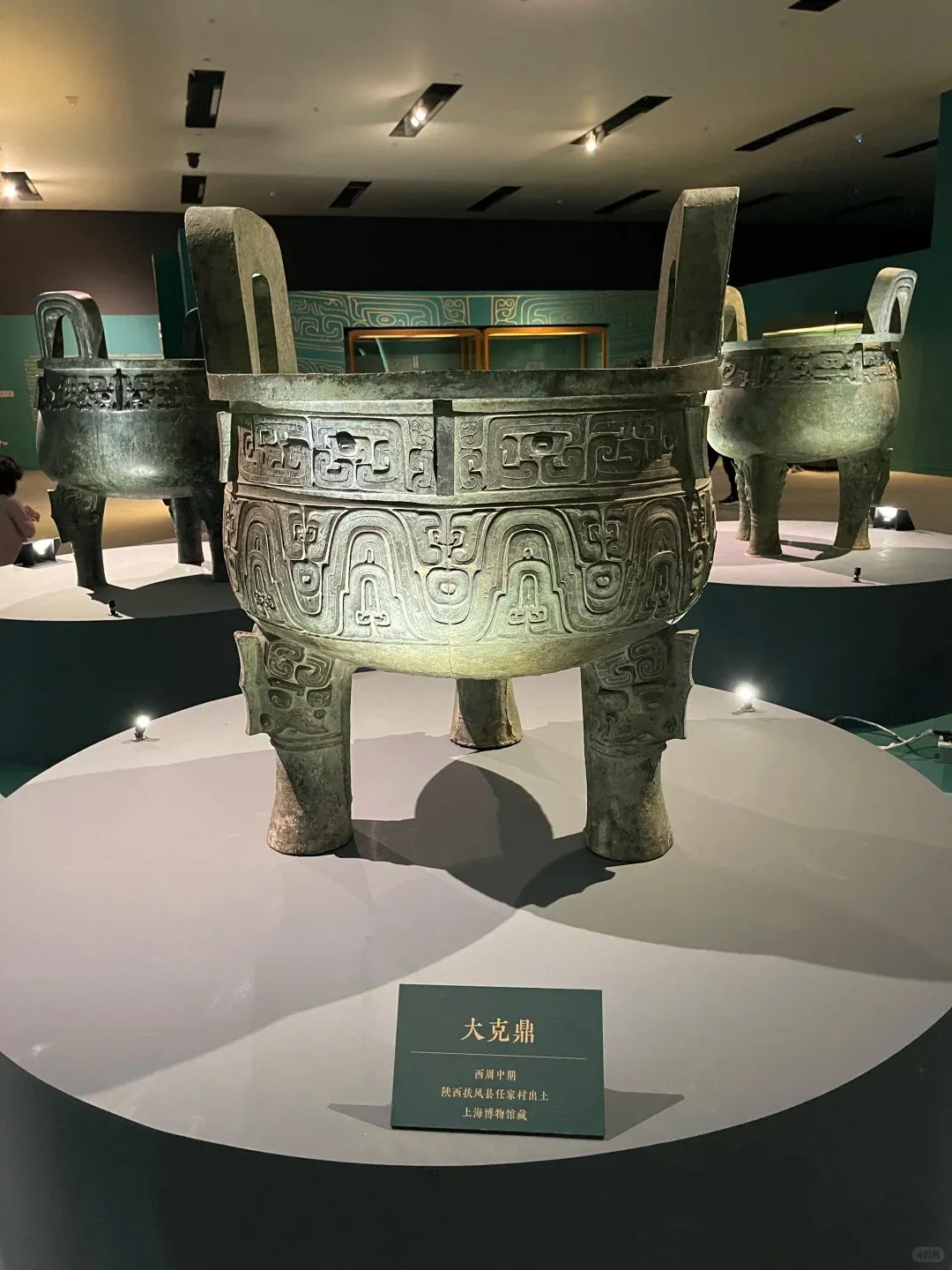
One of the Shanghai Museum’s most celebrated treasures, the monumental Da Ke Ding is an essential stop for any visitor. This impressive bronze ritual vessel from the Mid-Western Zhou Dynasty is not only a masterpiece of ancient craftsmanship but also historically significant for its extensive inscription detailing the life of Grand Scribe Ke.
Where to Eat
There is a tea room and a small shop inside the museum, but the options are overpriced and average. Since the museum is in the city center, I recommend exiting and walking across the square to Raffles City. The basement level is a food court paradise offering everything from Yang’s Dumplings (pan-fried pork buns) to bubble tea at local prices.
Is it Worth Visiting the Urban Planning Hall Nearby?
If you finish the Shanghai Museum in two hours, walk five minutes east to the Shanghai Urban Planning Exhibition Center. It sounds dry, but it is fascinating.
It houses a massive scale model of the entire city of Shanghai that fills an entire floor. It gives you a bird’s-eye view of the city’s expansion and is one of the few places where you can truly grasp the scale of the megalopolis you are visiting.