


1. Leshan Giant Buddha: The Heavy Hitter
Standing at 71 meters (233 ft), the Leshan Giant Buddha is the largest stone Buddha in the world and undoubtedly the most popular of all Chengdu day trips. Carved into a cliff face at the confluence of three rivers, it is a masterpiece of Tang Dynasty engineering.
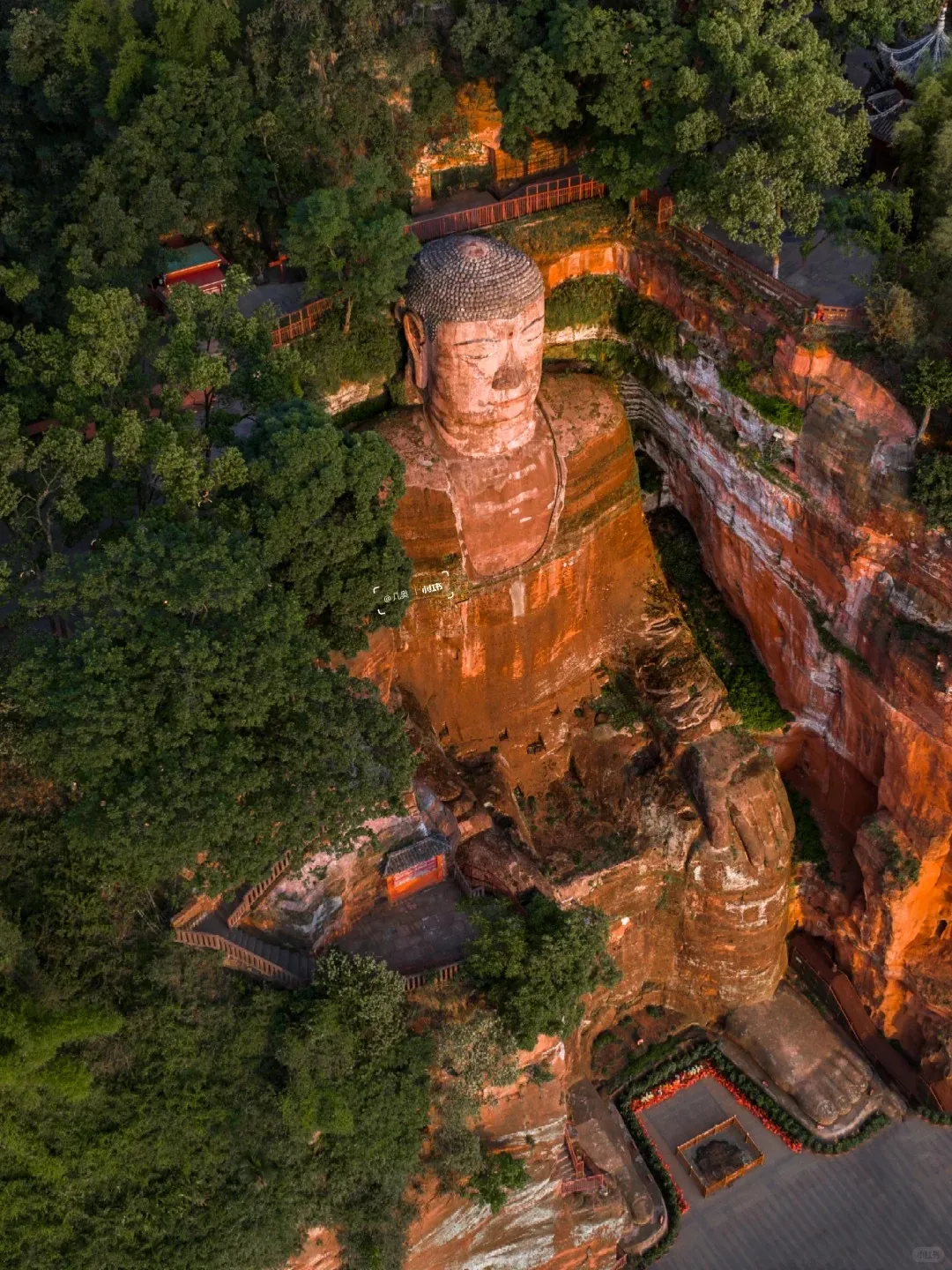
Aerial view of the colossal Leshan Giant Buddha carved into a towering red sandstone cliff. The ancient Buddha, surrounded by lush green trees at the top and left, features a serene expression and intricate details on its head and body. Terraced walkways and a small temple building are visible along the ancient cliff face, leading down to the base where the Buddha’s large feet rest, emphasizing the immense scale of this historical site.
How to Experience It (Without the Crowd Stress)
Most tourists make the mistake of entering the park and queuing for the “Nine Bends Plank Road”—a narrow, steep staircase leading to the Buddha’s feet. In summer or on weekends, this queue can last 2 to 4 hours. You will spend your day looking at the back of someone’s head, not the Buddha.
The Insider Strategy:
- The Boat Tour: For the best photo, take the sightseeing boat (approx. 70-150 CNY). It stops directly in front of the statue for a panoramic view that hikers never get.
- The Hike: Only hike if you arrive right at the 7:30 AM opening or visit on a winter weekday. The perspective from the feet is humbling, but not worth wasting half a day in line.
Logistics: Take the high-speed train from Chengdu East to Leshan Station (approx. 1 hour). From there, a taxi to the scenic area takes 20 minutes.
2. Mount Emei (Emeishan): The Golden Peak
One of China’s Four Sacred Buddhist Mountains, Emei is famous for its “Sea of Clouds” and the Golden Summit (Jinding). While often grouped with Leshan, Emei deserves its own day or an overnight stay.
Mistakes to Avoid
Don’t underestimate the monkeys. The wild macaques in the lower ecological zones are notorious for aggressive behavior. Keep food hidden, zippers locked, and avoid eye contact. Local vendors sell bamboo sticks to ward them off, but maintaining distance is the safest policy.
The One-Day Reality: To do this as a day trip, you must take the earliest train (approx. 6:30 AM) from Chengdu. You will need to take the scenic bus to Leidongping, hike to the cable car, and ride to the summit. You won’t have time to hike the lower trails. If you want to see the sunrise, you must stay overnight at the summit or Leidongping.
3. Dujiangyan: Pandas and Engineering Marvels
If you find the Chengdu Panda Base too crowded, Dujiangyan is the superior alternative. Located just 45 minutes by high-speed train, this city offers a dual experience: the Dujiangyan Irrigation System (a UNESCO site) and the Panda Valley.
Why It’s Better Than the City Base
Panda Valley focuses on reintroduction training. It is quieter, greener, and the red pandas often roam freely near the walkways. For those wanting to get hands-on, the nearby Dujiangyan Panda Base offers a Volunteer Program (booking weeks in advance is mandatory) where you can clean enclosures and prepare bamboo.
Don’t Miss: The “Blue Tears” night view at the Irrigation System. When the lights turn on in the evening, the rushing water turns a fluorescent blue, creating a cyberpunk vibe against the ancient pagodas.
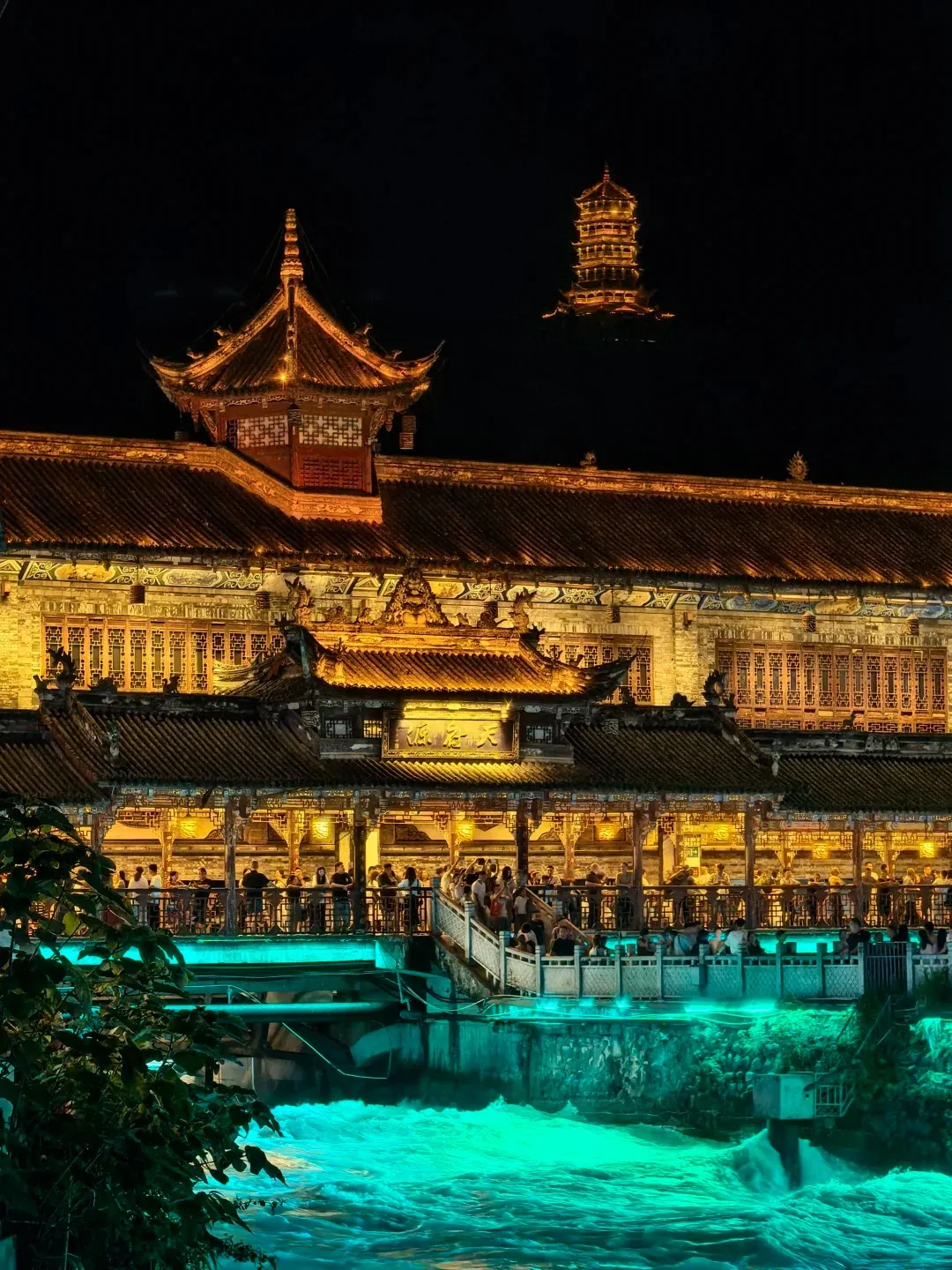
Lidui Park at Dujiangyan Irrigation System at night, showcasing traditional Chinese architecture brightly illuminated with warm golden lights. Below, the Min River rushes with a vibrant teal-blue glow from underwater lights, reflecting on the turbulent water. People gather on the park’s balconies and a bridge that spans the river. In the upper background, a distant pagoda is also lit up, standing out against the dark sky, characteristic of this famous day trip from Chengdu.
4. Qingcheng Mountain: The Birthplace of Taoism
Often paired with Dujiangyan, Mount Qingcheng is the yin to Emei’s yang. It is the birthplace of Taoism and offers a lush, green, and serene hiking experience. The mountain is split into the Front Mountain (temples, cultural sites) and the Back Mountain (nature, waterfalls, hiking).
Contrarian Tip: Skip the Front Mountain if you hate crowds. The Back Mountain (Hou Shan) is where the locals go. It’s cheaper, steeper, and significantly more beautiful, with waterfalls cascading over mossy rocks. It requires a moderate fitness level.
5. Huanglongxi Ancient Town: The Water Village
Located about 40km from Chengdu, Huanglongxi is a film set come to life. Known for its cobblestone streets, ancient banyan trees, and temples dating back to the Qing Dynasty, it is famous for its water dragon festivals.
What to Eat: This is the place to try “One Strand Noodle” (Yi Gen Mian). A single, continuous strand of noodle is thrown into the boiling pot by a chef performing a dance-like motion. It’s touristy, but delicious.
6. Suji Ancient Town: The Foodie’s Secret
While most tourists rush back to Chengdu after seeing the Leshan Buddha, savvy travelers head 30 minutes west to Suji Ancient Town. This is not a polished tourist trap; it is a living town famous for its “Bobo Chicken” (skewers in chili oil) and Fried Tofu.
Why Go? It feels authentic. You can sit by the river, sip tea for 15 CNY, and watch life go by without the commercial hustle of the bigger spots. It pairs perfectly with a morning trip to the Leshan Buddha.
7. Luodai Ancient Town: The Hakka Stronghold
For a different cultural flavor, visit Luodai. It is the largest Hakka community in southwest China. The architecture here differs distinctively from the Sichuanese style, featuring the iconic “Tulou” (earthen roundhouses).
The Activity: Visit the Golden Dragon Great Wall nearby. It is a modern replica, but it offers a decent hike and views of the Chengdu plain without traveling all the way to Beijing.
Practical Logistics for 2026
Booking Trains
China’s high-speed rail network is the most efficient way to reach Leshan and Dujiangyan, but with the 2026 visa-free travel boom, tickets sell out faster than ever. Aim to book 5 to 7 days in advance for weekend trips or peak seasons.
- Apps: The official Railway 12306 app now features a robust English interface and is the most reliable for real-time seat availability. Trip.com remains the best alternative for those preferring 24/7 English customer support and seamless international card processing.
- Passport: Your physical passport is your ticket. Most major stations in Sichuan now utilize automated scanners that read your passport chip at the gate. However, always carry the physical document; photos or digital copies will not be accepted by station security.
Navigation & Maps
The digital landscape for travelers in China has improved significantly. Google Maps remains unreliable without a VPN and lacks up-to-date local transit data.
- Amap (Gaode Ditu): As of early 2026, Amap has rolled out a dedicated English interface for international visitors. You can now search for major landmarks in English and receive accurate walking and public transit directions.
- Ride-Hailing: Use the Didi mini-app located within Alipay. It features an automatic translation tool for messaging drivers, and the fare is deducted directly from your linked card, eliminating any price haggling.
Essential Digital Payments
China is effectively a cashless society. While cash is legally accepted, Alipay is essential for everything from street food in Suji to temple entry tickets on Mount Emei.
- 2026 Update: International travelers can now link Visa, Mastercard, or Discover cards directly to Alipay with high success rates. Ensure you complete the “Real-name Verification” in the app settings before arrival to avoid payment freezes on larger transactions.
- Local Transport: Most city buses and subways in Chengdu and Leshan can be paid for using the “Transport Code” feature within the Alipay app.