
Sichuan Teahouse Culture You Can Experience: From Chengdu to Zigong

You haven’t truly arrived in Sichuan until you’ve lost an afternoon staring at a lake, listening to the rhythmic clacking of Mahjong tiles, and sipping jasmine tea from a porcelain cup. While Chengdu is rapidly modernizing into a cyberpunk metropolis of skyscrapers and luxury malls, the city’s soul remains firmly planted in its bamboo chairs.

However, finding an “authentic” experience can be tricky. Many guidebooks point you toward tourist traps that charge 80 RMB for a cup of tea that should cost 15. This guide cuts through the noise to show you where the locals actually go, from the famous parks of Chengdu to the grit of the Sha River and the historic salt city of Zigong.

Quick Summary: Key Takeaways for Travelers

  • Go Early for Authenticity: The “real” atmosphere (elders chatting, bird cages, smoke) happens between 6:30 AM and 9:00 AM. After 10:00 AM, the tourists and photographers take over.
  • The “Lid” Signal: Never shout for a refill. Simply place the lid of your teacup on the table or balance it on the saucer to signal the server to pour more water.
  • Price Expectations: A standard cup of tea in a park should cost 15–30 RMB. If a menu charges 60+ RMB for basic green tea, you are paying a “tourist tax.”
  • Ear Cleaning is Safe: It looks terrifying, but professional ear cleaners are highly trained. Expect to pay 20–30 RMB for a basic clean.
  • Cash is Dead: Even 80-year-old tea masters use Alipay or WeChat Pay. Do not rely on cash/credit cards at local teahouses.

Summarize with :

What is a Gaiwan?

A Gaiwan (盖碗) is a traditional Chinese tea set consisting of three parts: a saucer, a bowl, and a lid. In Sichuan teahouse culture, you drink directly from the bowl while using the lid to hold back the floating tea leaves. It represents the harmony of heaven (lid), earth (saucer), and human (bowl).

The Heavyweight: Heming Teahouse (People’s Park)

Located in the heart of Chengdu, Heming Teahouse (鹤鸣茶馆) is the most famous spot in the city. Yes, it is touristy. Yes, it is crowded. But you should absolutely go—if you time it right.
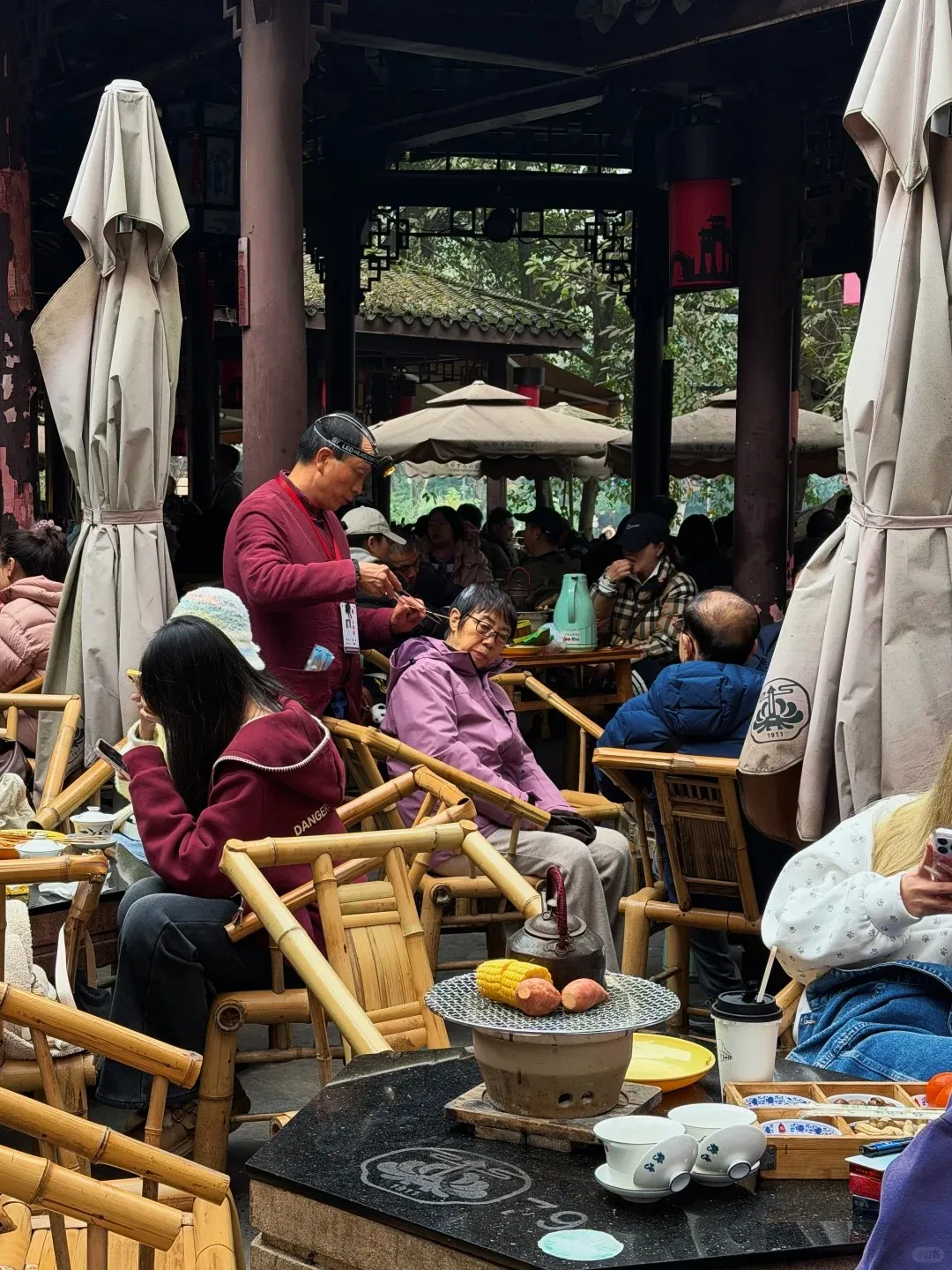
A bustling outdoor teahouse. In the foreground, a charcoal grill with corn and sweet potatoes sits on a black table with a dark teapot and white gaiwans. People sit on bamboo chairs. A man in a red jacket with a headlamp performs an ear cleaning service on a seated patron. Beige parasols and traditional wooden architecture are visible throughout the crowded scene.

A quintessential scene from Chengdu’s Heming Teahouse, where the rich tradition of Sichuan tea culture comes alive. Beyond sipping from gaiwans and relaxing on bamboo chairs, patrons can enjoy freshly grilled snacks and experience unique services like traditional ear cleaning, a testament to the city’s leisurely charm.

The Insider Strategy

Mistake to Avoid: Do not visit on a Saturday or Sunday afternoon. You will fight for a table, the service will be frantic, and the noise level is deafening.

The Fix: Arrive on a weekday morning at 8:30 AM. The air is cooler, and the clientele is mostly local retirees stretching or chatting. You can secure a lakeside table easily.

The Ear Cleaning Experience: You will hear a strange “twang” sound vibrating through the air. This is the metal tuning fork used by ear cleaners. While it seems invasive, it is a relaxing sensory experience unique to Sichuan. Negotiate the price upfront (usually 30 RMB). The sensation of the vibrating tool stimulating nerves in the ear canal is described by locals as “small comfort.”

The Photographer’s Dream: Pengzhen Old Teahouse

If you have seen atmospheric photos of light beams cutting through smoke in an ancient wooden building, it was taken at Pengzhen (Guanyin Pavilion) Old Teahouse. Located in Shuangliu district, about 30km from downtown Chengdu, this is a time capsule of the Cultural Revolution era.

Logistics and Reality Check

  • Getting There: The metro doesn’t go all the way. Take a Didi (Chinese Uber) from the city center (approx. 60-80 RMB, 45 minutes).
  • The “Model” Fee: This teahouse is so popular with photographers that the owner now charges a small fee (around 10 RMB) just to take photos if you aren’t buying tea.
  • Sensory Details: The floor is packed earth—literally dirt. The walls are covered in Mao-era propaganda posters. The smell is a mix of strong tobacco and coal fire.

contrarian Tip: If you aren’t a serious photographer, you might find Pengzhen underwhelming. It is small, dusty, and overrun with camera crews by 9:30 AM. For a similar vibe without the “staged” feel, try the Niang Niang Miao (娘娘庙) behind Wenshu Monastery.

Off the Grid: The Sha River Teahouse

For those who find People’s Park too polished, the teahouse on the Sha River (near Lijiatuo Metro Station) offers a gritty, unfiltered look at Chengdu life.

This is not a place for premium tea; it is a community center. You walk across the Shangsandong bridge and suddenly the city feels miles away. Here, tea is cheap (often under 10 RMB), and the primary activity is Mahjong. In the evenings, the tea is swapped for Baijiu (strong sorghum liquor).

Warning: English is not spoken here. You will need a translation app. The toilets are likely traditional “squat” style and may not be pristine. This is real life, not a resort.

Beyond Chengdu: The Zigong Salt History Vibe

If your itinerary takes you south to Zigong (famous for its dinosaur museum and lantern festival), the teahouse culture shifts. Zigong was built on salt wealth, and its historic teahouses often occupy grander, older guild halls compared to the bamboo sheds of rural Chengdu.

In Zigong, look for teahouses along the river near the Salt History Museum. The pace here is even slower than Chengdu. You can often sit for 4 hours for the price of a bottle of water. It is the perfect place to rest after walking the hilly streets of the salt city.

Practical Guide: How not to look like a Tourist
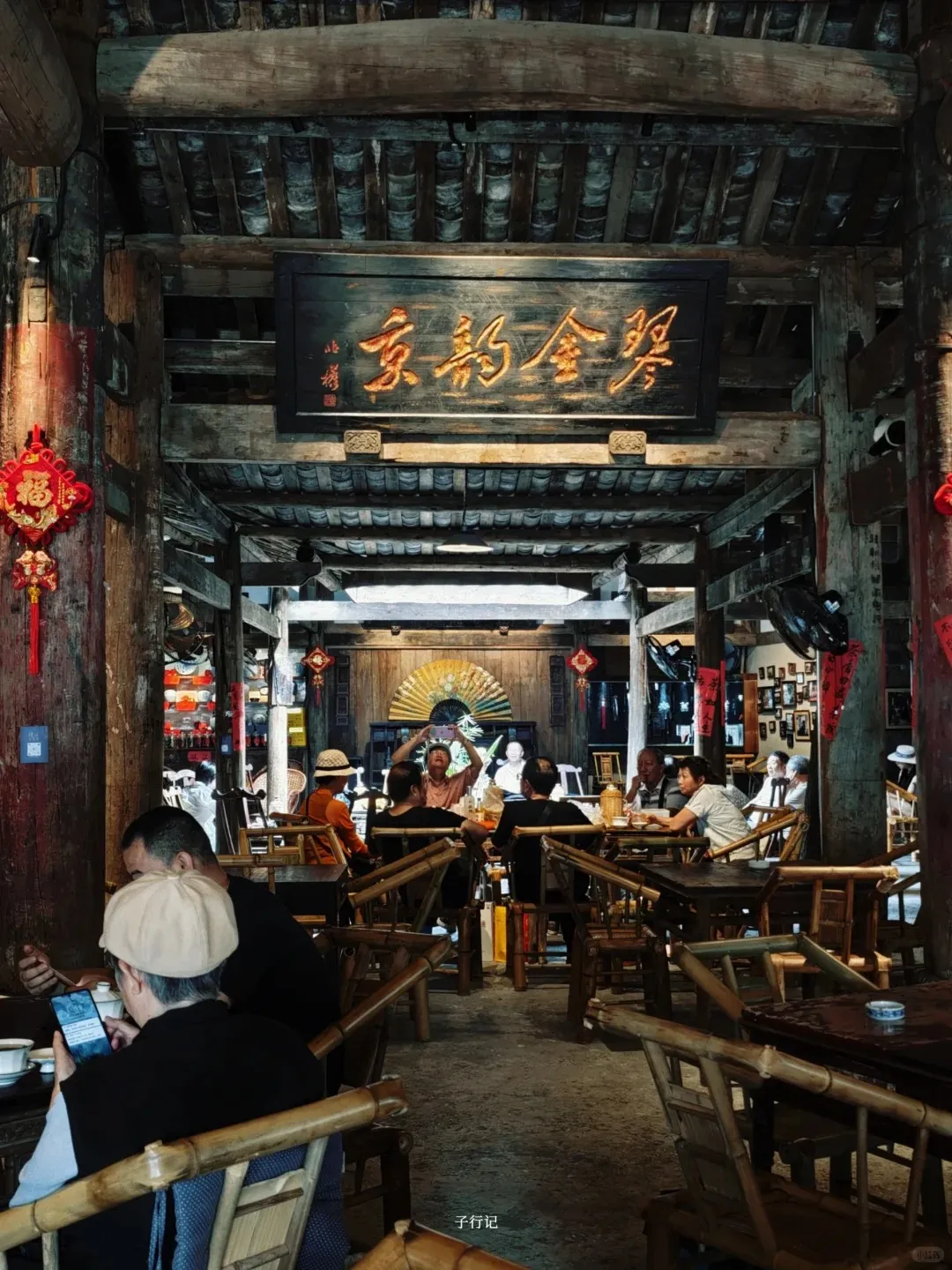
Interior view of a bustling traditional Chinese teahouse with high dark wooden beamed ceilings and a tiled roof structure. Numerous customers, mostly adults, are seated at dark wooden tables with light-colored bamboo chairs, drinking tea and socializing. A prominent rectangular wooden plaque with large gilded Chinese characters hangs centrally, with smaller red couplets on a wooden pillar to the left. Red festive decorations are visible on the pillars.

Immerse yourself in the timeless tradition of a Sichuan teahouse, a vibrant hub of social life and relaxation. From Chengdu’s bustling streets to the serene corners of Zigong, these historic establishments are where stories unfold over cups of local brew.

1. Ordering the Right Tea

Don’t overcomplicate it. Most locals stick to two staples:

  • Zhu Ye Qing (竹叶青): A premium green tea that tastes grassy and refreshing.
  • Mo Li Hua (茉莉花): Jasmine tea. In Sichuan, this is potent and heavily scented. It’s the standard “table tea.”

2. The Snack Culture

You never just drink tea. You must order “Guazi” (sunflower seeds). Cracking these seeds is the background music of Sichuan. You spit the shells on the table or the floor, depending on the venue’s cleanliness level (watch what the locals do). Other common snacks include peanuts and dried beef.

3. The Water Refill (Jia Shui)

Sichuan teahouses use heavy copper kettles with long spouts. You do not need to flag down a waiter. As mentioned in the summary, prop the lid against the saucer. This is the universal silent signal. A server will come by with boiling water and refill your bowl with acrobatic precision.
Common Questions About Sichuan Teahouse Culture

How much does a cup of tea cost in Chengdu teahouses?

For an authentic experience in a public park, expect to pay between 15 and 30 RMB. If a menu charges over 60 RMB for basic green tea, it is likely a tourist trap price. Always check the menu before ordering.

You do not need to shout for a waiter. Simply place the lid of your teacup (Gaiwan) on the table or balance it against the saucer. This is the universal silent signal for a server to refill your water.

Relying on cash or credit cards is not recommended, as even elderly vendors prefer digital payments. You should have Alipay or WeChat Pay installed on your phone before visiting local spots like the Sha River Teahouse.

Yes, while it looks intimidating, the ear cleaners in places like Heming Teahouse are highly trained professionals. It is a traditional grooming service that locals find relaxing, usually costing around 20 to 30 RMB.

Conclusion

Sichuan teahouse culture is about more than hydration; it is a rebellion against the speed of modern life. Whether you choose the polished history of Heming, the photographic drama of Pengzhen, or a roadside shed in Zigong, the rule is the same: stop rushing. Order a Jasmine tea, crack some seeds, and let the afternoon dissolve. If you are ready to book your trip, ensure you have Alipay installed and your Didi app ready—these hidden spots are waiting for you.

Similar posts to this one

Multiple Fuxinghao high-speed bullet trains, silver with red and orange stripes, are parked at platforms inside Shenzhen North Railway Station at night. Station signs show '深圳北站' and 'Shenzhen North Railway Station'. Overhead metal structures and lighting are visible.

Beijing to Shanghai High-Speed Rail: The Complete Station & Seat Guide

For travelers in 2026, the debate between flying or taking the train from Beijing to Shanghai is effectively over. The [...]

A vibrant sunrise or sunset over the modern Beijing cityscape, featuring prominent skyscrapers like the tall, slender CITIC Tower (China Zun) reflecting golden light, the distinctive CCTV Headquarters building, and the spiraling dome of the Phoenix International Media Center. A dense canopy of green and golden trees forms the foreground under a sky with dramatic, colorful clouds.

Emergency Travel in China: Vital Phrases, Apps, and Safety Protocols

Traveling to China is an exhilarating experience, but the unique digital ecosystem and language barrier can make even seasoned globetrotters [...]

Two modern Chinese high-speed trains, including a silver Fuxing bullet train with red, orange, and gold stripes, parked side-by-side at a bright station platform. A white high-speed train with blue stripes is to the left. A yellow tactile paving strip is visible on the platform.

China High-Speed Rail for Tourists: Booking, Classes & Onboard Experience

For many travelers, the first time stepping into a Chinese railway station is more overwhelming than the flight that brought [...]

Get the China Arrival Survival Kit

Planning a trip here has a steep learning curve. Join our newsletter and receive our free “Day One Checklist” covering everything from setting up Alipay and WeChat to bypassing the internet firewall.