



The Golden Rules of Chopsticks
For Western travelers, the most anxiety-inducing aspect of dining in China is often the utensils. However, proficiency is less important than understanding the cultural symbolism attached to them. In Chinese culture, chopsticks are more than tools; they are extensions of your manners.
The “Big Three” Taboos
If you remember nothing else, avoid these three specific actions, as they are universally viewed as auspicious or rude:
- The Incense Mimic: Never leave your chopsticks standing vertically in your rice bowl. This visually mimics incense sticks used at funerals and is a powerful symbol of death. If you need to put them down, place them horizontally across the top of your bowl or on the chopstick rest.
- The Beggar’s Tap: Do not tap your chopsticks against the side of your bowl. Historically, beggars tapped their bowls to attract attention. Doing this at a dinner table is considered low-class and insulting to the cook.
- The Spear: Do not stab food with the tip of a chopstick to pick it up. If you are struggling with a slippery item (like peanuts or quail eggs), it is acceptable to use a spoon, which is almost always provided.
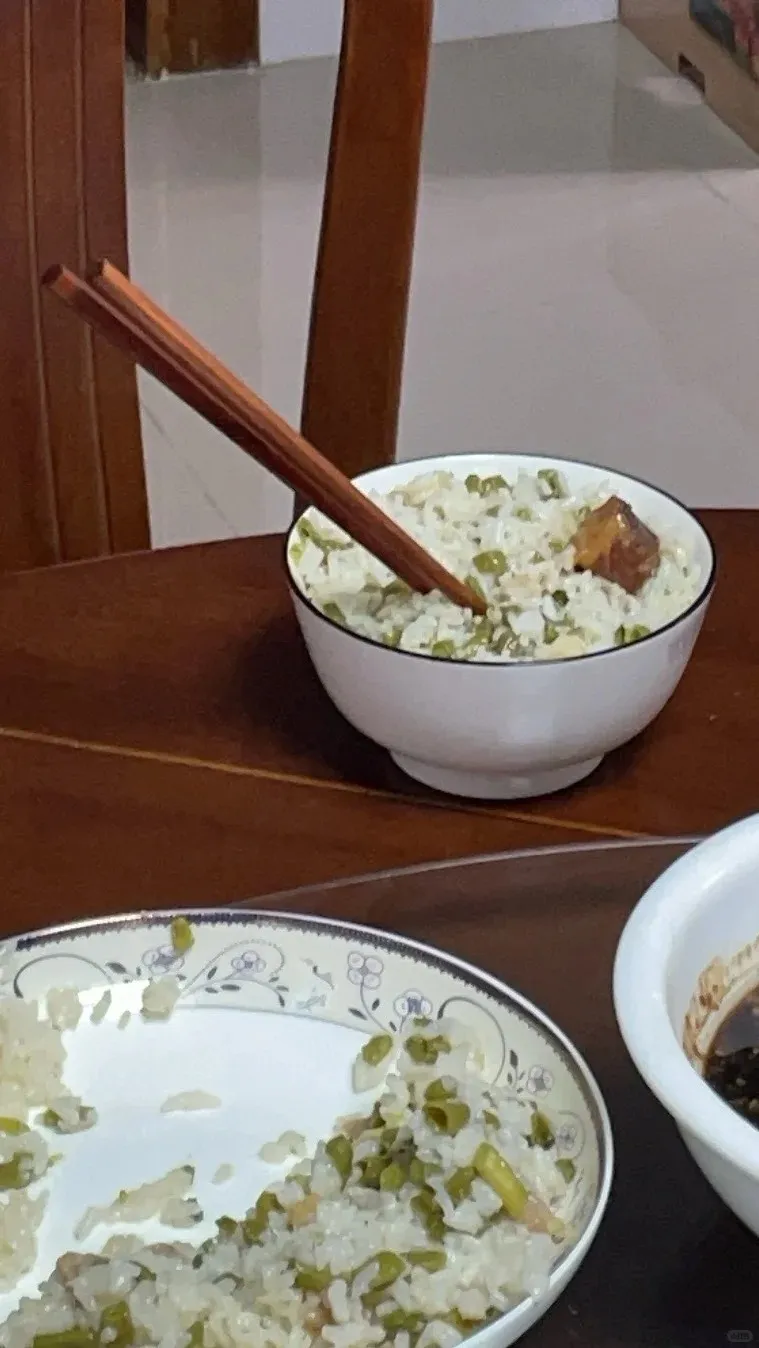
A crucial lesson in Chinese dining etiquette: Avoid sticking your chopsticks vertically into your rice. This gesture is widely considered disrespectful and a major faux pas, as it strikingly resembles incense offerings at a funeral.
Hygiene and the “Gongkuai”
Since 2020, a significant shift in China dining etiquette has been the widespread adoption of Gongkuai (public chopsticks). In the past, diners used their own chopsticks to reach into communal dishes. Today, you will often find two pairs of chopsticks at your setting or a specific pair resting on the communal dish. Use the public pair to transfer food to your bowl, then switch to your personal pair to eat. Ignoring this is seen as unhygienic.
Navigating the Table: Seating and Serving
The geography of a Chinese dinner table is political. Unlike in the West, where seating is often casual, the arrangement in China reinforces hierarchy.
Who Sits Where?
The seat of honor—reserved for the host or the most senior guest—is always the one facing the entrance. The next most important seats are to the immediate left and right of this position. The “least” important seat is the one with its back to the door, usually reserved for the person paying the bill or the youngest attendee. Insider Tip: When you enter a private dining room, stand and wait to be directed to your seat. Do not just grab the chair with the best view.
The Lazy Susan Protocol
Most round tables in China feature a glass turntable (Lazy Susan). While convenient, it comes with rules:
- Clockwise Rotation: Generally, rotate the table clockwise.
- Wait Your Turn: Never spin the table when someone else is in the process of serving themselves. This is a common mistake travelers make that instantly halts conversation.
- Elders First: Do not start eating or spinning the wheel until the guest of honor or the eldest person has begun.
Ordering and Paying in a Digital China
If you are relying on physical cash or asking for an English menu in 2026, you will struggle. The dining landscape is almost entirely digital.
The QR Code Menu
In 90% of restaurants, from hole-in-the-wall dumpling shops to mid-range eateries, there are no physical menus. You will find a QR code sticker on the corner of the table. You must scan this with Alipay or WeChat to see photos of the dishes, place your order, and pay. The staff will simply bring the food once the order prints in the kitchen.
To navigate this, you need a reliable internet connection. Public Wi-Fi in restaurants often requires a Chinese phone number to authenticate, leaving many tourists disconnected.
💡 Editor’s Pick: We recommend Nomad eSIM for China because it reliably bypasses the Great Firewall with stable speeds. Use code JORICAQLKF at checkout to get $5 USD off your first data plan.
The Bill and Tipping
What is the tipping policy in China? The short answer: Do not tip. In mainland China, tipping is not part of the culture. Leaving cash on the table will likely result in a waiter chasing you down the street to return your “forgotten” money. In high-end hotels or Westernized bars in Shanghai, service charges may be included, but voluntary tipping is unnecessary.
Furthermore, “Going Dutch” (splitting the bill) is rare in formal settings. Usually, one person—the host—pays for the entire table. If you invite Chinese friends out, expect to fight for the right to pay; it is a performative dance of politeness. If you intend to treat them, you may need to sneak away to the counter (or pay via the app) before the meal ends.
Insider Tips: What to Know Before You Go
Beyond the strict rules, there are sensory aspects of dining in China that guidebooks rarely mention.
Bones and Tablecloths
In the West, we hide inedible parts of food. In China, dealing with bones, gristle, and shells is part of the meal. You will often be given a small side plate (about the size of a coaster). Spit bones or shells onto this plate, or use your chopsticks to remove them from your mouth. In more casual, loud restaurants with plastic tablecloths, it is socially acceptable to place these scraps directly on the table next to your bowl. It feels messy at first, but it is normal.
The Toasting Ritual (Ganbei)
If alcohol is involved, you will encounter Ganbei (literally “dry cup”). When clinking glasses, if you want to show respect to someone senior to you (in age or status), ensure the rim of your glass touches the body of theirs—keeping your glass physically lower than theirs. This is a subtle physical gesture that speaks volumes about your understanding of humility.
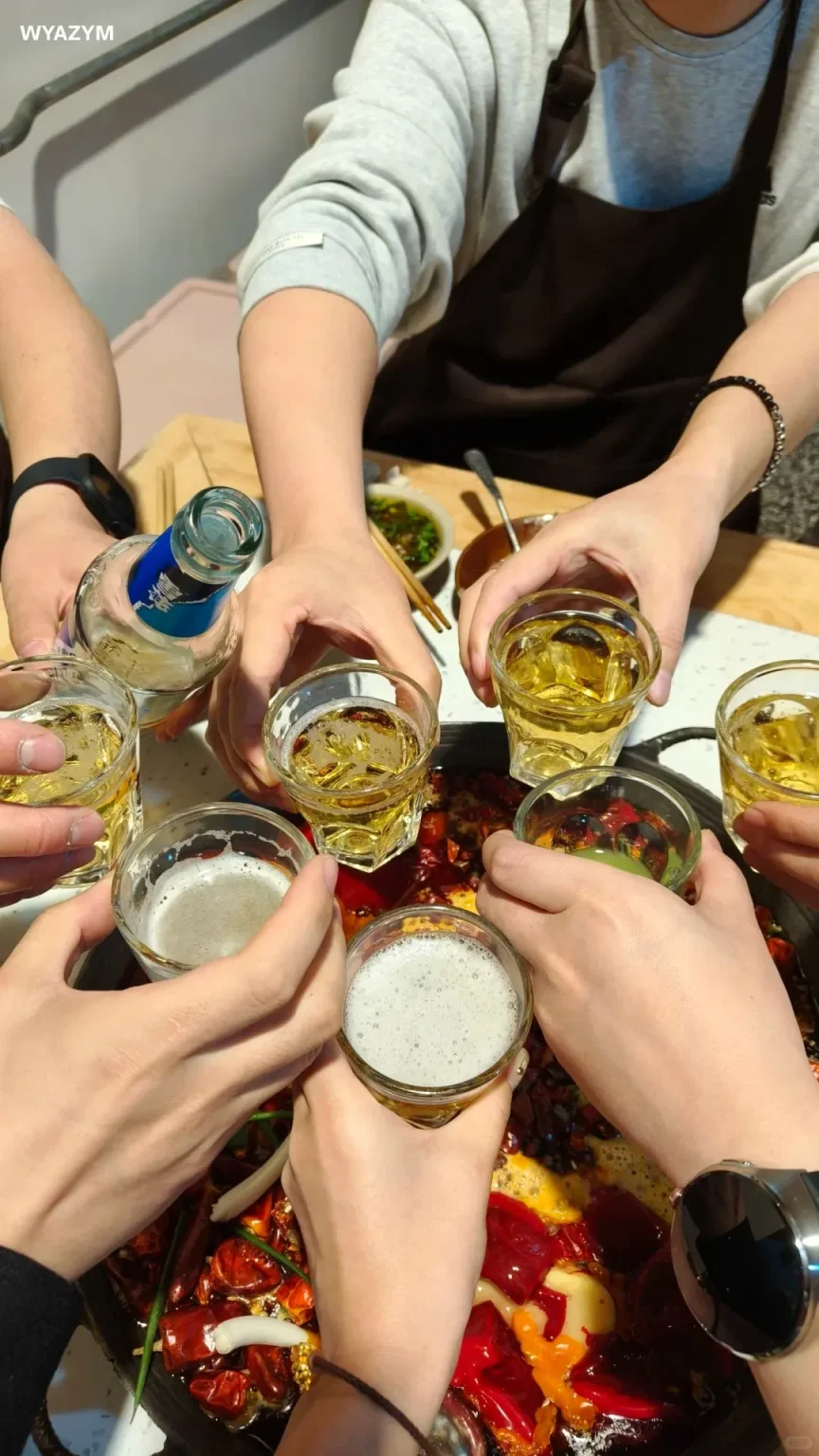
Beyond mastering chopsticks, understanding the etiquette of toasting is key to fully immersing yourself in Chinese dining culture. Shared moments like this hot pot toast foster camaraderie and are a vibrant part of the communal meal experience.
Don’t Fill Your Own Glass
If you are drinking tea or beer, keep an eye on your neighbor’s cup. It is polite to refill their cup when it gets low. They will likely tap the table with two fingers as you pour—a gesture of thanks that mimics bowing. Conversely, never refill your own glass; wait for someone else to do it, or pour for them first to prompt the favor.