


What is the 144-Hour Visa-Free Transit?
The 144-hour visa-free transit is a policy allowing travelers from 54 countries (including the US, UK, EU, Canada, and Australia) to enter designated Chinese ports, including Xiamen Gaoqi International Airport, for up to six days without applying for a visa in advance. To qualify, you must hold a valid passport and a connecting ticket to a third country or region (e.g., USA -> Xiamen -> Hong Kong) departing within 144 hours.
Gulangyu Island: The Crown Jewel (and How to Survive It)
Gulangyu is a pedestrian-only island famous for its colonial consulates, piano museums, and banyan-shaded alleys. It is a UNESCO World Heritage site and arguably the main reason travelers flock to Xiamen. However, the experience can vary wildly depending on how you navigate the crowds.
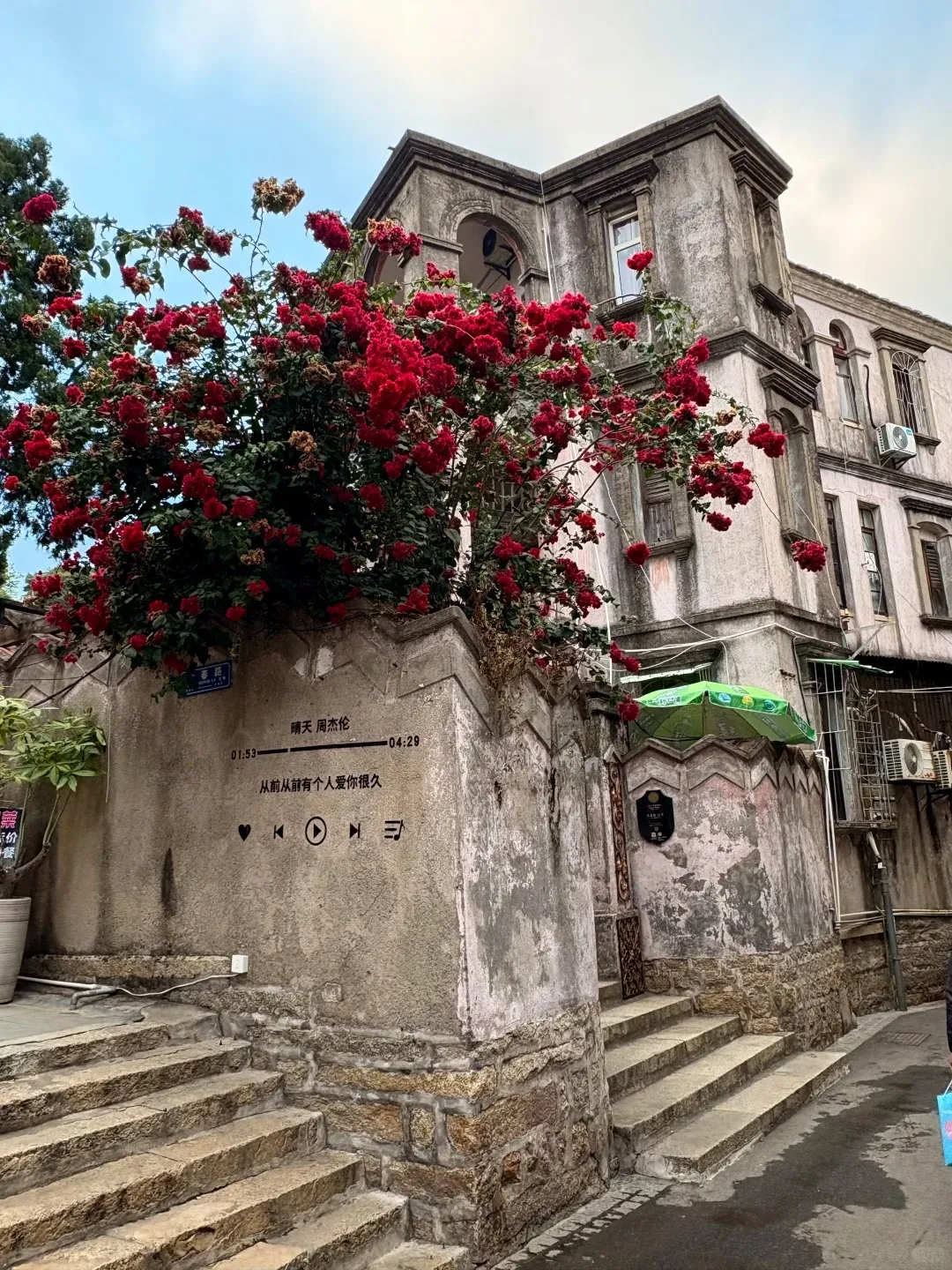
Beyond its historic colonial architecture, Gulangyu Island offers charming surprises. This building, vibrant with red flowers, uniquely features lyrics from Jay Chou’s iconic song ‘Qingtian’ painted on its wall, blending timeless beauty with modern cultural touches. Discover more unique spots that make Xiamen and its surroundings truly worth visiting!
Insider Tip: The Ferry Logistics Trap
The most common mistake international travelers make is showing up at the wrong ferry terminal. As of 2026, the rules remain strict:
- Locals: Use the Lundu Ferry Terminal (downtown).
- Tourists (You): Must use the International Cruise Terminal (Dongdu) during the day (7:10 AM – 5:30 PM).
- Nighttime: After 5:50 PM, tourists can use the convenient Lundu Terminal (Terminal 2).
Experience Note: Tickets sell out days in advance during holidays. You should book via the official WeChat mini-program (search “Xiamen Ferry Company”) or ask your hotel concierge to book it for you 3-5 days prior. A standard round-trip ticket costs roughly 35 RMB.
Is Gulangyu Worth the Hype?
If you visit between 10:00 AM and 3:00 PM, you will be fighting shoulder-to-shoulder crowds following flag-waving tour guides. The magic of Gulangyu happens early in the morning or late at night.
Recommendation: Book a night at a heritage hotel on the island (like the Lin Family Mansion). Once the day-trippers leave on the last ferries, the island falls silent, and you can hear the sound of pianos drifting from open windows—a sensory experience that justifies the trip.
Fujian Tulou: The Architecture of Community
Located in the mountainous interior northwest of Xiamen, the Fujian Tulou are massive, donut-shaped earthen fortresses that house entire clans. They are unlike any other architecture on earth.
Nanjing vs. Yongding Clusters
Most travelers have to choose between two main areas:
- Nanjing Tulou (Tianluokeng): Famous for the “Four Dishes and a Soup” cluster. It is closer to Xiamen (approx. 2.5 hours) but more commercialized.
- Yongding Tulou (Hongkeng/Gaobei): Home to the “King of Tulou,” the massive Chengqilou. It feels slightly more authentic but requires a longer drive.
Logistics: You can take a high-speed train from Xiamen North Station to Nanjing Station (approx. 40 mins), then hire a local driver. However, for a stress-free experience, a private driver from Xiamen (approx. 600–800 RMB for the day) allows you to stop at tea plantations along the way.
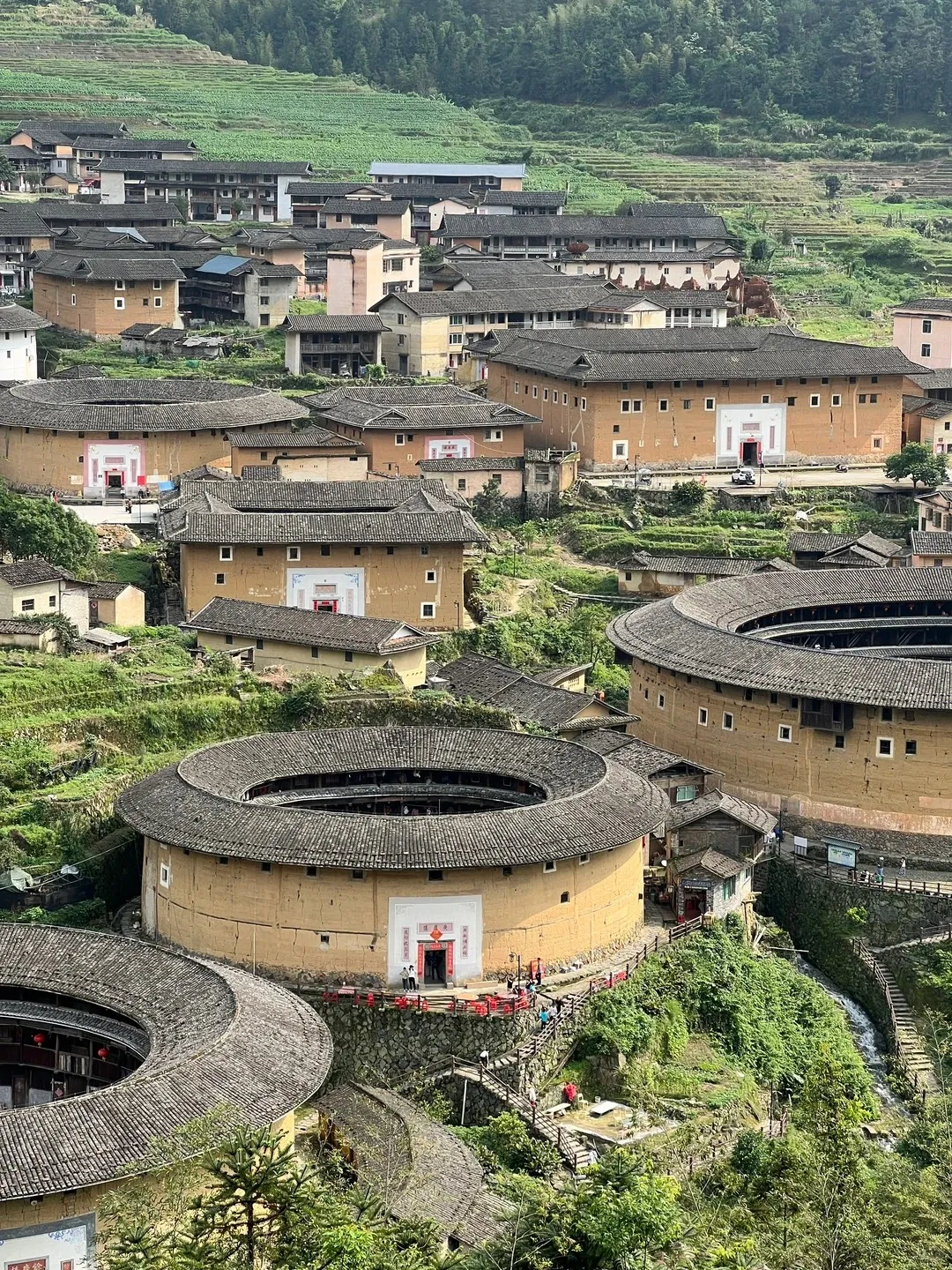
Discover the unique architectural marvels of the Fujian Tulou, UNESCO World Heritage sites that offer a fascinating glimpse into traditional communal living. A visit to these impressive earthen castles is a memorable highlight of any trip to the Xiamen region.
Xiamen’s Coastal Eats: A Challenge for the Brave
Fujian cuisine (Min Cuisine) is renowned for its emphasis on umami and seafood. Xiamen offers street food that ranges from comforting to confronting.
Must-Try Dishes
- Sandworm Jelly (Tusundong): This is the ultimate test. These are gelatinous worms harvested from the mudflats, boiled, and served in their own natural collagen jelly. It tastes cool and refreshing, served with cilantro, garlic, and chili. Texture: Like firm Jell-O.
- Satay Noodles (Shacha Mian): A rich, peanut-based broth spiked with shacha sauce (dried shrimp and spices). You choose your toppings—tofu puffs and squid are standard.
- Oyster Omelet: Unlike the crispy version in Taiwan, the Xiamen version uses sweet potato starch to create a gooey, chewy texture.
Where to Eat: Skip Zengcuo’an
Insider Tip: Avoid the “Zengcuo’an” food village. It is a tourist trap serving overpriced, generic snacks. Instead, head to the 8th Seafood Market (Kaihe Lu). This is a wet market where locals actually shop. It smells of brine and fresh fish. You can buy seafood downstairs and have restaurants upstairs cook it for a small fee (“jiagong”).
Practical Logistics for 2026
Staying Connected
Navigating Xiamen without data is nearly impossible, as you will need Alipay for payments and Amap (Gaode Ditu) for navigation. The Great Firewall blocks Google, WhatsApp, and Instagram. We strongly recommend setting up an eSIM before you land to bypass these blocks automatically.
💡 Editor’s Pick: We recommend Nomad eSIM for China because it reliably bypasses the Great Firewall with stable speeds. Use code JORICAQLKF at checkout to get $5 USD off your first data plan.
Where to Stay
- Siming District (Near Zhongshan Road): Best for first-timers. Walkable to the ferry terminal and the 8th Market.
- Shapowei/Xiamen University Area: Hip, artistic vibe with coffee shops and bars. Great for younger travelers.
- Gulangyu Island: Only if you pack light (no cars/taxis means dragging luggage) and want a romantic, quiet evening.
Best Time to Visit
Avoid the “Golden Weeks” (Chinese New Year in Jan/Feb and National Day in early October). The best weather is October to November and March to May. Summers are brutally hot and humid, and typhoon season (August/September) can cancel ferries to Gulangyu on short notice.