


However, navigating this labyrinth without a plan is a rookie mistake. Most tourists get stuck on the flashy main drag, eating overpriced squid on a stick, while the culinary gold lies in the narrower alleyways. This guide cuts through the tourist traps to highlight the specific Xi’an Muslim Quarter food entities you actually need to track down.
What is the Xi’an Muslim Quarter?
The Muslim Quarter is a collective name for several blocks north of the Drum Tower, inhabited by the Hui ethnic minority for over 1,000 years. It is not a single street, but a neighborhood covering 12.5 square kilometers, centered around the Great Mosque. It serves as the living custodian of Xi’an’s Silk Road heritage, blending Islamic culture with traditional Han Chinese architecture.
Logistics: Getting There & Connectivity
To reach the quarter, take Metro Line 2 to the Bell Tower station. Exit towards the Drum Tower. The main entrance is obvious—just follow the flow of people under the archway. However, for a less chaotic entry, you can enter via North Guangji Street to the west, which drops you closer to the authentic eateries.
Navigating the back alleys requires a working map app (Apple Maps or Amap). You will also need reliable data to scan QR codes for menus and payments. Public Wi-Fi in these alleyways is non-existent.
For seamless connectivity in China that bypasses the Great Firewall without draining your battery, we recommend using an eSIM.
💡 Editor’s Pick: We recommend Nomad eSIM for China because it reliably bypasses the Great Firewall with stable speeds. Use code JORICAQLKF at checkout to get $5 USD off your first data plan.
Insider Tip: The “Main Street” Trap
Beiyuanmen Street is the wide, paved road directly behind the Drum Tower. It is beautiful, lined with Ming-dynasty architecture, and absolutely terrible for dining. The rents here are astronomical, forcing vendors to sell mass-produced, flashy snacks like “smoke-breathing liquid nitrogen balls” or generic fried potatoes. Walk down Beiyuanmen for the photos, but keep your wallet in your pocket until you turn left onto Xiyangshi or continue north to Dapiyuan. That is where the locals eat.
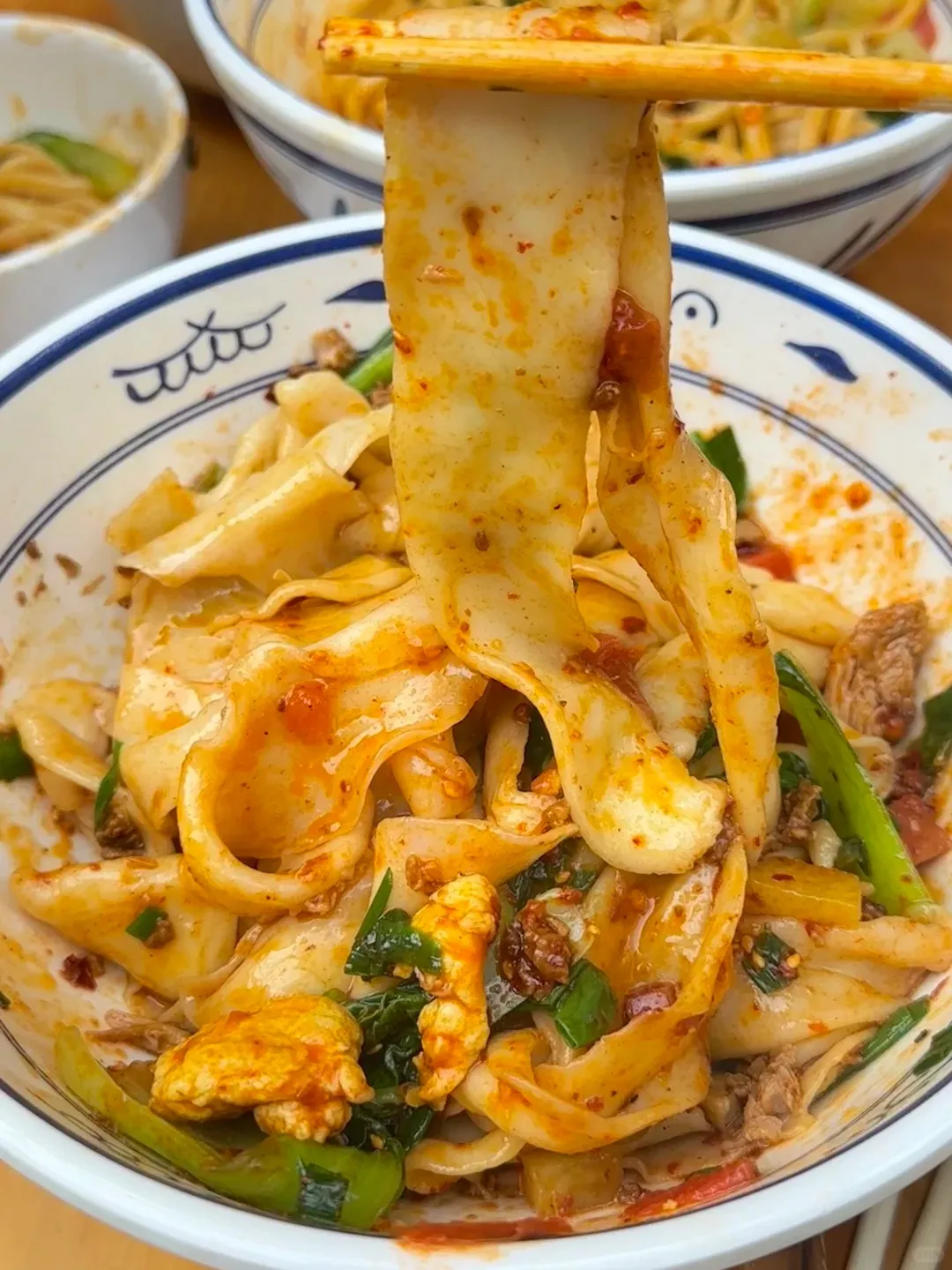
Savor the iconic Biang Biang noodles, a highlight of Xi’an’s Muslim Quarter street food scene, known for their satisfyingly wide, chewy texture and fiery chili oil sauce.
10 Must-Eat Dishes in the Muslim Quarter
1. Yangrou Paomo (Crumbled Flatbread in Mutton Stew)
This is the crown jewel of Xi’an cuisine. It is not just a soup; it is a ritual. You are given a bowl and two rounds of hard, unleavened bread. You must break the bread yourself into pieces no larger than a bee’s head. If your pieces are too large, the chef may send it back or the flavor won’t penetrate. Once crumbled, the bowl is returned to the kitchen to be flash-boiled in rich mutton broth with glass noodles and wood ear mushrooms. Served with pickled garlic and chili paste.
2. Roujiamo (Beef or Lamb Sandwich)
Often called the “Chinese Hamburger,” the Muslim Quarter version differs from the pork version found elsewhere in China. Here, it is Lazhi Roujiamo, featuring cured beef or lamb stewed for hours in a heavy master stock, then minced and stuffed into a crispy, oven-baked bun (mo). Look for a vendor where the bun is baked fresh in a vertical drum oven—if the bun is cold, walk away.
3. Biang Biang Noodles
Famous for utilizing the most complex character in the Chinese language, these noodles are wide, thick, and hand-ripped. They are usually served “dry” (without broth) and topped with hot oil, chili flakes, garlic, and vinegar. The texture is chewy and hearty. Listen for the “biang-biang” sound of dough being slapped against stainless steel tables.
4. Red Willow Branch Kebabs (Chuan’er)
Skip the small bamboo skewers. In the Muslim Quarter, you want the massive chunks of lamb skewered on Red Willow (Hongliu) branches. The tamarisk wood imparts a subtle, woody fragrance to the meat as it roasts over charcoal. They are heavily seasoned with cumin and chili powder. Price in 2026 is typically around 15-20 RMB per skewer.
5. Zenggao (Date and Sticky Rice Cake)
A breakfast staple that sells out by early afternoon. This is a dense, sticky cake made from layers of glutinous rice, kidney beans, and dates, steamed in a traditional earthen vessel called a zeng. It is sweet, heavy, and served hot. It looks like a dark, mushy mess, but the flavor is deeply comforting.
6. Guantangbao (Soup Dumplings)
Unlike the pork-filled Shanghainese xiaolongbao, these dumplings are filled with beef or lamb and a rich gelatinous broth. The skins are incredibly thin. Jiasan Guantangbao is the most famous institution for this, located on Xiyangshi Street. Caution: The soup inside is molten hot. Bite a small hole in the top to let the steam escape before eating.
7. Liangpi (Cold Skin Noodles)
The perfect antidote to a hot Xi’an summer. These are cold, translucent noodles made from wheat or rice flour, tossed with cucumber strips, bean sprouts, sesame paste, and a splash of chili oil. In the Muslim Quarter, the sesame paste (majiang) version is dominant. It is savory, nutty, and refreshing.
8. Persimmon Cakes (Shizibing)
You will see these bright orange/brown disks stacked in pyramids. Made from the local “fire crystal” persimmons mixed with flour, they are deep-fried and filled with sesame, walnut, or rose paste. They are best eaten fresh off the fryer when the outside is crispy and the inside is molten lava. Note: These are most common in autumn and winter.
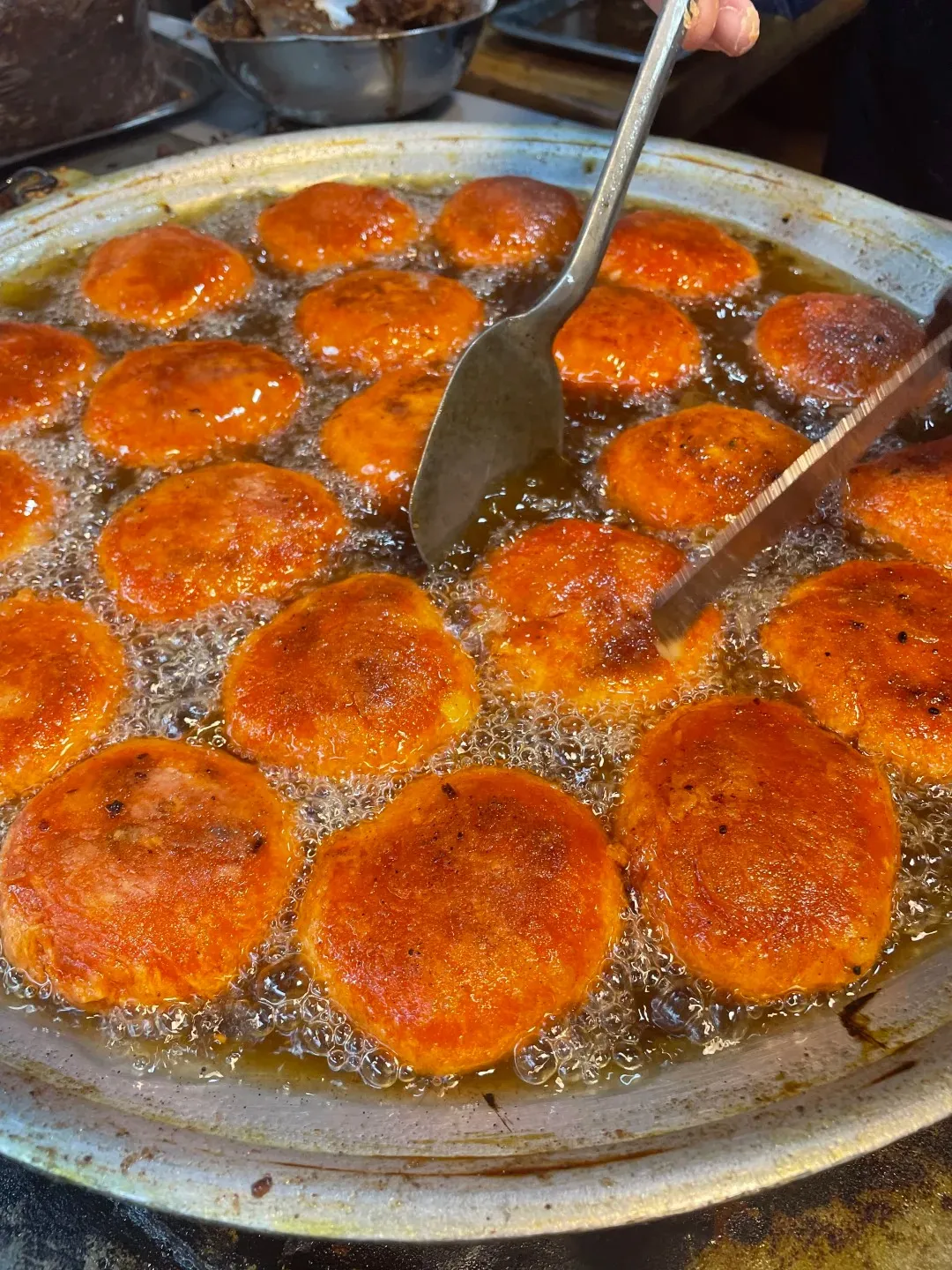
A beloved sweet treat in Xi’an’s Muslim Quarter, these fried persimmon cakes (柿子饼, shìzi bǐng) are a must-try street snack, often filled with a sweet bean or nut paste and fried until golden brown.
9. Suantang Shuijiao (Sour Soup Dumplings)
If you visit in winter, this dish is mandatory. These are boiled lamb dumplings floating in a broth made of vinegar, chili oil, sesame seeds, and cilantro. The “sour” comes from the heavy hand of black vinegar, which cuts through the richness of the lamb filling. It is incredibly warming.
10. Fresh Pomegranate Juice
While not a “dish,” this is the signature drink of the area. Lintong, just outside Xi’an, is famous for pomegranates. You will see vendors pressing the ruby-red seeds manually or with mechanical presses. In 2026, ensure you watch them press it fresh to avoid watered-down mixtures.
Practical Tips for 2026
- The Toilet Situation: Public restrooms in the quarter are improving but remain largely “squat style” and often lack toilet paper. It is highly recommended to use the facilities in the modern malls near the Bell Tower (like the Kaiyuan Mall) before diving into the alleys.
- Haggling: You generally do not haggle for prepared food. Prices are fixed on the wall. However, for souvenirs, dried fruits, or boxed tea, you should aim to pay about 60-70% of the initial asking price.
- Water Safety: Do not drink tap water. The spicy food will make you thirsty, so buy sealed bottled water from convenience stores (approx. 2-3 RMB).
- Trash: Bins can be scarce. Carry a small plastic bag for your used skewers and tissues until you find a disposal point.