


What is the 144-Hour Visa-Free Transit?
If you are planning a shorter trip, you might be looking at visa options. The 144-hour visa-free transit allows travelers from 54 eligible countries to enter China without a visa for up to six days, provided they have a connecting ticket to a third country. Note: As of 2026, Guizhou (Guiyang) typically requires a standard tourist visa (L Visa) or entry via a specific 15-day visa-free policy for select European and Asian nations, as it is not always a standalone 144-hour transit port like Shanghai or Beijing. Always check the latest entry port list on the National Immigration Administration website.
Getting There: The Logistics
Fanjingshan is located in Tongren, Guizhou. It is no longer the remote outpost it once was, thanks to China’s aggressive high-speed rail expansion.
By High-Speed Train
The most reliable method is taking a high-speed train to Tongren South Station (Tongrennan) or Tongren Station.
- From Guiyang: 1.5 hours.
- From Changsha: 2.5 hours.
- From Chengdu/Chongqing: Approx. 3-4 hours.
Once you arrive at Tongren South, you can take a direct tourist shuttle bus to the Fanjingshan Visitor Center (approx. 1 hour). Taxis are available but expect to pay around 150–200 RMB.
Connectivity and Navigation
Navigating rural Guizhou requires a stable internet connection, as public Wi-Fi is spotty and firewalled. You will need data to access Alipay for the shuttle bus and translation apps.
💡 Editor’s Pick: We recommend Nomad eSIM for China because it reliably bypasses the Great Firewall with stable speeds. Use code JORICAQLKF at checkout to get $5 USD off your first data plan.
Tickets and Pricing (2026 Update)
Do not underestimate the popularity of this site. Daily visitor caps are strictly enforced. According to the official scenic area policy, tickets are released daily at 8:00 AM (Beijing Time) for visits 7 days out.
- Entry Ticket: ~100 RMB (Season dependent)
- Round-trip Cable Car: 140 RMB
- Sightseeing Bus (Mandatory): 20 RMB
Insider Tip: If you cannot read Chinese, the WeChat mini-program can be difficult to navigate. Ask your hotel concierge to book this for you the moment the window opens, or use a reliable third-party agent like Trip.com, though they charge a service fee.
The Climb: Routes and What to Expect
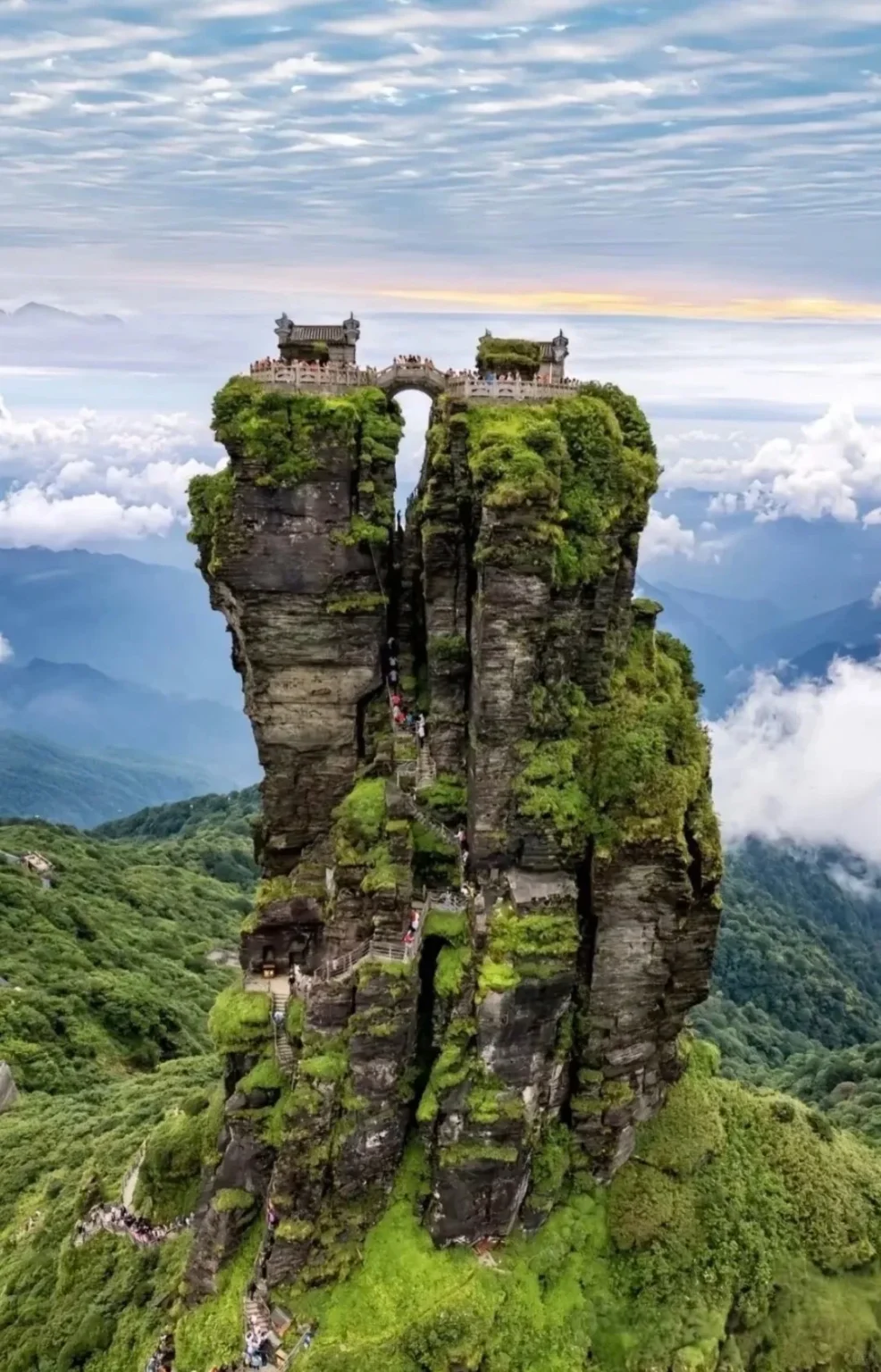
Conquering the incredible ascent to Fanjingshan’s Red Clouds Golden Summit truly feels like reaching a temple in the sky. The two temples at the top are dedicated to Maitreya Buddha, representing his past and future lives.
The East Gate (The Standard Route)
95% of travelers should use the East Gate (Jiangkou County). This is where the cable car is located.
- Enter the gate and take the sightseeing bus (20 mins) to the cable car station.
- Take the cable car (20 mins) through the clouds.
- The Hike: Upon exiting the cable car, you are not at the summit. You must hike up wooden boardwalks and stone stairs for about 45–60 minutes to reach the Mushroom Rock area.
The West Gate (The Hiker’s Route)
Located in Yinjiang County, this entrance has no cable car. It involves a 4 to 5-hour strenuous hike uphill. Only choose this if you are extremely fit and want to avoid queues. The path eventually meets the East Gate crowd at the top.
The Summit Experience: Temples in the Sky
Once you reach the upper plateau, the air gets thinner and significantly cooler. Even in summer, the wind here can be biting. There are three main focal points:
1. Mushroom Rock (Mogu Shi)
This is the landmark of Fanjingshan. Standing 10 meters tall, this precarious rock formation has defied gravity and wind erosion for a billion years. It is the spiritual guardian of the mountain.
2. The Old Golden Summit
At 2,494 meters, this is the highest point. The climb is steep, but the views over the Wuling mountains are unmatched if the fog clears.
3. Red Clouds Golden Summit (The Highlight)
This is the iconic “thumb” spire you see in photos. The climb to the top is vertical. You will pull yourself up using iron chains on stairs that are barely wide enough for one person. At the peak, the spire splits in two, connected by a small stone bridge. One side houses the Temple of the Buddha, the other the Temple of Maitreya.
Sensory Detail: The queue to climb the Red Clouds Summit can take 1-2 hours during midday. The smell of burning incense is heavy here, and the sound of temple bells mixes with the heavy breathing of hikers hauling themselves up the chains.
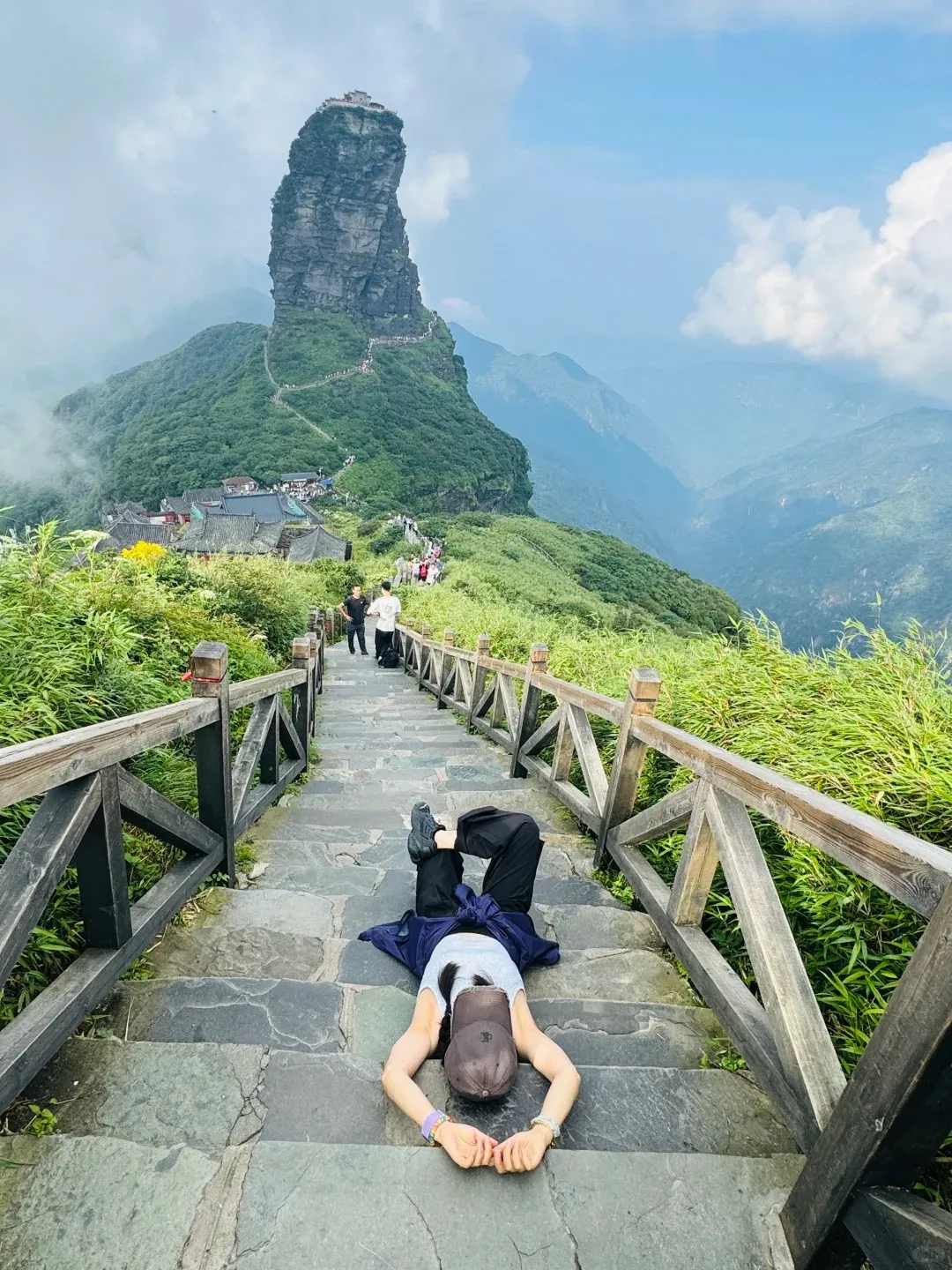
The journey to Fanjingshan’s ‘Temple in the Sky’ is renowned for its challenging ascents. Take a cue from this hiker and remember to pause, re-energize, and soak in the majestic Guizhou scenery on your way up!
Where to Stay: Jiangkou vs. Zhaisha
Avoid staying in Tongren City if you want to beat the crowds. It is too far (1.5 hours) for an early start. Instead, choose one of these two options:
- Jiangkou County: A small town 30 minutes from the gate. Plenty of hotels and restaurants. Good for budget travelers.
- Zhaisha Dong Village: Located just 3km from the East Gate. This is a tourist-oriented but atmospheric village of the Dong ethnic minority. You can stay in wooden guesthouses and hear the river rushing by at night. It allows you to be at the gate by 7:30 AM.
Insider Verdict: Is it Worth the Hype?
Fanjingshan is spectacular, but it is not an “off-the-beaten-path” secret anymore. The crowds can be overwhelming, and the weather is a gamble—it is foggy 200 days a year. However, if the clouds part while you are standing on the bridge between the two temples, it is a spiritual experience unlike anywhere else in Asia.