
Hiking Meijiawu Tea Village: A Tranquil Escape from Hangzhou

While the broken bridge of West Lake is often shoulder-to-shoulder with tourists, a short drive southwest reveals a completely different side of the city. Hangzhou tea village hiking offers a blend of physical activity and cultural immersion that few other Chinese cities can match. Meijiawu (梅家坞) is one of the four famous production bases for Dragon Well (Longjing) tea, nestled in a basin of lush, terraced hills.

Unlike the more commercialized Longjing Village, Meijiawu retains a slightly more authentic agricultural vibe, though it has certainly adapted to tourism. Here, the air smells of roasting leaves, the hills are manicured into endless rows of green, and the hiking trails offer panoramic views that justify the exertion. This guide covers how to navigate the village, find the best trails, and avoid common tourist pitfalls in 2026.

Quick Summary: Key Takeaways for Your Trip

  • Difficulty Level: Easy to Moderate. The trails are paved but involve steep stone steps.
  • Entrance Fee: Hiking the tea terraces is free. Tea tasting in a farmhouse costs between 60–150 RMB ($8–$20 USD) per person.
  • Getting There: Bus 103 or 121 are the most reliable public options. Taxis from West Lake cost approx. 45-60 RMB.
  • Best Time: Late March to May (Harvest Season). Avoid Chinese National Day (Oct 1-7).
  • Top Dish: Fried Shrimp with Longjing Tea Leaves (Longjing Xiaren).

Summarize with :

The Hiking Experience: Navigating the Tea Terraces

The primary allure of Meijiawu is not a single defined “trailhead,” but rather the network of stone paths that weave directly through the working plantations. Unlike hiking in the West, where you might be in deep forest, here you are walking through an active agricultural landscape.

The Ten Mile Langdang Connection
For serious hikers, Meijiawu serves as a perfect entry or exit point for the famous “Ten Mile Langdang” (Langdang Ridge) hike. You can start at the base of the village—look for signs pointing uphill near the main parking lot or ask a local for “Langdang Ling.” The path consists of paved stone stairs. It takes about 30-45 minutes of steep climbing to reach the ridge.

Once on the ridge, the views are spectacular. You can see the Qiantang River on one side and the West Lake basin on the other. From the ridge, you can hike north toward Longjing Village or south toward the Bamboo Forest at Yunqi. Be warned: there is little shade on the ridge, so bring a hat if you are visiting in July or August.
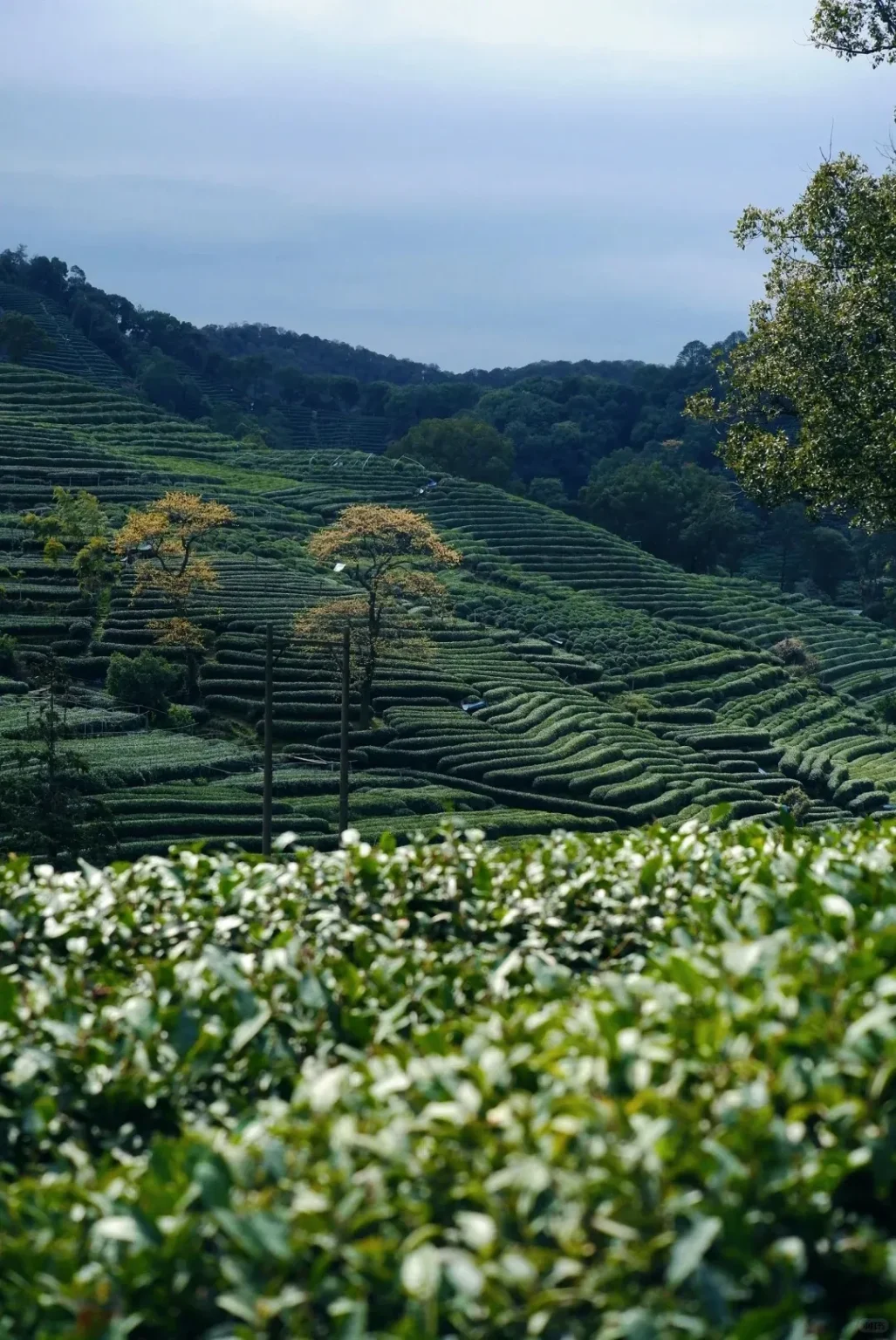
Green tea terraces stretch across rolling hills under a light blue sky. Two trees with yellowish-orange leaves are visible in the midground among the tea bushes. Blurred green tea leaves are in the foreground.

Discover the tranquil beauty of Meijiawu Tea Village, where endless green terraces invite peaceful hikes away from Hangzhou’s city bustle.

Authentic Tea Culture: The “Nongjiale” Experience

After your hike, the tradition is to settle into a Nongjiale (farmer’s guesthouse/restaurant). You will see hundreds of them lining Meiling Road. Do not expect a formal menu in English at the smaller places; translation apps are essential here.

What to Order
You are here for West Lake Dragon Well Tea (Xi Hu Longjing). In 2026, a glass of quality tea at a farmhouse typically costs between 50 RMB and 80 RMB. You are paying for the “seat” and unlimited hot water refills. Sit on a terrace, watch the farmers dry the leaves in electric woks (or hand-roasting woks during festivals), and recover from your hike.

For food, the local cuisine is “Hangbang Cai” (Hangzhou Cuisine). Must-try dishes include:

  • Tea-Crisped Chicken: Salty, savory, and tender.
  • Longjing Shrimp: Freshwater shrimp cooked with tea leaves—delicate and slightly sweet.
  • Bamboo Shoots: If you visit in spring, fresh bamboo shoots are a non-negotiable side dish.

Logistics: How to Get to Meijiawu in 2026

Meijiawu is located in the hills southwest of the main city. Traffic controls are strict on weekends, often banning private cars without permits, making public transport or taxis the best options.

By Public Bus

The bus system in Hangzhou is efficient and electric. You will need Alipay (switch to the “Transport” mini-app) to scan the QR code for the bus.

  • Bus 103: Runs from downtown through the hills. It stops directly at “Meijiawu” (梅家坞).
  • Bus 121: Connects the Lingyin Temple area to Meijiawu. Great if you are combining temple visits with hiking.

By Taxi or Ride-Share

The DiDi app (integrated into Alipay or WeChat) is the standard. A ride from the broken bridge area to Meijiawu takes about 30-40 minutes (traffic dependent) and costs roughly 50 RMB. Tip: On weekends, traffic on Meiling Road can be gridlocked. It is often faster to rent a shared e-bike (HelloBike or Meituan) for the final 3 kilometers if traffic is at a standstill.

Staying Connected
Accessing maps and translation apps while hiking is critical. The Great Firewall blocks Google Maps and WhatsApp, so you need a reliable connection solution.

💡 Editor’s Pick: We recommend Nomad eSIM for China because it reliably bypasses the Great Firewall with stable speeds.

Insider Tips: Avoiding the “Tea Scam”

While Meijiawu is generally safe, it is the epicenter of a specific tourist trap that continues to catch travelers off guard. As you hike or walk the main road, you may be approached by friendly “students” or older women claiming to work for the tea cooperative.

They will invite you to a private tasting, claiming to sell “Emperor’s Grade” tea at a discount. Do not follow them. You will likely be pressured into buying low-quality tea for thousands of RMB. Only buy tea if you are a connoisseur and can verify the quality. For 99% of travelers, it is better to simply pay for a cup of tea at a restaurant to enjoy the moment, rather than buying bulk leaves to take home.

When to Visit: The Seasonal Calendar

The Golden Window: Late March to April
This is the harvest season for Mingqian tea (picked before the Qingming Festival in early April). This is the most expensive and prized tea. The village is buzzing with energy, the fields are full of pickers wearing straw hats, and the smell of processing tea is everywhere. However, this is also when crowds are highest.

The Quiet Season: November to February
The tea bushes are dormant and darker green. It is chilly and damp, but the hiking trails are empty. If you want solitude and don’t mind wearing a jacket, this is a fantastic time for Hangzhou tea village hiking.
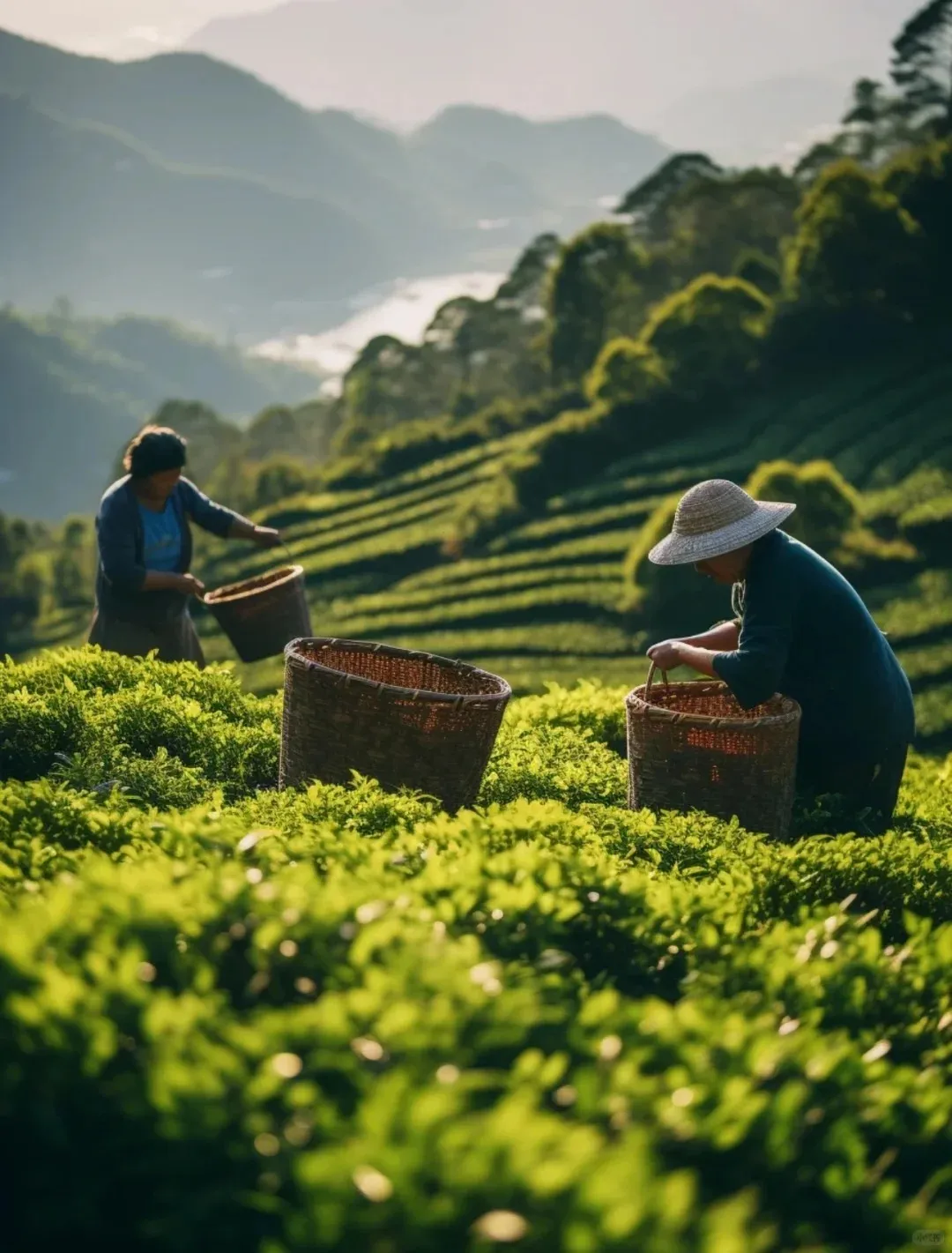
Two tea pickers, one wearing a straw hat, gather tea leaves into large woven baskets on a vibrant green terraced tea plantation. Rolling mountains and a river are visible in the sunlit background.

Beyond the tranquil hiking trails, Meijiawu Tea Village thrives with the dedicated work of its tea farmers, whose tireless efforts bring the world-renowned Longjing tea from these very hills to your cup.
Common Questions About Visiting Meijiawu

How do I get to Meijiawu Tea Village from West Lake?

The most reliable public transport options are Bus 103 or Bus 121, which you can pay for using the Alipay Transport mini-app. Alternatively, a DiDi (ride-share) takes about 30-40 minutes from the Broken Bridge area and costs roughly 50 RMB.

The hiking difficulty is rated as Easy to Moderate. While the paths are paved with stone steps, they can be steep when climbing toward the Langdang Ridge. No technical hiking gear is required, but comfortable walking shoes are essential.

The best time to visit is late March to April during the tea harvest season when the village is most vibrant. However, for a quieter experience with fewer crowds, the winter months from November to February offer peaceful, empty trails.

Yes, be wary of the ‘Tea Scam.’ Avoid following friendly strangers or ‘students’ who invite you to private tea tastings or claim to sell ‘Emperor’s Grade’ tea at a discount. It is safer to simply order tea at a standard restaurant or Nongjiale.

Conclusion

Hiking Meijiawu Tea Village provides a necessary counterpoint to the urban density of modern China. It is one of the few places where you can walk directly through the source of a world-famous product, watch it be processed, and taste it within meters of where it grew. Whether you tackle the ridge hike to Ten Mile Langdang or simply stroll the lower terraces before a lunch of Longjing shrimp, Meijiawu is a sensory experience that defines the elegance of Hangzhou.

Similar posts to this one

A wide, green meadow filled with small yellow and purple wildflowers in the foreground, with a cluster of wooden buildings and trees in the middle ground. Behind the trees, majestic snow-capped mountains rise under a cloudy blue sky.

Beyond the Peaks: A Guide to the Mandalas of Four Sisters Mountain

Finding genuine spiritual solitude in China’s booming outdoor travel scene can feel impossible. Yet, tucked away on the eastern edge [...]

A large, ancient ginkgo tree with vibrant golden leaves dominates the center of the frame against a bright blue sky. In the foreground, traditional Chinese-style buildings with tiled roofs are visible behind a low, ornate stone wall and several wooden benches. Fallen golden ginkgo leaves carpet the ground.

Beijing’s Western Hills: A Guide to Tanzhe Temple and Beyond

Escaping the concrete density of downtown Beijing requires little more than a subway card and a willingness to head west. [...]

A nighttime aerial view of a sandy beach with bioluminescent waves crashing ashore. The water glows an intense blue and green, creating trails of light along the shore and around rocks. The background shows a rocky coastline with vegetation and distant lights under a dark sky.

Chasing 'Blue Tears': A Guide to Pingtan Island's Bioluminescence

If you are scrolling through Chinese social media in the spring, you have likely seen the ethereal, glowing blue coastlines [...]

Get the China Arrival Survival Kit

Planning a trip here has a steep learning curve. Join our newsletter and receive our free “Day One Checklist” covering everything from setting up Alipay and WeChat to bypassing the internet firewall.