


Where to Wash Your Clothes: The Laundromat Myth
Many first-time visitors expect to find self-service coin laundromats lining the streets of major cities like Beijing or Shanghai. This is a common misconception. Because washing machines are a standard household appliance in China, standalone public laundromats simply never gained traction.
Instead, you will see thousands of dry cleaners (干洗店 – gānxǐ diàn). While great for a wool coat, they charge per item and are far too expensive for your daily t-shirts and socks. So, where do you go to wash your everyday travel clothes?
What is a hotel self-service laundry room?
A hotel self-service laundry room (自助洗衣房) is a dedicated space in mid-range to high-end Chinese hotels providing commercial-grade washers and dryers for guests. These are typically free or cost a nominal fee payable via mobile apps, operating 24/7 for guest convenience.
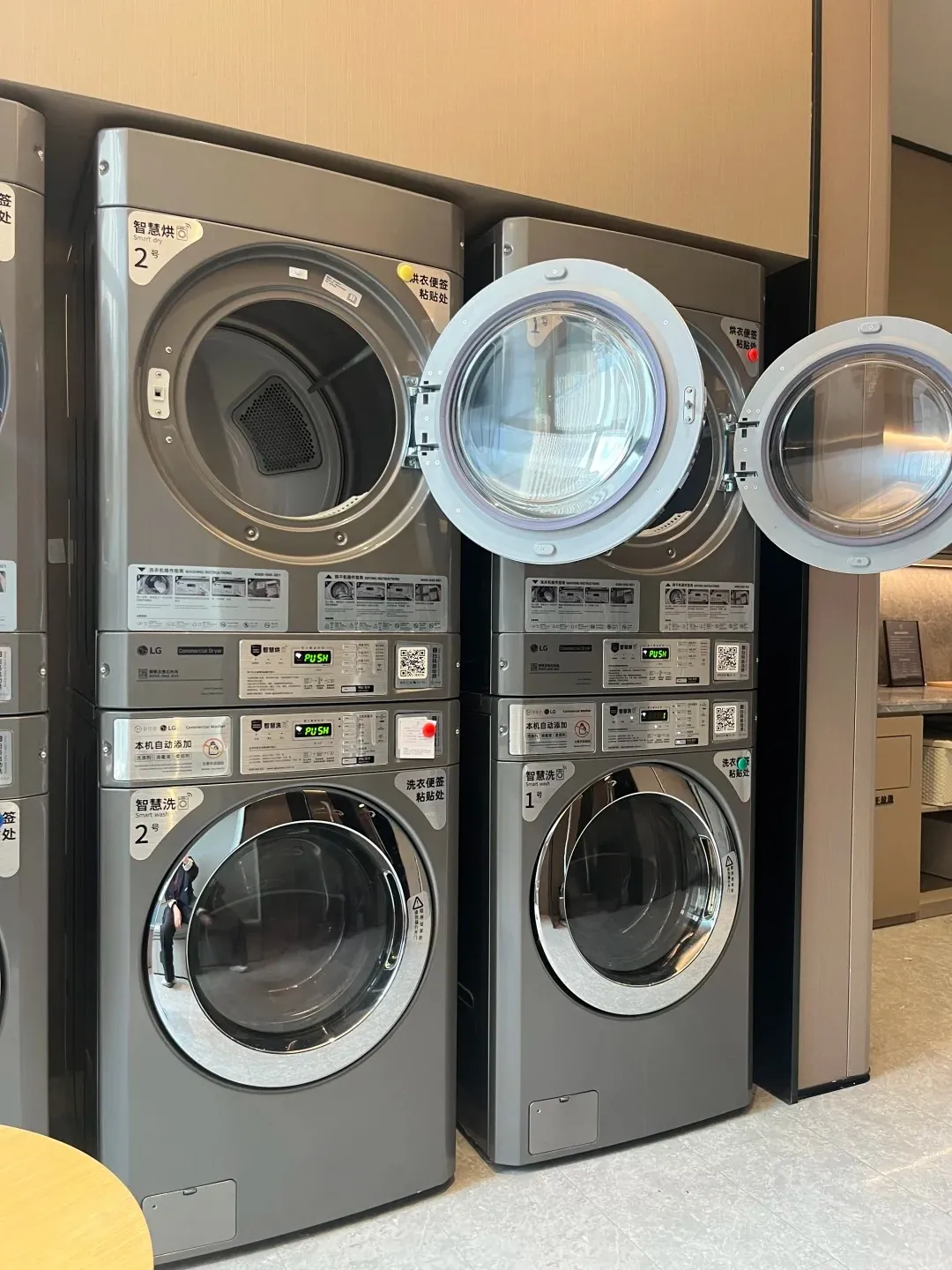
Forget fumbling for coins – modern Chinese hotel laundry services, like these LG machines, have embraced QR code technology, making washing and drying a simple scan away once you’ve deciphered the initial instructions!
Navigating Digital Washers with Alipay and WeChat
If you are staying in popular mid-range domestic chains like Atour, Ji Hotel, or Home Inn, you are in luck. These hotels almost always feature a self-service laundry room. However, you won’t be using coins to operate them.
Modern machines in China require you to scan a QR code pasted on the front panel using either Alipay or WeChat Pay. Scanning the code opens a mini-program where you select your cycle, pay the fee (usually around 10 to 20 RMB, or $1.50-$3.00 USD), and start the machine.
Because these machines require a stable internet connection to load the mini-programs, having reliable mobile data deep inside a hotel basement is non-negotiable. If you are relying on a travel eSIM to stay connected, make sure your coverage is active before heading to the laundry room.
💡 Editor’s Pick: We recommend Nomad eSIM for China because it reliably bypasses the Great Firewall with stable speeds. Use code JORICAQLKF at checkout to get $5 USD off your first data plan.
Insider Tip: Bring Your Own Pods
While many hotel apps dispense liquid detergent directly into the machine, budget hotels might require you to provide your own. I highly recommend packing a small bag of laundry detergent pods in your luggage.
Finding travel-sized detergent in a local Chinese convenience store like FamilyMart can be frustrating. They typically only sell massive 2-liter jugs that cost around 40 RMB and are far too heavy to carry around in your suitcase for the rest of your trip.
How to Read Chinese Washing Machine Settings
If you rent an Airbnb or stay in a local guesthouse, you will likely face a domestic washing machine covered entirely in Chinese characters. Do not panic and press buttons randomly, or you might end up with a 3-hour boiling cycle for your delicates.
Here is a quick translation guide to the most common buttons you will encounter on a Chinese washing machine:
- 开/关 (Kāi/Guān): Power On/Off
- 启动/暂停 (Qǐdòng/Zàntíng): Start/Pause
- 标准 (Biāozhǔn): Standard Wash (Your go-to setting)
- 快洗 (Kuàixǐ): Quick Wash (Usually 15-30 minutes, great for lightly soiled clothes)
- 脱水 (Tuōshuǐ): Spin / Drain (Crucial if your clothes come out soaking wet)
- 温度 (Wēndù): Temperature
A vital sensory detail to remember: Chinese washing machines default to cold water to save energy. If your clothes smell intensely of sweat from hiking the Great Wall in July, you must manually adjust the 温度 (Temperature) button to 30°C or 40°C to get a proper clean.
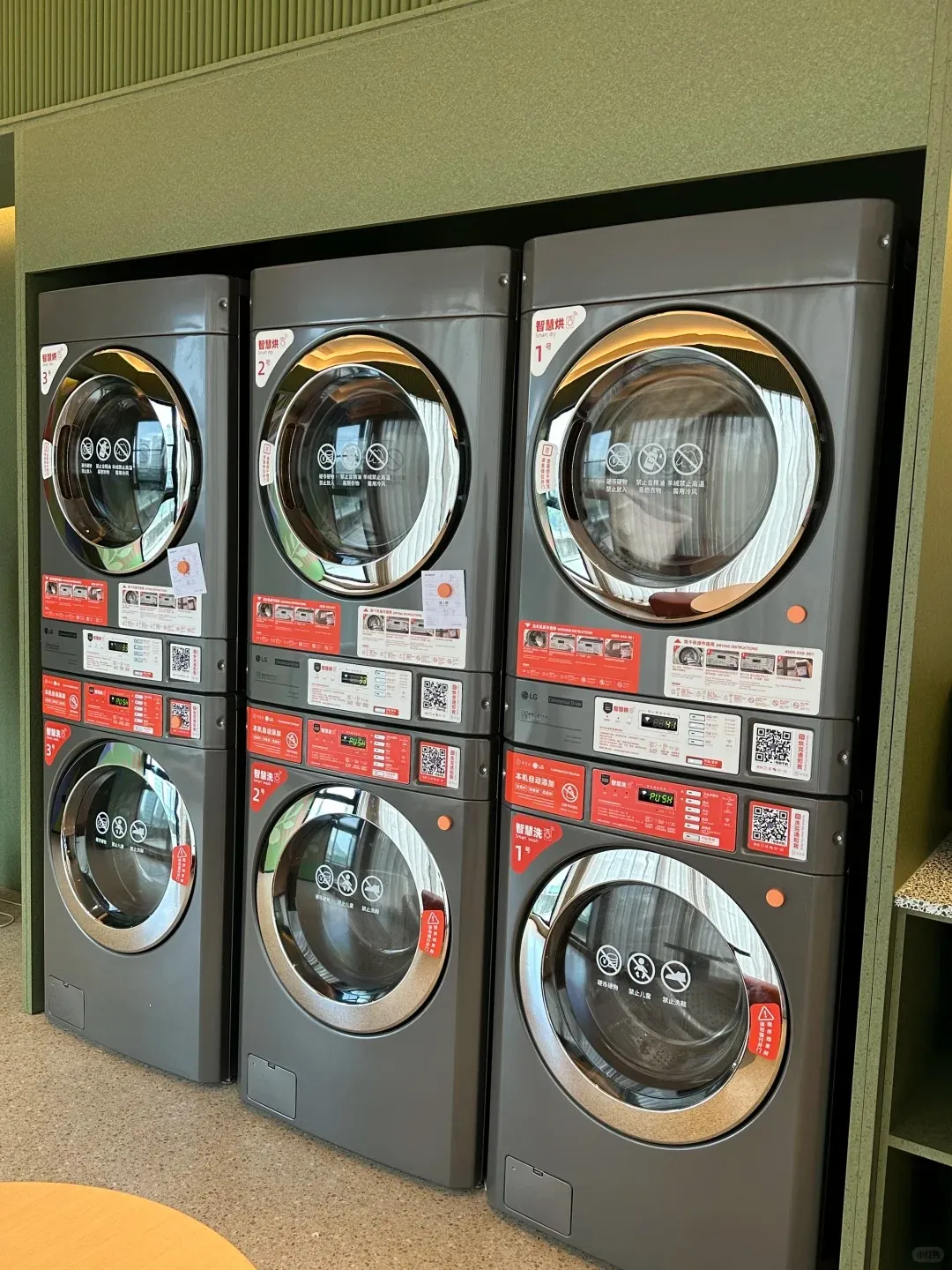
Modern laundry facilities in China, like these stacked washer-dryer units, are often found in hotels or dedicated laundromats. Deciphering the various wash cycles and payment methods, frequently conducted via QR codes, is a key part of the laundry experience for travelers.
Drying Clothes in China’s Humid Climate
According to standard Chinese residential designs, tumble dryers are incredibly rare. Most local apartments and budget guesthouses rely entirely on air-drying, usually hanging clothes on enclosed balcony racks (晾衣架 – liàngyījià).
If you are traveling through southern China—such as Guangzhou, Guilin, or Shanghai—during the summer “plum rain” season (梅雨 – méiyǔ), air-drying can be a nightmare. The air is so thick with humidity that a cotton t-shirt can take three days to dry, eventually developing a distinct, sour damp smell.
What to Know Before You Go: Quick-Dry Strategies
To avoid packing damp, foul-smelling clothes into your suitcase before your next bullet train ride, adopt these local strategies:
- Use the “Extra Spin” cycle: Always run your clothes through a second 脱水 (Spin) cycle to extract as much moisture as possible before hanging them.
- Leverage the AC: Hang your damp clothes directly in the path of your hotel room’s air conditioning unit. The AC acts as a dehumidifier and will dry clothes overnight.
- The Hairdryer Trick: For thick items like socks or jeans waistbands that refuse to dry, use the hotel hairdryer on medium heat for 5-10 minutes before packing.
If you absolutely need a tumble dryer (烘干机 – hōnggānjī), you must filter your hotel search specifically for properties that list them. Major booking platforms like Trip.com allow you to filter for “Laundry Room” amenities, which usually guarantees access to a commercial dryer.