
Top 5 Translation Apps for Surviving China: Offline & Real-Time Tools

Arriving in Beijing, the sheer scale of the city hits you instantly. Between the chaotic symphony of honking scooters, the rich smell of roasted street-side sweet potatoes, and the maze of digital payment codes, you quickly realize your high school Mandarin won’t cut it. Finding the best translation apps for China travel isn’t just about convenience in 2026; it is a sheer survival tactic. Whether you are trying to decipher a complex regional hotpot menu or asking a DiDi driver to find your hidden alleyway hotel, having the right digital tools downloaded before you land will completely make or break your trip.

Quick Summary: Key Takeaways for Your Trip

  • Google Translate works offline in China: Download the Simplified Chinese language pack before arriving, as the live web version requires a VPN to bypass local network restrictions.
  • WeChat is mandatory for daily survival: Beyond messaging, its built-in scanner instantly translates real-world text, menus, and the mini-programs you need for daily mobile payments.
  • Baidu Translate beats Western apps for local nuance: As a domestic app, it handles regional slang, complex dish names, and poorly lit restaurant menus far better than its competitors.
  • A reliable connection is crucial: Most translation apps require stable internet for advanced voice features. Secure a travel eSIM that bypasses the Great Firewall before landing.

Summarize with :

What is the 144-Hour Visa-Free Transit?

The 144-hour visa-free transit is an official policy by China’s National Immigration Administration allowing eligible travelers from 54 countries to explore specific Chinese regions for up to six days without a prior visa. You must possess a valid passport and a confirmed onward ticket to a third country.

How to Stay Connected: The Great Firewall Bypass

To use real-time voice translation, you need reliable data. While offline language packs are great backups, the Great Firewall blocks standard foreign SIMs from accessing Google services and Western servers. Getting a specialized travel eSIM is the most frictionless way to keep your apps running smoothly in 2026.

💡 Editor’s Pick: We recommend Nomad eSIM for China because it reliably bypasses the Great Firewall with stable speeds. Use code JORICAQLKF at checkout to get $5 USD off your first data plan.

Why You Can’t Just Rely on English in China

Many first-timers assume major hubs like Shanghai or Shenzhen will be entirely English-friendly. This is a common misconception to avoid. Step two streets away from the Bund, and English signs vanish completely. You will quickly find yourself pointing at a bubbling vat of spicy broth, trying to buy a ¥2 bottle of Nongfu Spring water from a vendor who only speaks the local Wu dialect.

What to Know Before You Go: Don’t waste time looking for English menus in authentic eateries. The best food in China is found in places where the menu is a text-only poster slapped on a tiled wall. This is where your smartphone’s image recognition apps become your absolute best friend.
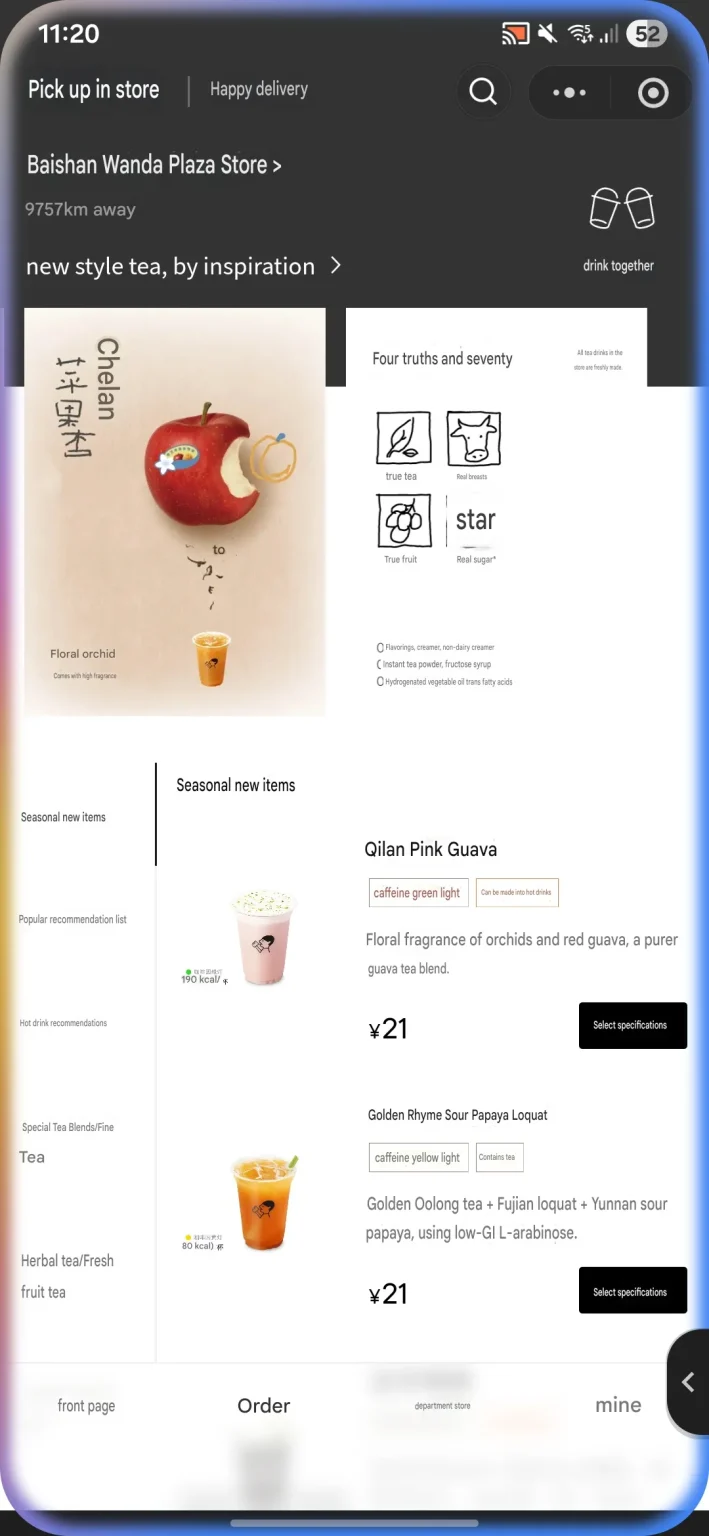
A screenshot of a mobile application from a Chinese tea shop. The app displays the store 'Baishan Wanda Plaza Store', delivery options, and a menu featuring drinks like 'Qilan Pink Guava' and 'Golden Rhyme Sour Papaya Loquat' with images, prices, calorie information, and ingredient descriptions.

Exploring local flavors in China often means navigating unique ordering apps. This detailed menu from a Chinese tea shop illustrates why having a reliable translation app – one of the ‘Top 5 Translation Apps for Surviving China’ – is crucial for understanding specific ingredients, caffeine levels, and making informed choices.

The 5 Best Translation Apps for China Travel

1. Google Translate: The Reliable Offline Savior

Yes, Google Translate works in China—if you prepare correctly. While the live web version is blocked without a VPN, the mobile app functions perfectly if you download the Simplified Chinese pack beforehand. Its camera translation is highly intuitive for reading street signs and basic grocery packaging.

2. WeChat: The Essential Daily Life Translator

WeChat is the undisputed operating system of China. Beyond paying for your subway ride, its built-in translation tool is a lifesaver. Simply long-press any Chinese text message from a driver to translate it, or use the “Scan” feature to instantly overlay English text onto physical menus and museum plaques.

3. Baidu Translate: The Local Menu Master

If you want the most accurate translations of complex Chinese dishes, Baidu Translate is superior. Developed locally, its AI understands cultural context better than Western apps. When Google tells you a dish is “Husband and Wife Lung Slices,” Baidu correctly identifies it as sliced beef and ox tongue in chili sauce.

4. Microsoft Translator: The Real-Time Voice Champion

For live conversations, Microsoft Translator is exceptional. Its split-screen voice feature allows you to speak into your phone in English, while the other person reads the Chinese text and replies. It operates smoothly on Chinese networks without a VPN and is incredibly helpful when negotiating at local markets.

5. U Dictionary (Youdao): The Deep-Context Decoder

Often overlooked by tourists, U Dictionary (powered by Youdao) is a favorite among expats. It features a “magic translation ball” that floats over other applications, instantly translating text within local apps like Meituan or Dianping when you are trying to order late-night food delivery to your hotel.

Insider Tip: The Handwritten Menu Mistake

Here is an honest assessment from years on the ground: do not trust AI with handwritten Chinese characters. At smaller, family-run noodle shops, menus are often scribbled hastily on whiteboards. Image recognition apps will hallucinate wild, nonsensical translations here.

Instead of struggling with your camera, use your app’s voice feature to politely ask the staff, “What is your signature dish?” (Nǐmen de tèsè cài shì shénme?). Locals appreciate the effort, and you’ll end up with a much better meal than if you blindly pointed at a mistranslated whiteboard.

Logistics: Navigating Trains and Payments

Translation apps are only half the battle; you also need to navigate local infrastructure. According to the official 12306 rail policy, foreign travelers can now seamlessly book high-speed rail tickets using their passports directly on the English version of the 12306 website or via the Trip.com app.

When you arrive at the chaotic, cavernous Beijing South Railway Station, use your translation app’s camera to read the massive digital departure boards. Pair this with Alipay or WeChat Pay, which now seamlessly accept international Visa and Mastercards for everything from a ¥5 subway token to a ¥500 bullet train ticket.
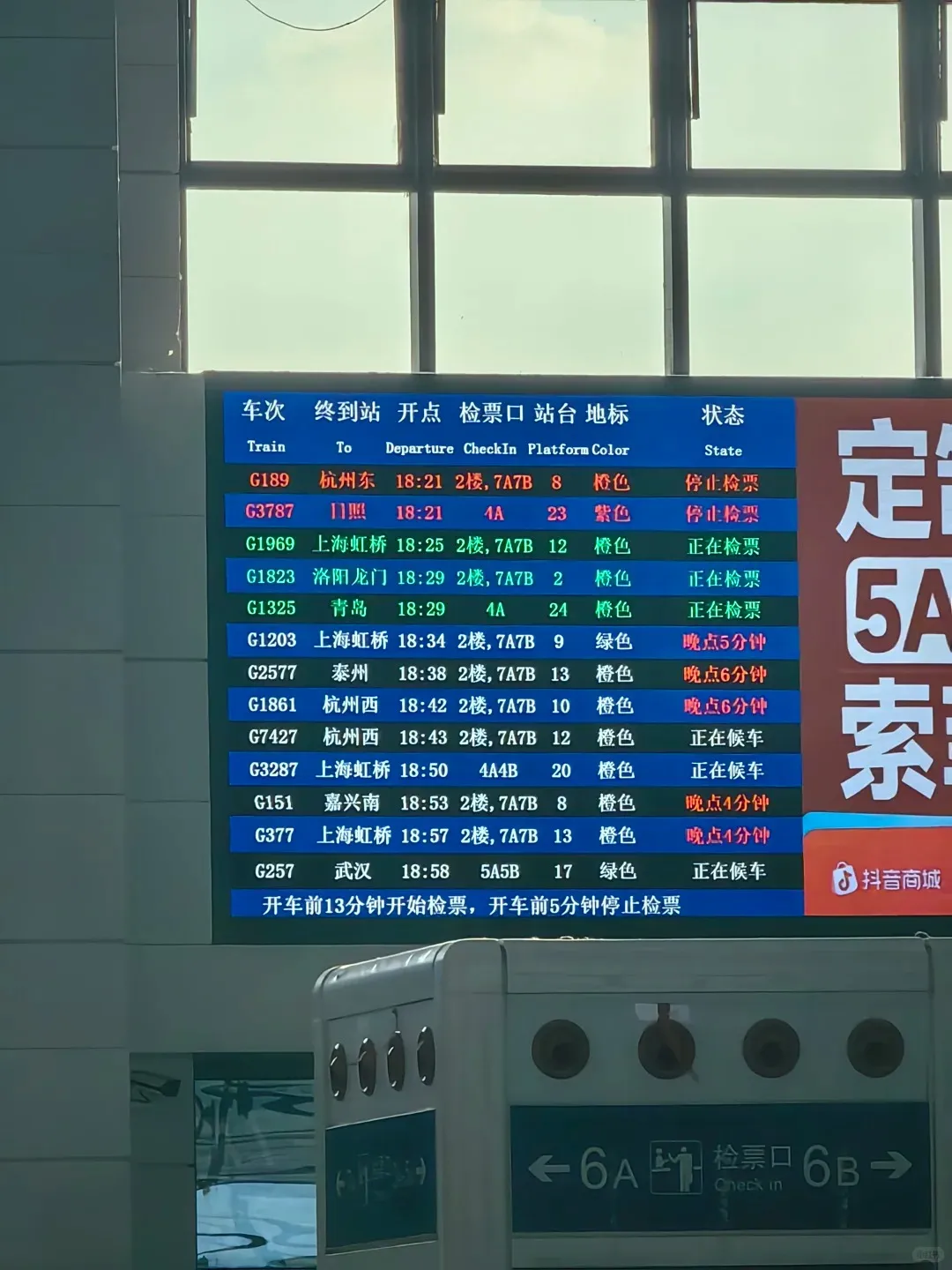
A digital departure board at a busy Chinese high-speed railway station, displaying train information in both Chinese and English. Columns include Train, To, Departure, CheckIn, Platform, Color, and State. Multiple train entries are visible with numbers, destinations like Hangzhou East and Shanghai Hongqiao, departure times, gate numbers, and statuses such as 'Stopped check-in,' 'Checking in,' 'Waiting,' and 'Delayed 6 minutes.' Below the main list, text in Chinese and English explains check-in timings. A grey check-in gate with '检票口 Check in' and arrows for gates 6A and 6B is partially visible at the bottom.

Navigating China’s efficient high-speed rail network is made easier with departure boards often featuring both Chinese and English. However, for those crucial last-minute announcements or specific instructions—like the detailed check-in times shown here—a trusty translation app, as featured in our guide, can be a lifesaver for ensuring a smooth journey.


Frequently Asked Questions: China Travel Apps

Does Google Translate work in China?

Yes, Google Translate works in China if you prepare correctly by downloading the Simplified Chinese language pack before arriving. The offline mobile app functions perfectly for reading street signs and menus. However, the live web version requires a VPN or travel eSIM to bypass local network restrictions.

While Google Translate is excellent for reliable offline use, Baidu Translate is the best tool for local accuracy. Developed domestically, Baidu is far superior at translating complex restaurant menus and regional slang. Additionally, WeChat’s built-in translation scanner is an absolute must-have for daily life and digital payments.

The most frictionless way to stay connected and bypass the Great Firewall in 2026 is by purchasing a specialized travel eSIM before you land. This allows you to maintain a reliable data connection for real-time voice translation and Western apps without the hassle of downloading a separate VPN.

No, you do not need to speak Mandarin to visit China, even as a first-time traveler. By equipping your smartphone with the right digital tools, offline language packs, and a travel eSIM, you can easily navigate high-speed trains, order authentic food, and communicate with locals.

Conclusion: Ready to Navigate China Like a Pro?

Surviving and thriving in China without speaking Mandarin is entirely possible in 2026. By layering these specific translation tools—Google for offline reliability, WeChat for daily integration, and Baidu for local accuracy—you unlock a much deeper, more authentic travel experience. Stop worrying about the language barrier and start embracing the adventure.

Book your bullet train tickets today, download your offline language packs, and be sure to read our comprehensive guide on setting up Alipay for foreigners before you board your flight to China!

Similar posts to this one

Interior view of a modern Hema Freshippo supermarket. A prominent blue sign features a white hippo logo and the Chinese characters '盒马鲜生' (Hema Xiansheng). Below the sign, multiple glass display cases are filled with various packaged fresh foods, salads, and desserts. Signs overhead read 'Food & Salad' and 'Light Food & Salad'.

The Hema (Freshippo) Experience: A Tourist's Guide to China's Futuristic Supermarket

Welcome to the bleeding edge of retail in 2026. If you are traveling to China, visiting a traditional wet market [...]

A table on an outdoor balcony featuring two glasses of white wine, a silver teapot, small plates of snacks including fruit, nuts, cookies, and asparagus. In the background, historic European-style buildings and construction scaffolding line a street, with the Oriental Pearl TV Tower visible in the distance.

How to Order Coffee in China: A Guide for Caffeine Lovers

If you think a trip to China means resigning yourself to two weeks of green tea, think again. By 2026, [...]

Panoramic view of the Shanghai Pudong skyline at sunset, featuring the red-and-white Oriental Pearl TV Tower, the Shanghai Tower, and other modern skyscrapers. The Huangpu River flows in the foreground with a white boat, and a person walks on a tiled promenade with a decorative black and red railing.

Essential China Travel Apps: Didi, Baidu Maps & WeChat Mini-Programs

If you are planning a trip to China in 2026, forget everything you know about cash-based travel. Landing in Beijing [...]

Get the China Arrival Survival Kit

Planning a trip here has a steep learning curve. Join our newsletter and receive our free “Day One Checklist” covering everything from setting up Alipay and WeChat to bypassing the internet firewall.