


What is Hema (Freshippo)?
Hema (branded internationally as Freshippo) is Alibaba’s “New Retail” supermarket chain in China that seamlessly blends online and offline shopping. It functions as a high-tech grocery store, a live seafood restaurant, and an e-commerce fulfillment center where overhead conveyor belts transport digital orders to delivery drivers.
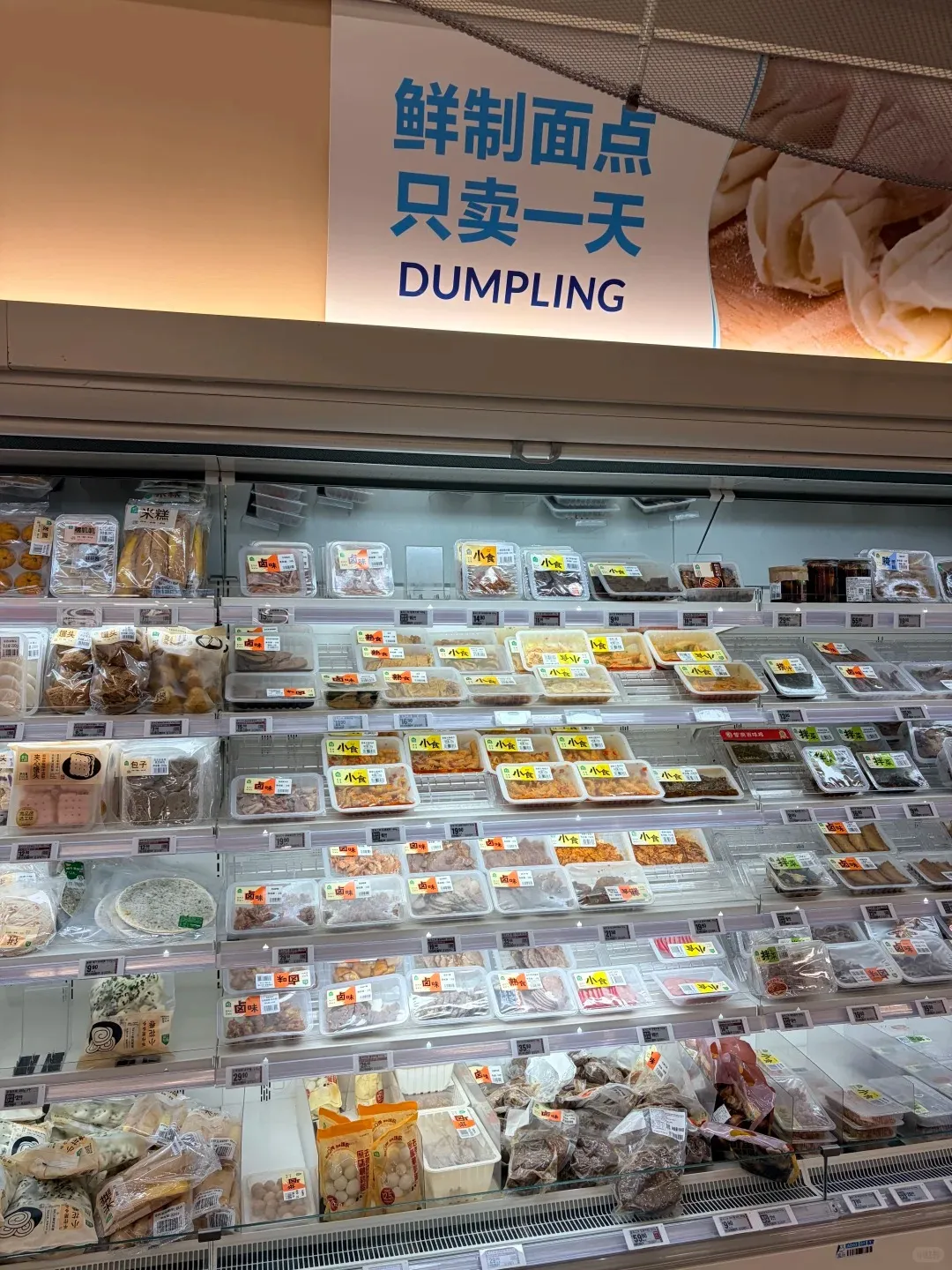
Hema’s commitment to freshness is on full display in sections like this, offering a vast array of freshly made dumplings and other convenient snacks. The sign proudly declares these items are ‘only sold for one day,’ highlighting the futuristic supermarket’s dedication to quality and quick turnaround for busy shoppers and curious tourists alike.
How to Shop at Freshippo: A Step-by-Step Guide for Foreigners
Walking into a Freshippo store for the first time is a sensory overload. Blue-shirted employees are running down aisles, barcode scanners are beeping constantly, and robotic carts are zipping past your ankles. Here is how to navigate the chaos like a local.
Getting Connected and Setting Up Alipay
Before you even step foot in the store, you need a robust mobile internet connection. Hema’s entire ecosystem relies on you scanning QR codes with your smartphone. We highly recommend setting up a reliable travel eSIM before you land to bypass the Great Firewall.
💡 Editor’s Pick: We recommend Nomad eSIM for China because it reliably bypasses the Great Firewall with stable speeds.
Once connected, ensure you have downloaded Alipay. As of 2026, Alipay allows tourists to easily bind foreign Visa, Mastercard, and Discover cards directly to the app. You cannot use cash at Hema. Every checkout kiosk is a digital screen requiring an Alipay QR code scan.
Scanning, Bagging, and Checking Out
Every item in the store features a digital price tag. If you scan the barcode using the Taobao or Alipay app, you can see the product’s origin, nutritional information, and customer reviews. When you are ready to leave, simply take your items to the self-checkout kiosks.
Insider Tip: Bring your own reusable bag. China has strict plastic reduction laws, and purchasing a Hema-branded reusable bag at the kiosk will cost you an extra 3 to 5 RMB.
What to do next
- Need full app setup for China travel? Read China Travel Apps Guide 2026.
- Want realistic trip cost planning? Read China Travel Cost Guide 2026.
- Need first-time safety/logistics context? Read Solo Female Safety Guide.
The In-Store Dining Experience: Catch, Cook, and Eat
The crown jewel of the Hema experience is the live seafood section. The air here is thick with humidity and the salty smell of the ocean. You will hear the constant splashing of Boston lobsters, Dungeness crabs, and razor clams in highly oxygenated, glowing blue tanks.
You literally grab a net, catch your dinner, and hand it to a staff member in rubber boots. They will weigh it, print a barcode, and direct you to the cooking counter. You can choose your preparation style: steamed, baked with cheese, or wok-fried with garlic and black bean sauce.
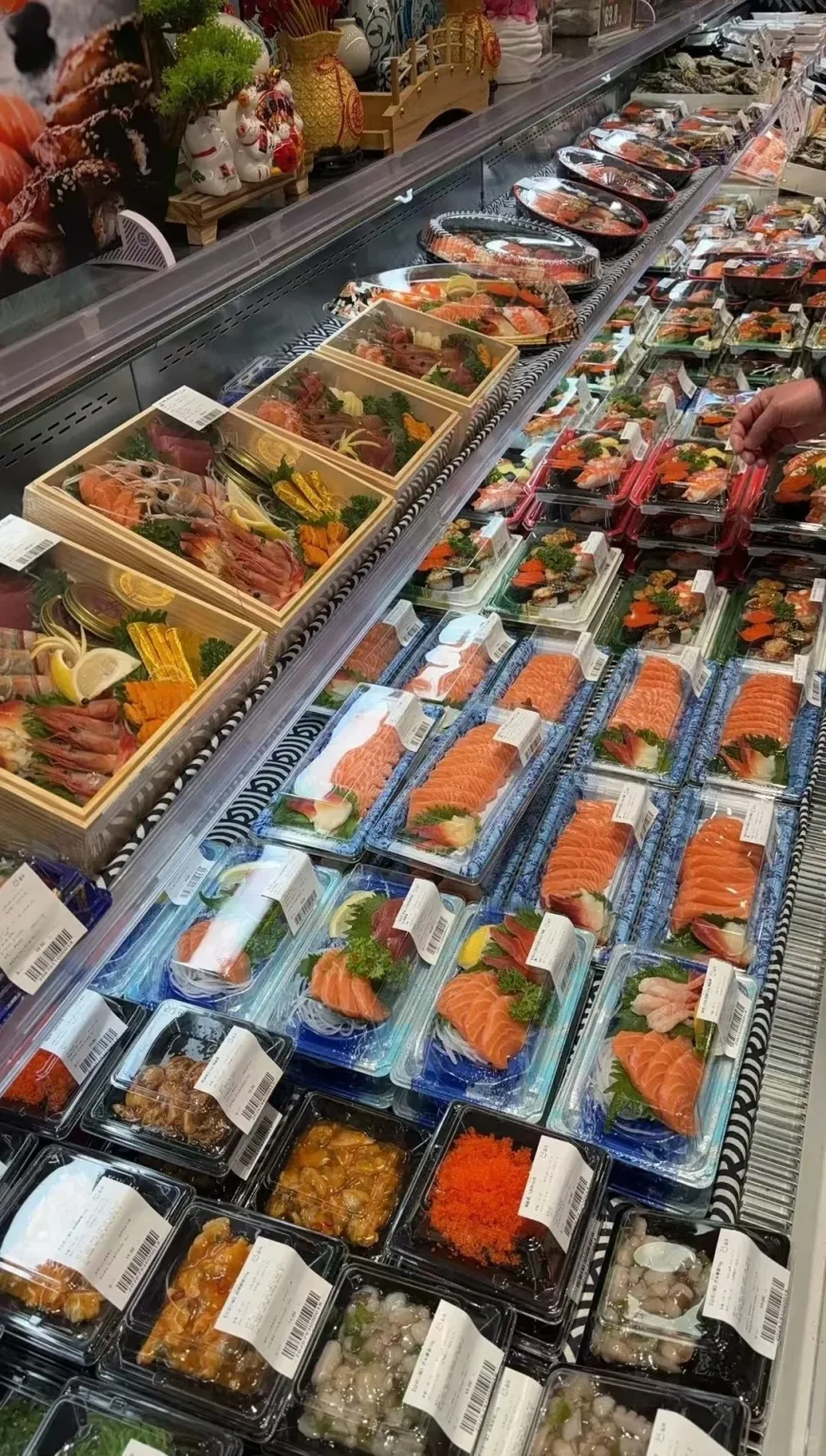
Explore Hema’s extensive prepared food section, a hallmark of its ‘futuristic supermarket’ experience. This vibrant display showcases an incredible variety of fresh sushi, sashimi, and seafood bowls, offering gourmet convenience for shoppers on the go.
What to Know Before You Eat
While the seafood is spectacular, avoid the pre-packaged sushi section. It is highly overrated, often sits under harsh fluorescent lights for hours, and pales in comparison to the freshly wok-fried dishes. Instead, spend your money on a live lobster (usually around 99 to 120 RMB) and a plate of garlic scallops.
Be prepared for the dining area to be loud and aggressive. Seating is unassigned, meaning you must hover near tables and claim your spot the second another group stands up. Do not wait to be seated by a host; you will be waiting forever.
Hotel Delivery: Is the App Worth It for Tourists?
You have probably read about Hema’s legendary 30-minute delivery radius. Locals use the Hema app to order groceries that arrive at their doorsteps before they even finish commuting home.
Here is the honest truth for tourists: skip the delivery. The dedicated Freshippo app lacks comprehensive English support. Navigating the Chinese-only UI to input a highly specific hotel address, room number, and contact phone number is a frustrating nightmare for temporary visitors.
Furthermore, the magic of Hema is in the physical experience. Watching the overhead conveyor belts whisk bags across the ceiling is something you simply cannot appreciate from your hotel room.
Practical Logistics: Locations, Hours, and Prices
Hema stores are ubiquitous in Tier 1 cities like Beijing, Shanghai, Guangzhou, and Shenzhen, usually located in the basements of major shopping malls. You can easily find the nearest one by typing “Hema” or “Freshippo” into Apple Maps or the Chinese mapping app Amap (Gaode Ditu).
- Operating Hours: According to Alibaba Group’s official 2026 retail policies, standard Hema locations operate from 8:00 AM to 10:00 PM daily. The seafood cooking counters usually close around 9:00 PM.
- Pricing: Hema is slightly more expensive than a traditional Chinese wet market but cheaper than imported grocery stores. A standard 500ml bottle of Nongfu Spring water costs about 2.50 RMB, while imported cherries might run you 60 RMB per box.
- Restrooms: Because they are located inside malls, Hema stores do not usually have their own dedicated restrooms. You will need to exit the supermarket and use the main mall facilities.