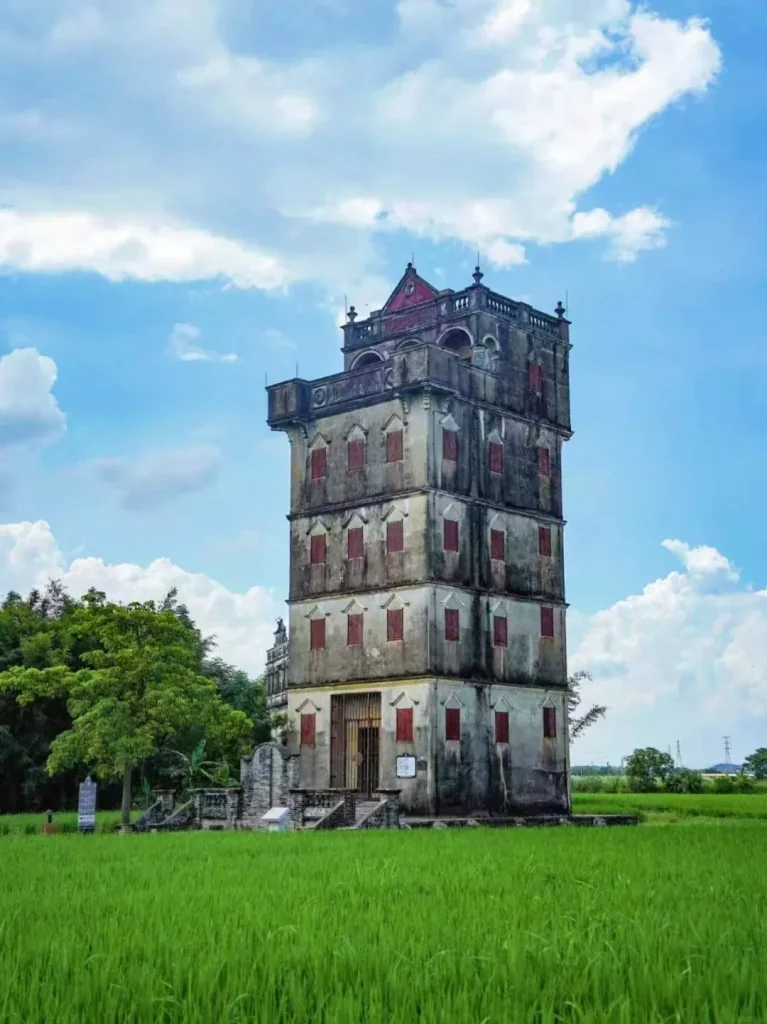



What is the 144-Hour Visa-Free Transit Policy?
According to the China National Immigration Administration (2026 update), the 144-hour visa-free transit allows eligible passport holders to enter Fujian province without a prior visa, provided they hold a confirmed onward ticket to a third country within 144 hours. This covers travel between Fuzhou, Xiamen, and the Tulou regions.
Logistics: Navigating the Journey South
Getting to the Tulou from Fuzhou is a two-step process. You will trade the urban sprawl for subtropical mountains, which means transitioning from high-tech transit to rural negotiation.
Step 1: Booking Your High-Speed Train
Your destination is Nanjing Station (南靖站), not to be confused with the major city of Nanjing in Jiangsu province. According to the official 12306 rail policy, foreign travelers can now fully verify their passports digitally within the English 12306 app.
Book a morning G-class or D-class train departing from Fuzhou Station or Fuzhou South Station. The journey takes approximately 2 hours and costs roughly 120 RMB for a second-class seat. Try to book the 7:30 AM or 8:00 AM departure to maximize your daylight hours.
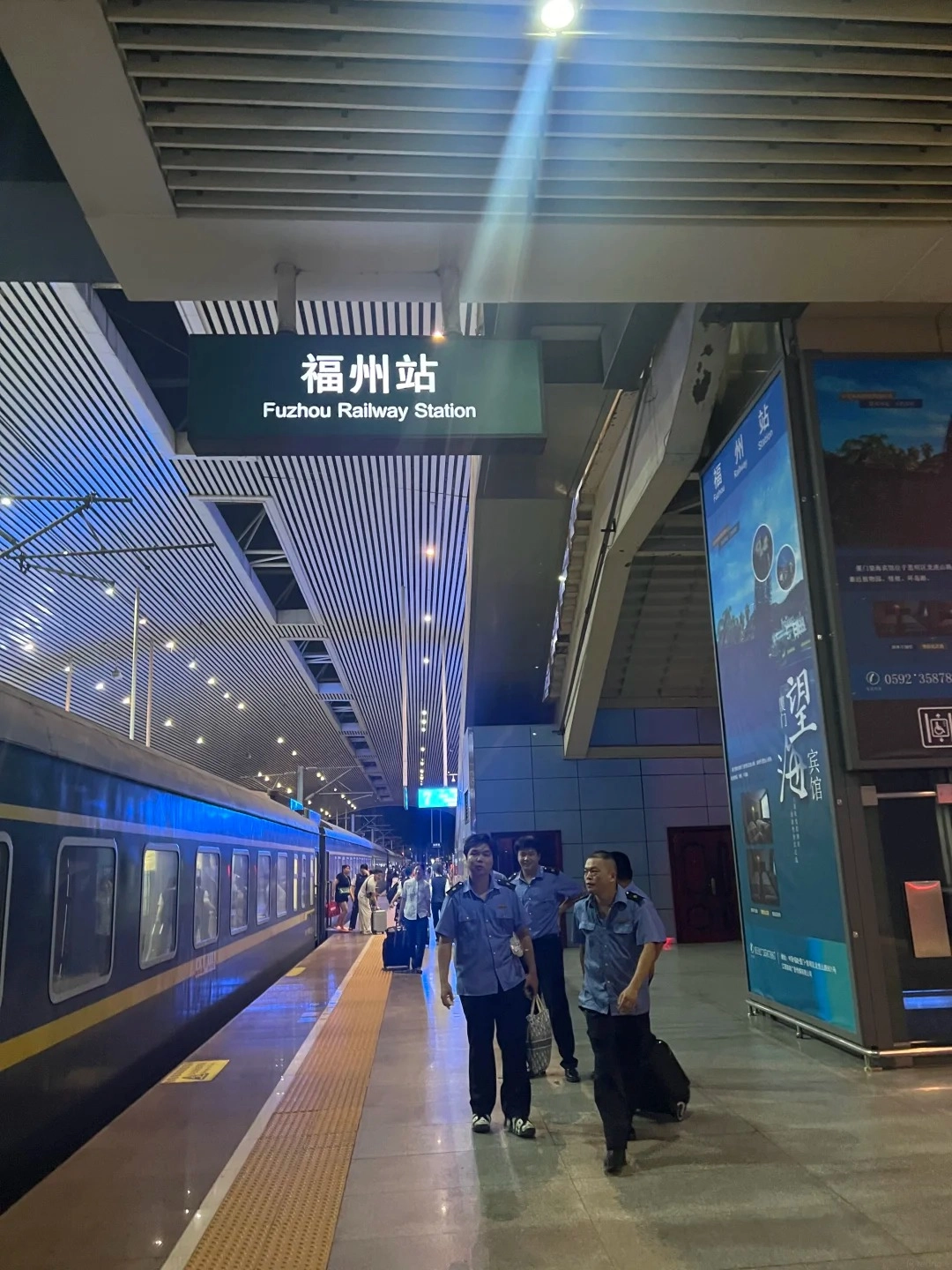
Begin your journey to the Fujian Tulou from Fuzhou Railway Station. This modern station is your gateway to exploring the unique ancient earthen buildings of Fujian province.
Step 2: Hiring a Local Driver
Once you exit the ticket gates at Nanjing Station, the humid air will hit you, closely followed by a swarm of local taxi drivers. Do not expect to use Didi here. Ride-hailing cars rarely venture into the deep mountain roads where the Tulou are located.
You need to charter a driver for the day. A fair price in 2026 for a standard 4-seater sedan is between 300 and 400 RMB for a full day (usually 6-8 hours). Use the WeChat translation feature to agree on the price, the specific villages you want to visit, and the return time to the station before getting in the car.
Essential Tech: Staying Connected in the Mountains
The Hakka villages are nestled in deep valleys. While China’s 5G network is incredibly robust, switching between cell towers on winding mountain roads will drop your signal. You need a reliable connection to translate conversations with your driver and pay for entrance tickets via Alipay.
💡 Editor’s Pick: We recommend Nomad eSIM for China because it reliably bypasses the Great Firewall with stable speeds.
Ensure you have your digital wallets set up, but again, carry physical RMB. Some elderly vendors selling tea or fruit outside the earthen buildings still prefer, or only accept, cash.
Insider Tip: Skip the “Four Dishes and One Soup”
If you search for the Fujian Tulou, you will immediately see aerial photos of the Tianluokeng cluster—famously dubbed “four dishes and one soup” for its layout. Skip it.
Because it is the most famous, it is the most congested. By 10:30 AM, the narrow wooden corridors are choked with domestic tour groups following guides with loud portable microphones. The authentic atmosphere is completely drowned out by the commercial chaos.
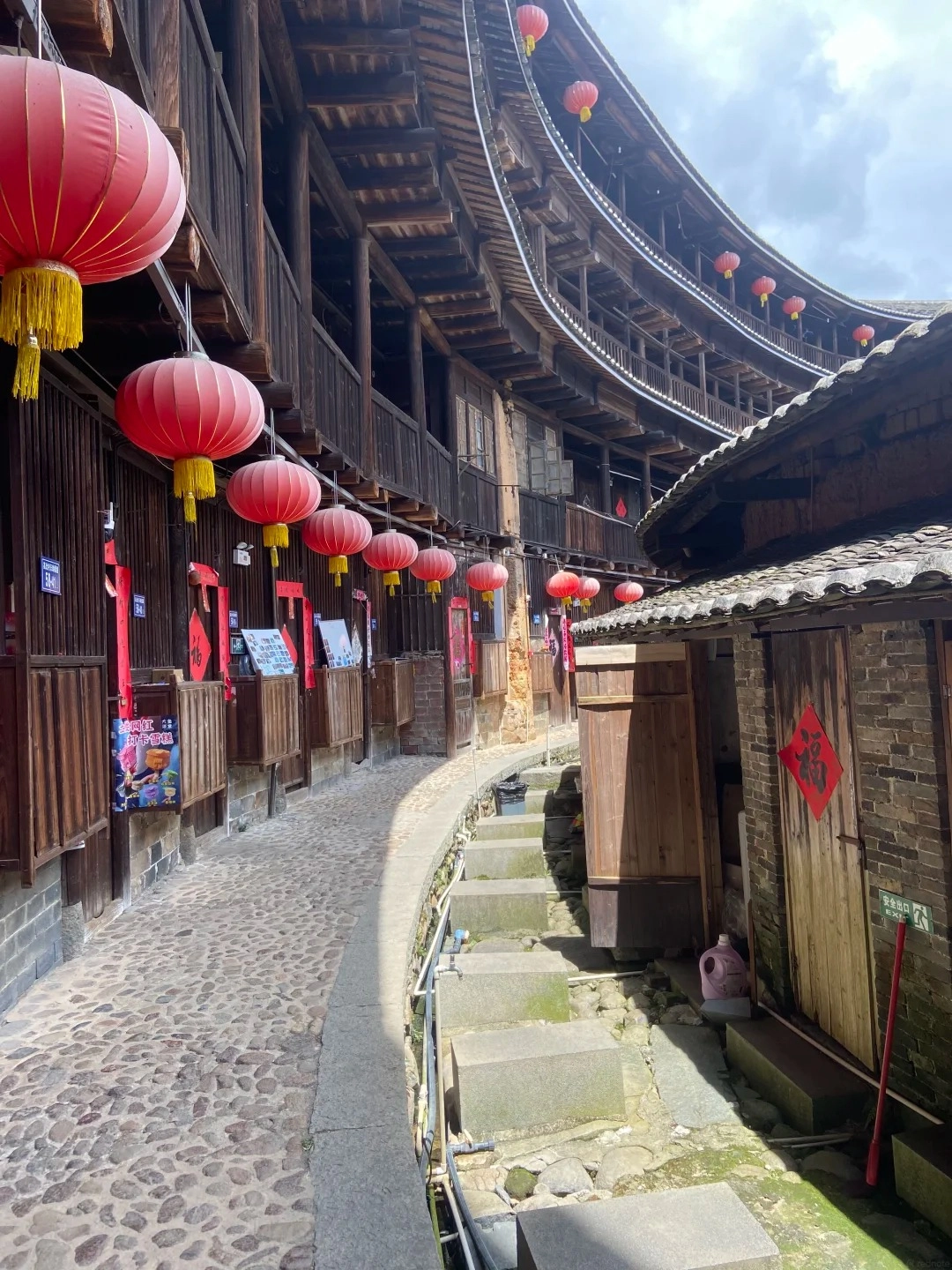
Step into the heart of a Fujian Tulou, a UNESCO World Heritage site and a testament to the unique Hakka architecture. These iconic circular earth buildings, once communal homes, offer a glimpse into a rich cultural past, perfect for a day trip from Fuzhou.
Where to Go Instead: Hekeng and Hegui
Tell your driver to take you to the Hekeng Tulou Cluster or the Hegui Building in Yunshuiyao. Hekeng is much quieter. Here, you can actually smell the burning pine wood from the kitchens and the sweet, roasted scent of local oolong tea leaves drying on bamboo mats.
At the Hegui Building, you can experience a true architectural marvel. It is a five-story square fortress built entirely on a marsh. If you jump lightly in the cobblestone courtyard, you can feel the ground physically yield and bounce beneath your feet. It is a sensory experience you cannot get in the overcrowded clusters.
Real Talk: Crowds, Costs, and Navigation
Do not romanticize the amenities in these rural areas. While the Tulou are UNESCO World Heritage sites, they are still active farming communities. Expect muddy paths if it has rained, and be prepared for squat toilets with no provided paper.
Pricing inside the villages can vary wildly based on how tourist-heavy they are. In the heavily trafficked Yunshuiyao, a simple bottle of Nongfu Spring water will cost you 5 RMB. Down the road in the quieter Taxia village, that exact same bottle is the standard 3 RMB.
Finally, respect the residents. These are not just museums; they are apartment complexes. Do not wander up the wooden stairs to the second or third floors unless a resident explicitly invites you up (often for a small fee of 5-10 RMB). The floorboards are 300 years old, and the echoing footsteps of uninvited tourists are a major nuisance to the families living there.