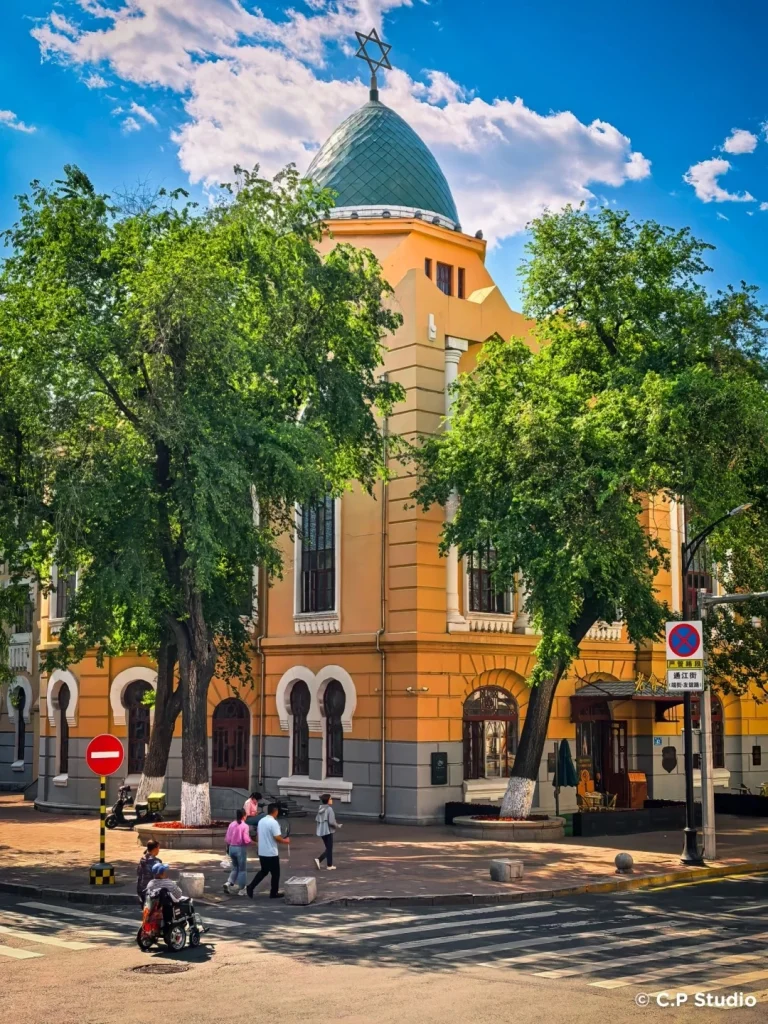



What is Harbin’s Central Street?
Harbin’s Central Street (Zhongyang Dajie) is a 1.45-kilometer pedestrian avenue originally built in 1898 by Russian railway engineers. Today, it stands as China’s longest pedestrian street, serving as an open-air architectural museum featuring 71 historic European-style buildings, including Renaissance, Baroque, and Eclectic designs.
Logistics: Getting There and Staying Connected
Central Street is located in the old Daoli District. If you are arriving via the high-speed rail network, a taxi from Harbin Railway Station takes about 10 minutes and costs roughly 15 RMB. According to the official 12306 rail policy, you can book your bullet train tickets directly using your passport up to 15 days in advance.
Navigating Harbin requires a reliable internet connection for translation apps and mobile payments. Relying on public Wi-Fi is a major mistake, as most networks require a Chinese phone number to log in. I highly recommend installing an eSIM before you land.
💡 Editor’s Pick: We recommend Nomad eSIM for China because it reliably bypasses the Great Firewall with stable speeds.
Once connected, you can easily use DiDi (the Chinese ride-hailing app) via the Alipay mini-program to get dropped off right at the southern entrance. Do not try to hail a cab off the street in winter; the wait times in the freezing cold are brutal.
The Harbin Zhongyang Dajie Walking Guide: A Sensory Journey
Start your walk at the southern end and head north. The first thing you will notice is the unique texture beneath your boots. The street is paved with distinctive “bread stones”—rectangular cobblestones laid in 1924 that perfectly resemble loaves of Russian bread.
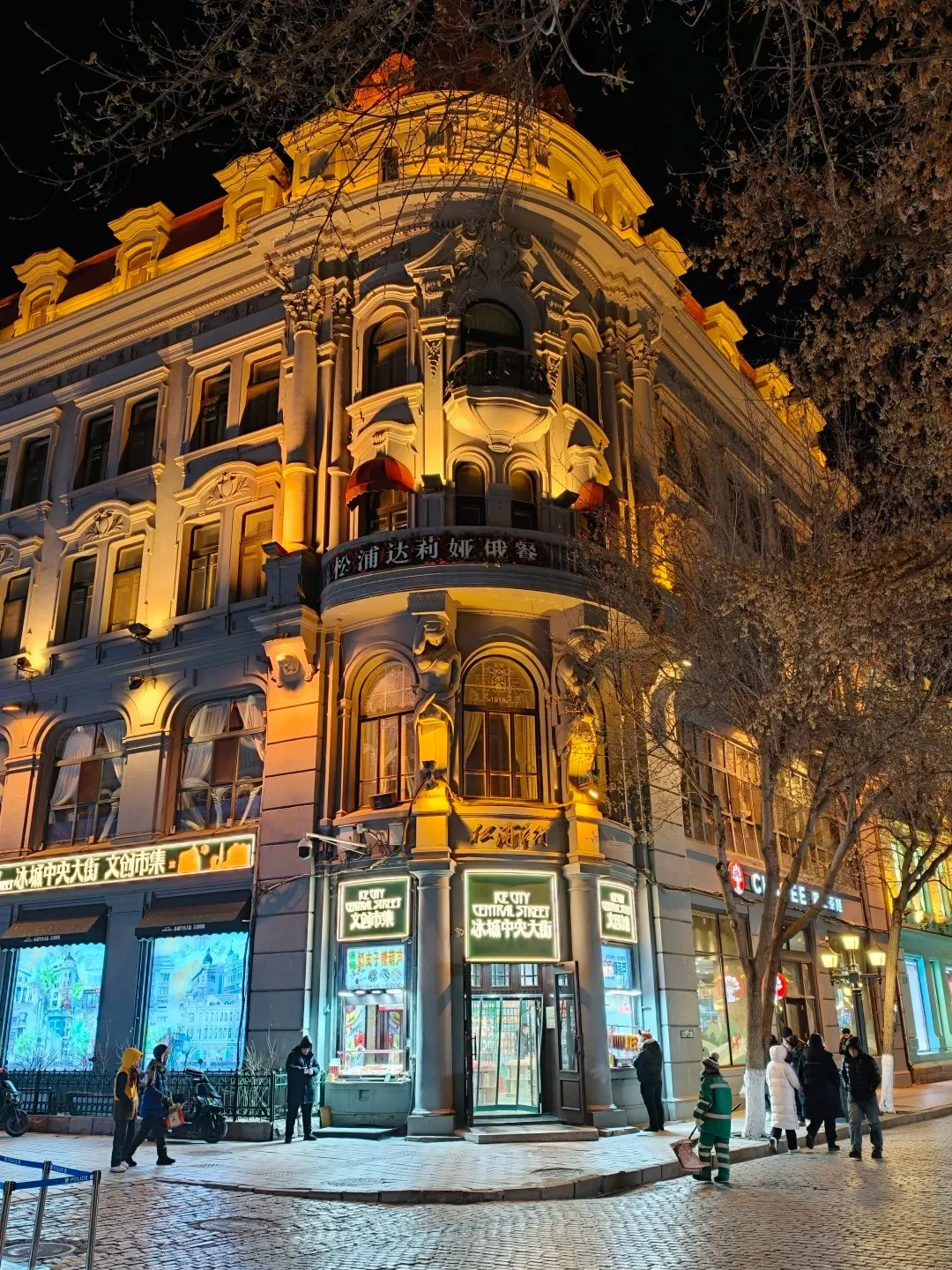
Step back in time on Harbin’s Zhongyang Dajie, where dazzling architecture meets the buzz of a vibrant winter night. Explore the historic street and discover delicious local flavors waiting around every corner.
As you walk, the smell of roasted sweet potatoes and charcoal smoke from street vendors fills the icy air. The crowds here are thick, especially during the Harbin International Ice and Snow Festival. You will need to weave through groups of tourists posing in front of the illuminated ice sculptures tucked into the street corners.
Insider Tip: What to Skip and What to Savor
Skip the overpriced “authentic” Russian caviar dinners advertised by touts along the main avenue. Many of these restaurants cater strictly to tourists and charge premium prices for mediocre, mass-produced meals. Instead, dive into the side streets for a more genuine local experience.
Head to the nearby Hongzhuan Street Morning Market (just a 5-minute walk away). Here, you can rub shoulders with bundled-up locals and buy steaming hot lamb buns or a bowl of wontons for under 10 RMB. It is a far more authentic taste of Dongbei (Northeast China) culture.
Essential Food Stops on Central Street
No walking tour of Central Street is complete without indulging in the local snacks. Harbin’s culinary scene is a fascinating blend of hearty Northeastern Chinese fare and historical Russian influence.
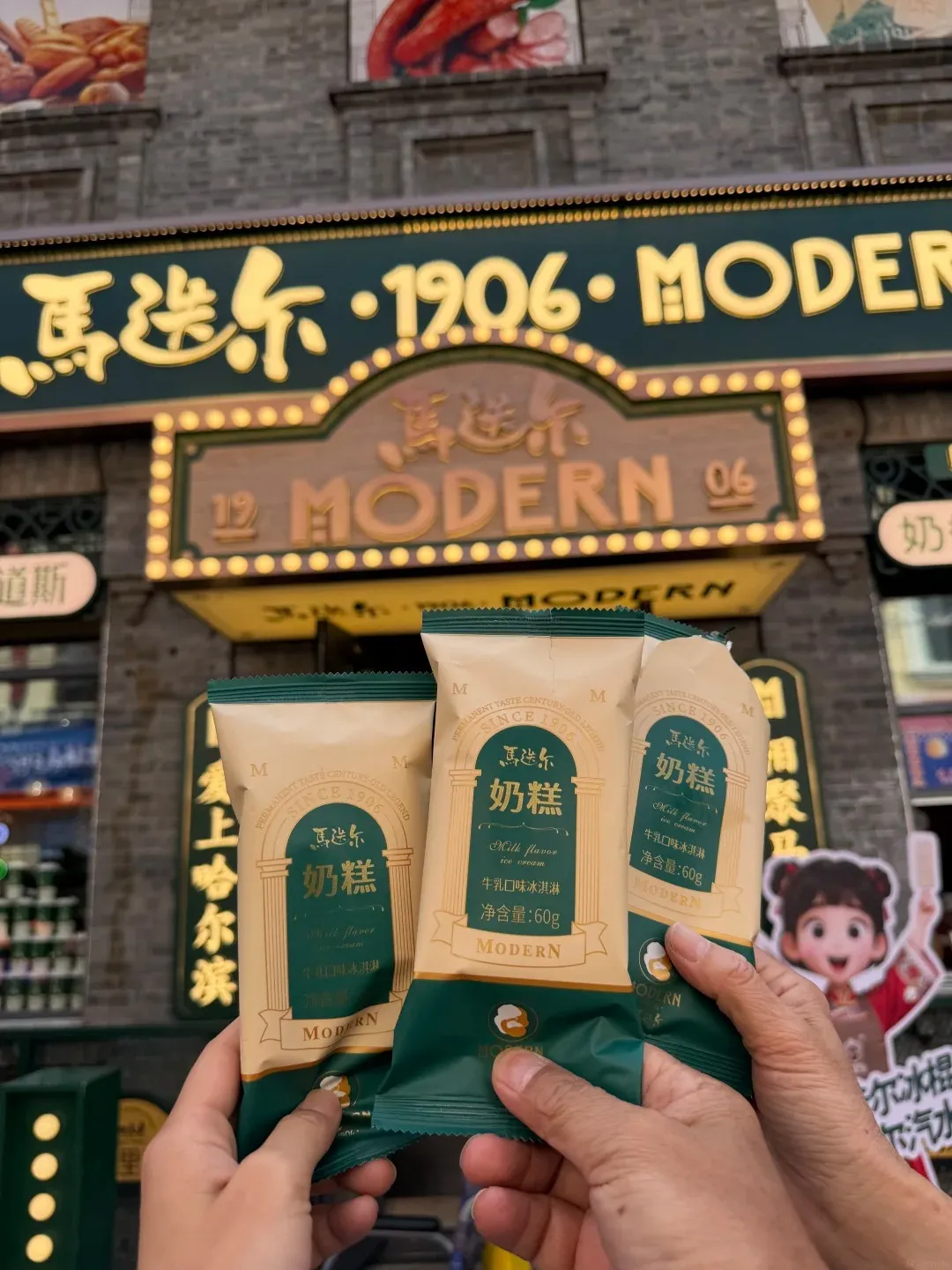
Enjoying a taste of history with Madier ice cream in front of the iconic Modern Hotel on Harbin’s Central Street, a beloved landmark since 1906.
- Madier Ice Cream (Modern Ice Cream): Found near the historic Modern Hotel, this vanilla treat is a Harbin institution. Eating a 5 RMB ice cream bar while shivering in -20°C weather is a local rite of passage. The line moves fast, but watch out for the slippery ice on the pavement nearby.
- Harbin Smoked Red Sausage (Hongchang): You will smell the garlic and wood smoke before you see the stalls. Churin (Qiulin) is the most famous brand. A vacuum-sealed pack costs around 35 RMB and makes an excellent, albeit pungent, train snack.
- Russian Khleb (Dalieba): These massive, round loaves of sourdough bread can weigh up to 2.5 kilograms. They have a hard crust but are incredibly soft inside, perfect for dipping into a hot bowl of local stew.
Practical Tips for a 2026 Visit
If you are visiting in winter, your smartphone battery will drain rapidly due to the extreme cold. Keep your phone in an inner pocket close to your body heat, and bring a high-capacity power bank. I also strongly recommend buying a pair of touchscreen-compatible gloves so you don’t risk frostbite while pulling up your Alipay QR codes.
Most shops on Central Street open around 9:00 AM and close surprisingly early by 10:00 PM. The street is beautifully lit up at night, so time your walk to start around 4:00 PM. This allows you to see the architecture in the daylight, watch the sunset, and experience the magical evening illuminations.
What is the 144-Hour Visa-Free Transit?
The 144-Hour Visa-Free Transit policy allows eligible passport holders from 54 countries to explore Harbin and the wider Heilongjiang province for up to six days without a pre-approved visa. You must have a confirmed onward flight ticket to a third country (not your country of origin) to qualify.
Plan Your Harbin Adventure
Exploring Zhongyang Dajie is just the beginning of what this magnificent winter city has to offer. From the crunch of the bread-stone pavement to the rich taste of smoked red sausage, a well-planned Harbin Zhongyang Dajie walking guide ensures you capture the true essence of the “Moscow of the Orient.”