


Essential 2026 Logistics: Visas, Trains, and Apps
What is the 144-Hour Visa-Free Transit?
The 144-hour visa-free transit allows citizens of 54 countries to explore specific Chinese regions without a visa for six days. However, this policy restricts travel to the designated entry province. To complete this multi-city Gansu Silk Road itinerary, you must apply for a standard Chinese Tourist (L) Visa.
Navigating the Great Firewall and Payments
You cannot survive in Gansu without a smartphone. Alipay and WeChat Pay are essential; even the elderly vendors selling roasted lamb at the Shazhou Night Market only accept QR codes. Furthermore, Google Maps, WhatsApp, and western social media are blocked in China. You will need a reliable travel eSIM to bypass these restrictions seamlessly.
💡 Editor’s Pick: We recommend Nomad eSIM for China because it reliably bypasses the Great Firewall with stable speeds.
For navigation, download Apple Maps (which works without a VPN in China) or the domestic Baidu Maps. To book intercity transport, use the official China Railway 12306 website or app. According to the official 12306 rail policy, high-speed train tickets are released exactly 15 days before departure at 8:00 AM Beijing time.
Days 1-2: Zhangye and the Rainbow Mountains
What is the Zhangye Danxia Landform?
The Zhangye Danxia landform is a geological wonder in Gansu province, characterized by striking, multicolored ridges of sandstone and minerals. Formed over 24 million years by tectonic plate movements and weathering, these “Rainbow Mountains” offer a vivid, surreal landscape that peaks in color intensity immediately following rainfall.
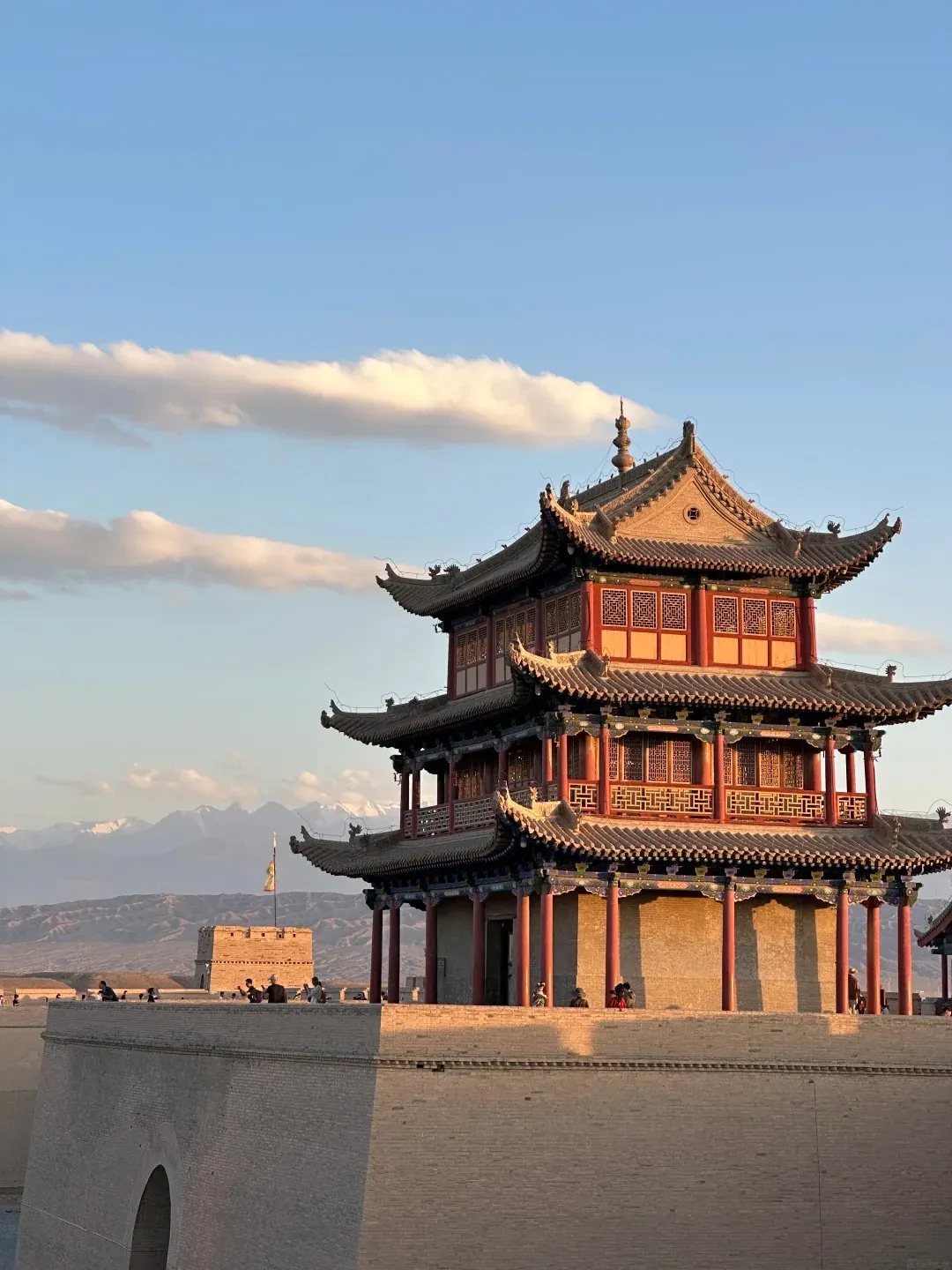
The magnificent Jiayuguan Pass, a key stop on your Silk Road itinerary, stands as the westernmost military stronghold of the Great Wall, guarding a vital gateway to Central Asia.
Arrive at Zhangye West Railway Station and base yourself in the city center. On your first afternoon, hire a taxi (roughly ¥150 round trip) to the Zhangye National Geopark. The ¥93 entrance ticket includes the mandatory hop-on, hop-off park buses.
What to Know Before You Go: Most tourists rush straight to Viewing Platform 4 for sunset. While the iridescent hills rolling off in a long panorama are stunning, it is intensely crowded. If you want a wider, less obstructed shot without fighting for tripod space, head to Platform 1. The colors are slightly less concentrated, but the sprawling scale of the rock formations is far more dramatic.
On Day 2, visit the Giant Buddha Temple in downtown Zhangye. It houses China’s largest indoor reclining Buddha, constructed in 1098. The scent of ancient wood and burning incense inside the dim hall offers a quiet contrast to the bustling city outside.
Day 3: Jiayuguan Fort and the Edge of the Empire
Take the 1.5-hour high-speed train from Zhangye to Jiayuguan South Station. Built in 1372, Jiayuguan was the final stronghold of imperial China. Beyond its walls lay the terrifying, lawless expanse of the Gobi Desert.
Is the Jiayuguan Fort Worth It?
The ¥110 entrance fee grants access to a massive, heavily restored fortress. Honestly, the pristine yellow brickwork can sometimes feel more like a movie set than an ancient ruin. However, the true magic lies in the sensory experience. Stand on the western Gate of Conciliation, feel the biting, dry wind whipping off the Qilian Mountains, and look out at the barren Mazong Shan range. You instantly understand the isolation ancient soldiers felt.
Skip the ¥80 camel rides outside the western gate—they are a tourist trap. Instead, take a ¥20 taxi to the Overhanging Great Wall (included in your fort ticket). This steep, reconstructed section snakes up a barren, dusty ridge and offers a punishing but rewarding 45-minute hike.
Days 4-5: Dunhuang and the Mogao Caves
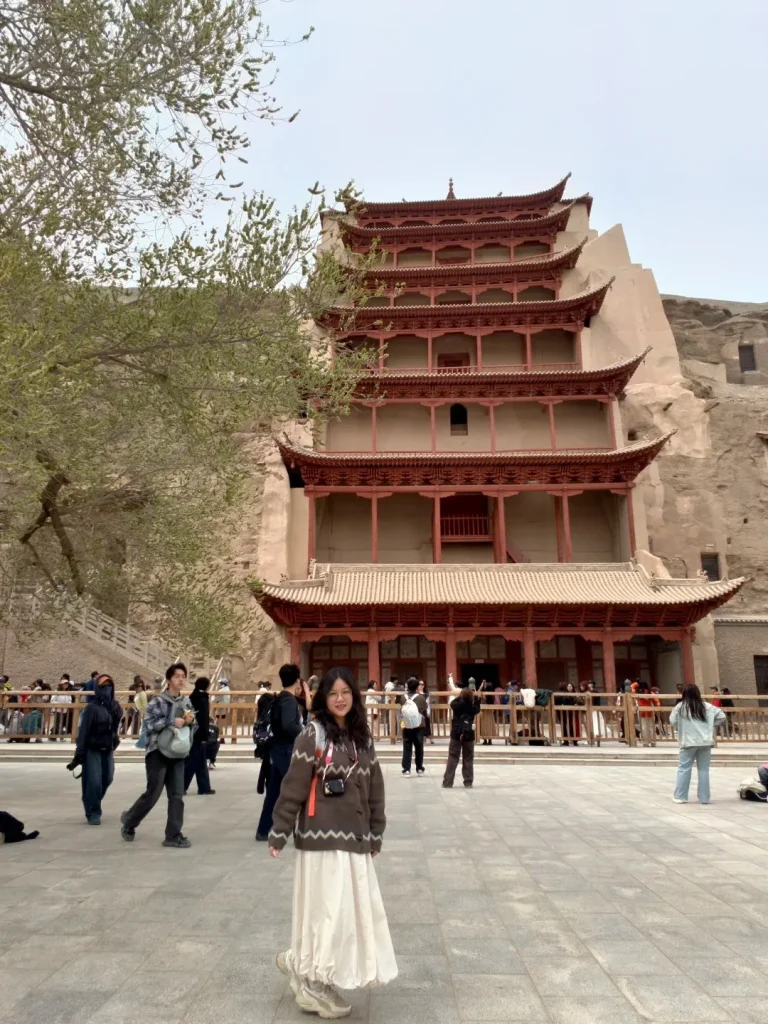
A 2.5-hour train ride brings you to Dunhuang, the crown jewel of the Silk Road. This oasis town was the ultimate crossroads for merchants, monks, and thieves. Your priority here is the Mogao Caves, a UNESCO World Heritage site housing 1,000 years of Buddhist mural art.
Insider Tip for Booking the Mogao Caves
You cannot just show up at the caves. You must book a “Type A” ticket (¥238) via the official Mogao Caves WeChat Mini Program up to 30 days in advance. Type A tickets allow access to 8 caves and include English-speaking guides. If you wait too long, you will be stuck with a “Type B” ticket, which restricts you to just 4 heavily crowded caves and no dedicated guide.
Inside the caves, the air is cool and smells faintly of damp earth and ancient pigment. Photography is strictly prohibited to preserve the fragile colors. The sheer scale of Cave 96, housing a 35-meter-tall seated Buddha, is staggering. After your tour, spend the evening at the Shazhou Night Market. Try the local specialty: yellow noodles with diced donkey meat, washed down with a ¥15 bottle of icy, sweet-and-sour Dunhuang apricot peel water.
Day 6: Mingsha Shan and Crescent Lake
Just 6 kilometers south of Dunhuang lies Mingsha Shan (the Singing Sand Dunes) and the iconic Crescent Moon Lake. The ¥120 entry ticket is valid for three days, allowing you to visit at different times.
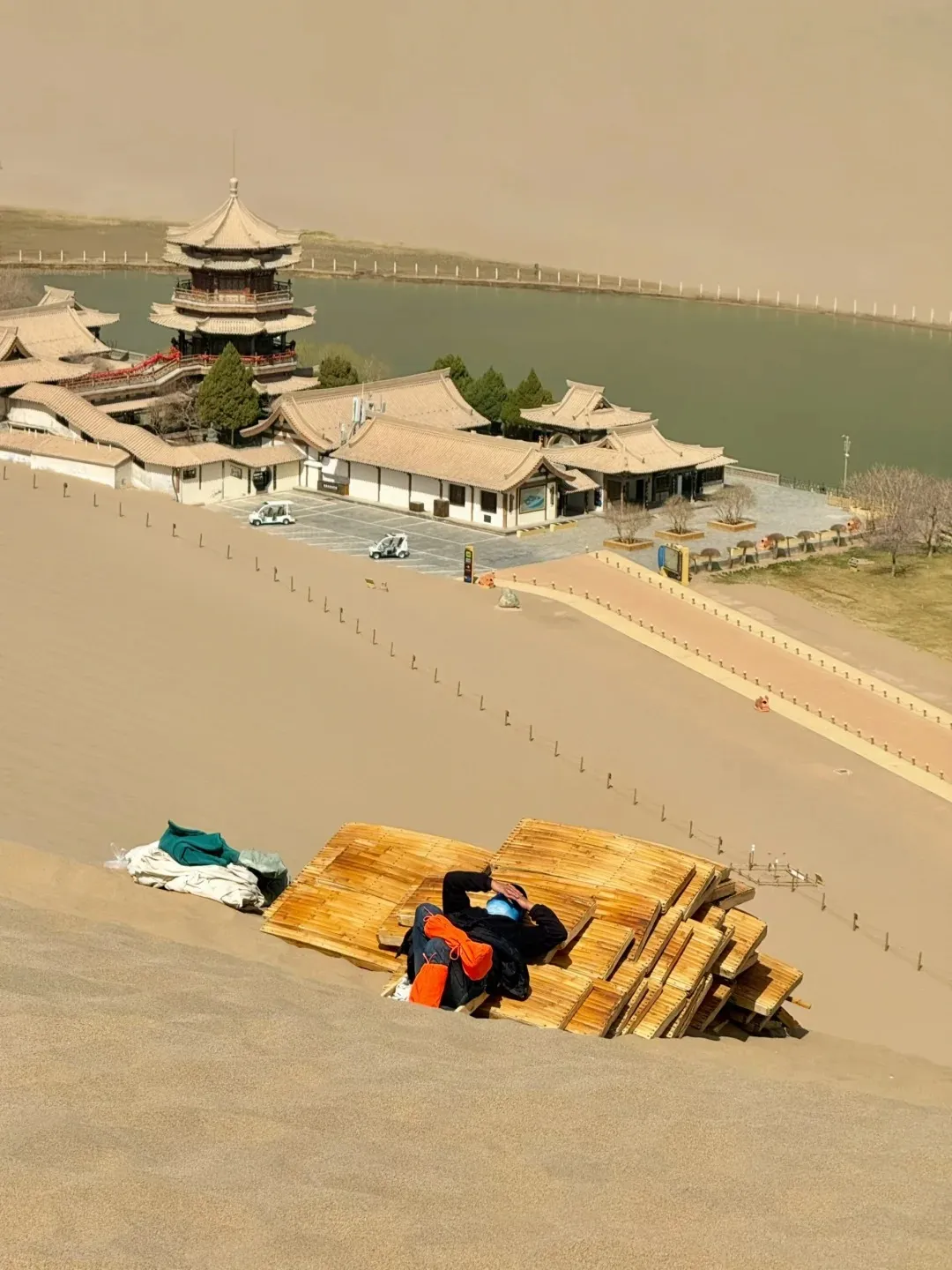
Find your moment of tranquility amidst the vastness of the Mingsha Shan ‘Singing Sand Dunes’ in Dunhuang, overlooking the iconic pagoda and the Crescent Lake oasis. A serene highlight of any Silk Road journey.
Is it Worth It? Crescent Lake is beautiful, but the base of the dunes is a chaotic circus of rental costumes, dune buggies, and megaphones. Do not pay for the overpriced camel caravans. Instead, invest your energy into climbing the towering dunes on foot. The sand is incredibly fine and slipping backward with every step is exhausting, but reaching the peak an hour before sunset is unforgettable. Watching the neon lights of Dunhuang flicker on in the distance while surrounded by a sea of darkening sand is the highlight of the trip.
Day 7: Yadan “Devil City” and Departure
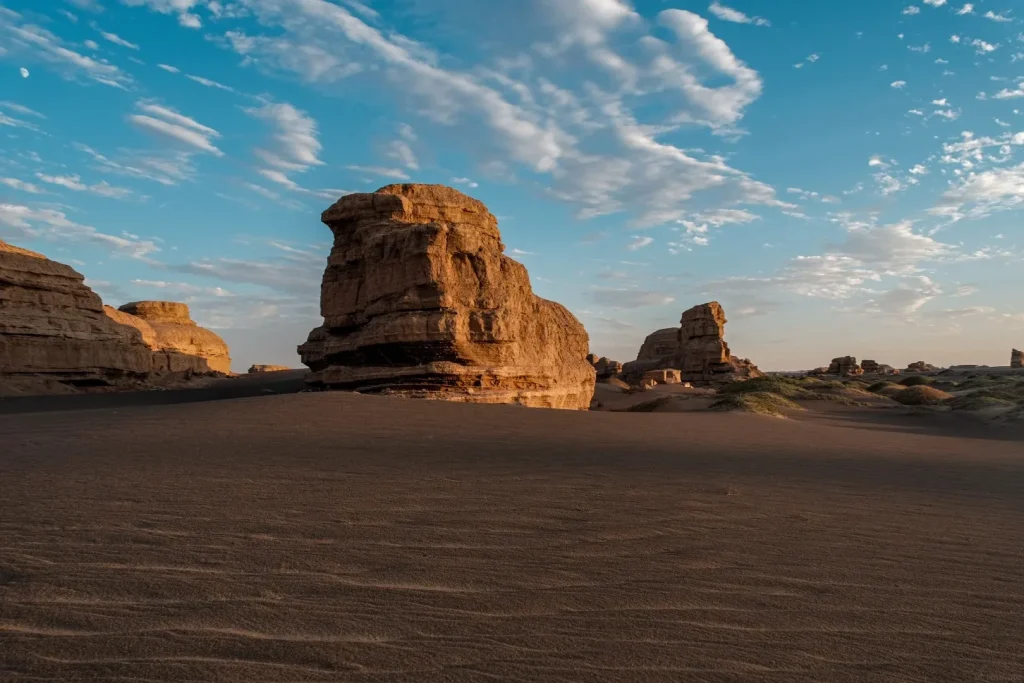
On your final day, book a shared minibus tour through your hotel to the Yadan National Geological Park, located 180km northwest of Dunhuang deep in the Gobi Desert. Known locally as “Devil City” due to the eerie howling sounds the wind makes as it whips through the rock formations, this former lakebed was eroded over 12,000 years ago.
The ¥120 park entry restricts you to official shuttle buses with fixed photo stops. Despite the rigid structure, the landscape feels genuinely extraterrestrial. Bring plenty of water and lip balm; the air here is aggressively dry, and the sun reflection off the baked earth is intense.
Return to Dunhuang in the late afternoon. From Dunhuang Airport (DNH), you can catch direct flights back to major hubs like Xi’an, Beijing, or Chengdu, officially concluding your desert expedition.